A plumbing emergency checklist for landlords is the short plan you keep for every rental: where the water shuts off, who gets called, and what the tenant should do before water spreads. On Florida’s Gulf Coast, the usual triggers are a burst supply line, a toilet that will not stop, sewage coming up through a drain, or a water heater dumping onto the floor. The first minute decides how much drywall, flooring, and tenant frustration you inherit.
Call Premier Plumbers for a rental plumbing emergency
This guide is for owners and small property managers from Tampa through Sarasota, Fort Myers, and Naples. It is not a repair manual. It tells you what to set up before trouble, what to do in the first minutes, and which regional number matches the property. Premier Plumbers is a family-owned company that has served this coast since 2008, with 24/7 emergency contact and same-day service when a crew is available. A call starts the dispatch process and confirms availability. It is not a timed arrival promise.
What belongs on a plumbing emergency checklist for landlords
Build one page per unit, not one page for the whole portfolio. A Sarasota duplex and a Fort Myers condo do not share a shutoff, a gate code, or a water heater. Tape a copy inside the unit, keep one in your phone, and give the tenant the version that tells them what they may touch.
Each sheet needs six things:
- The property address, unit number, and gate or lockbox code.
- Where the main water shutoff is, and where the water heater and toilet stops are.
- The tenant’s name and a second phone number.
- Your number, plus a backup person if you are on the road.
- The plumber’s regional number for that city.
- Notes on old pipe, a prior sewer backup, or an HOA rule about after-hours work.
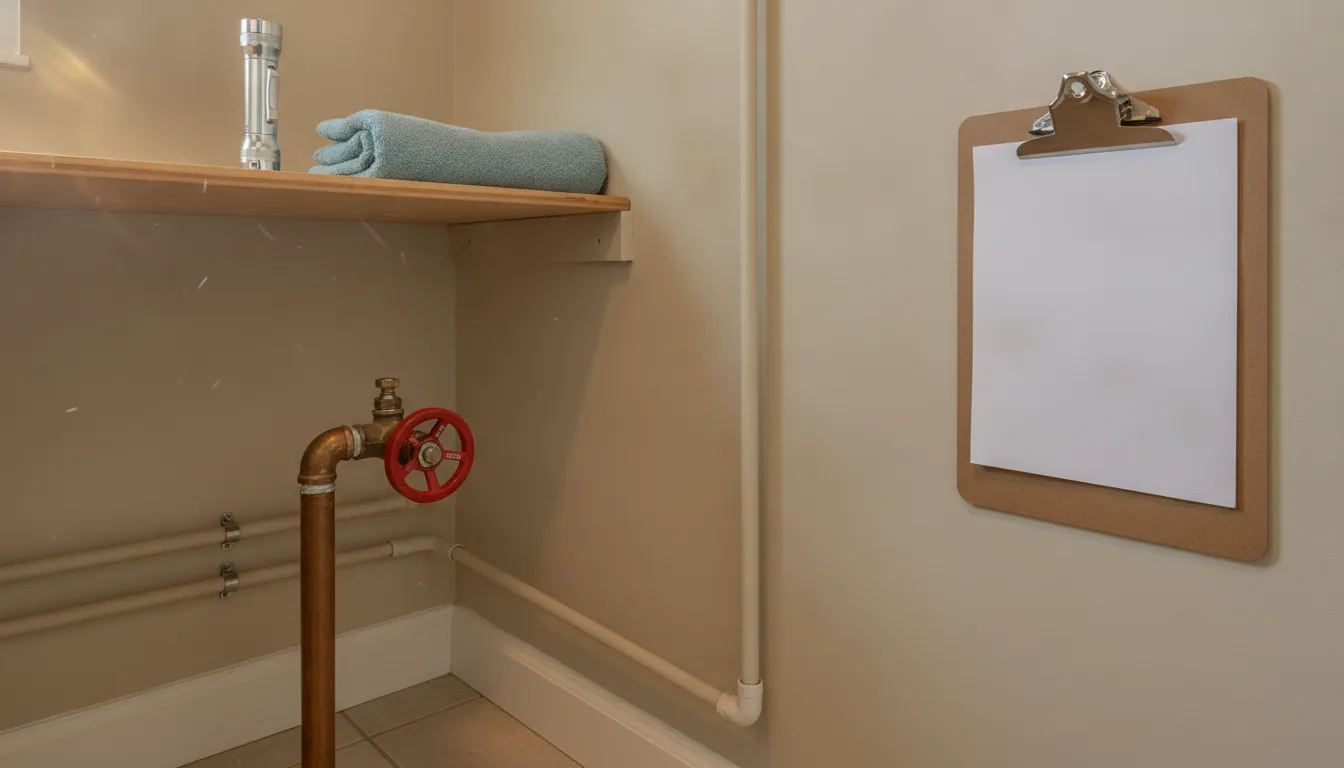
Walk the unit once a year, or at each turnover. Open the shutoff a quarter turn and close it again so it does not freeze in place. Label it with a tag the tenant can see in the dark. If you cannot find the valve, that is the item to fix on a normal weekday, not at 11 p.m.
Keep a small kit in a hall closet: a flashlight, towels, a bucket, and the checklist. You do not need a pipe wrench. Guessing at a repair on a pressurized line is how a small leak becomes a ceiling repair.
Which rental plumbing problems are true emergencies
Not every leak is an after-hours call. Tenants will report both, and your checklist should say which is which so nobody waits on the wrong problem.
| What the tenant reports | How to treat it | First move |
|---|---|---|
| Water spraying, a burst line, or a ceiling that is actively dripping. | Emergency. | Shut off water to the fixture or the whole unit, then call. |
| A toilet or tub that will not stop overflowing. | Emergency. | Close the toilet stop or the main, and stop using every drain. |
| Sewage odor with water coming up in a tub, shower, or floor drain. | Emergency. | Keep people out of the water and call. Do not run more fixtures. |
| A water heater leaking onto the floor, or no hot water with a wet tank. | Emergency. | Shut the heater’s cold inlet if you can do it safely, then call. |
| No water at any fixture in the unit. | Emergency. | Check that the shutoff is open, then call. Do not assume the city main failed. |
| A slow drain, a drip under a sink, or a running toilet that still shuts off. | Next-day repair. | Note it, contain the drip, and schedule service. |
A single slow sink can wait until morning. Sewage in a hallway cannot. If two fixtures in the same unit back up together, treat that as a line problem, not a clogged stopper. Active flooding and sewage are the calls that should jump the list.
Gulf Coast rentals add a few local wrinkles. Slab homes hide supply lines under the floor, so a warm wet spot in the tile can be a leak you cannot see from the closet. Older cast-iron drains in Sarasota, Venice, and parts of Fort Myers fail from the inside. A camera inspection is the way to tell a dirty line from a broken one. Lining is only an option when that camera shows the pipe is still sound. It is not a substitute for replacement.
What to do in the first ten minutes
Use the same order every time. Speed matters, but so does not making the mess worse.
- Ask the tenant whether water is still running, and whether it is clean water or sewage.
- If clean water is escaping, have them close the angle stop at the toilet, sink, or heater. If that valve is stuck or the leak is in a wall, close the unit’s main shutoff.
- If sewage is coming up, leave the main water on only if no one is adding water to the line. Tell the tenant not to flush, run the washer, or use other drains.
- Move people, pets, and anything on the floor out of the wet room. Skip the shop vac if the water might be sewage.
- Kill power at the breaker only if water is near an outlet, a furnace, or the water heater’s electrical connection, and only if the panel is dry.
- Take wide photos of the room, then close photos of the leak, before anyone mops.
- Call the plumber with the address, the shutoff status, and what the tenant already tried.
Do not ask the tenant to open a wall, tighten a supply nut they cannot see, or run a chemical drain opener into a line that is already backing up. Those steps hide the source and can wreck the pipe. A plunger is fine on a single toilet that is not overflowing onto the floor. It is the wrong tool once water is coming up in a second fixture.
If the property is in an HOA or a condo, the checklist should name who owns the pipe. Many associations cover the stack and the line outside the unit, and the owner covers everything inside. Calling the wrong party first is how an hour disappears. Put that name and number on the sheet before you need it.
What to tell the tenant, and what to tell the plumber
Tenants do well with a short script, not a lecture. Yours can be four lines: where the shutoff is, which problems justify a night call, your number, and the plumber’s number if you want them to call directly. Spell out that they should not hire their own plumber and send you the bill unless you have agreed to that in the lease.
When you call, the dispatcher needs facts, not a theory:
- Street address, unit, and the city, so the call routes to the right crew.
- Whether the water is off, and which valve was closed.
- Clean water versus sewage, and which rooms are wet.
- How long it has been happening, and whether other units are affected.
- Gate codes, pets, and whether an adult will be there to open the door.
- Pipe notes you already know, such as cast iron, a prior spot repair, or a heater that has leaked before.
Price is quoted for that job after someone sees it. Premier Plumbers does not publish a flat emergency menu. The job is quoted individually, and current terms are confirmed before you approve the work. If the repair is large, such as a repipe or a sewer replacement, ask for the written options before you approve the work. GreenSky financing is available only with credit approval. It is not a loan from the plumbing company, and it is not interest-free unless the plan you are offered says so.
After the visit, file the invoice, the photos, and a one-line note about the cause. That note is what you hand the next tenant, the insurer, or the HOA. It also tells you whether this unit needs a camera inspection before the next lease, instead of another midnight call for the same stack.
Set the unit up so the next call is shorter
The checklist fails when the shutoff is painted stuck or hidden behind a locker. Spend an hour at turnover and the next emergency gets smaller.
Label three valves: the main, the water heater inlet, and the toilet supply. If the main is outside, say which side of the house and what it looks like. Write the water heater brand, age if you know it, and whether it is gas or electric. A leaking heater is a different call from a heater that simply ran out of hot water.
Ask for a video sewer inspection when the unit has repeat backups, old cast-iron drains, or a tenant who reports gurgling in more than one room. The recording shows whether you need drain cleaning, jetting, or a repair. Do not treat those as the same job. Jetting cleans a line that is still intact. It does not fix a collapsed pipe.
Some supply leaks stay hidden. A wet slab, a high water bill, or running water with every fixture off is the clue. Start with the signs of a hidden leak, then book a leak-detection visit. Closing the main stops the damage. Someone still has to find the line under the slab.
Sewage is its own path. If a Fort Myers tenant reports water rising in the tub and a bad smell, follow the steps in what to do before the plumber arrives for a sewer backup, then call. Keep people off the wet floor. Sewage cleanup is not a mop-and-forget task, and a second flush makes it worse.
Between tenants, run every fixture, look under sinks, and check the water heater pan. A slow drip found on a Thursday is a scheduled plumbing repair. The same drip found by a new tenant on a Sunday night is an emergency call. If the heater is at the end of its life, plan that replacement from the water heater service page before it fails on a holiday weekend.
Commercial buildings are a different scope. Premier Plumbers does handle general commercial plumbing, but the fixtures showroom in Sarasota is for homes only. Do not send a restaurant owner or a property manager there for parts.
Which number to call on the Gulf Coast
Match the number to the property, not to where you live. Premier Plumbers has three published locations, and Naples is part of the Fort Myers service area rather than its own storefront.
- Sarasota and Bradenton, including Siesta Key, Venice, Osprey, Nokomis, Longboat Key, and Anna Maria Island: (941) 257-9115, at 6026 S. Tamiami Trl., Sarasota, FL 34231.
- Fort Myers and Naples, including Fort Myers Beach, Sanibel, and Marco Island: (239) 427-2175, at 2317 Bruner Ln., Fort Myers, FL 33912.
- Tampa, including Brandon and Riverview: (813) 279-8575, at 255 S 78th St., Tampa, FL 33619.
If the property sits in Charlotte County, Englewood, Port Charlotte, or Punta Gorda, call and confirm the address is on a current route before you list that number on the tenant sheet. The same goes for any town you do not see named. There is no St. Petersburg office, so do not invent one on the checklist.
You can also request a visit on the contact page. That form collects a time that works for you, and someone still confirms availability. For water that is running right now, call (941) 921-4846. The phone is the faster path for an active leak.
Water still moving? Call the regional number for that rental, or schedule service if the leak is contained and can wait for a daytime visit.
Frequently asked questions
What should a landlord shut off first?
Shut off the nearest valve that stops the leaking fixture. That is usually the toilet supply or the heater’s cold inlet. If the leak is in a wall or you cannot find that valve, close the unit’s main water shutoff. Leave sewage backups alone except to stop anyone from adding more water.
Should tenants call the plumber themselves?
Only if your lease and your one-page sheet say they should. Many owners prefer the tenant to call them first so the same company, the same access notes, and the same billing stay in one place. Put the rule in writing before move-in, not during the leak.
Is a slow drain a plumbing emergency?
No. A single slow sink or a drip that stays in the cabinet can be scheduled. Call after hours when water is escaping, sewage is coming up, a fixture will not stop overflowing, or the unit has lost water entirely.
Does the emergency page for Naples apply to every city?
No. Use the regional phone number for the property you own. The published emergency service offer is the right place to request help, but a Naples page is not a promise that every Gulf Coast town has the same crew or the same response.
Will someone give me a price before the repair?
Yes. The technician looks at the job and quotes that visit before work starts. There is no public flat rate for emergency calls, and membership prices on the website should be confirmed before you enroll a rental, because those terms are not a fixed menu.