Immediate Safety Measures: What to Do Before Help Arrives
If sewage is backing up through your floor drains, shower basins, or toilets, act immediately: stop all water use, shut off the main water supply if an overflow is active, avoid contact with standing water, and keep family and pets away from contaminated areas. Raw sewage is categorized as Category 3 blackwater, meaning it is loaded with infectious pathogens, viruses, bacteria like E. coli, and chemical contaminants. A single sewer backup can spread contaminants across hundreds of square feet in your home within minutes, threatening your indoor air quality and structural components.
Before our emergency trucks pull up to your driveway, taking the right immediate safety measures can dramatically decrease the spread of contamination:
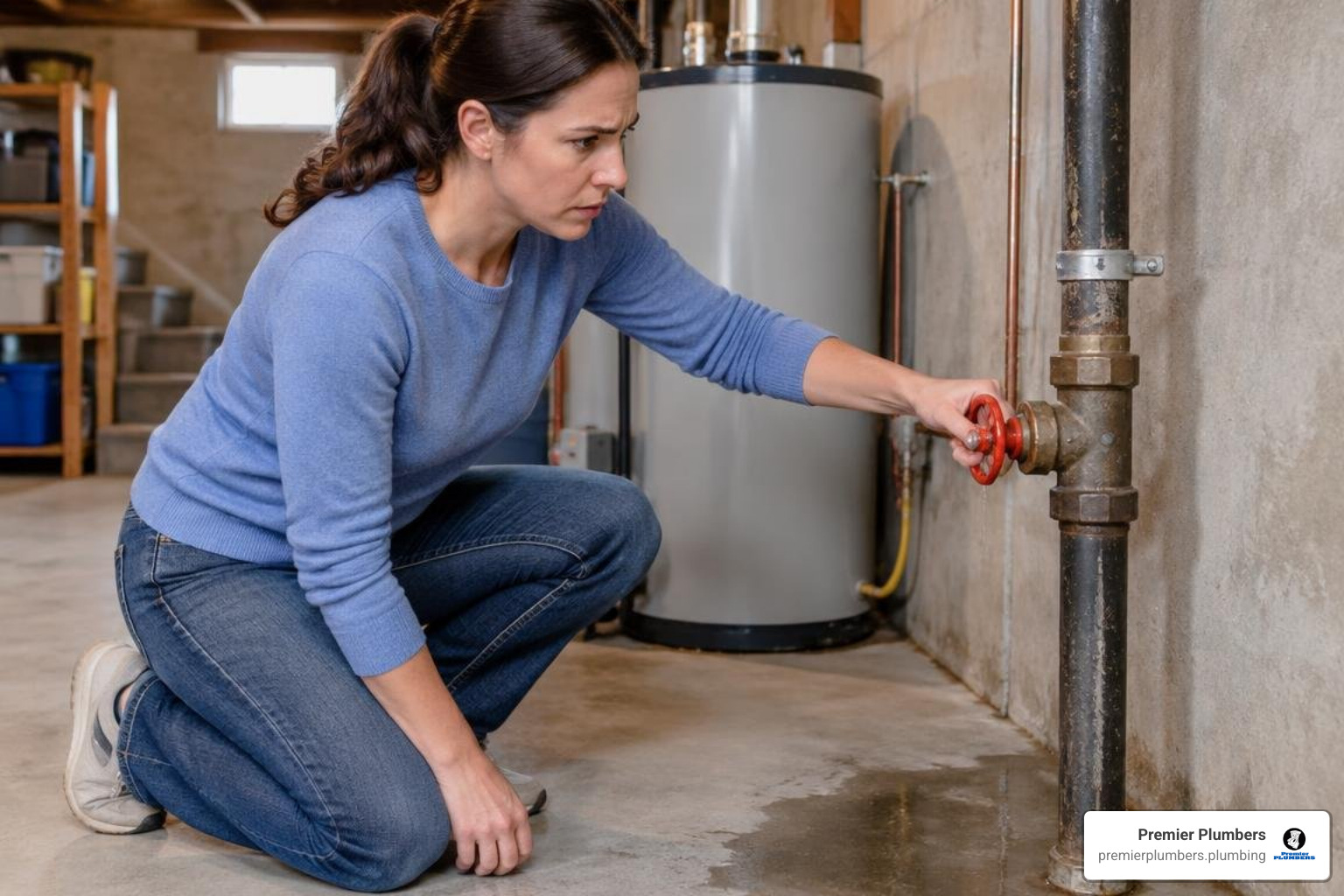
- Cease All Water Usage Immediately: Every single drop of water you run from an upstairs sink, washing machine, or dishwasher pushes more wastewater backward through your lowest drainage fixtures. Tell everyone in the household to leave all plumbing fixtures alone.
- Shut Off the Main Water Supply: If you have an active overflow that will not stop due to running fixtures or running toilets, quickly locate and turn off your home’s main water shutoff valve.
- Assess Electrical Panel Safety: Water conducting electricity poses a lethal hazard. If standing sewage is near electrical outlets, baseboard heaters, floor plugs, or major appliances, cut power to those individual circuits from your main breaker box only if the panel is in a completely dry, unaffected area. Never walk through standing sewage to access a breaker box.
- Don Basic Personal Protective Gear (PPE): If you must enter adjacent dry zones to retrieve valuables or open exterior windows, put on heavy rubber boots, thick waterproof gloves, eye protection, and an N95 respirator mask. Avoid touching any surfaces that have come into direct contact with wastewater.
- Ventilate Without Cross-Contaminating: Open exterior windows to allow sewer gases like hydrogen sulfide and methane to escape. However, leave interior doors to unaffected bedrooms and living areas closed, and turn off your central AC system. Running your AC fan can pull aerosolized bacteria through your ductwork and distribute biological contaminants into clean rooms.
- Evacuate Vulnerable Family Members and Pets: Children, elderly relatives, and pets should be moved completely out of the house or to a completely separate, non-contaminated upper floor until the situation is stabilized.
Identifying the Source: Private Lateral vs. Municipal Main
Homeowners often wonder who is financially and legally responsible for the mess when sewage backs up. The answer comes down to whether the blockage is located inside your private sewer lateral or within the municipal sewer main.
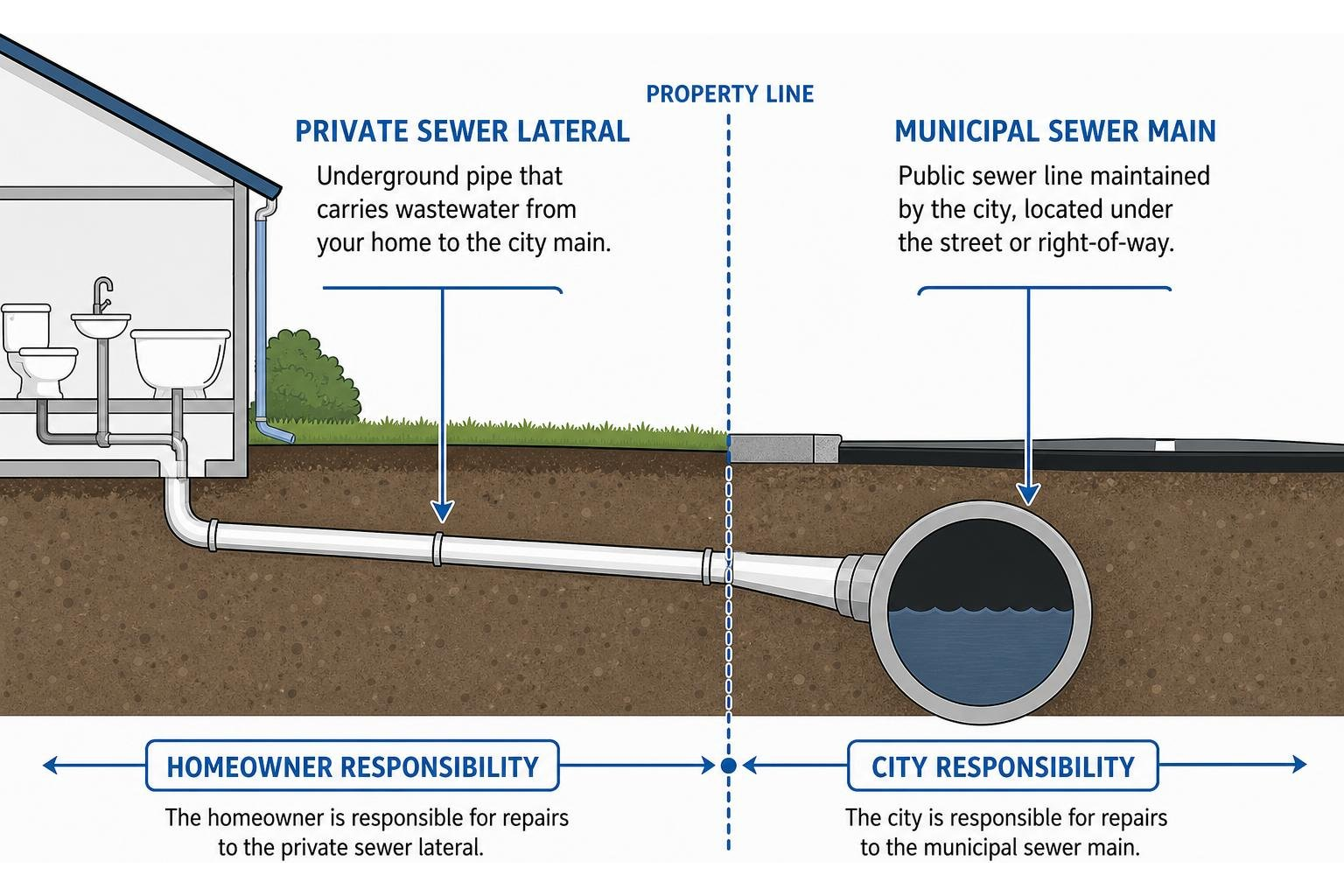
Your private sewer lateral is the underground pipeline that runs from your home’s exterior plumbing exit out to the property line or utility connection point. If the source of the backup, such as a clog, a structural break, or invasive tree root intrusion, is found in the private lateral, the costs for cleanup, diagnosis, and restoration are paid by the property owner. In contrast, if a city main under the street collapses or backs up due to heavy storm inundation, the utility handles repairs to that public infrastructure.
In coastal Southwest Florida, distinct regional conditions often trigger sudden sewer issues:
- Torrential Florida Rainfall and Storm Surges: During intense tropical weather, heavy downpours saturate the sandy soil, causing excessive infiltration and inflow into aging utility lines that can overwhelm public collection networks.
- Aggressive Tree Roots: Fast-growing subtropical trees seek out the moisture and nutrients found inside underground pipe joints, expanding tiny hairline fractures into massive structural blockages.
- Ground Shifts and Pipe Sags: Sandy Florida soils frequently shift, especially near high water tables, creating low points (known as pipe bellies) where solids collect and form stubborn obstructions.
To help determine where the issue sits, check your outdoor sewer cleanout cap located in your yard or flowerbed. If you safely remove the threaded cleanout cap and wastewater spills out onto the lawn, the obstruction is located between that cleanout and the street (or in the city main itself). If the cleanout pipe is dry inside while your indoor toilets are overflowing, the blockage is located inside your home’s interior drainage lines.
If you notice wastewater pooling around street manholes or if all the neighbors on your block are experiencing simultaneous backups, you should immediately notify local officials. Southwest Florida residents can review local utility procedures such as reporting municipal sewer emergencies or checking county utility service responsibilities to alert public works crews to main line issues.
Professional Sewer Backup Repair Options
When simple methods cannot clear a sewer line, modern diagnostics help identify the blockage and assess the pipe’s condition.
At Premier Plumbers, we begin with high-definition video sewer inspections. Our specialized fiber-optic cameras travel through the drainage system in real time, helping our team locate root intrusion, evaluate pipe slope, and inspect older underground lines without unnecessary excavation.
Homeowners comparing repair approaches can use our overview of main sewer line repair costs and common repair factors to understand why the condition, depth, and accessibility of a pipe influence the recommended solution.
| Repair Method | Best For | Landscaping Impact | Typical Durability |
|---|---|---|---|
| Hydro Jetting | Heavy grease, sludge, soft blockages, minor tree root intrusion | Zero excavation | Restores original flow capacity |
| Trenchless Pipe Lining (CIPP) | Cracked pipes, joint leaks, moderate root intrusion, aged host pipes | Minimal, with one or two small access pits | 50+ years |
| Traditional Pipe Excavation | Collapsed lines, severe pipe bellies, completely crushed pipes | Requires trench excavation | 50+ to 100 years with modern PVC |
Clearing Blockages with Hydro Jetting
When a line is intact but choked with built-up debris, mechanical snakes may only create a temporary opening through the clog. A more thorough cleaning may be needed to restore flow across the pipe diameter.
Our hydro jetting service uses multi-directional, high-pressure water streams to scour the interior walls of sewer lines. This process helps remove grease, scale, sediment, and root growth so waste is less likely to catch and create another backup.
If recurring clogs are becoming more frequent, our step-by-step guide to clearing a clogged sewer line explains the warning signs that indicate professional diagnosis is safer than repeated temporary fixes.
Trenchless Sewer Backup Repair and Pipe Relining
If a camera inspection shows structural cracks, missing pipe bottoms, or extensive root intrusion, trenchless pipe lining may repair the line without disturbing a driveway or mature landscaping.
With trenchless Cured-in-Place Pipe (CIPP) technology, our team inserts an epoxy resin-saturated felt tube into the damaged sewer line. The liner is inflated against the host pipe and cured into a seamless, joint-free pipe within the existing line. Our pipe lining guide explains how this rehabilitation method can preserve yards and patios when the underlying pipe is a suitable candidate.
Traditional Excavation and Main Line Replacement
While trenchless repairs work well for many situations, certain structural failures require excavation:
- Severely collapsed or crushed lines: When an underground pipe has completely collapsed, a new liner cannot pass through it.
- Deep pipe bellies and negative slope: If ground shifting creates a low spot that repeatedly holds water and waste, the pipe may need to be excavated and re-graded with a proper downward slope.
- Severely corroded cast iron pipes: Homes built before the mid-1970s may have cast iron drainage networks with channeling, bottom corrosion, and rust buildup.
In these situations, our cast iron pipe replacement service replaces degraded lines with durable, smooth-walled PVC piping designed to resist corrosion and root intrusion.
Preventing Future Sewage Backups in Southwest Florida
Dealing with a sewer backup once is more than enough for any homeowner. Proactive prevention can help protect a Fort Myers or Southwest Florida property from the stress and expense of structural water damage.
- Install a sewer backflow prevention valve: A sewer backflow valve is a one-way flapper valve installed in the sewer lateral. Under normal conditions, household wastewater flows toward the city main. If the main or lateral becomes overwhelmed, reverse pressure closes the valve to help keep sewage from flowing back into tubs and sinks. Our article on protecting your home with a sewer backflow valve outlines when this protection may be worth discussing with a plumbing professional.
- Practice strict kitchen grease management: Never pour fats, cooking oils, or melted grease down a kitchen sink or garbage disposal. Grease cools inside underground pipes, forming hard obstructions that capture food scraps and paper waste. Pour leftover cooking grease into a heat-safe container and dispose of it with household trash.
- Flush only the “Three Ps”: Only flush pee, poop, and toilet paper. Never flush so-called “flushable” wipes, feminine hygiene products, paper towels, dental floss, or facial tissues. Flushable wipes do not dissolve like toilet paper and can catch on rough pipe joints to create clogs.
- Schedule routine preventative drain maintenance: Having a professional inspect and clear drainage lines every few years can remove minor buildup before it becomes an emergency.
When to Schedule Emergency Sewer Backup Repair
Recognizing early warning signs gives homeowners a chance to address plumbing trouble before raw sewage spills onto bathroom floors:
- Multiple plumbing fixtures draining slowly at the same time
- Gurgling sounds from toilet bowls or shower drains when running a washing machine or sink
- Foul sewage or rotten-egg odors near indoor drains or around the lawn
- Water surfacing in a bathtub or shower pan when flushing a nearby toilet
- Unexplained lush, soggy patches of grass above an underground sewer line
If you notice these symptoms, emergency plumbing service can diagnose the issue and help prevent severe property damage.
Frequently Asked Questions About Sewer Backups
Does homeowners insurance cover sewer backup damage?
Typical homeowners insurance does not automatically cover backups in sewers and drains. Standard HO-3 policies generally exclude water that backs up through sewers, drains, or overflows from sump pumps.
To protect your property against these losses, you must add an optional Water Backup and Sump Overflow endorsement or rider to your policy. When dealing with a backup, always take extensive photos and videos of all contaminated areas, structural damage, and ruined personal property before cleanup begins to support your insurance claim.
How long does sewage cleanup and sewer line restoration take?
The total time required depends on the extent of the contamination and the type of pipe repair needed:
- Emergency Extraction and Line Clearing: A professional plumbing team can clear blockages, perform camera diagnostics, or hydro jet lines within a few hours of arriving on site.
- Structural Drying and Sanitization: Professional water remediation teams typically require 3 to 5 days to completely remove moisture, apply antimicrobial disinfectants, run commercial dehumidifiers, and verify that subfloors and wall framing are fully dry.
- Reconstruction and Pipe Replacement: If physical excavation, drywall replacement, or new flooring installation is required, full structural restoration can take anywhere from one to two weeks depending on the scope of work.
Can I clean up a raw sewage backup myself?
For anything more than a tiny, contained overflow involving only gray water, DIY cleanup is strongly discouraged due to extreme health hazards.
Raw sewage is a biohazard filled with harmful bacteria, parasites, viruses (such as Hepatitis A), and hazardous molds. Cleaning up blackwater requires certified protective gear, specialized EPA-registered hospital-grade disinfectants, and industrial air scrubbers equipped with HEPA filtration to capture airborne contaminants. Furthermore, porous materials like carpets, padding, insulation, and lower sections of drywall that absorb sewage cannot simply be washed; they must be carefully cut away, removed, and disposed of according to hazardous waste regulations.
Conclusion
A sudden sewer backup is among the most disruptive and hazardous plumbing emergencies a property owner can face. Cutting off water use, prioritizing electrical safety, isolating contaminated areas, and contacting experienced plumbing professionals can help protect the property and everyone in it.
For three generations, Premier Plumbers has provided Southwest Florida homeowners and businesses with dependable, technically advanced plumbing solutions. Our team can assess the line with camera inspection, clear appropriate blockages with hydro jetting, and recommend pipe lining or replacement when structural damage is found.
If wastewater is rising in your home or you suspect a main line blockage, do not wait. Contact our professional sewer backup repair technicians today to restore safety, cleanliness, and peace of mind.