Signs of Failing Cast Iron Sewer Lines and Florida Soil Impact
If your Naples home has cast iron sewer lines that are more than 25 to 30 years old, replacement is usually the right choice when widespread corrosion, channel rot, or recurring backups are present. Spot repairs can buy a little time, but they only address isolated damage and leave the rest of the aging pipe in place. Cast iron was the gold standard for residential plumbing throughout much of the twentieth century. While these heavy pipes were expected to last between 50 and 75 years in moderate climates, Southwest Florida presents a unique set of harsh environmental challenges. In Naples, cast iron pipes often begin showing severe signs of deterioration in as little as 25 to 30 years.
The primary culprit behind this premature failure is the local environment. Naples features a high water table, sandy and acidic soil, and salt-laden coastal air. Moisture continuously surrounds the exterior of buried pipes, while sewer gases such as hydrogen sulfide eat away at the interior crown of the pipe. Over time, the bottom channel of the pipe wears thin from water flow, creating a flat, jagged surface that catches debris and toilet paper.
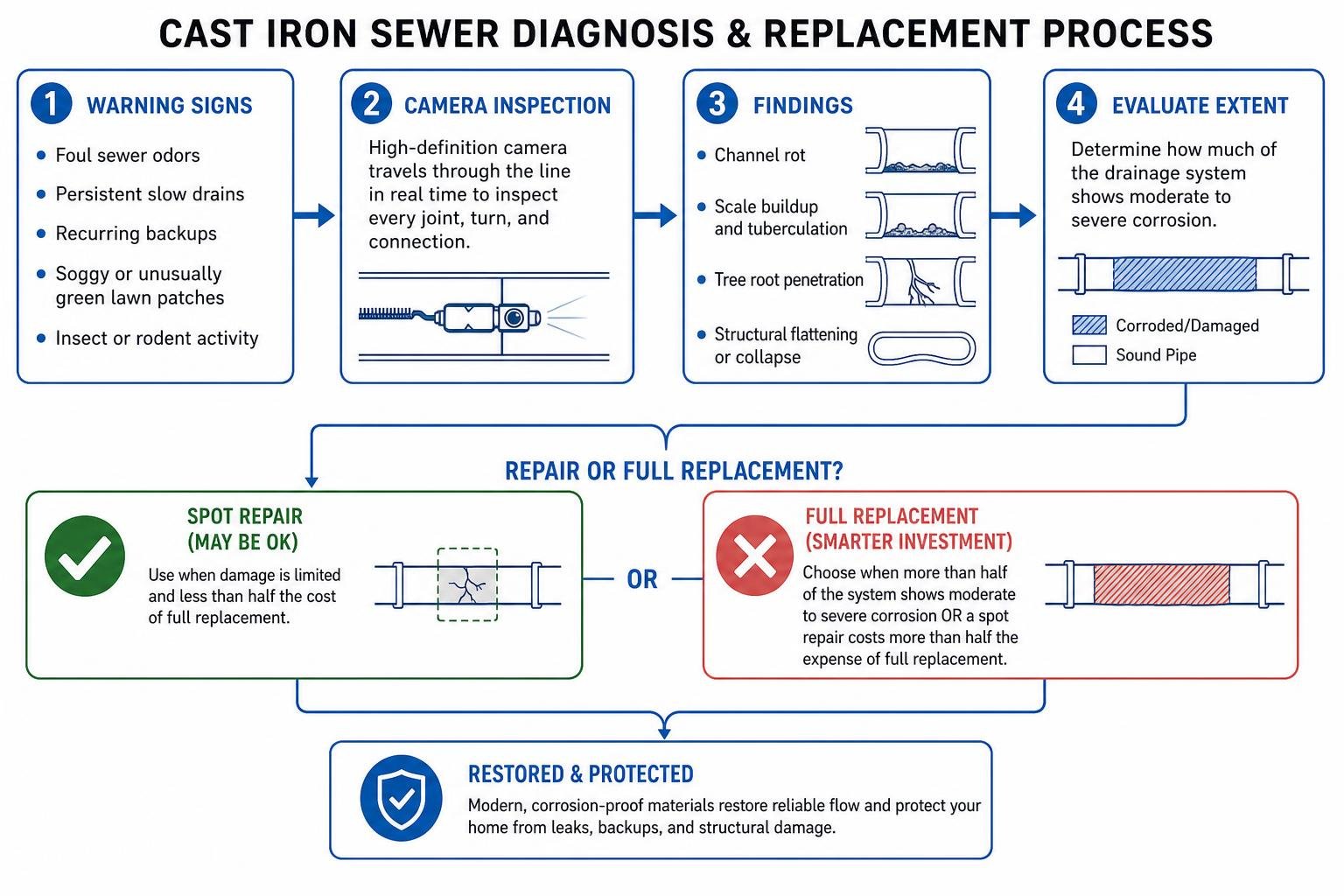
If your plumbing system is struggling, watch for these common warning signs:
- Foul sewer odors: Smelling rotten eggs or sewage inside bathrooms, near laundry rooms, or around the yard indicates that sewer gases are escaping through hairline cracks or rust holes.
- Persistent slow drains: When multiple fixtures throughout your house drain sluggishly despite regular clearing, the main sewer line is likely choked with rust scale or root intrusion.
- Recurring backups: Regular clogs that cause toilets or bathtubs to back up signal that the pipe walls have become too rough or misshapen to allow waste to pass freely.
- Soggy or unusually green lawn patches: Sewage escaping from cracked underground pipes acts as an unwanted fertilizer, leading to isolated patches of lush, wet grass or sunken soil in the yard.
- Insect or rodent activity: Pests can enter sewer lines through deteriorated piping, finding pathways into your home.
Understanding the condition of your pipes beneath the slab is critical before small leaks lead to structural foundation issues or expensive interior restoration. Homeowners can see how local soil chemistry and moisture affect aging drains in this overview of under-slab cast iron pipe replacement in Southwest Florida.
Evaluating the Need for Cast Iron Sewer Line Replacement Naples
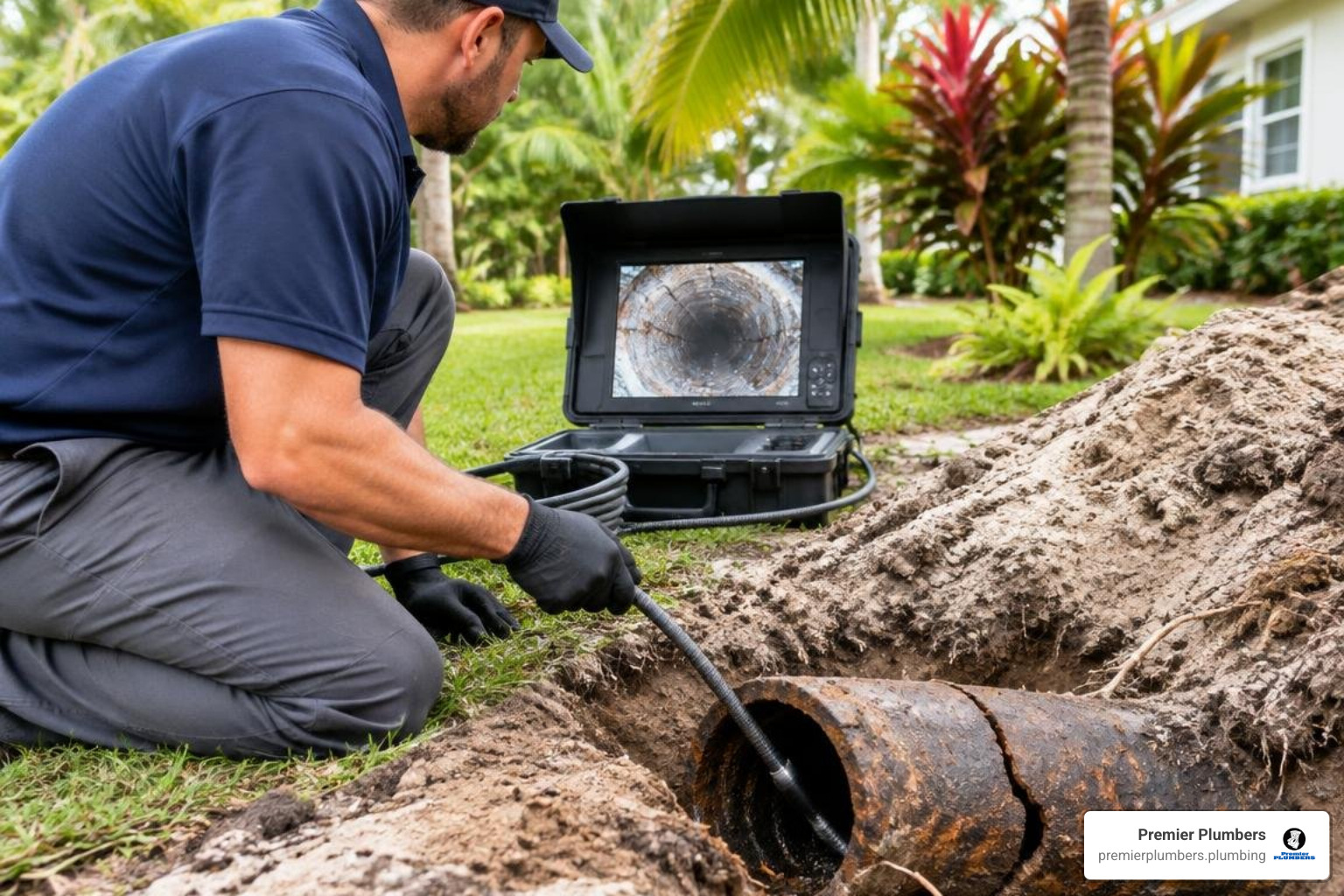
Pinpointing the exact state of buried plumbing requires more than guesswork. The Premier Plumbers team uses high-definition sewer camera inspections to travel directly through your drainage system. As the camera glides down the line, it transmits real-time footage to a monitor, allowing the team to inspect every joint, turn, and connection.
During an inspection, we look for several key indicators of structural failure:
- Channel rot: The bottom of a cast iron pipe often completely corrodes away, allowing wastewater to drain straight into the sand beneath your foundation.
- Scale buildup and tuberculation: Rust flakes and mineral mounds build up along the pipe walls, catching solid waste and narrowing the internal diameter.
- Tree root penetration: Seeking moisture, opportunistic root systems force their way through cracked joints, expanding until they fracture the pipe.
- Structural flattening or collapse: When soil shifts and the iron weakens, the pipe can buckle under the weight of the concrete slab above.
Cast Iron Sewer Line Replacement Naples: Repair vs. Full Replacement
When faced with a failing sewer system, homeowners often wonder whether they can simply patch the problem area or if a complete replacement is necessary. Making the right choice comes down to balancing immediate expenses against long-term reliability.
A practical guideline used across the industry is the 50 percent rule: if a spot repair costs more than half the expense of a full replacement, or if more than half of the system shows moderate to severe corrosion, full replacement is often the smarter investment. Patching a single leak in a line that is thinning across its entire length can lead to another leak just feet away a few months later.
Transitioning from cast iron to modern Schedule 40 PVC piping eliminates corrosion risks entirely. PVC provides a smooth interior surface that resists scale buildup and tree roots, delivering a long service life. For a closer look at how a full upgrade can address widespread deterioration, explore Premier Plumbers’ cast iron pipe replacement service.
| Feature / Factor | Spot Pipe Repair | Full Sewer Replacement |
|---|---|---|
| Primary Material | Clamps, sleeves, or short PVC bridge | Complete Schedule 40 PVC or epoxy structural liner |
| Expected Lifespan | Temporary to short-term (1 to 5 years) | 50+ years of reliable service |
| Root Resistance | Vulnerable at adjacent existing joints | Completely sealed against root intrusion |
| Corrosion Risk | Remaining cast iron continues to corrode | Zero risk of rust or scale accumulation |
| Property Value Impact | Minimal; unresolved issues on home inspection | High; can reduce concerns during inspections |
| Disruption Level | Localized to a single access point | Comprehensive, planned installation |
Trenchless CIPP vs. Open Trench Excavation
When replacing or rehabilitating cast iron lines, there are two primary approaches: trenchless technology and traditional open excavation. Both methods offer distinct advantages depending on your home layout, slab design, and the structural integrity of the existing pipe.
Trenchless cured-in-place pipe (CIPP) lining is a non-invasive option. The Premier Plumbers team inserts an epoxy-saturated felt tube into the damaged host pipe through a cleanout or small access point. Once inflated and cured, this resin hardens into a smooth, jointless pipe within a pipe. It restores hydraulic flow and seals cracks without tearing up flooring or landscaping.
However, CIPP lining requires that the host pipe still possesses enough structural integrity to hold its shape. If the pipe has completely collapsed, backpitched, or lost its base channel, traditional excavation is necessary.
Traditional replacement involves cutting into the concrete slab or digging a trench through the yard to remove old iron lines and lay new PVC pipe. While excavation requires structural restoration afterward, it provides a clean slate, correcting improper pipe sloping or crushed sections beneath older homes.
Costs, Timelines, Permits, and Insurance Coverage in Collier County

Planning for a sewer replacement involves understanding the local requirements and administrative steps in Collier County. Because sewer work affects public health and environmental safety, a replacement project may require permits and final inspections depending on its scope and jurisdiction. Working with a licensed contractor helps ensure the project complies with the current Florida Building Code and applicable Collier County requirements.
Homeowners frequently ask if their insurance policy will cover sewer line work. In Florida, standard homeowners insurance generally does not cover the repair or replacement of pipes that have failed due to age, wear and tear, or ongoing corrosion. However, policies often provide coverage for sudden, accidental water damage to flooring, drywall, and cabinetry if a pipe collapses and floods the home. This guide to avoiding excessive sewer repair costs explains why diagnosing recurring drainage problems early can help homeowners avoid more extensive restoration.
A typical sewer replacement project follows a clear timeline:
- Day 1: Camera inspection, site marking, and permitting. We verify the run, establish access points, and finalize local permits.
- Days 2 to 3: Pipe rehabilitation or excavation. Trenchless lining is completed, or trenches are excavated to extract old cast iron and install new PVC lines.
- Days 4 to 5: Municipal inspection, backfilling, and cleanup. County inspectors approve the work, lines are backfilled with crushed limestone for stability, and the work area is cleaned up.
Choosing the Best Method for Cast Iron Sewer Line Replacement Naples Properties
Selecting the right replacement strategy depends on your home foundation, budget, and future property goals. In many Naples communities, homes rest on thick monolithic concrete slabs with high-end tile, marble, or hardwood flooring. In these cases, under-slab tunneling or trenchless lining is often preferred to protect interior finishes from demolition.
When open trenching is necessary beneath the foundation, the process must be handled carefully. Excavated trenches must be backfilled with compactable material, such as crushed limestone, to provide solid support beneath the new Schedule 40 PVC lines and prevent foundation settling.
Choosing a contractor with proven local experience helps ensure that pipe pitch, cleanout access points, and vent stacks meet modern plumbing codes. A quality installation protects your living space and eliminates drainage headaches for decades.
For homeowners who need a complete assessment of repair, lining, or excavation options, Premier Plumbers provides sewer replacement services based on camera findings, property access conditions, pipe condition, and drainage layout. The team’s three generations of hands-on plumbing experience help homeowners understand the work before it begins and choose a solution designed for lasting drainage performance.
Frequently Asked Questions About Naples Sewer Line Replacement
How much does cast iron sewer line replacement typically cost in Naples?
The overall cost of sewer replacement varies based on pipe length, depth, whether the line runs beneath a concrete slab or through open yard, and the chosen installation method. Trenchless lining generally reduces surface restoration expenses, while full excavation requires factoring in concrete cutting, backfilling, and floor repairs. A professional diagnostic inspection provides an accurate, transparent project estimate tailored to your home layout.
Does replacing old cast iron sewer pipes increase Naples property value?
Yes, replacing failing cast iron pipes provides a significant boost to your home marketability and overall value. In Southwest Florida, real estate buyers and insurance companies frequently mandate 4-point inspections on older properties. Homes with original, deteriorating cast iron plumbing often face steep insurance surcharges or outright denial of coverage. Upgrading to modern PVC eliminates buyer hesitations, smooths the sale process, and protects your property equity.
How long does a typical sewer line replacement take to complete?
Most residential sewer replacements take between two and five days from start to finish. Trenchless pipe lining is often completed within one to two days because it avoids extensive digging. Full excavation projects involving under-slab tunneling or trenching through long driveways take slightly longer to allow for county inspections and proper structural backfilling.
Conclusion
Living with deteriorating plumbing puts your home at risk for sudden backups, expensive foundation damage, and health hazards. If your Naples home was built before the mid-1970s and you are dealing with chronic drainage issues, patching old iron lines is only a short-term solution. Upgrading to a modern, corrosion-free system brings lasting peace of mind and helps protect your property investment.
At Premier Plumbers, our team brings three generations of hands-on plumbing expertise to every job across Southwest Florida. We use advanced diagnostic cameras, precision lining equipment, and durable materials to provide drainage solutions tailored to local soil and climate conditions.
When you are ready to evaluate your home plumbing, contact our cast iron pipe replacement specialists at Premier Plumbers to schedule a comprehensive sewer camera inspection and get a clear plan for your property.