
What Does Sewer Line Repair Actually Cost in 2026?
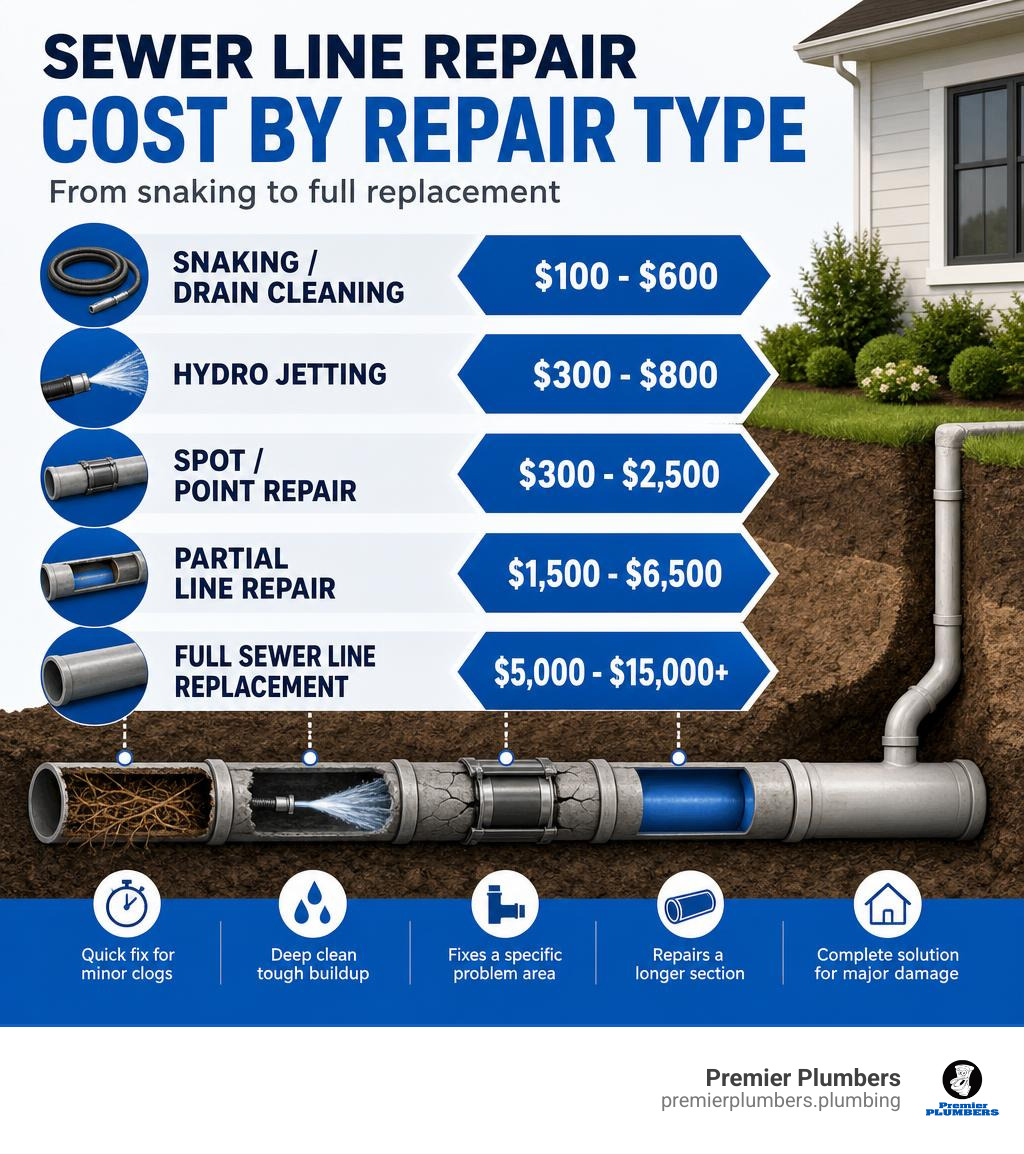
Understanding the cost for sewer line repair starts with knowing what type of problem you’re dealing with. Here’s a quick breakdown:
| Repair Type | Typical Cost Range |
|---|---|
| Snaking / drain cleaning | $100 – $600 |
| Hydro jetting | $300 – $800 |
| Spot / point repair | $300 – $2,500 |
| Partial line repair | $1,500 – $6,500 |
| Full sewer line replacement | $5,000 – $15,000+ |
Most Florida homeowners pay somewhere between $3,500 and $15,000 for a full sewer line replacement, with the national average sitting around $3,319 for standard repairs. Minor fixes cost far less, but ignoring small problems can quickly push you toward the higher end of that range.
Sewer issues rarely announce themselves politely. One day your drains are slow. The next, you have a backup in the house and a repair bill you were not expecting. The gap between a $500 fix and a $15,000 replacement often comes down to how early you catch the problem, and whether you are working with someone who gives you straight answers.
Premier Plumbers brings three generations of plumbing experience to help Southwest Florida homeowners understand the real cost for sewer line repair – from simple clogs to full line replacements. In this guide, we’ll walk through what affects your estimate, what costs are reasonable, and how to make a smart decision.
Average Cost for Sewer Line Repair and Replacement in 2026
When facing a sewer issue, the first question on every homeowner’s mind is, “What is this going to run me?” The overall cost for sewer line repair is highly dependent on whether we are performing a simple cleanout, patching a single broken spot, or replacing the entire run from your house to the city main.
To help you visualize the potential investment, here is a detailed comparison of the project scopes you might encounter:
| Project Scope | Average Cost Range | What It Typically Includes |
|---|---|---|
| Minor Repairs & Cleaning | $100 – $800 | Snaking, clearing blockages, or high-pressure hydro jetting to restore flow. |
| Spot Repairs (Point Repair) | $300 – $2,500 | Repairing a single broken joint, a small cracked section, or a localized root intrusion. |
| Partial Line Replacement | $1,500 – $6,500 | Replacing a damaged section of pipe (typically 1 to 15 feet) using traditional excavation or trenchless methods. |
| Full Line Replacement | $5,000 – $15,000+ | Replacing the entire main sewer line (typically 30 to 100+ feet) from the foundation to the municipal connection. |
If you find yourself on the higher end of this spectrum, you are likely looking at a complete overhaul. For a comprehensive look at the process and why costs vary, you can find more info about sewer replacement services to help you plan your next steps.
Historically, standard residential projects hover around a national average of $3,319 to $4,300 for mid-range sewer repairs. However, when a pipe has completely collapsed, lost its structural integrity, or has been thoroughly invaded by tree roots, a full replacement becomes unavoidable. A 100-foot sewer line replacement can quickly scale from $5,500 to $25,000 or more if there are major complications like deep lines, mature trees, or concrete driveways in the path of the excavation.
Minor Cost for Sewer Line Repair: Snaking and Hydro Jetting
Not every sewer crisis requires heavy machinery or digging up your pristine yard. In fact, many emergency service calls start with a severe clog that can be resolved using non-invasive drain cleaning methods.
If your drains are backing up but your pipes are structurally sound, professional clog removal and preventive maintenance are your best friends. The two primary methods for this are:
- Sewer Snaking (Drain Cabling): Typically costing between $100 and $600, this method uses a mechanical cable with a cutting blade to punch through dense blockages like grease build-up, hair, or flushable wipes.
- Hydro Jetting: Costing between $300 and $800, hydro jetting uses high-pressure water streams (up to 4,000 PSI) to blast away grease, scale, and minor root intrusions, scrubbing the pipe walls clean.
If you are experiencing slow-moving drains, getting a professional to clear the line immediately can prevent a minor clog from turning into a high-cost structural failure. You can read more info about hydro jetting services or explore more info about drain cleaning services to see how these preventive measures keep your plumbing system flowing smoothly without breaking the bank.
Major Cost for Sewer Line Repair: Spot Fixes vs. Full Line Replacement
When a sewer camera reveals actual physical damage, such as a cracked pipe, an offset joint, or a completely collapsed section, cleaning is no longer enough. At this point, you have to choose between a localized spot fix, also called a point repair, and a full main line replacement.
A spot repair is highly cost-effective if the rest of your sewer line is in good condition. For instance, if a single tree root has cracked a 3-foot section of an otherwise perfect PVC pipe, we can dig a small access hole and replace just that specific pipe section. This typically costs between $300 and $2,500.
However, if your home was built before the 1980s, a spot repair is often just a temporary band-aid on a system that is failing due to age. Older homes in areas like Sarasota, Tampa, and Fort Myers often feature clay tile or cast iron pipes that are nearing the end of their lifespans. In these cases, fixing one spot today simply means you’ll be digging up another spot next year.
Choosing a full replacement might feel painful upfront, but it prevents repeated emergency service fees, property damage, and ongoing stress. For a deeper dive into making this decision, check out our Sarasota Sewer Line Replacement Guide for Stinky Situations to learn how to identify when your pipes are truly past the point of simple repairs.
Key Factors That Influence Your Sewer Repair Estimate
No two sewer lines are identical, which is why we can never give a single, flat price over the phone without looking at the property first.
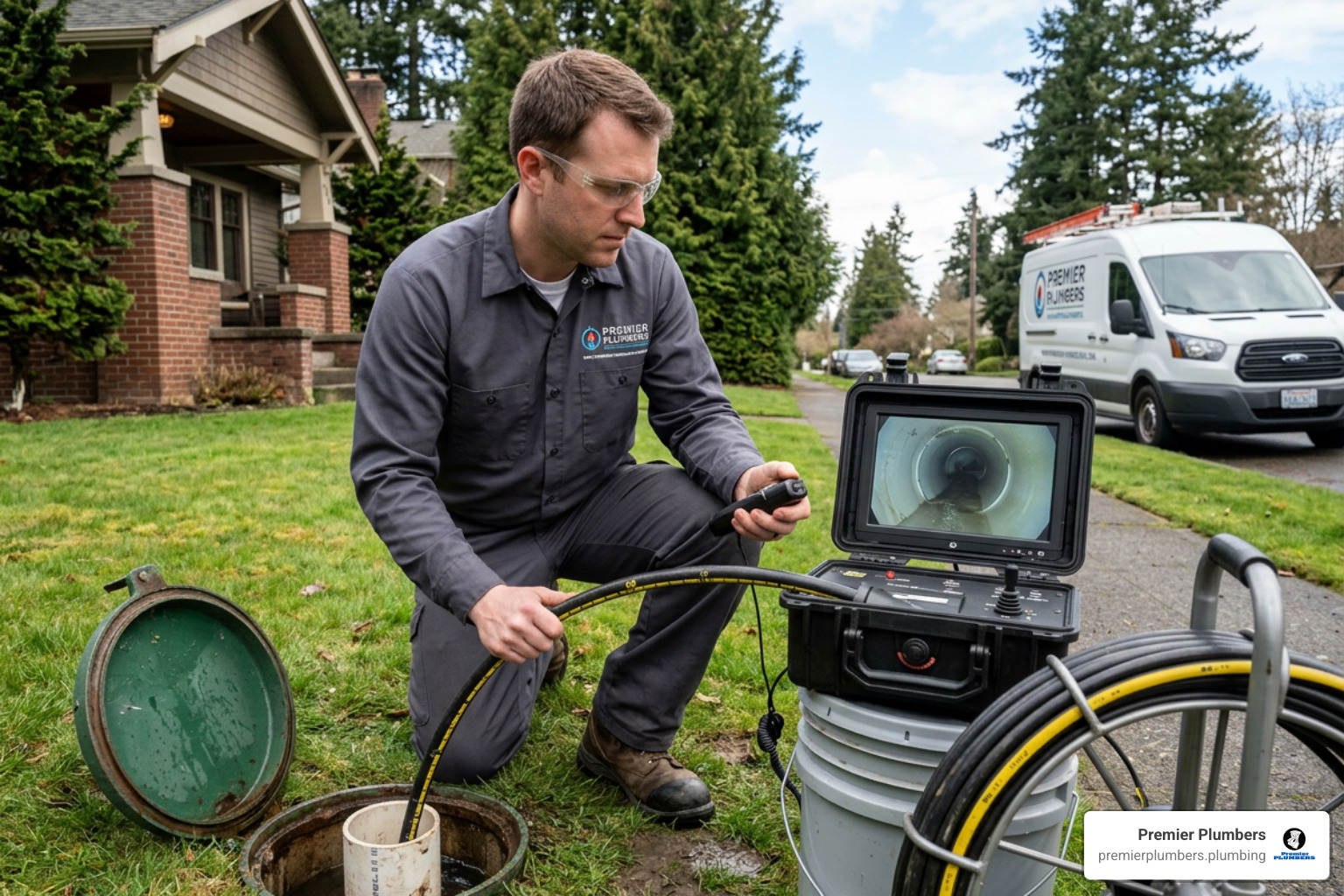
When we assemble an estimate for the cost for sewer line repair, several critical physical and regulatory factors come into play:
1. Pipe Material and Age
The type of pipe buried beneath your home dictates how easily it can be repaired and how prone it is to future failures:
- Clay Tile: Very common in mid-century homes. It is highly susceptible to root intrusion at the joints and can easily crack under shifting soil.
- Cast Iron: Durable but prone to internal rusting, scaling, and channeling (where the bottom of the pipe wears completely away). To understand your options for dealing with failing cast iron, you can learn about cast iron pipe replacement in Southwest Florida to update your system to modern standards.
- PVC / ABS Plastic: The modern standard. It is cheap, smooth, rust-resistant, and highly flexible, making it the most cost-effective material to install and maintain.
- Orangeburg Pipe: Made of compressed wood pulp and tar (common from 1945–1975). This material almost always deforms and collapses over time, meaning trenchless lining is rarely an option; it must be fully excavated and replaced.
2. Pipe Depth and Accessibility
The deeper your sewer line is buried, the more labor-intensive and dangerous the excavation becomes. While a shallow pipe buried 2 to 3 feet deep is easy to reach, a pipe buried 8 to 10 feet deep requires specialized shoring equipment to keep workers safe, which can increase labor costs by 50% or more.
Furthermore, accessibility is key. If your sewer line runs under an open, grassy lawn, digging is straightforward. If it runs directly beneath a concrete driveway, a beautifully paved patio, or worse, the concrete slab foundation of your home, the cost of cutting, removing, and rebuilding those structures can add $3,000 to $10,000 to the project.
3. Permits, Inspections, and Local Regulations
Before any major plumbing work begins, local municipalities require permits and post-repair inspections to ensure the work meets safety codes. Permit fees can range from $100 to $1,000. If the repair extends past your property line and into the public right-of-way (under the sidewalk or street), right-of-way permits and traffic control plans can add $1,000 to $3,000 to the bill.
For homeowners in our coastal communities, it is essential to stay compliant with local utility rules. You can review the Charlotte County sewer service guidelines to understand your responsibilities as a property owner versus what the county utilities department covers.
To get a precise picture of what is happening underground before making any decisions, we always recommend starting with a high-definition diagnostic look. You can find more info about video sewer inspections to see how our team pinpoints the exact location and cause of your sewer line issues without any guesswork.
Traditional Excavation vs. Trenchless Sewer Repair Costs
For decades, the only way to fix a broken sewer line was to bring in a backhoe, dig a massive trench across the yard, and physically swap out the old pipe for a new one. Today, modern trenchless technology allows us to repair or replace pipes with little to no digging.
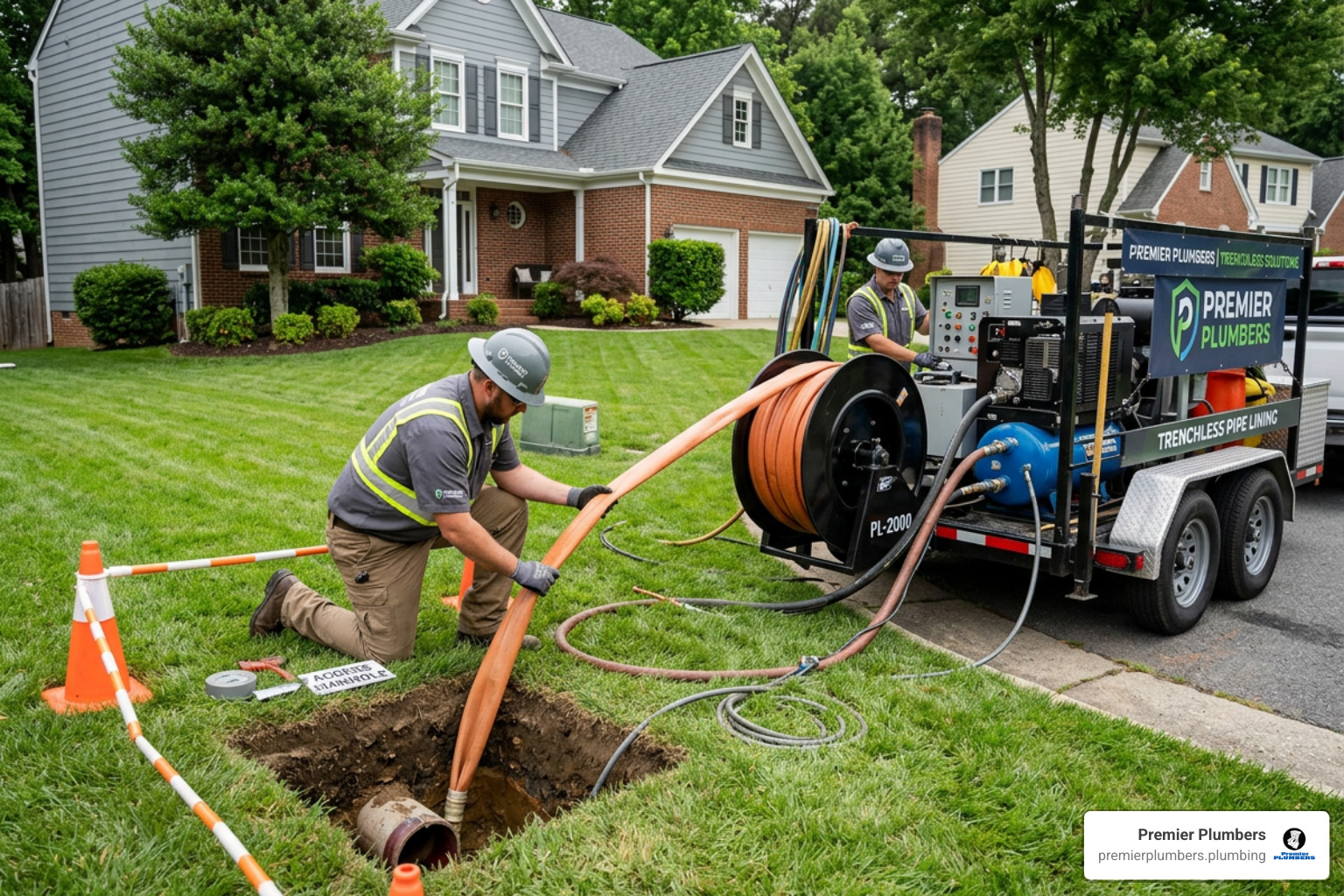
Understanding the cost differences between these two methods is crucial for protecting both your yard and your wallet:
- Traditional Excavation ($50 – $250 per linear foot): This method is highly effective and often has a lower upfront plumbing quote. However, it requires digging up your property. If your pipe runs under a driveway or mature landscaping, the subsequent restoration costs can be staggering.
- Trenchless Sewer Repair ($60 – $250 per linear foot): While the plumbing work itself may cost 30% to 50% more upfront due to specialized equipment and high-tech resins, it requires only one or two small access holes.
The Real Cost: Factor in the Restoration Savings
When comparing quotes, you must look at the total project cost, not just the plumbing estimate. Traditional excavation often leaves homeowners with massive secondary bills to repair the damage left behind by the heavy machinery:
- Driveway or Patio Replacement: Can easily add $3,000 to $5,000+ to a traditional dig project.
- Landscaping & Lawn Restoration: Can add $1,500 to $5,000+ to replant sod, shrubs, and trees.
Because trenchless methods leave your yard, driveways, and sidewalks completely untouched, they save homeowners between 38% and 59% on total project costs once restoration is factored in.
The two main trenchless methods we utilize are:
- Cured-in-Place Pipe (CIPP) Lining ($80 – $180 per foot): We insert a flexible, epoxy-saturated liner into your old pipe, inflate it, and let it cure. This creates a brand-new, seamless, root-proof pipe inside your old one.
- Pipe Bursting ($60 – $200 per foot): We pull a heavy bursting head through your old pipe, fracturing it outward while simultaneously pulling a new, highly durable High-Density Polyethylene (HDPE) pipe into place behind it.
If you want to explore how these non-disruptive solutions work across our major service areas, you can read about pipe lining in Fort Myers, Sarasota, and Tampa to see which method fits your property’s layout.
Regional Pricing Variations and Hidden Fees
Where you live in Florida has a direct impact on the labor rates and overall pricing you will see on an estimate. Across the United States, labor rates vary widely — for example, West Coast homeowners routinely pay 25% to 67% more than the national average, with costs ranging from $100 to $250 per linear foot. Here in the Southeast, standard rates are generally more competitive, typically ranging from $70 to $150 per foot, with average plumber labor rates falling between $85 and $175 per hour.
However, rapidly growing coastal areas in Florida present unique local challenges. High water tables, sandy soil conditions that require special shoring to prevent trench collapses, and rising local utility fees can all drive up the cost of underground construction. For instance, local infrastructure demands have caused municipal water and sewer rates on the rise in Collier County, highlighting the growing regional costs of maintaining and updating waste management systems.
When budgeting for a sewer repair, always ask your contractor if their quote includes these commonly overlooked fees:
- Utility Locates: Identifying underground power, gas, and water lines before digging.
- Sewer Camera Inspections: Usually $150 to $400, though often rolled into the cost of the repair if you hire the company.
- Permit and City Inspection Fees: Ensuring the job is fully legal and documented for your home’s history.
Frequently Asked Questions About Sewer Line Costs
How do I know if my sewer line needs to be repaired or fully replaced?
The decision between repair and replacement comes down to the severity of the damage, the age of the pipe, and how often you are experiencing issues.
If you have a single, isolated crack in a newer PVC line, a simple spot repair is perfect. However, if you are dealing with recurrent clogs, widespread root intrusion across multiple joints, or your pipes are cast iron or clay approaching 50+ years of age, a full replacement is the only way to avoid continuous emergency service calls. If you are currently dealing with a backup, you can find more info about handling emergency blocked drains to learn how to stabilize your home while you make a permanent repair plan.
Does homeowners insurance cover the cost of sewer line repairs?
In most cases, standard homeowners insurance policies do not cover sewer line repairs if the damage is caused by gradual wear and tear, age, or root intrusion.
However, there are two major exceptions:
- Sudden Accidental Damage: If a third-party excavation crew accidentally cuts your line, or if a sudden, catastrophic event occurs that is covered under your policy, you may receive coverage.
- Service Line Endorsements: Many insurance companies offer optional “service line warranties” or riders for a few dollars a month. If you have this add-on, it will often cover excavation and repair costs up to a certain limit (usually $10,000). It is always worth calling your insurance agent to check your specific policy details.
How can I avoid overpaying for my sewer line repair?
Sewer repairs are major construction projects, and the best way to protect yourself is to be an informed consumer:
- Always Demand a Camera Inspection: Never let a plumber convince you to replace a sewer line without showing you the live video footage of the break, collapse, or root system inside your pipe.
- Get Line-Item Estimates: Ensure your quote clearly separates the plumbing labor, materials, permit fees, and restoration work so you know exactly where every dollar is going.
- Compare Traditional vs. Trenchless: Always ask if trenchless lining or bursting is an option for your property, and weigh the upfront plumbing cost against the eventual landscaping and driveway restoration bills.
Conclusion
Dealing with a failing main sewer line is stressful, but understanding the real factors behind the cost for sewer line repair helps you take control of the situation. By identifying the problem early, utilizing high-definition camera diagnostics, and weighing the long-term restoration savings of trenchless technology, you can protect both your home and your budget from being completely drained.
At Premier Plumbers, our family-owned business is built on a three-generation legacy of honesty, expertise, and quality craftsmanship. We serve homeowners across Southwest Florida, from Sarasota and Bradenton down to Fort Myers, Naples, and nearby communities, providing accurate, transparent diagnostics and state-of-the-art repair solutions.
Don’t wait for a slow drain to turn into an expensive emergency. Contact our plumbing specialists to schedule your professional sewer line replacement today, or contact our team for a clear, honest assessment of your home’s sewer system.