What a Backwater Valve Does (And Why Florida Homeowners Should Care)
A backwater valve is a one-way plumbing device installed on your home’s main sewer line that lets wastewater flow out but automatically closes to stop sewage from flowing back in.
Quick answer: what does a backwater valve do?
- Sits on your home’s sewer lateral (the pipe connecting your home to the city sewer)
- Allows wastewater to flow out freely during normal conditions
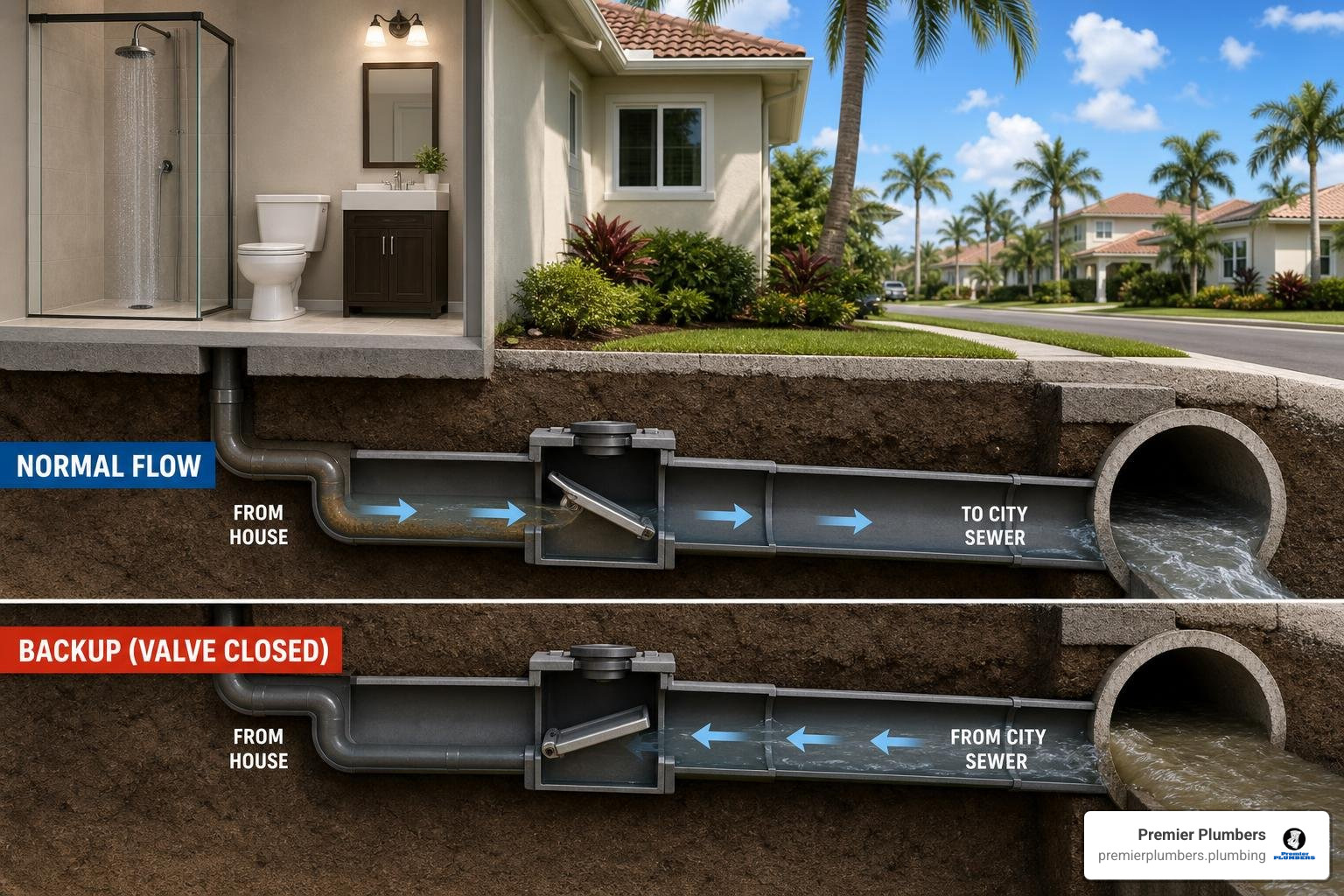
- Automatically closes when municipal sewer pressure reverses direction
- Protects floor drains, toilets, and showers from raw sewage backups
- Most critical for homes with fixtures at or below street level
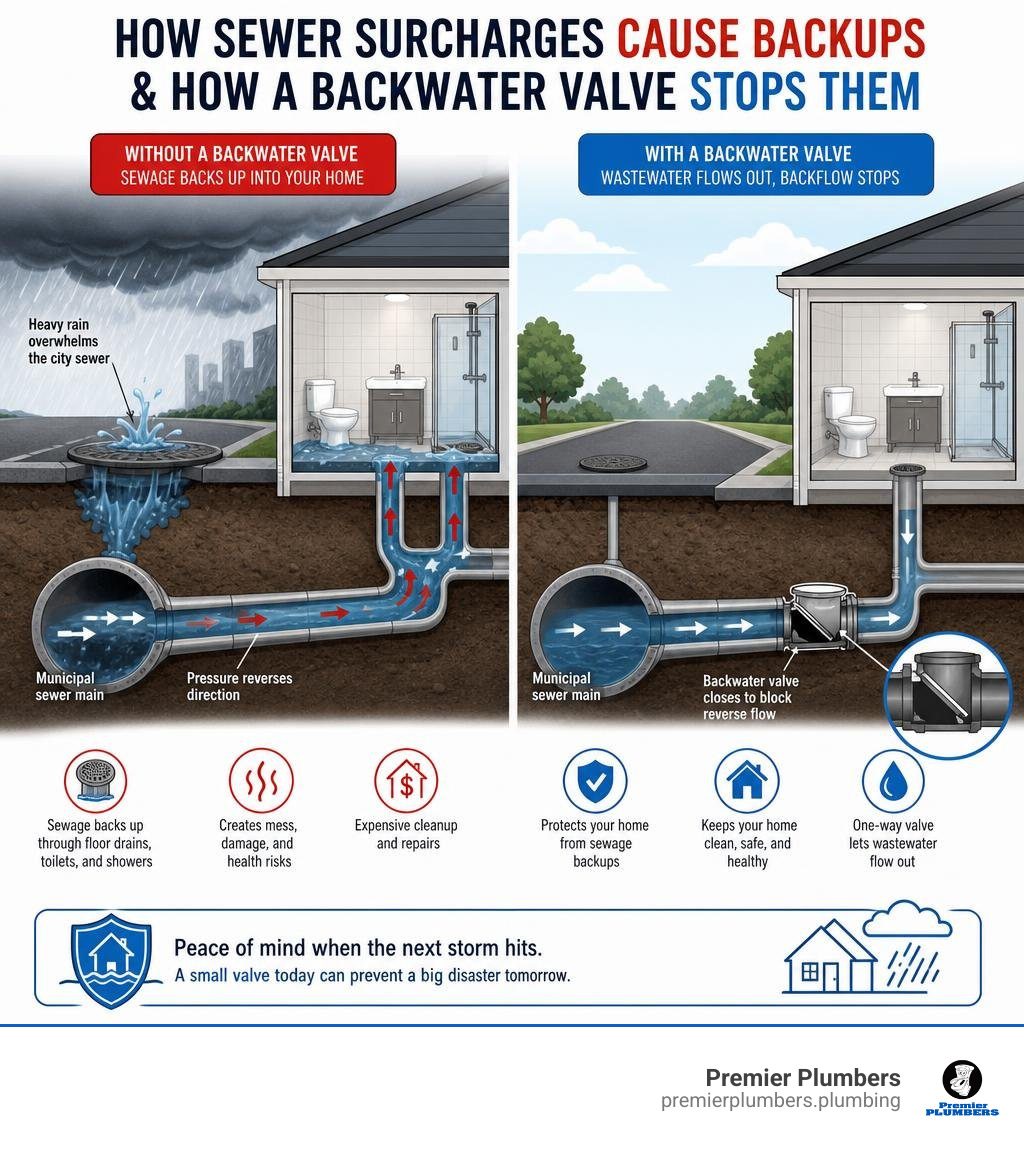
Here is why this matters in Southwest Florida. When a heavy storm hits, city sewer lines can fill up faster than they can drain. That pressure has to go somewhere, and it often pushes back up through the lowest point it can find: your home’s plumbing fixtures. The result is raw sewage backing up through your floor drain, shower, or toilet. The average cost to repair a flooded basement or ground floor from a sewer backup can be incredibly expensive, and that does not include the damage to your insurance premium or the health risks from exposure to raw sewage.
This is not a rare edge case. It happens in older neighborhoods, areas with combined storm and sanitary sewers, and anywhere that heavy rainfall overwhelms aging infrastructure.
At Premier Plumbers, our team of experienced plumbers has spent decades helping Southwest Florida homeowners protect their homes from exactly these kinds of plumbing failures, including backwater valve installation and maintenance. In this guide, we will walk you through everything you need to know, from how the valve works to what it costs and how to keep it running reliably.
What Is a Backwater Valve and How Does It Work?
To understand how a backwater valve protects your property, you have to understand the basic physics of a municipal sewer system. Under normal conditions, gravity does all the work. Wastewater from your sinks, showers, and toilets flows down through your home’s drain pipes, enters your main sewer lateral, and empties into the city’s main sewer line under the street.
However, during heavy tropical storms, hurricanes, or rapid flooding events in coastal Florida, the municipal system can experience a sewer surcharge. This happens when the sheer volume of stormwater overloads the city’s pipes. When the main line under the street fills to capacity, the pressurized water has nowhere to go but backward up the lateral lines of nearby homes.
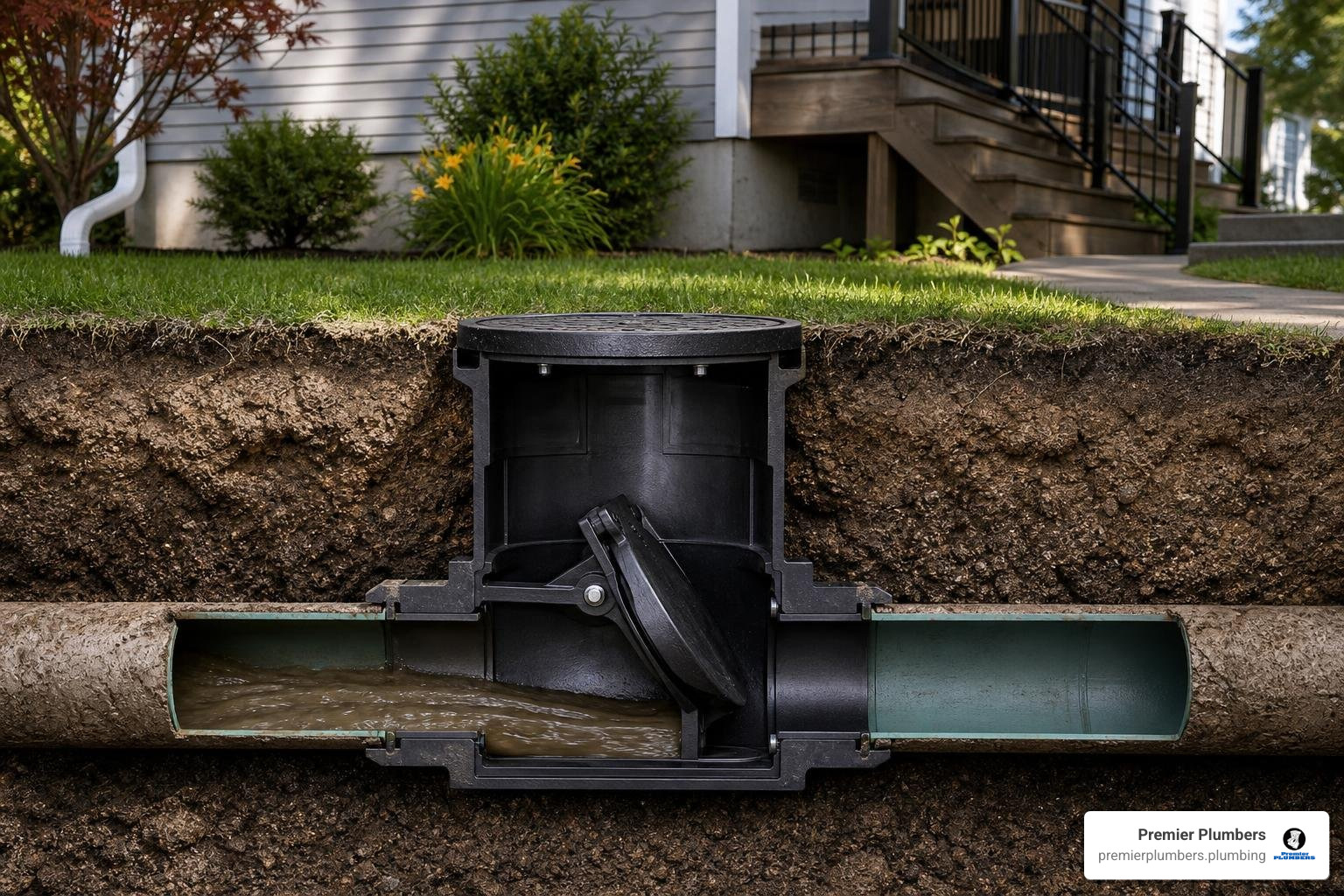
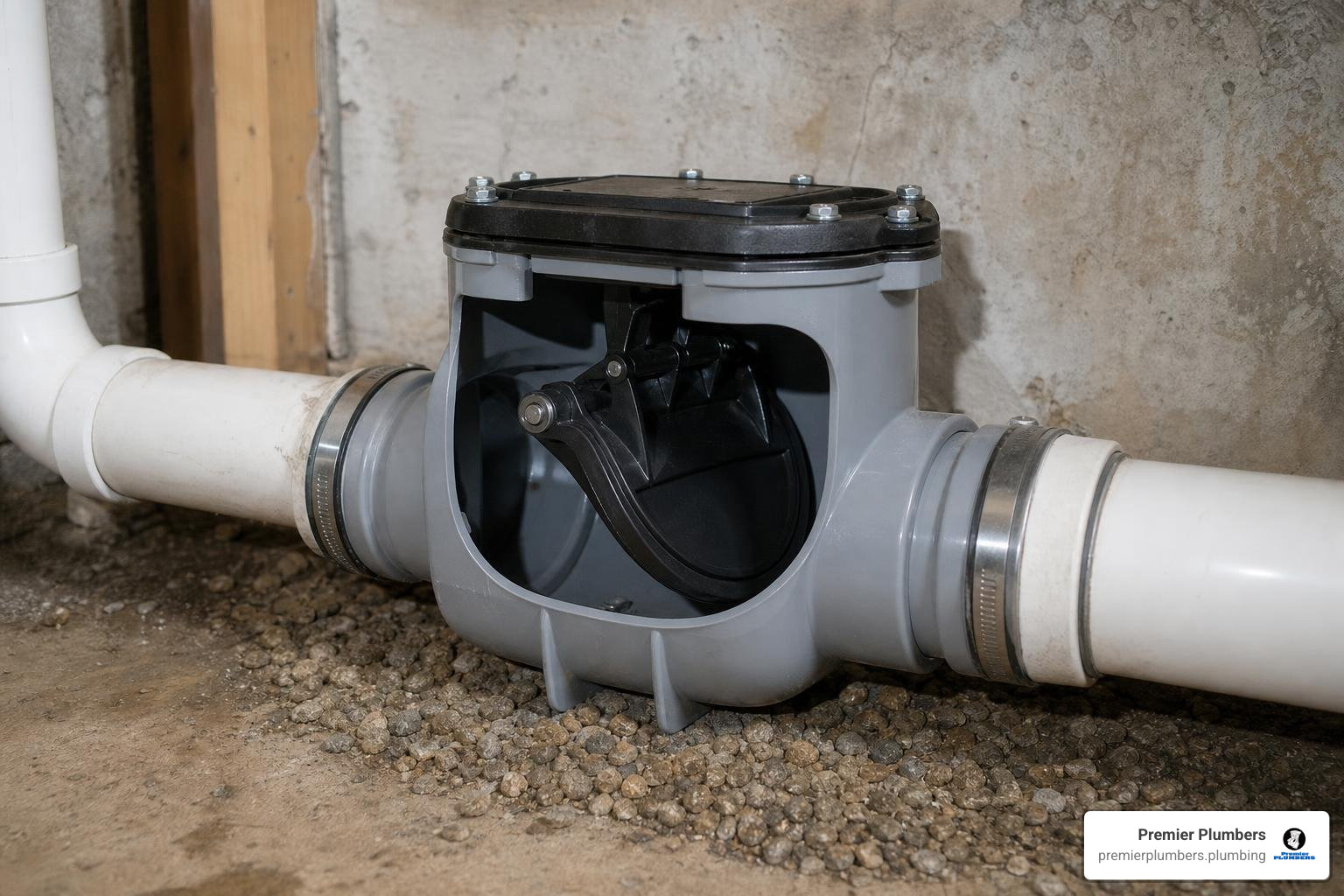
A backwater valve acts as a mechanical gatekeeper. It is installed directly on your sewer line, usually buried just outside your home or beneath the slab. The valve contains an internal flapper that remains open under normal conditions, allowing wastewater to exit without restriction. If the municipal sewer begins to back up, the reverse flow of water pushes against the flapper, forcing it to seal shut. This simple, automatic action blocks the incoming sewage and keeps it safely outside your home.
Backwater Valve vs. Backflow Preventer
It is very common for homeowners to confuse a backwater valve with a backflow preventer, but they serve completely different parts of your plumbing system:
- Backwater Valves: These are designed strictly for wastewater and sewer lines. They handle blackwater and greywater, preventing sewage from backing up into your living spaces. They operate via gravity and physical floats or flappers.
- Backflow Preventers: These are installed on your potable (drinking) water lines, irrigation systems, or commercial water mains. They prevent contaminated water from siphoning backward into the clean public water supply. These devices utilize spring-loaded check valves and are heavily regulated under local cross-connection control programs to protect public health.
If you are dealing with sewer issues, you need a backwater valve. If you are protecting your clean drinking water or irrigation system, you need a backflow prevention assembly.
How the Flapper and Float Mechanism Prevents Backups
The magic of a modern backwater valve lies in its internal mechanics. There are two primary styles of valves: normally-closed and normally-open.
Normally-closed valves feature a flapper that stays shut until wastewater exiting your home pushes it open. While effective, they can sometimes trap solid waste or restrict the natural venting of sewer gases.
To solve this, some modern full-port backwater valves use a normally open gate design. This setup offers several distinct advantages:
- Zero Flow Restriction: The gate lies completely flat during normal operation, allowing sewage and solids to exit without catching on the flapper.
- Sewer Gas Venting: Because the valve remains open, sewer gases can vent freely through your home’s roof stacks, preventing pressure imbalances.
- Floating Action: The gate is equipped with closed-cell polyethylene floats. If sewage begins to back up slowly from the city main, the rising water lifts these floats, automatically raising and sealing the gate shut.
- Hydrodynamic Force: During a sudden, high-velocity backup, the gate features specially engineered 45-degree wings. The hydrodynamic force of the rushing water catches these wings and instantly slams the gate shut, locking out the floodwater.
Sewer Backflow Protection: Requirements and Installation Costs
In Southwest Florida, our unique geography plays a massive role in plumbing design. Unlike northern climates, we do not have basements. Our homes are built on slab-on-grade concrete foundations. We also deal with incredibly high water tables, flat terrain, and coastal flooding from seasonal tropical storms.
These factors make ground-floor plumbing fixtures in cities like Sarasota, Tampa, and Fort Myers highly vulnerable to sewer surcharges. If your home’s slab sits low to the ground, a backed-up city sewer line does not have to travel very far to find your shower pan or floor drain.
The Upstream Manhole Elevation Rule
How do you know if your home actually needs a backwater valve? Plumbing codes rely on a simple rule of thumb known as the Upstream Manhole Elevation Rule.
Look at the street in front of your home. Find the nearest municipal sewer manhole cover. Now, look at the lowest plumbing fixture in your house (usually a shower drain or toilet on the ground floor).
If the rim of that lowest fixture is lower than the elevation of the upstream manhole cover, you are legally required by the Florida Building Code to have a backflow protection device installed.
Why? Because if the city sewer main surcharges, the sewage will naturally rise to the level of the manhole cover. If your shower drain is lower than that cover, the sewage will overflow into your bathroom before it ever pushes the heavy iron manhole cover off the street. The manhole acts as the natural relief point for the system, and your home must be higher than that relief point to remain safe without a valve.
Signs You Already Have a Backwater Valve Installed
If you bought a home built within the last twenty years in a low-lying area of Sarasota or Bradenton, there is a good chance a valve is already installed. Here is how the team at Premier Plumbers recommends checking:
- Look for an Access Cover: Walk around your yard near the front of your home or look at your garage floor. You are searching for a rectangular or round access box, typically made of plastic or metal, measuring about 10-by-14 inches.
- Check Your Home Inspection Report: If you recently purchased the home, the inspector should have noted the presence of a sewer cleanout or backwater access point.
- Locate the Main Cleanout: Sometimes, a valve is integrated directly into your main sewer cleanout fitting outside.
If you cannot find any physical signs but suspect you have one (or desperately need one), the most reliable method is to schedule a professional diagnostic service. Our team at Premier Plumbers can run high-resolution cameras down your sewer line through our video sewer inspections to visually map your line and locate any hidden valves or blockages.
New Construction vs. Retrofitting an Existing Slab
Installing a backwater valve during the initial construction of a home is highly straightforward and economical. The plumbing lines are fully exposed, and the valve can be placed in the main lateral line for a minimal material cost.
Retrofitting an existing home built on a concrete slab is a much more intensive project. Because the main sewer line runs directly beneath your concrete floor, our team must locate the pipe, use specialized concrete-cutting saws to open up the slab, excavate the dirt underneath, splice in the valve, and then pour new concrete.
| Feature | New Construction Installation | Retrofit Slab Installation |
|---|---|---|
| Labor Complexity | Low (open trenches, easy access) | High (concrete cutting, excavation, dust control) |
| Material Requirements | Standard valve and pipe fittings | Valve, access sleeves, concrete, and patch materials |
| Average Timeframe | 1 to 2 hours | 1 to 2 days |
| Access Requirements | Direct ground access | Requires a permanent access hatch in the floor or yard |
To minimize the disruption of cutting concrete inside your home, we often look for opportunities to install the valve outside in your yard. A properly sized backwater valve can be buried beyond the foundation wall with an access riser brought up to ground level, keeping the maintenance point accessible in a garden bed rather than inside your living space.
Permits, Inspections, and Plumbing Codes
Because a backwater valve is a mechanical safety device installed on a sanitary sewer line, you cannot simply bury one in your yard without proper oversight. Local municipalities throughout Southwest Florida require official plumbing permits and post-installation inspections.
The valve itself must comply with strict manufacturing standards, specifically ASME A112.14.1. This certification ensures that the plastic, bearings, and gaskets can withstand the harsh, corrosive environment of a sewer line without degrading. Once our team at Premier Plumbers completes the installation, a city or county inspector must sign off on the work to ensure it is graded correctly and fully accessible for future maintenance.
If you are currently experiencing an active sewer backup or suspect your main lateral has failed, do not wait. Contact our team for immediate assistance through our emergency plumbing services to get the situation stabilized safely.
Maintenance, Common Problems, and Limitations
A backwater valve is not a “set-it-and-forget-it” device. Because it operates in an environment filled with grease, soap scum, hair, and solid waste, it requires regular upkeep to remain functional. If a valve is neglected, debris will inevitably build up under the flapper, preventing it from creating a watertight seal when a backup occurs.
Cleaning Your Valve and Preventing Flapper Damage
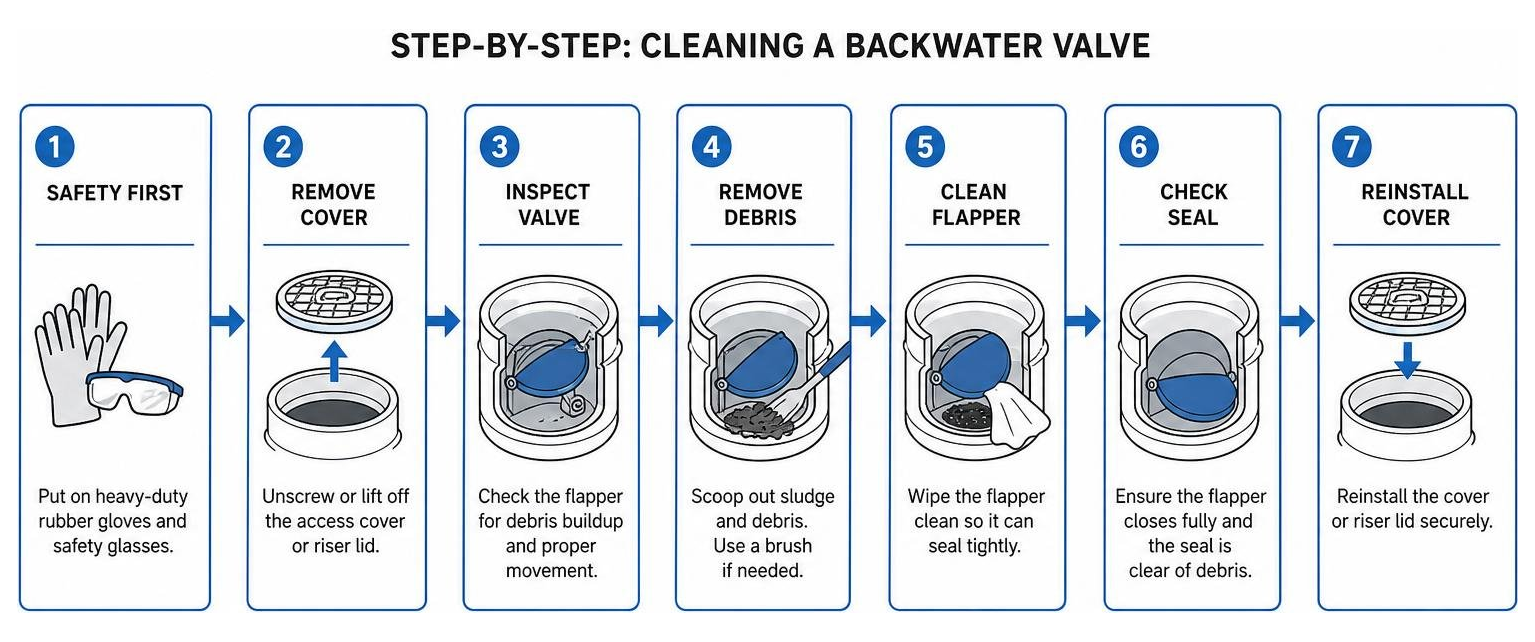
The team at Premier Plumbers recommends inspecting and cleaning your valve at least twice a year. Here is how to do it safely:
- Safety First: Put on heavy-duty rubber gloves and safety glasses. You are dealing with a sanitary sewer line, so hygiene is paramount.
- Open the Access Cover: Unscrew the bolts on your access hatch and remove the threaded cleanout cap on top of the valve body.
- Visual Inspection: Shine a bright flashlight into the valve. Check for any visible accumulation of grease, wet wipes, or hair.
- Flush the Line: Have someone run hot, soapy water down an indoor sink to help flush away loose debris.
- Scrub the Flapper: Use a long-handled, stiff-bristled brush to gently scrub the underside of the flapper and the mating face where the flapper seals against the valve body.
- Inspect the Seals: Check the condition of the neoprene O-ring seals on both the flapper and the access cap. If they are cracked, dry-rotted, or flattened, they must be replaced.
- Test the Movement: Manually lift the flapper up and down to ensure the hinge moves freely without sticking.
One of the most surprising issues we encounter in Southwest Florida is pest damage. Rats frequently use municipal sewer lines as subterranean highways. Unfortunately, they find the soft plastic of standard PVC flappers highly appealing to chew on. A chewed flapper will leak under pressure, completely defeating the purpose of the valve. During our routine professional drain cleaning visits, we always check the integrity of these flappers to ensure pests have not compromised your flood protection.
If your valve has a severe buildup of hardened grease or scale, standard scrubbing might not cut it. In these cases, we utilize specialized hydro jetting services to blast away the debris with high-pressure water, leaving the pipe and valve chamber perfectly clean without damaging the internal mechanical parts.
Why a Valve Is Only Part of a Flood Protection Strategy
While a backwater valve is incredibly effective at stopping sewer surcharges, it is important to understand its limitations. It is only one piece of a comprehensive home flood protection plan.
First, a backwater valve does nothing to prevent overland flooding. If a hurricane pushes storm surge through your front door, or if heavy rain pools against your foundation because of poor yard grading, a sewer valve cannot help you. You still need proper gutters, downspout extensions, and potentially a sump pump to handle groundwater.
Second, you must understand the “self-flooding” risk. When a municipal sewer surcharges and your backwater valve closes to protect your home, your sewer line is temporarily blocked in both directions. If you run your washing machine, take a long shower, or run the dishwasher while the valve is closed, that wastewater cannot escape. It will back up into your own home, causing a self-inflicted flood.
Frequently Asked Questions
Navigating sewer protection can feel overwhelming. Here are the answers to some of the most common questions our team at Premier Plumbers receives from local homeowners.
Do municipal rebate programs cover installation costs?
Yes, depending on where you live. Because sewer backups are incredibly costly for city utility departments to manage, many municipalities offer financial assistance, utility subsidies, or rebate programs to encourage homeowners to install backwater valves.
For example, some major metropolitan utility districts offer substantial rebates to cover the purchase and installation costs for eligible properties with documented histories of sewer backups. We highly recommend checking with your local county utility department (such as Sarasota County, Hillsborough County, or Lee County utilities) to see if any active subsidy programs are available in your neighborhood.
Can I use my plumbing when the valve is closed?
No. When the backwater valve is actively closed during a heavy storm or city sewer backup, you must strictly limit your water usage. Avoid running water-heavy appliances like washing machines and dishwashers, and keep showers to an absolute minimum. Any water you send down your drains during this time will remain trapped inside your home’s pipes and will eventually overflow out of your lowest fixtures.
How often should I clean my sewer valve?
We recommend a basic visual inspection and cleaning at least twice a year, ideally in the spring before our Florida rainy season begins, and again in the late fall. If your household is prone to sending grease down the kitchen sink or if you have older clay pipes that attract tree roots, you may need to inspect the valve more frequently.
Conclusion
Protecting your home from the devastating and unsanitary reality of a sewer backup is one of the smartest investments you can make as a homeowner in Southwest Florida. Whether you are building a new home in Lakewood Ranch or retrofitting an older property in historic Sarasota or Fort Myers, a properly installed backwater valve provides invaluable peace of mind when tropical storms roll in.
At Premier Plumbers, we carry a three-generation legacy of plumbing expertise. Our team is fully licensed, insured, and deeply familiar with the unique plumbing challenges of our coastal communities. We don’t believe in quick fixes; we believe in doing the job right the first time so your family stays safe and dry.
If you want to ensure your home is fully protected before the next major storm hits, or if you need your existing sewer system evaluated, contact our professional sewer line replacement technicians today to schedule a comprehensive consultation.