Why a Water Softener and Reverse Osmosis System Are the Ultimate Home Water Solution
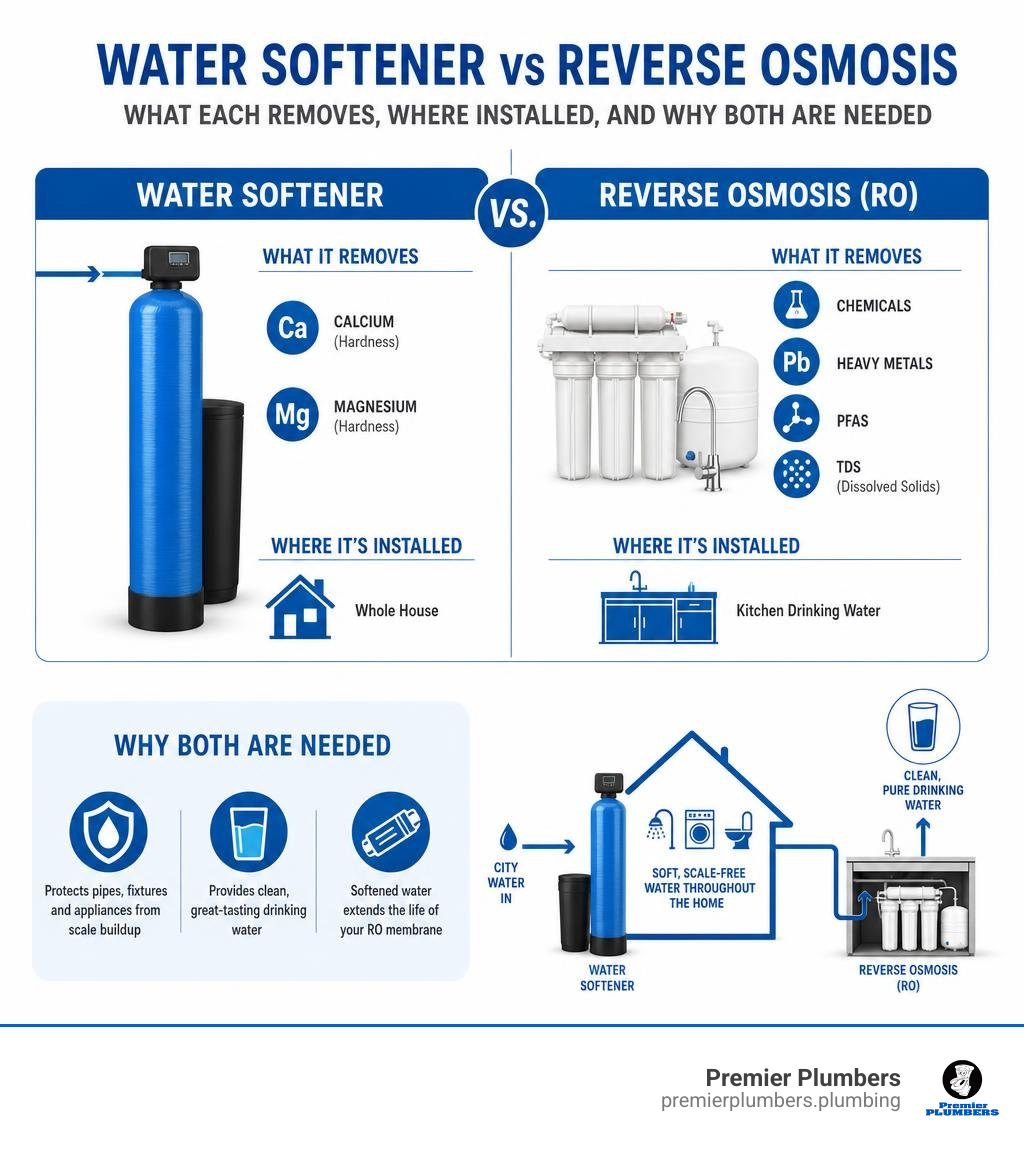
A water softener and reverse osmosis system are two different tools that solve two different water problems, and most Florida homeowners need both. Here is a quick breakdown:
What each system does:
| System | Primary Job | Where It Works |
|---|---|---|
| Water softener | Removes hardness minerals (calcium, magnesium) | Whole house |
| Reverse osmosis (RO) | Removes chemicals, heavy metals, PFAS, TDS | Kitchen drinking water |
Do you need both? Yes, if you want:
- Scale-free plumbing, appliances, and fixtures throughout your home
- Clean, great-tasting drinking water free of contaminants a softener cannot remove
- A longer lifespan for your RO membrane (softened water protects it from mineral scaling)
Turn on a tap in many Florida homes and you will find two problems at once: hard water quietly destroying your pipes, appliances, and fixtures, and tap water carrying contaminants that no water softener alone can touch. Hard water minerals like calcium and magnesium clog pipes and coat appliances, while chemicals, heavy metals, and PFAS slip right through a softener untouched. No single system solves both problems, which is exactly why combining the two is so effective.
At Premier Plumbers, our team of experienced professionals has spent decades helping Southwest Florida homeowners tackle hard water and drinking water quality challenges with the right water softener and reverse osmosis setup. In this guide, we will walk you through everything you need to know to choose and maintain the right system for your home.
Understanding Water Softener and Reverse Osmosis Systems
To understand why these systems work so well together, we first have to look at how they operate on a chemical and physical level. They are designed for completely different jobs. A water softener treats your working water, which is the water you use to bathe, wash clothes, and run appliances. A reverse osmosis system treats your drinking water, which is the water you put into your body.
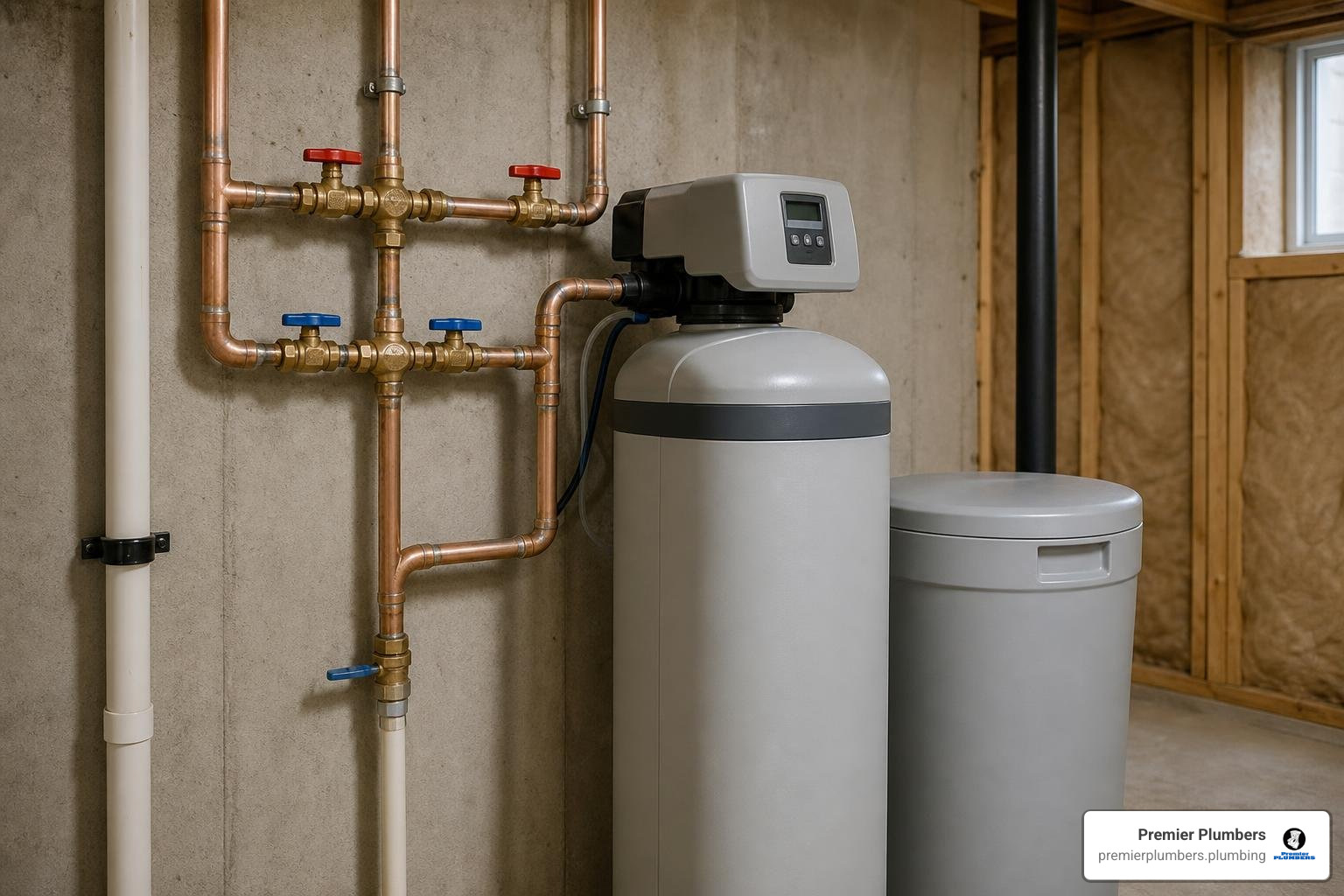
A water softener works through a chemical process called ion exchange. Inside the softener tank are thousands of tiny resin beads that hold a negative charge. Calcium and magnesium ions hold a positive charge. As hard water flows through the tank, these minerals stick to the beads, which release a tiny, harmless amount of sodium or potassium in exchange. This process physically removes the hardness minerals from your water supply.
A reverse osmosis system, on the other hand, is a physical filtration powerhouse. It uses household water pressure to force water through an incredibly tight, semi-permeable membrane with pores as small as 0.0001 microns. This physical barrier strips out virtually everything that is not a pure water molecule, including total dissolved solids, heavy metals, and chemical residues.

| Feature | Water Softener | Reverse Osmosis (RO) System |
|---|---|---|
| Primary Technology | Ion exchange | Multi-stage physical filtration and membrane separation |
| Main Target | Calcium, magnesium, and dissolved iron | Heavy metals, PFAS, chlorine, bacteria, and TDS |
| Water Type Treated | Working water (showering, laundry, cleaning) | Drinking and cooking water |
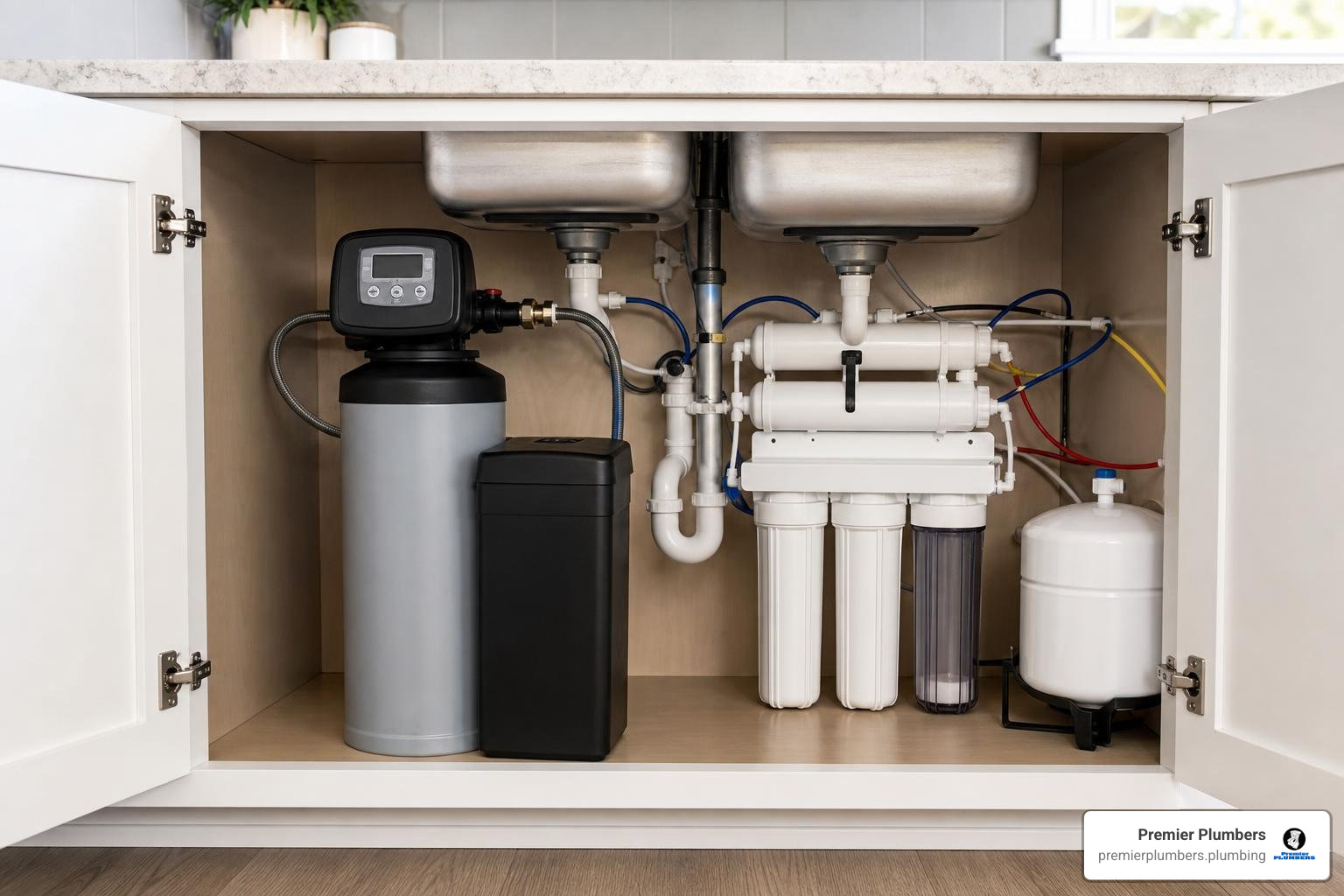
| Installation Point | Main water line (whole-house) | Under the kitchen sink (point-of-use) |
| Wastewater | Minimal (only during regeneration cycles) | Small amount produced during filtration process |
What is a Water Softener?
A water softener is your home’s shield against mineral damage. In Southwest Florida, our water is packed with calcium and magnesium. When this water is heated or left to dry, these minerals crystallize, forming a rock-hard layer of scale. This scale coats the heating elements in your water heater, clogs your showerheads, and leaves white spots on your clean dishes.
By removing these minerals before they enter your plumbing, a water softener prevents scale reduction issues and keeps your pipes clear. These systems are rated by their grain capacity, which represents how many grains of hardness they can remove before they need to run a regeneration cycle to clean the resin beads.
What is a Reverse Osmosis System?
A reverse osmosis system is the ultimate gatekeeper for your drinking water. While a water softener does a fantastic job of protecting your pipes, it does not filter out chemical contaminants. An RO system uses a multi-stage filtration process, typically consisting of a sediment pre-filter, an activated carbon filter, the RO membrane itself, and a post-carbon polishing filter.
This multi-stage approach targets microscopic contaminants, including total dissolved solids, chlorine, and industrial chemicals. Because treating an entire home’s water supply with reverse osmosis is highly inefficient and unnecessary, these systems are almost always installed as point-of-use systems under your kitchen sink, delivering pure water to a dedicated tap and your refrigerator ice maker.
Why You Need Both Systems in Your Florida Home
If you live in Sarasota, Fort Myers, or Naples, you are likely dealing with some of the hardest water in the country. Our water comes from underground limestone aquifers, which saturate the supply with calcium carbonate. This hard water ruins tankless water heaters, reduces the efficiency of conventional appliances, and makes it incredibly difficult to get soap to lather.
However, hard water is only half the battle. Municipal water treatment plants use chlorine or chloramines to disinfect the water supply, leaving behind a strong chemical taste and smell. Private wells in our region can also contain high levels of iron, sulfur, and agricultural runoff. For homeowners throughout Southwest Florida, professional water purification services can help identify the right combination of treatment equipment for local water conditions. You can also learn more about how these different technologies fit together by reading our guide on the ins and outs of water purification to see how we design custom solutions for local homes.
Protecting Your Membrane with a Water Softener and Reverse Osmosis Setup
One of the best reasons to use both systems is that they protect each other. A reverse osmosis membrane is incredibly delicate. If you feed raw, hard Florida water directly into an RO system, the calcium and magnesium will quickly crystallize on the surface of the membrane. This is known as membrane fouling or scaling.
Scaling can clog the membrane’s microscopic pores, reducing water output and pressure while shortening the membrane’s service life. Installing a water softener upstream of the RO system removes the calcium and magnesium that contribute to scale before they reach the membrane. This helps the RO system operate more efficiently, reduces strain on its filters, and can extend the time between membrane replacements.
Removing Sodium with a Water Softener and Reverse Osmosis Combination
A common concern we hear from homeowners is that water softeners add salt to their drinking water. While it is true that the ion exchange process adds a small amount of sodium ions as it removes calcium and magnesium, it does not make your water taste salty. However, for individuals on low-sodium diets, even this small amount of added sodium can be a concern.
This is where the reverse osmosis system shines. Because sodium ions are monovalent, they are easily captured and flushed away by the RO membrane. A high-quality RO system will remove up to 98 percent of the sodium introduced by your water softener, leaving you with ultra-pure, low-sodium drinking water. For a deeper look at how this filtration process works, check out our article on demystifying the reverse osmosis water filter for pure drinking water.
Choosing and Maintaining Your Water Treatment Setup
Investing in water treatment is one of the smartest upgrades you can make for your Florida home, but you must choose the right equipment and keep up with basic maintenance to get the best results. If you want help matching equipment to your household’s water quality and daily demand, Premier Plumbers can recommend a tailored setup through our water purification services. For continued upkeep and help catching plumbing concerns early, ask about our maintenance membership.
Sizing Your Water Softener Capacity
To choose the right water softener, you need to calculate your household’s daily grain removal requirements. This is done by multiplying the number of people in your home by the average daily water usage (typically 75 gallons per person) and then multiplying that by your water’s hardness level in grains per gallon.
- 32,000-Grain Systems: Often a practical fit for households of one to three people with moderate water hardness.
- 48,000-Grain Systems: A common choice for Florida households of three to five people. If you use well water, have your water tested for iron and other minerals so the equipment can be matched to your water conditions.
- 64,000-Grain Systems: Often better suited to larger households, high daily water use, or especially hard water. Proper sizing helps ensure the system can keep up during busy periods without regenerating too frequently.
Salt-Free vs. Salt-Based Systems
When shopping for systems, you will run into the debate between salt-based softeners and salt-free conditioners. Salt-based systems physically remove hardness minerals using ion exchange. Salt-free systems use Template-Assisted Crystallization (TAC) technology to alter the structure of the minerals so they cannot bind to surfaces, though they do not actually lower the mineral count of the water.
While salt-free systems do not use electricity or produce wastewater, they do not provide the slick, soft-water feel that many people prefer for bathing and laundry. They can still be a practical option for homeowners who want to reduce scale buildup without regularly handling salt bags. The best choice depends on your water chemistry, household water use, and whether your priority is true hardness removal or scale control.
Frequently Asked Questions about Water Softeners and RO Filters
Can a reverse osmosis system remove PFAS and heavy metals?
Yes. Reverse osmosis is one of the few residential water treatment technologies certified to remove emerging contaminants like PFAS (per- and polyfluoroalkyl substances), which are often referred to as forever chemicals. Because the RO membrane has microscopic pores, it also filters out heavy metals like lead, copper, and arsenic, alongside microplastics and agricultural chemical runoff, giving you complete peace of mind.
What is the typical maintenance schedule and cost for these systems?
Maintaining these systems is relatively simple but crucial for keeping your water clean:
- Water Softeners: You will need to add salt or potassium chloride pellets to the brine tank every 2 to 3 months. The system itself should be inspected annually to ensure the control valve is operating correctly.
- Reverse Osmosis Systems: The sediment and carbon pre-filters should be replaced every 6 to 12 months to protect the membrane. The main RO membrane typically lasts 2 to 3 years before it needs to be swapped out. While replacement filter kits are highly affordable, neglecting them can cause your water pressure to drop.
Should I connect my RO system to hard or softened water?
You should always connect your reverse osmosis system to your softened water line. While the RO system is technically capable of filtering out hard water minerals, doing so will cause rapid scaling on the membrane. Feeding pre-softened water into your RO system protects the delicate membrane, reduces system strain, and ensures you get the maximum possible lifespan out of your filters.
Conclusion
At Premier Plumbers, we believe that every family deserves access to clean, safe, and scale-free water. Backed by a three-generation legacy of plumbing expertise, our team has spent decades installing and servicing water treatment systems throughout Southwest Florida, from Sarasota and Bradenton down to Fort Myers and Naples. We do not believe in one-size-fits-all solutions; instead, we help you choose the exact system configuration that matches your household size, water chemistry, and budget. If you are ready to upgrade your home with a professional installation, please contact our water purification specialists to schedule an in-home consultation today.