Why a Clogged Drain in Sarasota Is More Than Just a Slow Sink
A clogged drain in Sarasota is rarely just a simple inconvenience. Between the mineral-heavy water from the Floridan aquifer, sandy coastal soil, and the heavy summer rains that push grit and debris into drain lines, Sarasota homes face plumbing pressures that most other cities simply don’t.
Here’s what to do if you have a clogged drain in Sarasota right now:
- Single slow drain: Try a plunger first. If it doesn’t clear within a few attempts, call a professional.
- Foul odor from drains: This points to organic buildup or a blocked vent. Skip DIY and book a drain cleaning.
- Gurgling sounds from toilets or sinks: This often signals a main line issue. Stop using water and call a plumber.
- Multiple fixtures backing up at once: This is a main sewer line emergency. Call a licensed plumber immediately.
- Recurring clogs in the same drain: A deeper blockage or pipe damage is likely. A camera inspection is needed.
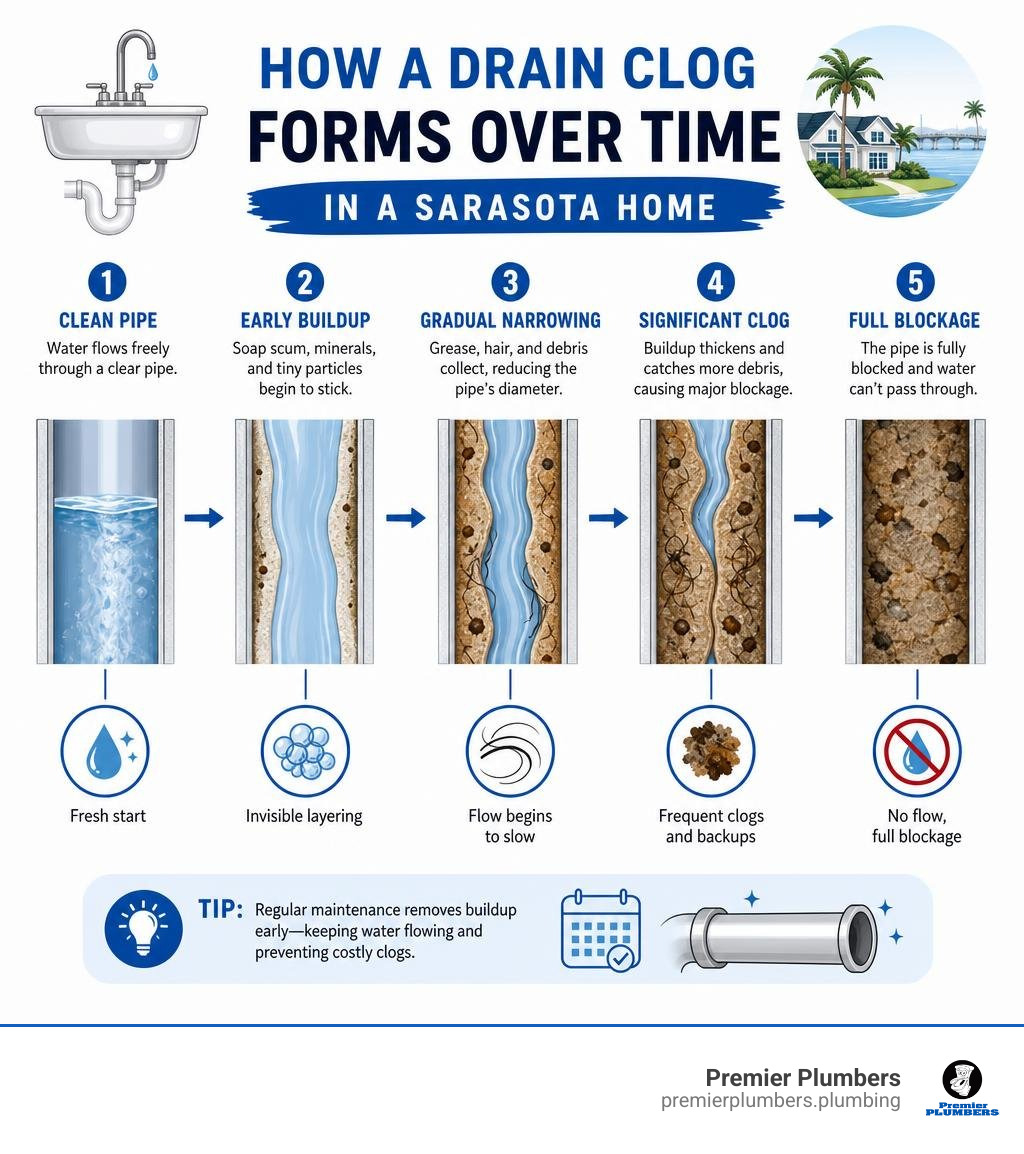
Sarasota’s humid climate makes things worse. Organic material breaks down faster in the heat, odors spread quickly, and mineral scale from hard groundwater can quietly narrow a 3-inch pipe down to a 1-inch opening over 20 years without a single visible warning sign.
At Premier Plumbers, our team brings a third-generation legacy of plumbing expertise to tackling clogged drains in Sarasota and across Southwest Florida. In this guide, we walk you through everything you need to know to identify, clear, and prevent drain clogs in your home.
Understanding the Unique Causes of a Clogged Drain in Sarasota
Sarasota is a beautiful place to live, but local geological and weather conditions can be tough on residential plumbing systems. Homes along the Gulf Coast deal with environmental factors that can accelerate pipe blockages.
When local conditions disrupt your system, professional drain cleaning services can clear buildup safely and help identify the cause of recurring clogs. A local approach matters because a quick fix may not address the conditions affecting the line.
How Local Environment Leads to a Clogged Drain in Sarasota
The Floridan aquifer supplies much of the region’s water, and its mineral content can contribute to scale buildup inside plumbing pipes. As hard water flows through a home, calcium and magnesium deposits can cling to pipe walls.
This mineral buildup can develop faster in hot-water lines and kitchen drains. Over time, limescale can create a rough surface that catches hair, soap scum, and food particles that might otherwise wash away.
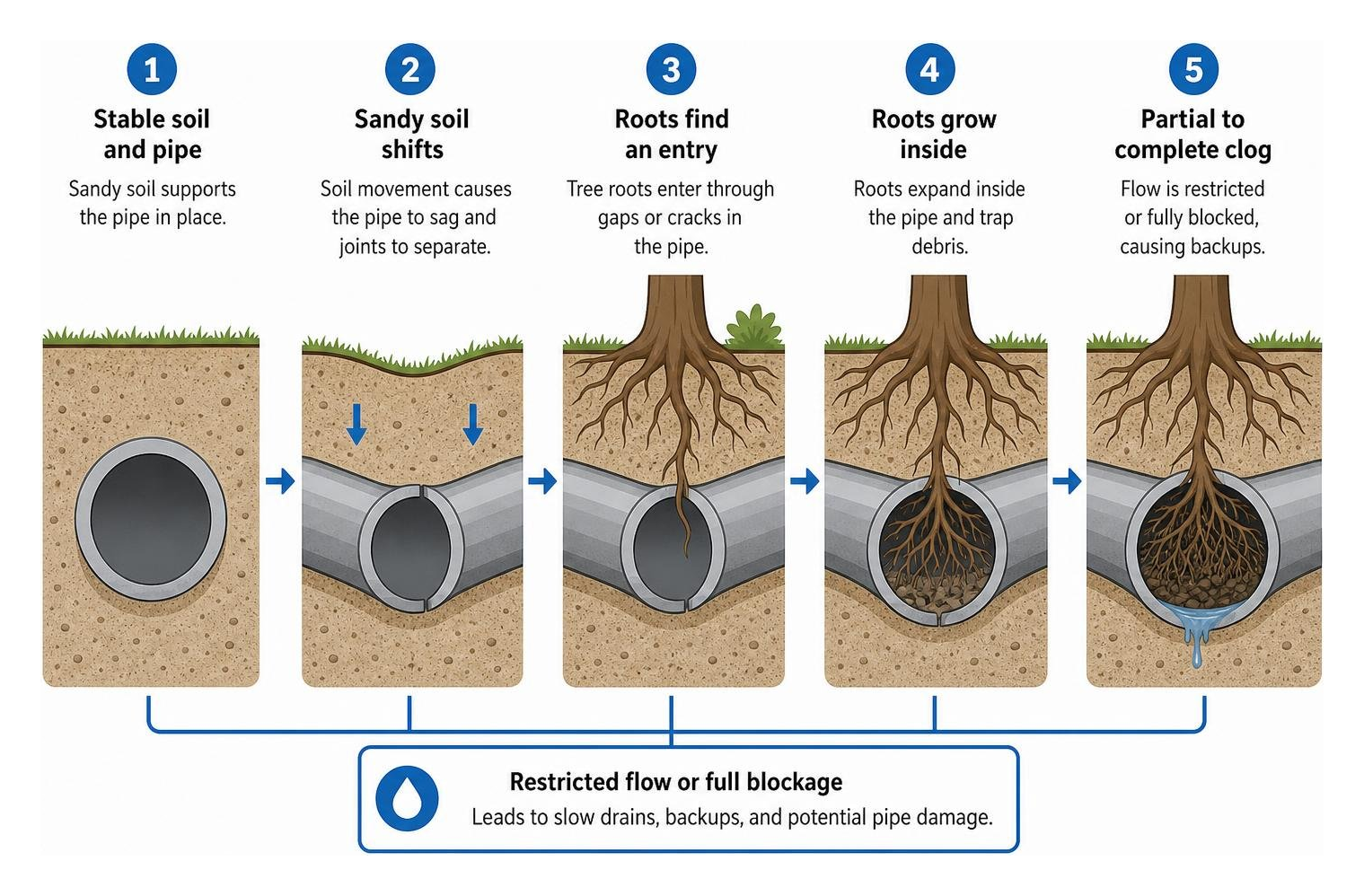
Sarasota’s seasonal weather patterns can also create challenges. During dry winter months, sandy coastal soil can dry out, prompting local trees, including live oaks, banyans, and palms, to send roots deeper in search of moisture.
Sewer pipes carry warm water and can release vapors that attract roots. Even small gaps at joints or cracks in older cast-iron pipes can let roots enter. Once inside, they can grow into a dense mass that restricts flow.
During the summer wet season, heavy tropical rain can saturate the ground and raise the water table. Shifting sandy soil may contribute to pipe sags or cracks.
Fine sand, grit, and yard debris can also wash into outdoor drains, garage floor drains, and low-lying fixtures during heavy rain. Knowing when local soil movement or root intrusion may be involved helps homeowners respond before a backup causes more extensive damage.
Household Habits That Cause a Clogged Drain in Sarasota
While local conditions play a role, daily household habits can also trigger a stubborn clogged drain in Sarasota. The kitchen is one of the most common areas for buildup. Many homeowners pour fats, oils, and grease down the sink.
While grease may be liquid when hot, it cools and solidifies inside pipes. It can catch food scraps, coffee grounds, and pasta, creating a blockage over time.
In the bathroom, hair and hygiene products can create a resilient barrier. When hard-water minerals mix with bar soap, they form sticky soap scum that adheres to pipe walls and catches hair.
Flushable wipes are another common problem. Despite their packaging claims, they do not break down like toilet paper. They can catch on pipe imperfections, rust, or root intrusions and quickly contribute to a backed-up sewer line.
Signs Your Home Needs Professional Drain Cleaning
Recognizing early warning signs of a clogged pipe can help you avoid a major household problem. Homeowners sometimes ignore a slow drain until wastewater begins backing up onto floors, increasing the risk of water damage and cleanup costs.
Keep an eye and an ear out for these common warning signs:
- Slow-draining water: If water pools around your feet during a shower or takes several minutes to empty from the kitchen sink, a restriction may be building inside the pipe.
- Audible gurgling or bubbling noises: If you hear a glug-glug sound from a sink, or your toilet bubbles when you run the bathroom faucet, trapped air from a partial blockage may be affecting the line.
- Foul odors: A persistent rotten-food smell in the kitchen or sewage odor in the bathroom can indicate organic material is decomposing in the pipes.
- Lawn anomalies: An unexplained wet spot or unusually green patch of grass can point to an underground sewer-line leak caused by root intrusion or a cracked pipe.
A clogged drain that keeps returning, produces gurgling across multiple fixtures, or causes wastewater to rise in a tub or shower needs prompt attention. Our guide to handling emergency blocked drains explains the immediate steps homeowners can take to limit additional water use while arranging professional help.
Comparing Drain Clearing Methods: DIY, Snaking, and Hydro Jetting
When you are dealing with a sluggish drain, you have several options for restoring proper flow. Understanding the differences can help you choose the safest and most effective approach for your plumbing system.
For severe, recurring clogs, hydro-jetting services can remove grease, scale, and debris from more of the pipe interior than a basic spot-clearing method. A professional should first assess the pipe’s condition to determine whether this approach is appropriate.
If a plunger has not solved the issue and the clog returns, the signs often point to buildup farther down the line. Our article on when drains need more than a plunger helps homeowners understand when professional hydro jetting may be the better next step.
When to Use a Plunger or DIY Methods
For simple, localized clogs, a standard cup or flange plunger is a good first line of defense. Plungers use pressure and suction to break up soft blockages, such as excess toilet paper or light organic matter.
For light grease or soap-scum buildup, you can try baking soda followed by white vinegar, then flush the line with hot water after about 15 minutes. Avoid pouring boiling water into a porcelain fixture or a drain if you are unsure of the pipe material.
Avoid chemical drain cleaners. These store-bought liquids can be acidic or caustic and may generate heat that can damage some pipes or worsen corrosion in older lines.
Chemical cleaners also rarely remove the entire blockage. They may create a small opening while leaving debris behind to collect more material and cause another backup.
When Professional Snaking Is Required
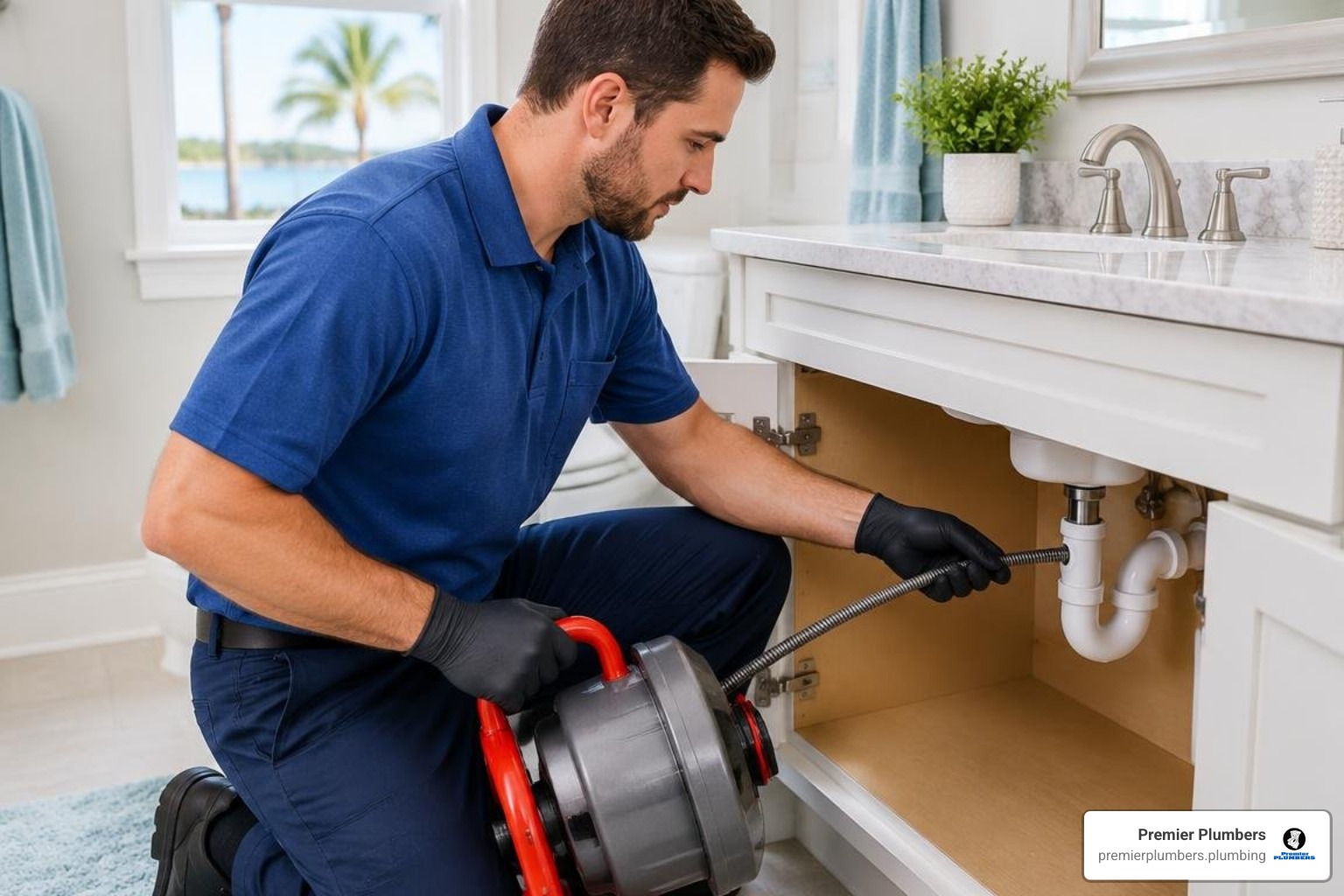
If a plunger does not clear the blockage, professional snaking is often the next step. Premier Plumbers uses commercial-grade drain cable machines, also known as plumbing snakes, to clear physical blockages.
These machines use a flexible steel cable and specialized cutting head to break through tough clogs, including hair clumps, food blockages, and small tree roots, so debris can be removed or flushed away.
Snaking can be effective for localized blockages in secondary lines, but professional handling is important. Incorrect use can damage fragile older pipes or scrape PVC pipe walls.
The Power of Hydro Jetting for Severe Blockages
For severe, recurring clogs or heavy grease and mineral-scale buildup, standard snaking may only provide temporary relief. Hydro jetting uses a specialized high-pressure pump to send water through pipes at high velocity.
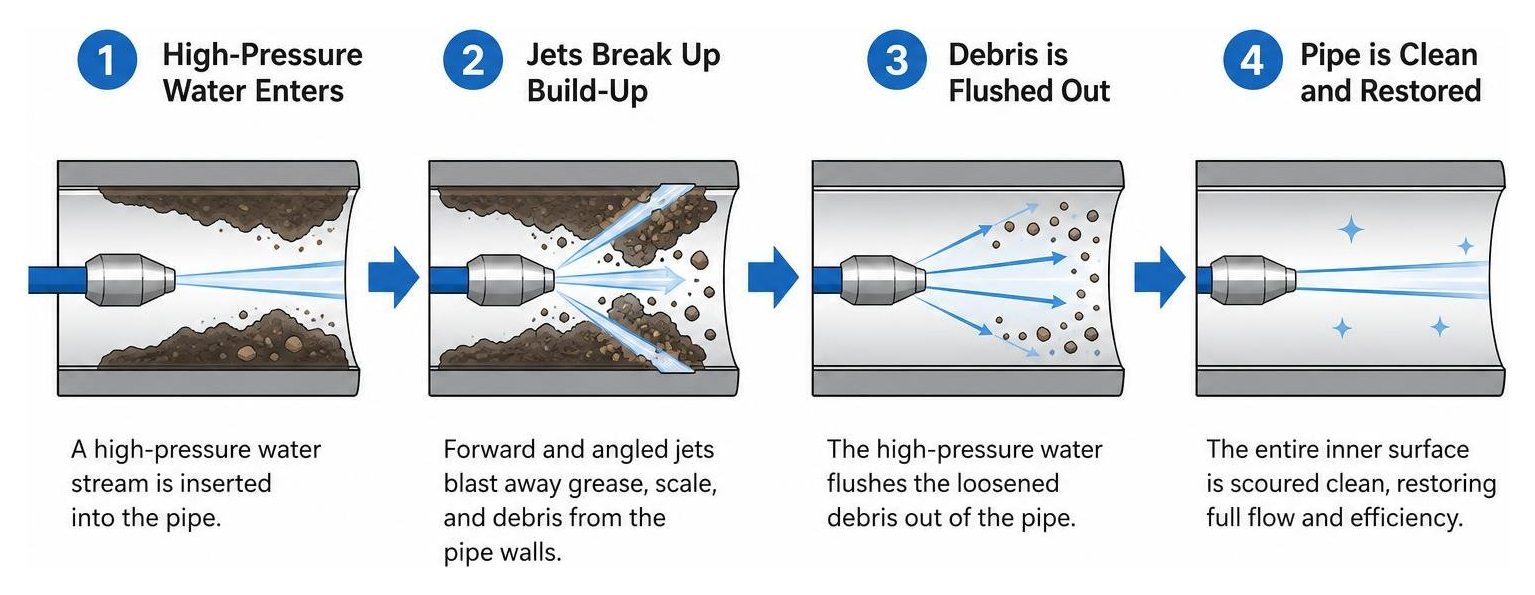
Unlike a plumbing snake, which opens a path through a clog, hydro jetting can scour more of the pipe’s inner surface. It can remove hardened scale, grease, sand, and roots while restoring flow.
Before performing hydro jetting, Premier Plumbers conducts a video camera inspection to assess pipe condition and help ensure the line can handle the water pressure safely.
Frequently Asked Questions About Sarasota Drain Cleaning
Plumbing issues can be stressful and confusing. To help you make informed decisions about your home, our team has answered common questions from Sarasota homeowners.
How much does professional drain cleaning cost?
The cost of professional drain cleaning in Sarasota depends on several factors:
- Accessibility of the cleanout: An easily accessible ground-level cleanout can make the job simpler. Accessing a sewer line through a roof vent or by removing a toilet can add complexity.
- Location and severity of the clog: A simple kitchen-sink clog is generally easier to clear than a main sewer-line blockage affected by tree roots.
- Required equipment: Standard drain snaking generally requires less specialized equipment than hydro jetting, which may also require a camera inspection first.
At Premier Plumbers, we provide upfront estimates before work begins, so homeowners know what to expect without surprise fees or hidden trip charges.
How often should I schedule professional drain cleaning?
As a general rule, professional drain cleaning every 18 to 24 months can help keep a plumbing system running smoothly and reduce the likelihood of sudden backups.
Older homes with cast-iron pipes or properties with mature trees and aggressive root systems may benefit from annual drain cleaning and a camera inspection.
Preventive maintenance gives Premier Plumbers an opportunity to identify scale buildup and root intrusions before they become more serious plumbing problems.
What should I do if multiple fixtures back up at once?
If you flush a toilet and water backs up into a shower drain, or several sinks drain slowly at the same time, you may be dealing with a main sewer-line blockage that needs immediate professional attention.
When a main sewer lateral is blocked, wastewater has nowhere to go. It can back up at the lowest drains in the home, often ground-floor showers, tubs, and garage floor drains. This wastewater can pose health risks and cause substantial damage.
If you suspect a main-line blockage, turn off the main water supply to prevent more water from entering the system. Avoid flushing toilets or running faucets until the issue has been assessed.
Conclusion
Clogged drains are a frustrating part of homeownership, but they do not have to disrupt your life. Good household habits, mesh strainers in sinks and showers, and avoiding harsh chemical cleaners can help protect pipes from premature wear.
When DIY methods fail, trust the three-generation legacy of quality and expertise at Premier Plumbers to restore your home’s plumbing system. Our family-owned team is proud to serve families across Sarasota County, Manatee County, and surrounding Southwest Florida communities.
Whether you need preventive maintenance or emergency main-line clearing, Premier Plumbers provides clear communication, clean service, and dependable solutions. To schedule help with a stubborn blockage, contact our professional drain cleaning technicians today.