
Is a Blocked Drain Really an Emergency?
An emergency blocked drain is a blockage that creates an immediate risk to your health, safety, or property, and knowing the difference between a slow sink and a real plumbing crisis could save you thousands in damage.
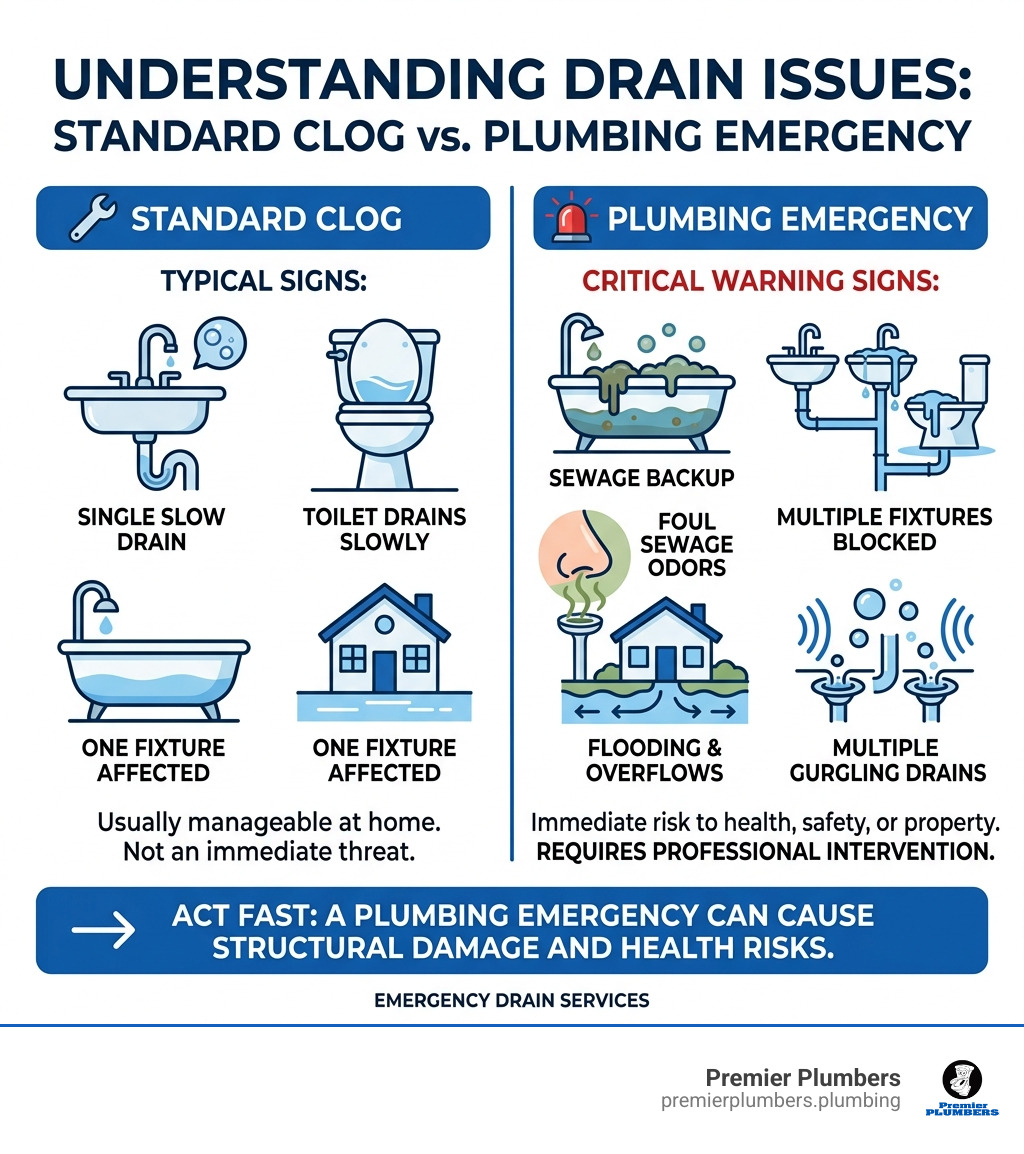
Quick answer — a blocked drain is an emergency if you notice any of these:
- Sewage or wastewater backing up into sinks, tubs, or toilets
- Multiple fixtures draining slowly or not at all at the same time
- Foul sewage odors coming from drains or outside your home
- Overflowing water causing flooding on floors or in your yard
- Gurgling sounds from several drains simultaneously
- A toilet that won’t flush and has no other working alternative
If one sink drains slowly, that is usually not an emergency. If your toilet is overflowing, sewage is backing up into the shower, and your yard smells like a sewer, that is.
Blocked drains left untreated can cause structural water damage, dangerous bacteria growth, and costly repairs that go well beyond a simple unclogging job. Acting fast matters.
At Premier Plumbers, we bring three generations of plumbing experience to every emergency blocked drain across Southwest Florida. In this guide, you’ll learn how to spot the warning signs, respond quickly, and help prevent drainage emergencies, so you know what to do when a blockage turns serious.
Recognizing the Signs of an Emergency Blocked Drain
Identifying a drainage crisis early is the best way to prevent your home from becoming a swamp. While a single slow-draining kitchen sink is a nuisance, an emergency blocked drain often presents with systemic symptoms that indicate a much larger problem deep within your plumbing.
One of the most telling signs is when multiple fixtures fail at once. If you flush the toilet and water bubbles up in the shower, or if running the washing machine causes the kitchen sink to overflow, you aren’t dealing with a simple hair clog. This is a sign that the main line is obstructed.
Beyond the inconvenience, there are significant health and structural risks. Stagnant water is a breeding ground for bacteria and mold. Sewage contains pathogens that can cause serious illness if it makes its way onto your floors or into your living spaces. Furthermore, the pressure from a major blockage can lead to pipe bursts or foundation damage, especially in the sandy soils of Sarasota or Fort Myers. If you’re seeing these red flags, you should review these: Signs Your Drains Need More Than a Plunger, to understand the severity of the situation.
When to Call for an Emergency Blocked Drain
We often get asked, “Can I wait until Monday morning?” If you have sewage backing up into your bathtub, the answer is a firm no. You should call for professional help immediately if:
- Multiple fixtures are affected: This indicates the blockage is in the main stack or sewer lateral.
- Sewage is visible: Any backup of raw sewage is a health emergency.
- Basement or floor flooding: Water damage spreads quickly, and Florida’s humidity can turn a small flood into a major mold problem in less than 24 hours.
- No working toilets: If you only have one bathroom and the toilet is out of commission, your home is effectively uninhabitable.
For situations like these, our team provides 24/7 emergency plumbing services throughout Southwest Florida, from Tampa down to Naples.
Identifying Main Sewer Line Failures
In many cases, an emergency blocked drain is actually a failure of the main sewer line. In our region, tree roots are a primary culprit. The lush Florida landscape means roots are constantly seeking moisture, and they can easily find their way into small cracks in your pipes. Once inside, they grow rapidly, creating a “net” that catches grease and debris.
Other causes include:
- Pipe Corrosion: Older homes in areas like Sarasota or Bradenton may still have cast iron pipes that eventually scale or collapse.
- Foundation Shifts: While we don’t have earthquakes, our high water table and sandy soil can cause pipes to shift or crack.
If you suspect the issue is not just on your property but involves the municipal connection, you can check with local authorities like Sarasota County Water and Sewer Emergency Reporting to see if there is a known utility failure.
Immediate Actions to Take During a Drainage Crisis
When you realize you’re facing a plumbing disaster, your first instinct might be to panic. Instead, take these immediate steps to mitigate damage while you wait for a plumber to arrive.
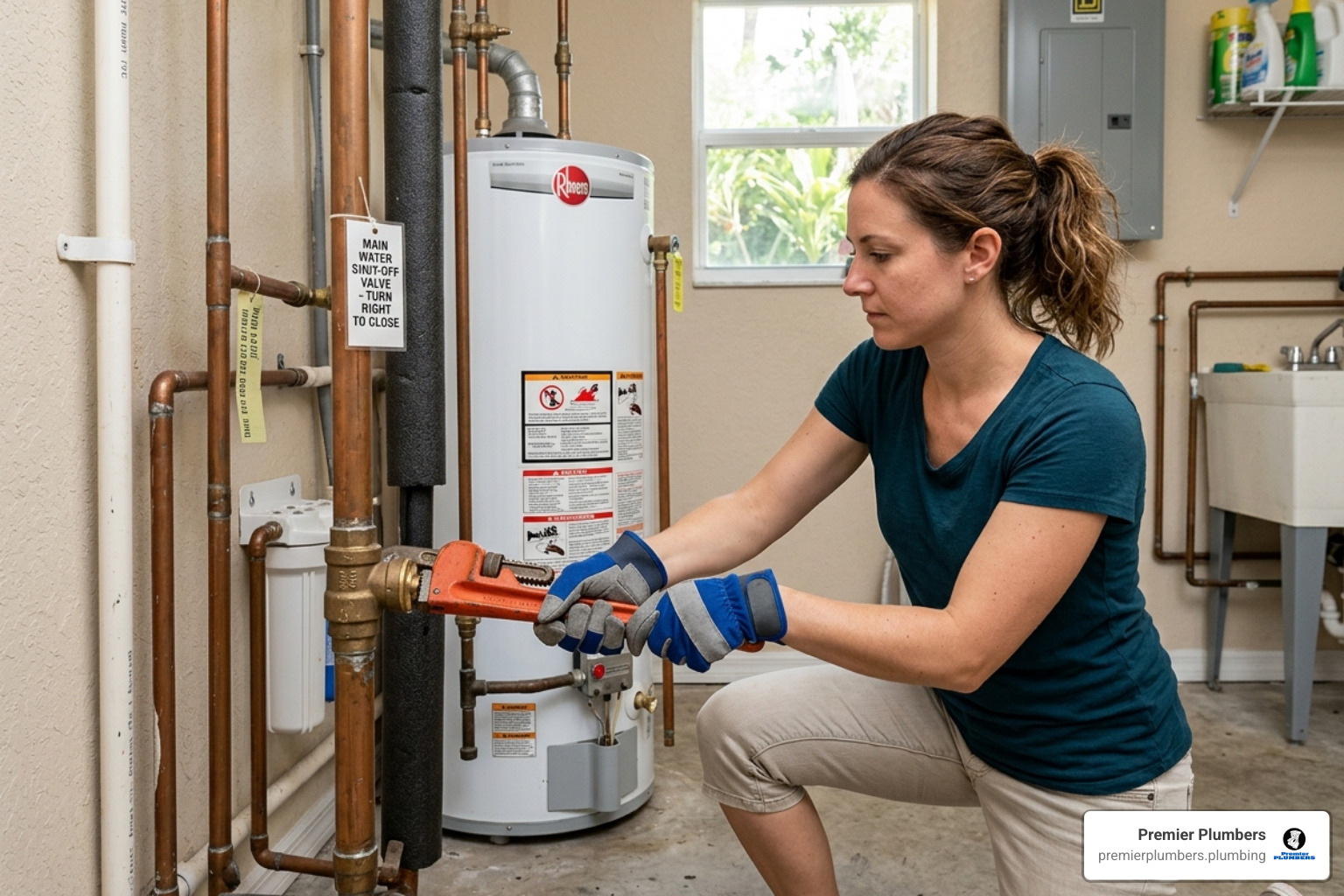
- Stop Using Water: This is the most important rule. If your main line is blocked, any water you put down any drain will eventually come back up at the lowest point in your house (usually a shower or floor drain).
- Turn Off the Main Water Supply: If water is actively overflowing, locate your main shut-off valve and turn it clockwise until it stops. This prevents accidental water usage from toilets or appliances.
- Ventilate the Area: Open windows and doors to let out foul odors and help dry out moisture.
- Practice Safety First: If you must enter a flooded area, wear rubber boots, gloves, and eye protection. Avoid contact with wastewater.
- Contain the Mess: Use old towels or sandbags to prevent water from reaching carpeted areas or wooden furniture.
Taking these steps can significantly reduce the cost of plumbing repairs later on.
Private vs. Public Responsibility
One of the first questions during a blocked drain emergency is, “Who pays for this?” In most cases, the homeowner is responsible for the lateral line, which is the pipe running from the house to the property boundary or the main sewer line in the street.
If you notice that your neighbors are also experiencing backups, or if you see sewage bubbling up from a manhole in the street, the issue likely lies with the city or county utility. Most municipal utility departments provide clear guidelines on these boundaries, and similar rules apply here in Florida. We can help you determine exactly where the blockage is located using our diagnostic tools.
Protecting Your Home from Water Damage
Water damage isn’t just about the puddle you see; it’s about the moisture that seeps into drywall and under floorboards.
- Move Furniture: Get any wood or upholstered items out of the “splash zone.”
- Electrical Safety: If water is near electrical outlets or your breaker box, do not enter the room. Call an electrician or the utility company to safely cut power.
- Documentation: Take photos and videos of the backup and any damage for insurance purposes.
In extreme cases where the pipes have collapsed under the weight of an emergency blocked drain, we may need to discuss sewer replacement options to prevent a repeat performance.
DIY Methods and Tools for an Emergency Blocked Drain
While major backups require a pro, minor clogs can often be handled with household items. However, you must be careful not to make the situation worse.
| Tool/Method | Best For | Effectiveness |
|---|---|---|
| Cup Plunger | Sinks and tubs | High for minor clogs |
| Flange Plunger | Toilets | High (designed for suction) |
| Baking Soda & Vinegar | Grease and odors | Moderate/Maintenance |
| Boiling Water | Soap scum and light grease | Low/Moderate |
| P-Trap Removal | Localized sink clogs | High |
For more routine issues, you can explore our guide on drain cleaning to see which methods are safest for your pipes.
Essential Tools for Clearing an Emergency Blocked Drain
If you’re a hands-on homeowner, having a few tools in the garage can be a lifesaver:
- Plumbing Auger (Snake): A hand-cranked snake can reach clogs that a plunger can’t touch.
- Adjustable Wrench: Necessary for removing the P-trap under the sink.
- Bucket: Always place this under a pipe before you open it!
- Sewer Rods: These are for the main clean-out outside your home.
When to Stop DIY Attempts
There is a point where DIY becomes dangerous. You should stop immediately if:
- You’re tempted to use chemical cleaners: We generally advise against these. They are highly acidic and can eat through older pipes, and they rarely work on a total blockage. If they fail, you’re left with a sink full of toxic “caustic soup” that makes a plumber’s job much more hazardous.
- The clog keeps coming back: This is a sign of a structural issue or tree roots.
- You hear “gurgling” in other fixtures: This means you’re pushing the clog further into the main system.
When you’ve reached your limit, it’s time to call the drain cleaning experts in Sarasota, Fort Myers & Tampa.
Professional Restoration: Hydro-Jetting and Video Inspections
When the plunger fails and the snake comes up empty, we bring out the heavy hitters. Modern plumbing technology has changed the way we handle an emergency blocked drain, making it faster and more effective than ever before.
The gold standard for clearing stubborn blockages is Hydro Jetting. Unlike a mechanical snake that simply pokes a hole through a clog, hydro-jetting uses highly pressurized water (up to 4,000 PSI) to scrub the inside of your pipes. It removes 100% of debris, including grease, scale, and even small tree roots. It’s essentially a pressure washer for the inside of your plumbing, and it’s completely chemical-free.
The Role of Video Sewer Inspections
We don’t like to guess. Before we start blasting water or digging, we use Video Sewer Inspections. We feed a waterproof, high-definition camera into your line to see exactly what’s going on.
- Diagnostic Accuracy: We can tell the difference between a wad of “flushable” wipes and a collapsed pipe.
- Pinpoint Location: The camera has a transmitter that allows us to find the exact spot of the problem above ground, preventing unnecessary digging in your beautiful Florida yard.
- Root Intrusion: We can see exactly where roots have entered the line and assess the damage.
Emergency Response Times and Costs
In a crisis, every minute counts. We strive for rapid response times throughout Southwest Florida, ensuring that our team arrives as quickly as possible to address the emergency and protect your property.
What affects the cost?
- Severity of the clog: A simple sink snake is cheaper than a main line hydro-jetting.
- Time of day: Emergency after-hours calls usually carry a dispatch fee.
- Equipment needed: Using specialized cameras or jetters adds to the service cost but often saves money in the long run by providing a permanent fix.
We believe in transparent, fixed-rate pricing so you aren’t surprised by the bill in the middle of a disaster.
Long-Term Prevention and Maintenance Strategies
The best way to handle an emergency blocked drain is to make sure it never happens in the first place. Most “emergencies” we see are actually the result of months or years of neglect.
The “Golden Rules” of Drain Health:
- Stop the Grease: Never pour cooking oil or bacon grease down the sink. It might be liquid when it’s hot, but it turns into a “fatberg” once it hits your cool pipes.
- Watch the “Flushable” Wipes: Despite what the packaging says, wipes do not break down like toilet paper. They are the #1 cause of main line backups.
- Use Drain Covers: A simple mesh strainer in the shower can catch hair before it binds with soap scum to create a stubborn clog.
For more localized advice, check out our Naples Drain & Sewer Maintenance Tips.
Routine Maintenance Schedules
Think of your plumbing like your car—it needs a tune-up.
- Annual Inspections: A quick camera check once a year can catch tree roots before they cause a backup.
- Septic Pumping: If you’re on a septic system (common in parts of Charlotte and Lee County), have it inspected every 2-3 years.
- Enzyme Treatments: Monthly natural enzyme cleaners can help “eat” organic buildup without damaging your pipes.
Most municipal utility departments emphasize that sewers are only designed for the “Three Ps”: Pee, Poo, and Paper. Everything else belongs in the trash.
Best Practices for Florida Homeowners
Florida presents unique challenges for plumbing:
- High Water Tables: Heavy rainfall can saturate the ground, putting pressure on your sewer lines and making septic systems less efficient.
- Sandy Soil: Pipes can shift more easily in sand than in clay or rock.
- Aggressive Roots: Our year-round growing season means tree roots never stop looking for your pipes.
We recommend seasonal checks, especially before the summer rainy season, to ensure your gutters and drains are clear and ready for the extra volume.
Frequently Asked Questions about Drainage Emergencies
Is a gurgling drain an emergency?
If it’s just one sink, it’s a warning sign. If multiple drains are gurgling when you use water elsewhere, it’s an emergency blocked drain in the making. Your pipes are struggling to “breathe” because of an obstruction in the main vent or sewer line.
Can I use chemical drain cleaners on a main line clog?
We strongly recommend against it. If the main line is totally blocked, the chemical will just sit there, potentially damaging your pipes and creating a hazard for the plumber who eventually has to clear it.
How long does professional emergency drain cleaning take?
A standard drain cleaning usually takes about an hour. However, if we need to use hydro-jetting or if the blockage is deep in the main line, it could take 2 to 4 hours to ensure the pipe is completely restored.
Conclusion
A drainage crisis can be overwhelming, but you don’t have to face it alone. Whether you’re in Sarasota, Naples, Tampa, or anywhere in between, Premier Plumbers is here to help. As a family-owned business with a three-generation legacy, we treat our customers like neighbors. We understand that an emergency blocked drain doesn’t happen on a schedule, which is why we offer 24/7 reliability and expert craftsmanship to get your life back to normal.
Don’t let a clog turn into a catastrophe. Contact our emergency plumbing team for immediate assistance and let our family take care of yours.