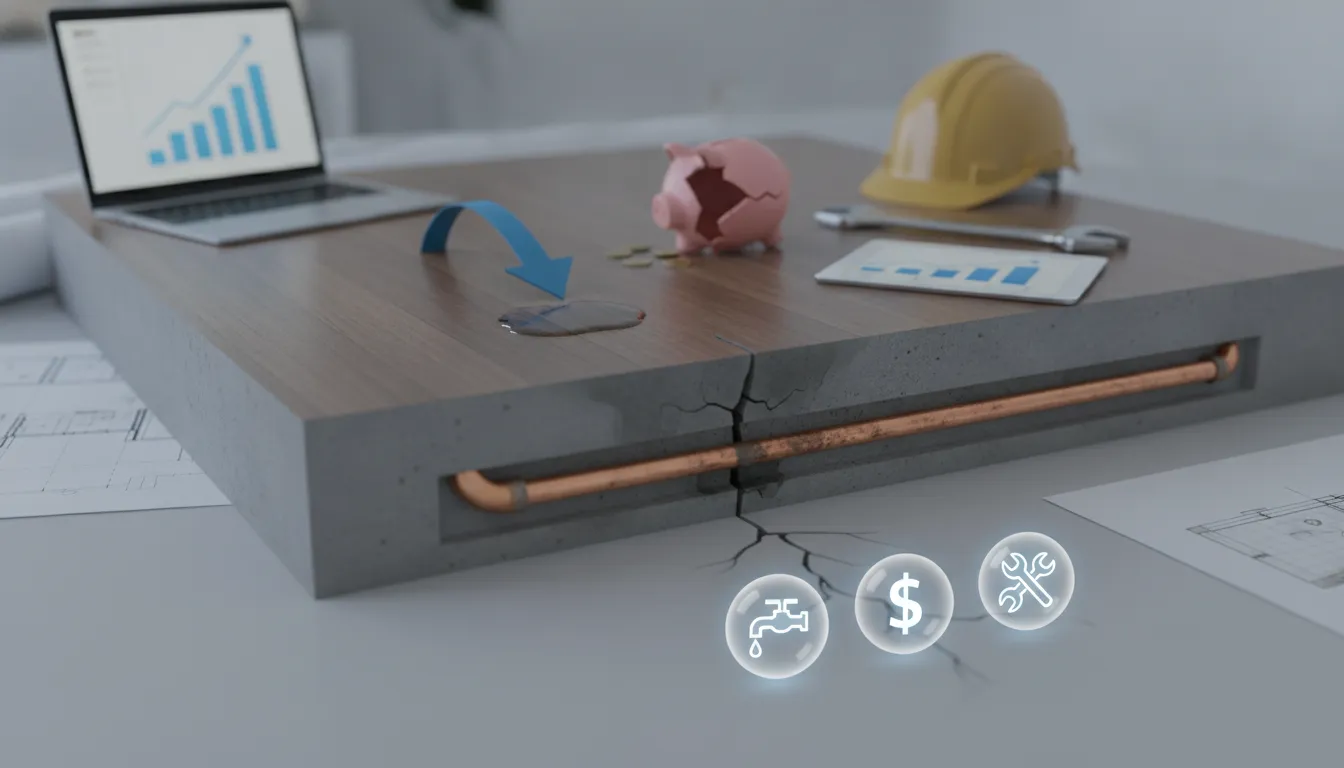
A leak beneath a concrete slab can affect more than the pipe itself. Continued moisture may damage flooring, reach walls, or create conditions for mold growth. Yet hearing about a slab leak doesn’t automatically mean your foundation has failed or that your floors must be torn up. Plumbers can assess the leak and compare options such as a spot repair, rerouting, or tunneling when site conditions allow. This guide explains the signs to watch for, how professionals locate hidden leaks, and what can affect slab leak repair time and cost. If you’re in Sarasota, Tampa, Fort Myers, Naples, or nearby, knowing what to expect can make the next step clearer.
Key Takeaways
- Pay attention to persistent changes: Higher water use, damp or warm floors, musty odors, or water sounds when fixtures are off can signal a leak. These clues need professional assessment to confirm the cause.
- Get the leak located before choosing a fix: A plumber can test the system and identify the affected pipe, then explain whether a spot repair, rerouting, tunneling, or another method suits your home.
- Clarify the full scope before work begins: Ask for an itemized estimate that covers detection, plumbing, access, and restoration. If water is spreading, shut off the main supply if safe and request urgent service.
What Is a Slab Leak, and Why Repair It?
How water or drain lines leak beneath concrete slabs
A slab leak happens when a water supply or drain pipe beneath a home’s concrete foundation develops a leak. Water from a supply line can seep into the soil and spread beneath floors or walls. A damaged drain line can also release wastewater below the slab, sometimes causing persistent moisture or unpleasant odors. Since these pipes are hidden, you may notice changes inside your home before you see the leak itself, such as damp flooring or an unexplained increase in water use. A slab leak overview explains how leaks under concrete can affect flooring and the foundation. A plumber can inspect the signs and test the plumbing system to confirm the source.
Common causes: corrosion, abrasion, shifting soil, and poor installation
Pipes beneath a slab can wear down for several reasons. Older metal pipes may corrode over time, while movement in the soil can cause pipes to rub against surrounding materials and develop small leaks. Shifting or settling soil may also put stress on plumbing lines. In some cases, poor installation, such as inadequate support or incorrect pipe placement, can contribute to early pipe damage. The cause depends on the pipe material, its age, and the conditions around it. A plumber can inspect the system to identify what failed and recommend a repair based on the pipe’s condition. Learn more about common causes of slab leaks.
How prompt repairs limit water damage, mold, and floor or foundation problems
Water that continues to leak beneath a slab may reach flooring, walls, and other building materials. Persistent moisture can damage finishes and create conditions for mold growth. A drain-line leak may also release wastewater beneath the home, so it’s worth having the problem assessed promptly. If you notice wet flooring, a sudden change in water use, or a lingering musty smell, contact a plumber instead of waiting to see if the signs disappear. Early assessment can help limit further damage and clarify what repairs are needed. Read more about how prompt slab leak repairs may help prevent moisture-related problems, or explore Premier Plumbers’ plumbing services.
Myth: slab leaks don’t always mean foundation failure or require jackhammering
A slab leak does not automatically mean the foundation has failed, and repairs do not always require breaking through the floor. After locating the leak, a plumber can assess the pipe and consider options such as a spot repair, rerouting, or another method suited to the home. Some repairs do involve cutting or removing concrete, while others may provide access from a different location or route new piping around the damaged section. The right approach depends on the leak’s location, pipe condition, and access around the property. Ask your plumber to explain the options and likely disruption before work begins. This guide to tunneling and rerouting outlines why repair methods can vary.
What Are the Signs of a Slab Leak?
A slab leak can be difficult to spot because the damaged pipe is beneath your home’s concrete foundation. Watch for changes in water use, flooring, or plumbing sounds, especially when more than one sign appears. These symptoms can have other causes, so they don’t confirm a slab leak on their own. If they persist, have a plumber check the system.
Higher water use or utility bills
An unexplained increase in your water bill may mean water is escaping somewhere in your plumbing system. Compare recent bills with your usual use, and consider other possible reasons for the change, such as extra guests, irrigation, or a running toilet. Low water pressure along with higher bills may also be a reason to investigate. This overview of slab leak warning signs describes both as potential indicators.
A higher bill does not necessarily mean there’s a leak beneath the slab. Toilets, faucets, irrigation lines, and other plumbing can also waste water. If your usage stays unusually high and you can’t find an obvious cause, ask a plumber to inspect the system and determine where the problem is.
Damp, warm, or wet floors and persistent moisture
Look for floor areas that stay damp, feel unusually warm, or develop unexplained wet spots. A leaking hot-water line beneath the slab may warm the flooring above it. Other leaks can leave moisture, discoloration, or damaged flooring. Persistent dampness is more concerning than a spill that dries quickly.
Check for soft or warped flooring, but don’t pull it up or cut into the slab to search for a pipe. Moisture can also come from condensation, an appliance, or another plumbing leak. A plumber can test the system and identify the source. If a wet area is spreading, contact a plumber promptly to help limit further damage. Premier Plumbers provides plumbing repair and leak services across Florida’s Gulf Coast.
Running-water sounds when fixtures are off
If you hear running, hissing, or trickling when faucets, showers, and appliances are off, listen to see whether the sound continues. A leak in a pressurized water line may make noise beneath floors or inside walls. However, toilets, ice makers, and other appliances can produce sounds that are easy to mistake for a hidden leak.
Turn off water-using appliances and fixtures, then listen again in a quiet room. If the sound persists, check whether the water meter moves while no water is being used. A moving meter can indicate a leak somewhere in the system, but it won’t show whether the leak is beneath the slab. A plumber can test the plumbing and locate the source. If water is actively leaking or causing damage, contact emergency plumbing service.
Musty odors, mold, mildew, or new cracks with other possible causes
A persistent musty smell or new mold and mildew may point to moisture hidden beneath flooring or behind walls. Look for recurring dampness, stains, or changes in flooring near the odor. These signs can also result from condensation, a roof leak, or plumbing problems elsewhere in the home, so they don’t confirm a slab leak by themselves.
Take note of new cracks in floors or walls, especially if they appear alongside wet spots, higher water use, or persistent plumbing sounds. Cracks can develop for many reasons, including normal settling, and are not proof of a leak. Record where they appear and whether they change over time. A plumber can check for leaks, while a qualified building professional can assess structural concerns if needed.
Check your water meter safely, then call a plumber if signs persist
For a basic meter check, turn off faucets and water-using appliances, including irrigation if possible. Make sure no one uses water during the test. Note the meter reading or check its leak indicator, wait 30 to 60 minutes, then look again. If the reading has changed, water may be flowing somewhere in your system. The test won’t identify the leak’s location or confirm that it’s beneath the slab.
Don’t open equipment you’re unfamiliar with or enter a wet area near electrical appliances. If you find a significant leak, shut off the home’s main water supply only if you can reach it safely. Note when symptoms occur and where you see moisture, then arrange a professional inspection. Leak detection and repair can help identify the source and determine the next steps.
How Do Plumbers Find a Slab Leak?
Inspect symptoms and test the plumbing system
A plumber will start by asking what you’ve noticed and when the symptoms began. Damp or warm flooring, unexplained increases in water use, low water pressure, musty odors, or the sound of running water when fixtures are off can all help narrow the search. These clues don’t confirm a slab leak on their own, since other plumbing or moisture problems can cause similar signs. Common slab leak symptoms give a plumber a starting point for further investigation.
The plumber may inspect accessible pipes and fixtures, then test the plumbing system for pressure loss. They may isolate sections of the water lines to see whether a particular line is losing pressure. Tell the plumber which rooms are affected and whether symptoms change when you use water. Those details can help focus the inspection.
Locate leaks with acoustic equipment, thermal imaging, and pressure tests
If initial tests point to a leak beneath the slab, plumbers can use specialized equipment to narrow down its location. Acoustic tools listen for the sound of water escaping from a pressurized pipe. Thermal imaging looks for temperature differences at the floor’s surface, which may indicate hot water moving below the concrete. Pressure tests can help identify a line that is losing pressure and isolate the affected section.
The plumber may use more than one method, depending on the home, pipe layout, and symptoms. Comparing test results helps them determine where the leak is most likely to be before choosing a repair approach. Acoustic detection, thermal imaging, and pressure testing are among the tools used to locate leaks while limiting unnecessary disruption.
How accurate detection avoids unnecessary concrete removal
Pinpointing a leak helps the plumber plan access around the actual problem. Without careful testing, it may be necessary to open a larger area of concrete or flooring while searching for the damaged pipe. Detection equipment can narrow the likely location, which may allow a spot repair to focus on a smaller section.
The right repair still depends on the pipe’s location and condition. In some cases, the plumber may need to cut into the concrete; in others, rerouting the line may be a better fit. Ask what the recommended method involves and whether flooring or concrete restoration will be needed. Accurate leak detection can help reduce unnecessary concrete removal, though it cannot eliminate it in every situation.
While you wait: limit water use, document symptoms, and find the main shutoff
Until a plumber can assess the problem, limit water use, especially if running fixtures or appliances seems to make the symptoms worse. Note when you first noticed the issue, which areas are affected, and any changes in water pressure or your water bill. Photos of damp spots or other visible changes can also help the plumber understand what’s happening.
Locate your home’s main water shutoff so you can respond quickly if the leak worsens. If water is spreading or causing damage, shut off the supply if it’s safe to do so, then contact a plumber. Recording symptoms and finding the shutoff can help you manage the situation while you wait. For urgent plumbing problems along Florida’s Gulf Coast, contact Premier Plumbers’ emergency service.
Which Slab Leak Repair Methods Can Plumbers Use?
The best repair depends on the leak’s location, the pipe’s condition, and how a plumber can reach it safely. After inspecting the plumbing and locating the leak, your plumber can explain the options, likely disruption, and any restoration work your home may need. Premier Plumbers offers plumbing repairs and related services throughout Florida’s Gulf Coast. Ask for a clear explanation of why a particular method suits your home, what the work includes, and how the plumber will test the repair afterward.
Spot repair: expose and fix the damaged pipe beneath the slab
A spot repair addresses one damaged section of pipe. To reach it, the plumber may cut through the concrete above the leak, remove or repair the affected pipe, and test the line. The concrete and flooring can then be restored. This approach may make sense when the leak is precisely located and the surrounding pipe is in good condition.
The main consideration is access: reaching the pipe from above can mean opening the floor and slab. The size of the opening depends on the pipe’s position and the work required. A slab leak repair guide notes that a simple spot repair may take a day, although repair complexity and restoration can affect the schedule.
Rerouting or repiping: bypass a damaged line with new plumbing
When a pipe beneath the slab is difficult to reach or has repeated problems, a plumber may recommend rerouting it. This means closing off the damaged section and installing a new line along a different, more accessible path, such as through walls, ceilings, or an attic. If several sections are in poor condition, replacing more of the plumbing may be worth discussing.
Rerouting can avoid opening the slab, but it may require access through interior walls or ceilings and repairs to those areas afterward. The route, pipe length, and finish work all affect the project. One repair guide estimates that rerouting may take one to three days, though the timeline depends on the home and job scope.
Under-slab tunneling: access pipes from outside when site and foundation conditions allow
With under-slab tunneling, a crew digs outside the home and creates a passage beneath the slab to reach the pipe. This can allow plumbers to work without cutting through interior flooring. Whether it is suitable depends on the foundation, soil, available space around the house, and the leak’s location.
Tunneling requires excavation and careful planning to protect the home and surrounding area. The crew must also restore the excavated area after completing the plumbing work. It is not practical for every property, so ask your plumber to explain whether the site allows safe access and what restoration is included. A repair overview describes some trenchless service-line projects as taking one to two days, though conditions and project scope vary.
Pipe lining or epoxy: when these methods work and when they don’t
Pipe lining creates a new interior surface inside an existing pipe. Some epoxy methods are also designed to seal small defects from within. These options may work for certain pipe materials and types of damage, but they are not suitable for every slab leak. A plumber should assess the pipe’s material, size, condition, and the extent of the damage before recommending a lining or epoxy repair.
A collapsed, badly shifted, or extensively deteriorated pipe may need a different solution. Ask what the proposed method can repair, how the plumber will prepare the line, and what testing will confirm the leak has stopped. A slab leak resource recommends agreeing on a clear scope of work and post-repair testing before work begins.
Compare methods by pipe condition, leak location, durability, disruption, and access
No single repair method suits every slab leak. A spot repair may work for one isolated leak in otherwise sound pipe. Rerouting may be a better fit when the damaged line is hard to reach or has a history of problems. Tunneling may limit interior floor disruption if the property and foundation allow safe access. Lining is an option only when the pipe and damage are appropriate for that method.
Ask your plumber to compare the options by expected durability, access requirements, disruption inside and outside the home, and restoration work. Request a clear reason for the recommendation based on the leak’s location and the pipe’s condition. This comparison of tunneling and rerouting outlines factors that can affect the work and project timeline.
When repairs can avoid jackhammering, and when concrete cutting or floor restoration is needed
Some repairs may avoid breaking through interior concrete. Rerouting can place a new line through walls or ceilings, while under-slab tunneling may provide access from outside when site conditions allow. These methods can reduce disruption to floors, but they are not right for every leak and may involve other work around the home.
A spot repair may require cutting concrete or removing flooring to reach the pipe. Once the plumbing repair is complete, the opening may need concrete patching and new flooring. Ask whether that restoration is part of the estimate or arranged separately. This overview of repairs that may avoid jackhammering explains how tunneling can provide access to some leaks without opening interior floors.
How Long Does Slab Leak Repair Take, and What Does It Cost?
Slab leak repair timelines and prices depend on the leak’s location, the condition of the pipe, and how the plumber can access it. A localized repair may take less time than rerouting a line, and restoration work can extend the project beyond the plumbing repair. Costs also vary by home, so online ranges are best treated as rough guidance rather than a quote.
Before work begins, ask what the estimate covers. Leak detection, plumbing labor, concrete or flooring repairs, and water-damage cleanup may be separate items. A written, itemized estimate helps you understand the proposed work and compare options.
Typical timelines for leak detection, spot repairs, rerouting, and restoration
Finding the source of a suspected slab leak may take a few hours, depending on the symptoms, the home’s plumbing layout, and the tests required. Once the leak is located, a straightforward spot repair may be completed the same day. That does not always mean the entire job is finished: concrete patching, flooring replacement, or drying wet areas may require additional time or a separate contractor.
Rerouting a pipe can take one or more days, since the plumber must plan and install a new route, then test the line. Every home is different, so ask which steps can happen during the first visit and what work may extend the schedule. A plumber can give a more useful estimate after inspecting the system and confirming the leak location.
Why spot repairs may take a day while rerouting takes several days
A spot repair addresses a damaged section of pipe. After locating the leak, the plumber accesses that area, repairs or replaces the affected pipe, and tests the plumbing. If the leak is easy to reach and the damage is limited, the plumbing work may be completed in a day. Cutting through concrete or removing flooring can add time, as can patching and restoring those surfaces.
Rerouting involves installing a new pipe path around the damaged line. The route, distance, access through walls or floors, and testing all affect the schedule. The best option depends on the pipe’s condition and the leak location, not just the time needed for the initial repair. Ask your plumber to explain the trade-offs between methods. You can also review Premier Plumbers’ plumbing services to see the types of plumbing work the company provides.
Typical plumber cost ranges and how the method, access, pipe material, and leak location affect estimates
Slab leak repair costs can vary substantially. Some published estimates put many repairs in the $1,500 to $4,500 range, but complex jobs may cost more. This is a broad reference, not a quote for your home. The factors that affect slab leak repair costs include the repair method, pipe material, leak location, and difficulty of reaching the damaged section.
A localized repair may be less costly when the leak is accessible and confined to one area. Rerouting can involve more labor and materials, while difficult access may require concrete cutting or additional work. Ask the plumber to explain what each option includes and what is driving the estimate. That makes it easier to compare the likely cost, disruption, and expected benefits of each approach.
Budget for detection, plumbing work, concrete or flooring restoration, and water damage
The plumbing repair may be only one part of the total cost. Ask whether the estimate includes leak detection, labor, replacement pipe, concrete removal and patching, and flooring work. If water has affected flooring or other materials, drying and repairs may be billed separately. Those services may require another contractor, so clarify who will coordinate the work and whether it changes the schedule.
Before approving the repair, request a written breakdown and ask which costs could change once the pipe is exposed. If the plumber finds additional damage, ask for an explanation and an updated estimate before authorizing extra work. Photos of damp areas, damaged flooring, or other symptoms can help you document the problem and discuss the scope of restoration with your plumber and insurer.
Request an itemized estimate and check what insurance may cover
An itemized estimate should separate leak detection, plumbing labor, materials, access work, and restoration. Check whether it describes the proposed repair and lists exclusions, such as flooring replacement or water mitigation. If the plumber presents more than one option, ask how each differs in cost, disruption, and expected durability. Clear answers help you compare the full scope of the work, rather than only the initial price.
Insurance coverage depends on your policy and the circumstances behind the leak. If it is safe to do so, contact your insurer before work begins and ask what documentation they require. The Insurance Information Institute’s overview of homeowners coverage explains common policy features, but your own policy determines what applies. Keep copies of estimates, invoices, photos, and messages with your insurer.
When to request same-day or emergency slab leak repair along Florida’s Gulf Coast
Call a plumber promptly if you notice pooling water, a sudden drop in water pressure, an unexplained increase in water use, or damp floors that persist. If water is actively spreading, you hear water running while fixtures are off, or you cannot stop the flow, shut off the main water supply if you can do so safely and request urgent service. Fast action can help limit further water damage.
Along Florida’s Gulf Coast, persistent moisture can also lead to musty odors and damage to flooring or nearby materials. Don’t wait for several signs to appear before asking for help. When you call, share what you’ve noticed, when it started, and whether water is still running. Premier Plumbers provides emergency plumbing service for urgent plumbing problems.
Related Articles
- Comprehensive Guide to Slab Leak Repairs
- Step-by-Step Process of Slab Leak Repair
- Slab Leak Detection: Early Signs and Repair Options
- Does Homeowners Insurance Cover Slab Leak Repair? A Detailed Guide
- Slab Leak Repair: When to Tunnel vs. When to Reroute
Frequently Asked Questions
Can I tell whether a leak is beneath the slab without a plumber?
You can check for signs such as a moving water meter when all fixtures are off, but that only suggests water is escaping somewhere in the plumbing system. It cannot pinpoint the leak or confirm that it is under the slab. A plumber can test the lines and locate the source.
Does a slab leak always require breaking through the floor?
No. Depending on the pipe’s condition and location, a plumber may recommend rerouting the line or tunneling beneath the home. A spot repair may require opening the floor or concrete. Ask which options suit your home and what repairs to the flooring or surrounding areas may be needed.
Should I turn off my water if I suspect a slab leak?
If water is actively spreading or the leak appears significant, shut off the main supply if you can reach it safely. Otherwise, limit water use and arrange an inspection. Avoid wet areas near electrical equipment, and contact an emergency plumber if the leak is causing damage.
How long does slab leak repair usually take?
The time varies with the repair method, access, and any restoration work. A simple pipe repair may be completed in a day, while rerouting or additional concrete and flooring work can take longer. Ask your plumber which parts of the job are included in the schedule.
Will homeowners insurance cover slab leak repairs?
Coverage depends on your policy and the cause of the damage. Contact your insurer to ask what applies and what records they need. Keep photos, estimates, invoices, and notes about when you first noticed the problem.