Your water heater usually gives you clues before it stops working. Maybe hot water runs out faster, the tank makes a new popping sound, or you spot moisture near a pipe. These changes can be easy to dismiss, especially when the heater still works. But paying attention early can help you address a small issue before it disrupts your day. Water heater maintenance doesn’t have to mean taking the unit apart or tackling risky repairs yourself. Start with simple visual checks, follow the manufacturer’s instructions, and know when to call a licensed plumber. Here’s how to care for your water heater safely and recognize when it needs professional attention.
Key Takeaways
- Watch for warning signs: New noises, rusty water, leaks, inconsistent hot water, or higher energy use are reasons to check the heater and contact a plumber if problems persist.
- Follow maintenance guidance for your model: Check for visible issues monthly, and use the owner’s manual to plan tank flushing or tankless descaling based on your unit and water conditions.
- Leave risky work to a professional: Call a licensed plumber about leaks, corrosion, relief-valve concerns, or electrical issues. If you smell gas, leave the building and contact emergency services from a safe location.
What Signs Show Your Water Heater Needs Maintenance?
A water heater often gives warning signs before it stops working. Pay attention to unusual sounds, changes in hot water, visible rust or moisture, and rising energy use. These clues can help you decide when to call a plumber.
Listen for rumbling, popping, or hissing
Rumbling or popping from a tank-style water heater can point to sediment at the bottom of the tank. As water heats beneath the buildup, it may bubble and make noise. Sediment can also make the heater work harder and contribute to overheating, as Lennox explains in its water heater maintenance guide.
Hissing may come from escaping water or steam, though the sound alone won’t identify the cause. Notice when it happens and check for moisture nearby, but don’t open the unit or adjust its valves. If the sound is new, persistent, or paired with a leak, have a licensed plumber inspect the heater.
Notice water that runs out quickly, heats slowly, or changes temperature
If hot water runs out faster than usual, takes longer to heat, or shifts unexpectedly between hot and cold, your water heater may need service. Sediment can reduce the usable capacity of a tank, while a worn heating element, thermostat, or other part may interfere with heating.
Notice where and when the problem occurs. Does it happen at one faucet or throughout the home? Does the water turn cold after a single shower? These details can help a plumber assess the issue. Ongoing hot-water problems, especially when paired with unusual sounds or leaks, deserve attention. Mister Water Heater’s safety tips also identify persistent hot-water issues as a reason to have the unit checked.
Check for rust-colored water, corrosion, or moisture
Run hot water from a tap and look for a rusty tint. If only the hot water is discolored, corrosion inside the water heater or its connected pipes may be the cause. If both hot and cold water look rusty, the issue may lie elsewhere in your plumbing.
Look around the heater for rust, damp spots, or standing water. Condensation can occur in some conditions, but moisture that persists or returns may signal a leak. Mister Water Heater recommends watching for rust and corrosion. Don’t touch wet electrical components or try to repair a leaking tank yourself. Contact a plumber if you see active leaking, corrosion, or water collecting around the unit.
Watch for higher energy use or frequent breaker trips
A sudden increase in your energy bill may mean the heater is using more electricity or fuel to provide the same amount of hot water. Sediment, worn components, or a thermostat issue can affect performance. Compare recent bills with your usual usage, and note whether the increase coincides with slower heating or less hot water.
For an electric model, a breaker that trips more than once is another warning sign. Don’t keep resetting it or open the electrical panel to investigate. Repeated trips may point to an electrical fault that requires professional attention. Routine checks can help identify developing problems, as Lennox’s maintenance guidance notes. If energy use rises unexpectedly or the breaker keeps tripping, arrange an inspection.
Treat active leaks, relief-valve problems, or gas odors as urgent
Water escaping from the tank, steam or water discharging from the temperature and pressure relief valve, or a gas odor requires prompt action. Never cap or block the relief valve, and keep clear of hot water or steam. The National Board’s water heater safety guidance says to remove the heat source only if you can do so safely.
If you smell gas, leave the building immediately. Don’t operate switches or use a phone indoors. Call your gas utility or emergency services from a safe location. For an active water leak or relief-valve concern, contact a licensed plumber promptly. Premier Plumbers offers emergency plumbing service across Florida’s Gulf Coast.
How Often Should You Maintain Your Water Heater?
Check monthly for leaks, corrosion, and performance changes
Once a month, take a few minutes to look around your water heater. Check the floor and nearby walls for moisture, and look for rust on the tank, pipes, or connections. Pay attention to changes in your hot water, too. Does it run out sooner than usual, take longer to heat, or fluctuate in temperature? Listen for new popping or rumbling sounds. These quick checks can help you catch developing issues before they interrupt your hot water or cause water damage. If you find moisture, heavy corrosion, or recurring performance changes, contact a plumber. Avoid taking the unit apart to investigate.
Flush tank models about once a year, as the manufacturer recommends
For many tank-style water heaters, flushing about once a year helps remove sediment that settles at the bottom. That buildup can make heating less efficient and put added strain on the unit. Check your owner’s manual for the recommended schedule and procedure, since the right approach depends on your model and water conditions. Draining a heater involves hot water and specific shutoff steps, so ask a plumber to handle it if you’re unsure how to proceed. Lennox recommends annual tank draining as part of routine maintenance. Follow your manufacturer’s guidance if it calls for a different schedule.
Descale tankless models as directed, often every 12 to 24 months
Tankless water heaters don’t store a tankful of water, but minerals can still build up inside the heat exchanger. Descaling removes those deposits and helps the unit heat water reliably. Some tankless models may need descaling every 12 to 24 months, particularly in areas with hard water, though the interval depends on the unit, water quality, and household use. Check the owner’s manual for the recommended schedule, process, and supplies. If you’re unfamiliar with the procedure or don’t have the required equipment, ask a plumber to handle it. A tankless water heater maintenance demonstration can show what descaling involves, but your manual should guide the work.
Adjust your schedule for local water conditions and follow the owner’s manual
A routine schedule is a helpful starting point, but every home and water heater is different. Mineral content, household demand, heater type, and the manufacturer’s instructions all affect how often maintenance is needed. A unit that sees heavy use or receives water with more mineral content may need attention more often. Check your owner’s manual for guidance on flushing, descaling, temperature settings, and safety checks. It will also explain which tasks are appropriate for homeowners. If you’re unsure what your unit needs, Premier Plumbers’ water heater services can help you plan maintenance or address a concern across Florida’s Gulf Coast.
What Maintenance Does Each Water Heater Need?
The right maintenance routine depends on your water heater. Tank-style models can collect sediment at the bottom, while tankless units can develop mineral scale inside the heat exchanger. Both types need regular checks for leaks, corrosion, and changes in performance.
Start by checking the owner’s manual for instructions specific to your make and model. Water quality, household use, and the unit’s age can affect how often it needs service. Because water conditions vary across Florida’s Gulf Coast, a plumber can help you choose a schedule that suits your home.
Some maintenance tasks involve hot water, pressure, electricity, or gas. Follow the manufacturer’s directions, and don’t force parts or attempt work that feels unfamiliar. Premier Plumbers provides water heater services for homeowners across the Gulf Coast.
Flush tank models to remove sediment and check for corrosion
Sediment and mineral deposits can settle at the bottom of a tank-style water heater. Buildup may reduce efficiency and contribute to rumbling or popping sounds. Many manufacturers recommend flushing the tank about once a year, but check your owner’s manual for the right interval and instructions. This water heater maintenance checklist explains why flushing matters.
Tank water can be hot enough to cause burns. Before you begin, follow the manual’s directions for shutting off the power or gas and water supply, and direct discharge to a safe location. Check the tank and nearby fittings for rust, dampness, or corrosion. If the drain valve is stuck, the tank is leaking, or you’re unsure how to flush it safely, contact a licensed plumber.
Descale tankless models and clean their filters as directed
Mineral scale can collect inside a tankless water heater’s heat exchanger, especially when the water supply has a higher mineral content. Buildup may affect how efficiently the unit heats water. Many manufacturers recommend descaling every 12 to 24 months, but water quality, household use, and the owner’s manual should guide your schedule.
Some models also have inlet filters that need periodic cleaning. Follow the manual’s instructions and use only approved supplies. Descaling may require a pump and hoses, but use them only if the manufacturer specifies that process. If you see an error code or experience ongoing temperature changes, ask a plumber to inspect the unit. This tankless water heater maintenance guide describes the purpose of descaling.
Inspect visible connections, shutoff valves, and the area around either model
Once a month, look over the visible pipes, fittings, and shutoff valves. Check the floor and nearby walls for moisture, drips, rust, or mineral deposits. These signs may point to a leak or corrosion. Don’t remove covers or tighten fittings unless the manufacturer’s instructions say it’s safe and you know how to do so.
Keep the space around the heater tidy and clear of stored items, particularly anything flammable. Make sure the shutoff valve is visible and accessible. If you find water near the unit, don’t assume it’s condensation. A plumber can identify whether the source is a leak, a drain line, or another issue. Review these water heater safety tips for more guidance.
Ask a licensed plumber to inspect the anode rod and temperature and pressure relief valve
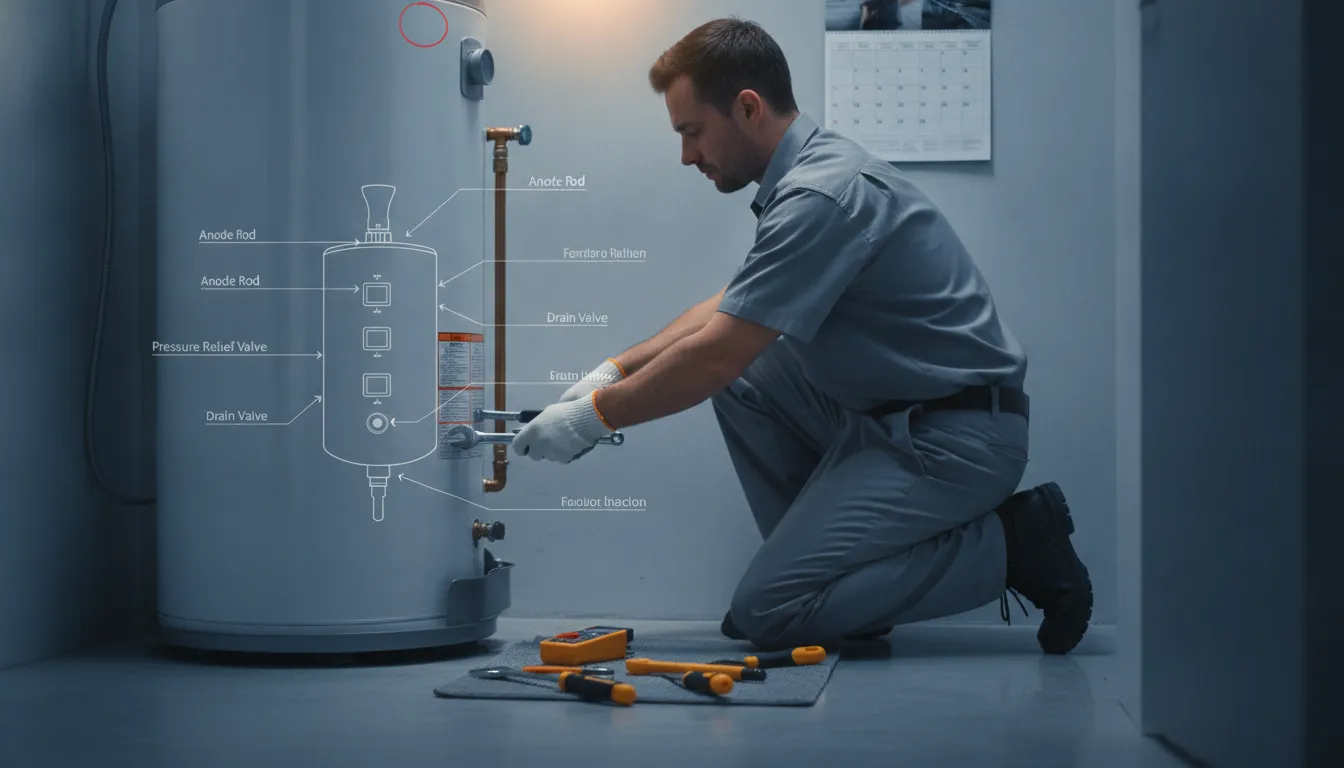
In a tank-style water heater, the anode rod helps protect the tank from corrosion. It wears down over time, so ask a licensed plumber to inspect it periodically. Some maintenance guidance suggests checking it about every three years, but the timing depends on your water and the manufacturer’s recommendations. A plumber can replace the rod if it is badly worn.
The temperature and pressure relief valve is a key safety component. Testing it may release very hot water, and an older valve may continue to drip afterward. Have a plumber inspect it and follow the manufacturer’s directions for testing or replacement. Call for service if you notice corrosion, leakage, or other signs the valve may not be working properly. This water heater maintenance guide covers these components.
Set the thermostat to the manufacturer’s recommended temperature
Check your owner’s manual for the recommended thermostat setting. A setting of 120°F is commonly suggested to help reduce scald risk and energy use, but the right temperature can depend on your water heater and household needs. Don’t adjust the thermostat if you can’t identify the control or aren’t sure how to use it safely.
After changing the setting, give the water time to stabilize before checking it at a faucet. Temperature can vary between the heater and the tap, so use care when testing hot water. If the temperature keeps changing, or you have concerns about safe water delivery for children or older adults at home, ask a plumber to check the system. This water heater checklist includes thermostat guidance and other routine maintenance steps.
What Tools and Safety Steps Do You Need?
Start by identifying whether your water heater is a tank or tankless model, then read its owner’s manual before gathering tools. Maintenance steps vary by unit, and a procedure that works for one heater may damage another. The manual should explain which supplies are approved, how to shut the unit down, and whether a task is intended for homeowners.
Water heaters combine hot water with electrical, gas, and plumbing connections. That makes preparation important: keep the work area clear, plan where water will drain, and don’t proceed if a valve or control is unfamiliar. Never try to relieve pressure or cool a hot tank yourself. The National Board of Boiler and Pressure Vessel Inspectors’ safety guidance explains why those actions can be dangerous.
If you’re uncertain about any step, stop and ask a licensed plumber. Premier Plumbers provides water heater service and repairs for homeowners across Florida’s Gulf Coast. Professional help is especially important when maintenance involves electrical components, gas connections, internal parts, or a valve that appears damaged.
Gather a garden hose, bucket, gloves, and approved supplies
For tank maintenance, the owner’s manual may call for a garden hose that fits the drain valve, a bucket, and gloves. Check that the hose is secure and long enough to reach a suitable drain or outdoor area. Hot water can damage surfaces and cause burns, so choose a route that keeps it away from people, walkways, and belongings. Water heater maintenance guidance also recommends planning where the drained water will go.
Use only cleaning products and tools approved for your model, and keep the manual nearby. Gloves can help protect against splashes, but they don’t make contact with hot water safe. If a drain valve leaks, looks damaged, or won’t turn easily, don’t force it. Stop and call a plumber.
Use a pump and hoses for tankless descaling only if the manual calls for them
Some tankless water heater descaling procedures use a submersible pump, a bucket, and two hoses. Your model may require different equipment or a different process, so check its manual before buying supplies or starting work. A tankless descaling walkthrough shows one common setup, but it shouldn’t replace the instructions for your specific heater.
Use only the cleaning solution and equipment approved by the manufacturer. Connecting hoses incorrectly or using an unsuitable product can damage the unit or cause a leak. If the manual is missing, the connections are unfamiliar, or you’re unsure how to isolate the heater, leave descaling to a licensed plumber.
Shut off power or gas and water as directed; let hot water cool
Before maintenance, follow the owner’s manual to shut down the water heater. Depending on the model, this may involve turning off the electrical supply or adjusting the gas control, as well as closing specific water valves. Don’t guess which switch or valve to use. If you can’t identify the correct controls, pause and contact a professional.
Give the unit and water time to cool before working nearby. Water in a tank can stay hot after the heater is switched off. Never try to relieve pressure yourself, add cold water to a hot tank, or spray the tank with a hose to cool it. The National Board’s residential safety guidance advises against these actions.
Route discharge safely and keep children and pets away
If your manual calls for draining or flushing a tank, decide where the water will go before opening the drain valve. Secure the hose and direct its open end to a suitable drain or safe outdoor area, following the manufacturer’s instructions. Hot discharge can burn skin or damage flooring, plants, and nearby belongings, so keep it away from walkways and surfaces that could be harmed.
Keep children and pets out of the work area until maintenance is finished and the heater is operating normally again. Don’t leave the unit unattended while it drains. If the hose slips, a valve leaks, or water flows somewhere unexpected, stop if you can do so safely and contact a plumber. These precautions reflect common water heater safety recommendations.
Don’t open electrical panels, handle gas connections, or force stuck parts
Routine maintenance doesn’t require opening electrical panels, disconnecting wiring, or adjusting gas connections. These tasks can create risks of electric shock, fire, or a gas leak, so leave them to a qualified professional. If you reach a step that involves internal components or a connection you don’t recognize, stop and arrange service.
Don’t force a stuck drain valve, fitting, or cover. Applying pressure can damage the part or cause a leak. Contact a plumber if a valve won’t move, you see active leaking or corrosion, or the heater keeps tripping a breaker. If you smell gas, leave the area and contact the appropriate emergency service. For other repairs, Premier Plumbers can help with water heater service.
Why Maintain Your Water Heater, and When Should You Call a Plumber?
Regular maintenance can help your water heater perform reliably and make it easier to catch developing problems. Follow the owner’s manual for your model, and contact a licensed plumber when a problem involves leaks, gas, electrical components, or internal parts.
Keep your unit running efficiently and help extend its service life
Sediment, mineral deposits, and corrosion can affect how well a water heater works. As buildup increases, the unit may take longer to heat water or use more energy to meet your household’s needs. Routine checks can help you spot changes early and address them before they lead to larger repairs.
Maintenance needs depend on the heater type, water quality, and how much hot water your household uses. Use the manufacturer’s instructions to guide your schedule, and ask a plumber if you’re unsure what your system requires. Some inspection and repair tasks involve specialized knowledge, as the National Board’s residential water heater safety guidance explains.
Reduce sediment-related wear and avoidable repair costs
Minerals in water can settle inside tank-style heaters. As sediment accumulates, you might hear popping or rumbling, or notice that water takes longer to heat. Flushing the tank at the interval recommended by the manufacturer can help clear sediment and reduce the wear it may cause.
Tankless heaters can also collect mineral scale, especially in areas with hard water. These units may need periodic descaling and filter cleaning, following the instructions for the specific model. If you aren’t sure how to perform the work or which products are approved, ask a plumber rather than guessing. A professional can help assess the unit and recommend appropriate maintenance. Read more about how routine maintenance can support water-heater performance.
Call a licensed plumber about leaks, corrosion, relief-valve problems, or recurring heating issues
Contact a licensed plumber if you see water near the heater, notice rust or corrosion, or have ongoing problems with water temperature. A leak may come from a fitting, valve, or the tank itself, and the source determines the right repair. Even a small amount of moisture deserves attention.
The temperature and pressure relief valve is an important safety feature. If it leaks or appears damaged, have a plumber inspect it instead of testing or replacing it yourself. Recurring loss of hot water, slow heating, or frequent breaker trips also call for a professional diagnosis. These symptoms can have several causes. Water heater safety guidance recommends seeking professional help for leaks, unusual noises, and persistent hot-water problems.
Get professional help with anode rod replacement, difficult descaling, or unfamiliar equipment
An anode rod helps protect the inside of a tank from corrosion. Checking or replacing it can mean working around hot water and removing a tightly fitted part, so ask a licensed plumber if you’re unfamiliar with the task. A plumber can check the rod’s condition and look for signs of corrosion inside the tank.
Descaling a tankless heater may require a pump, hoses, and a cleaning product approved by the manufacturer. If the instructions aren’t clear, you don’t recognize the equipment, or a part won’t loosen, stop and call a professional. Forcing a connection or using the wrong product may damage the unit. The National Board’s safety recommendations advise relying on qualified professionals for work that requires specialized knowledge.
If you smell gas, leave the area and contact the appropriate emergency service
If you smell gas near your water heater, leave the building and move to a safe location. Don’t light a flame, operate electrical switches, or use a phone inside the area where you smell gas. Once you’re safely away, contact your gas utility or emergency services for instructions.
Wait for qualified personnel to confirm that it’s safe before returning. Don’t try to diagnose the heater, adjust gas connections, or relight the equipment yourself. If there’s no gas odor but your gas water heater has a recurring problem, arrange an inspection with a licensed plumber or qualified technician. The National Board’s residential safety guidance covers the importance of professional help with water-heater concerns.
Schedule water heater service with Premier Plumbers across Florida’s Gulf Coast
If your water heater needs maintenance or you’ve noticed a problem, Premier Plumbers can help. Our family-owned team has three generations of plumbing experience and has served Southwest Florida since 2008. We offer same-day service across Florida’s Gulf Coast, from Tampa and Sarasota to Fort Myers and Naples.
We’ll assess your water heater, explain what we find, and discuss the next steps. Our team provides water-heater service and installation as part of our plumbing services. For a problem that needs urgent attention, learn more about emergency plumbing service.
Frequently Asked Questions
Can I maintain my water heater myself?
You can handle simple visual checks, such as looking for moisture, rust, or changes in hot-water performance. For flushing or descaling, follow the owner’s manual closely. If a step involves electrical or gas connections, internal parts, or a stuck valve, contact a licensed plumber.
Does Florida’s water affect how often my water heater needs service?
Water quality varies by location and can affect mineral buildup inside a heater. Your household’s hot-water use and the manufacturer’s instructions matter too. Ask a plumber to help set a maintenance schedule that fits your home.
Should I flush a water heater if it’s making popping sounds?
Popping can be caused by sediment, but it doesn’t confirm that flushing is the right fix. Check the manual and avoid draining the unit if you’re unsure about the shutoff steps or safe discharge. A plumber can inspect the heater and recommend what to do.
When does a water heater problem need urgent attention?
Treat a gas odor as an emergency: leave the building and call the gas utility or emergency services from a safe location. Active leaks and water or steam coming from the temperature and pressure relief valve also need prompt professional attention.
Can Premier Plumbers service tankless water heaters?
Yes. Premier Plumbers provides water-heater service and installation across Florida’s Gulf Coast, including help with tankless units. The team can assess the heater, explain the issue, and recommend next steps.