Is It Time for a Whole Home Repipe in Tampa, FL?
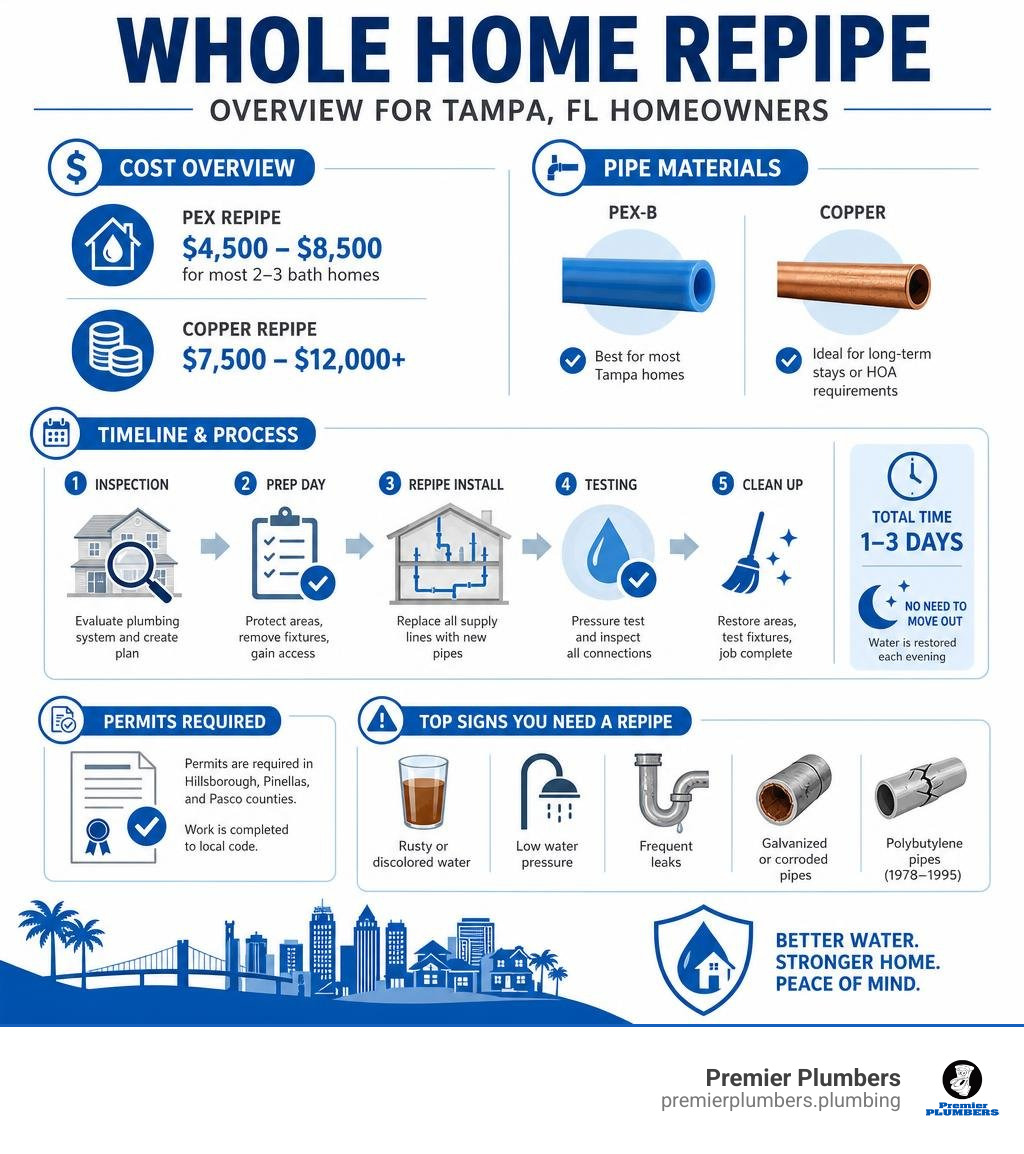
If you’re dealing with a whole home repipe in Tampa, FL, here’s what you need to know at a glance:
| Question | Quick Answer |
|---|---|
| Average PEX repipe cost | Cost-effective investment depending on home size |
| Average copper repipe cost | Higher initial investment for premium material |
| How long does it take? | 1 to 3 days for most Tampa homes |
| Do you need to move out? | No, water is restored each evening |
| Permits required? | Yes, Hillsborough, Pinellas, and Pasco counties all require permits |
| Best material for Tampa? | PEX-B for most homes; copper for long-term stays or HOA requirements |
| Biggest warning signs? | Rusty water, low pressure, frequent leaks, polybutylene or galvanized pipes |
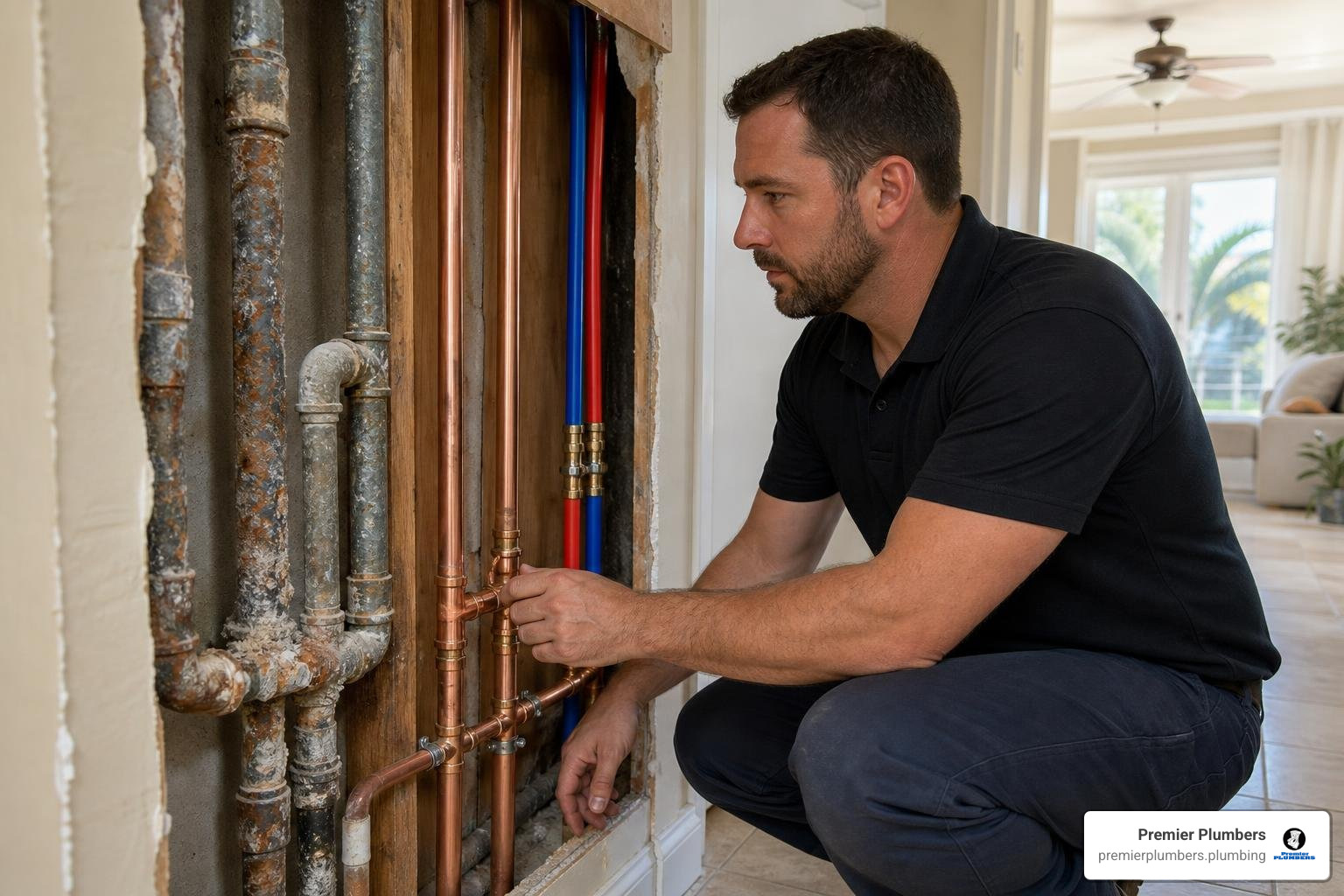
Tampa’s aging housing stock and hard municipal water are a tough combination for older pipes. Homes built before 1990 often run on galvanized steel lines that have been corroding for decades. Homes built between 1978 and 1995 frequently contain polybutylene pipes, a material that reacts with chlorine in Tampa’s water supply and breaks down from the inside out, often without any visible warning.
The result? Rusty water coming out of your taps. Pressure that drops to a trickle. Leaks that keep coming back no matter how many times you patch them.
Studies show that 70% of homes with outdated pipes experience frequent leaks, and 60% suffer from reduced water pressure. A whole home repipe replaces every supply line in one coordinated project, solving all of those problems at once instead of chasing them one repair at a time.
At Premier Plumbers, our team brings decades of experience in the plumbing trade, and we’ve seen how Tampa’s climate and water chemistry accelerate pipe failure in ways that catch homeowners completely off guard. Our team has handled whole home repipes in Tampa, FL across all types of homes, from historic bungalows to newer builds with failing polybutylene systems. If you’re ready to get started or just want to understand your options, our whole home re-piping service team can inspect your system and explain the best replacement options for your home.
Signs Your Property Needs a Whole Home Repipe in Tampa FL
Tampa homeowners often ignore the early warning signs of pipe failure, assuming that a single leak is just an isolated incident. However, plumbing systems age uniformly. When one section of pipe fails, the rest of the system is usually close behind. Recognizing the signs of deteriorating plumbing early can save you from catastrophic water damage and costly emergency restoration services.
Widespread Low Water Pressure
If you notice that your water pressure has dropped across multiple fixtures in your home, it is rarely a simple clog. In older homes with galvanized steel pipes, mineral deposits and rust build up inside the pipe walls over time. This internal corrosion constricts the flow of water, much like a clogged artery. If your shower has turned into a sad trickle and your washing machine takes twice as long to fill, your pipes are likely choked with rust.
Discolored or Rusty Water
When you turn on your faucets first thing in the morning, do you notice a brief flash of orange, brown, or yellow water? This is a classic sign of internal pipe corrosion. As water sits in rusted iron or galvanized steel pipes overnight, it absorbs iron oxide. Not only does this ruin the taste of your drinking water, but it also stains your sinks, tubs, and laundry. If you clean your faucet aerators and find them filled with dark rust flakes just a few weeks later, your pipes are actively disintegrating.
Recurring Pinhole Leaks
A single leak under your sink is a minor nuisance, but recurring leaks in different parts of your home are a systemic cry for help. Copper pipes, while highly durable, are susceptible to pinhole leaks caused by the chemical reaction between the metal and the chlorine used in municipal water treatment. If you find yourself patching leaks multiple times a year, a full replacement is the only logical next step.
If you are unsure whether a leak is isolated or part of a larger piping failure, Premier Plumbers can help with plumbing repairs that identify the source of the problem before you commit to a full repipe.
Slab Leaks and Foundation Dampness
Many homes in the Tampa Bay area are built on concrete slab foundations. When water lines run beneath these slabs corrode and burst, they cause slab leaks. These are particularly dangerous because they can erode the soil beneath your foundation, leading to structural cracking, mold growth, and localized moisture that attracts termites. Signs of a slab leak include unusually warm spots on your floors, the sound of running water when all faucets are off, and sudden spikes in your water bill.
Comparing Pipe Materials: PEX vs. Copper vs. CPVC
Choosing the right plumbing material is crucial for ensuring the longevity of your home’s new water supply system. The modern market is dominated by three main choices, each with its own advantages and disadvantages.
| Feature | PEX (PEX-B / PEX-A) | Copper (Type L) | CPVC |
|---|---|---|---|
| Average lifespan | 30 to 50 years | 70+ years | 20 to 30 years |
| Material cost | Budget-friendly | Very high | Moderate |
| Flexibility | High, fewer joints needed | Rigid, requires soldering | Rigid, joined with glue |
| Chlorine resistance | Excellent, especially PEX-B | Low to medium | High |
| Freeze resistance | High | Low, easily bursts | Low |
| Best for | Most residential repipes | Historic homes or high-pressure systems | Not recommended for full repipes |
PEX (Cross-Linked Polyethylene)
PEX is the undisputed industry standard for modern residential repiping. It is highly flexible, allowing plumbers to snake it through walls and ceiling joists with minimal drywall cuts. This flexibility also means fewer joints and fittings, which naturally reduces the number of potential leak points.
- PEX-A vs. PEX-B: PEX-A is manufactured using the Engel method, making it extremely flexible and capable of expanding and contracting. PEX-B is made using the Silane method, which provides higher tensile strength and superior resistance to chemical degradation from chlorine and chloramines, which are common in Tampa’s municipal water. At Premier Plumbers, we frequently recommend high-quality PEX-B for local homes because of this chemical resilience.
- Lifespan: PEX typically lasts between 30 and 50 years. It does not corrode, scale, or pit, making it highly reliable.
For homeowners looking to understand how PEX performs, the history and standards of cross-linked polyethylene explain why it has become the preferred choice for modern residential plumbing.
Copper (Type L)
Copper is the traditional gold standard of plumbing. It is incredibly durable, naturally antimicrobial, and resistant to fire and UV exposure.
- Type L Copper: This is the thickest and most durable grade of copper pipe used for residential water lines. It can easily last 70 years or more under ideal conditions.
- The downside: Copper is highly rigid and requires extensive soldering, which increases labor costs. Additionally, copper is vulnerable to acidic water and local water chemistry, which can cause pinhole leaks over time. It is also highly attractive to thieves on construction sites due to its high scrap value.
CPVC (Chlorinated Polyvinyl Chloride)
CPVC is a rigid plastic pipe that was popular in the late 1990s and early 2000s as a cheaper alternative to copper. While it is highly resistant to chlorine, it becomes extremely brittle as it ages. Minor water pressure fluctuations or physical impacts can cause older CPVC pipes to crack and shatter. Because of this fragility, our team at Premier Plumbers does not recommend CPVC for whole-house repiping projects.
The Cost of a Whole Home Repipe in Tampa
When planning a whole home repipe in Tampa, FL, understanding the financial investment is key to making an informed decision. The total cost of a repipe depends on several variables, including the size of your home, the number of bathrooms, the piping material you select, and the ease of access to your existing plumbing lines.
For a typical single-story, two-bathroom home, a PEX repipe represents a highly cost-effective solution. If your home has three or more bathrooms or multiple stories, the price for a PEX installation will increase moderately to account for the additional materials and labor required.
If you prefer to install premium Type L copper, the material costs alone will drive the price significantly higher. A standard copper repipe for a home requires a larger investment, with larger multi-story homes representing the highest tier of pricing due to the complexity of soldering and the premium cost of raw copper.
Material costs and labor rates can vary across different coastal Florida regions, depending on local building codes and regional market demands.
Factors Influencing the Cost of a Whole Home Repipe Tampa FL
Several specific elements will dictate where your final quote lands:
- Number of plumbing fixtures: Every sink, toilet, shower, washing machine, and outdoor hose bib counts as a fixture. The more fixtures you have, the more pipe runs, manifolds, and valves are required.
- Slab tunneling vs. attic routing: If your home is built on a concrete slab, abandoning the old pipes in the ground and routing new lines through your attic is the most cost-effective method. However, if lines must be run beneath the concrete, slab tunneling can add a significant additional charge to the project.
- Hillsborough County permits: Legally, a whole home repipe requires a plumbing permit and subsequent inspections. Permit fees in Hillsborough, Pinellas, and Pasco counties vary depending on the local municipality.
- Drywall patching and restoration: Running new pipes requires making small access cuts in your drywall. While some plumbing companies leave these holes for you to fix, Premier Plumbers coordinates a seamless process. Standard drywall patching and texture matching will add to the total project cost, depending on the complexity of the cuts.
- Water heater bundling: Since a repipe involves shutting off your main water line, it is the absolute best time to replace an aging water heater. Bundling a conventional or tankless water heater service with your repipe can save you significant labor costs compared to doing the projects separately.
If you are located in the southern part of our service area, local pricing factors will depend on your specific municipality’s permitting fees and regional labor rates.
The Repiping Process and Timeline
A whole home repipe is a major construction project, but a highly specialized team can complete the work with surprisingly minimal disruption to your daily life.
Most PEX repipes in the Tampa area can be completed within 2 to 3 days, with the actual plumbing installation often taking just a single day. Copper repipes are more labor-intensive and typically require 5 to 7 days to complete.
What to Expect During a Whole Home Repipe Tampa FL
Our team at Premier Plumbers follows a structured, step-by-step process to ensure quality and efficiency:
- Preparation and floor protection: On the first morning, our technicians arrive and meticulously cover your floors, furniture, and personal belongings with protective plastic sheeting and drop cloths to prevent dust and debris from spreading.
- Locating and cutting access points: We identify the most efficient pathways to run your new water lines, making small, precise access cuts in your drywall, usually inside closets or behind fixtures where they are least visible.
- Running the new pipes: We snake the highly flexible PEX piping through your walls and ceiling joists, completely bypassing your old, failing pipes. We install brand-new shut-off valves, supply lines, and water connections at every fixture.
- Pressure testing: Before we close up any walls, we perform a rigorous pressure test. We pressurize the new system to 100 PSI for at least 15 minutes to verify that every connection is completely watertight.
- Permit inspection: We coordinate with local building inspectors from Hillsborough, Pinellas, or Pasco County to review the work and sign off on the permit.
- Drywall patching and cleanup: Once approved, our professional drywall technicians patch, mud, sand, and texture the access points to match your existing walls perfectly. We then perform a thorough cleanup, leaving your home as clean as we found it.
Homeowners comparing a repipe with smaller water line fixes can also use our blog on Sarasota water line repair warning signs to understand when a repair may be enough and when whole-home replacement is the safer long-term choice.
If your repipe timing overlaps with water heater issues, our article on replacing a water heater heating element explains one common repair that can help you decide whether to repair the heater now or bundle a replacement into the plumbing project.
Frequently Asked Questions About Repiping
Why is polybutylene pipe a major concern for Florida homeowners?
Polybutylene (PB) is a gray plastic piping material that was widely installed in homes built between 1978 and 1995. Over time, plumbers discovered that the chlorine and chloramines used to treat municipal water react chemically with the polybutylene polymer, causing the pipes to become brittle, flake, and develop micro-fractures from the inside out.
Because polybutylene pipes fail internally without any outward signs of wear, they are highly prone to sudden, catastrophic bursts. As a result, Florida homeowners insurance carriers, including Citizens and Universal, actively flag homes with polybutylene plumbing. Insurance companies will frequently deny coverage, refuse policy renewals, or levy heavy surcharges on homes that still contain this material. Replacing polybutylene with PEX-B is often the only way to secure affordable property insurance in Florida.
Insurance companies across Southwest Florida handle older piping with strict guidelines, making a proactive repipe a critical step for maintaining coverage.
Do I need to move out of my home during a repipe?
No, you do not need to pack your bags or book a hotel room. While we will need to turn off your main water line during active working hours (typically between 8:00 AM and 4:00 PM), our team makes it a priority to restore your water service at the end of every evening. You will have functioning toilets, sinks, and showers overnight, allowing you to remain in the comfort of your own home throughout the project.
How does repiping affect my home’s resale value?
A whole home repipe is one of the most valuable upgrades you can make to an older property. When potential buyers hire a home inspector, outdated galvanized steel or polybutylene pipes are immediately flagged as major liabilities. This can stall real estate transactions, force sellers to offer massive repair credits, or cause buyers to walk away entirely because they cannot secure homeowners insurance.
A full PEX-B repipe typically adds significant immediate resale value to a Tampa home. Providing prospective buyers with a certified repipe document from a licensed contractor offers peace of mind, speeds up the closing process, and allows you to command a premium asking price.
If you are dealing with plumbing upgrades in historic coastal neighborhoods, a complete repipe is one of the most effective ways to protect your investment and ensure long-term property value.
Conclusion
A whole home repipe is a significant step toward protecting your property, improving your water quality, and securing your home’s long-term financial value. By replacing corroded, leak-prone, or uninsurable pipes with modern, highly durable PEX-B, you can enjoy strong water pressure, clean tap water, and complete peace of mind.
The Premier Plumbers team brings a three-generation legacy of plumbing expertise to every project, offering homeowners ultimate peace of mind. If your system is showing signs of age, contact our professional whole home repiping technicians to schedule an inspection.