Hurricane plumbing preparation Florida homeowners can finish in an afternoon is the difference between a wet floor and a sewage backup. On the Gulf Coast, the risk is not a frozen pipe. It is storm surge and days of rain pushing water into low yards, older cast-iron sewers, and water heaters that were never strapped down. The Atlantic hurricane season runs June 1 through November 30, so the useful window is April and May, not the afternoon a watch is posted.
Schedule a pre-season plumbing check
This checklist is for houses and condos from Tampa through Sarasota, Fort Myers, and Naples. It covers the shutoff, the heater, the drains, and the first hours after the power comes back. It is not a city evacuation plan, and it is not a substitute for a camera inspection when a line is already failing.
Why Hurricane Plumbing Preparation Florida Homes Need Early
NOAA sets the Atlantic season from June 1 to November 30, and it tells people to prepare before the season starts. Flood insurance bought through the National Flood Insurance Program also has a waiting period, so a policy started the week of a storm may not be in force yet. Plumbing work has the same problem. A clogged main, a loose heater, or a valve nobody can find is a May job, not a landfall job.
Gulf Coast houses fail in a few repeatable ways. Heavy rain overwhelms city sewers and pushes wastewater back through floor drains and toilets. Wind drops leaves into yard drains and gutter leaders. Saturated soil shifts older cast-iron and clay laterals. Salt water from surge speeds corrosion on metal fittings that were already thin. None of that shows up as a single dramatic break. It shows up as a slow drain in July and a backup during the first big rain band.
Premier Plumbers is a family-owned company that has served this coast since 2008. The work in this guide is the same work the crews already do year-round: drain cleaning, camera inspections, water heater service, and emergency calls. The difference in storm season is timing. Book the inspection while the calendar is open.
If your address is on the edge of the service area, call before you assume a crew can reach you the day a watch is issued. Coverage runs across Sarasota, Manatee, Charlotte, Lee, Collier, and Hillsborough counties, from Tampa to Marco Island. A named community is not the same thing as a staffed office on that island.
Find and Test the Main Water Shutoff
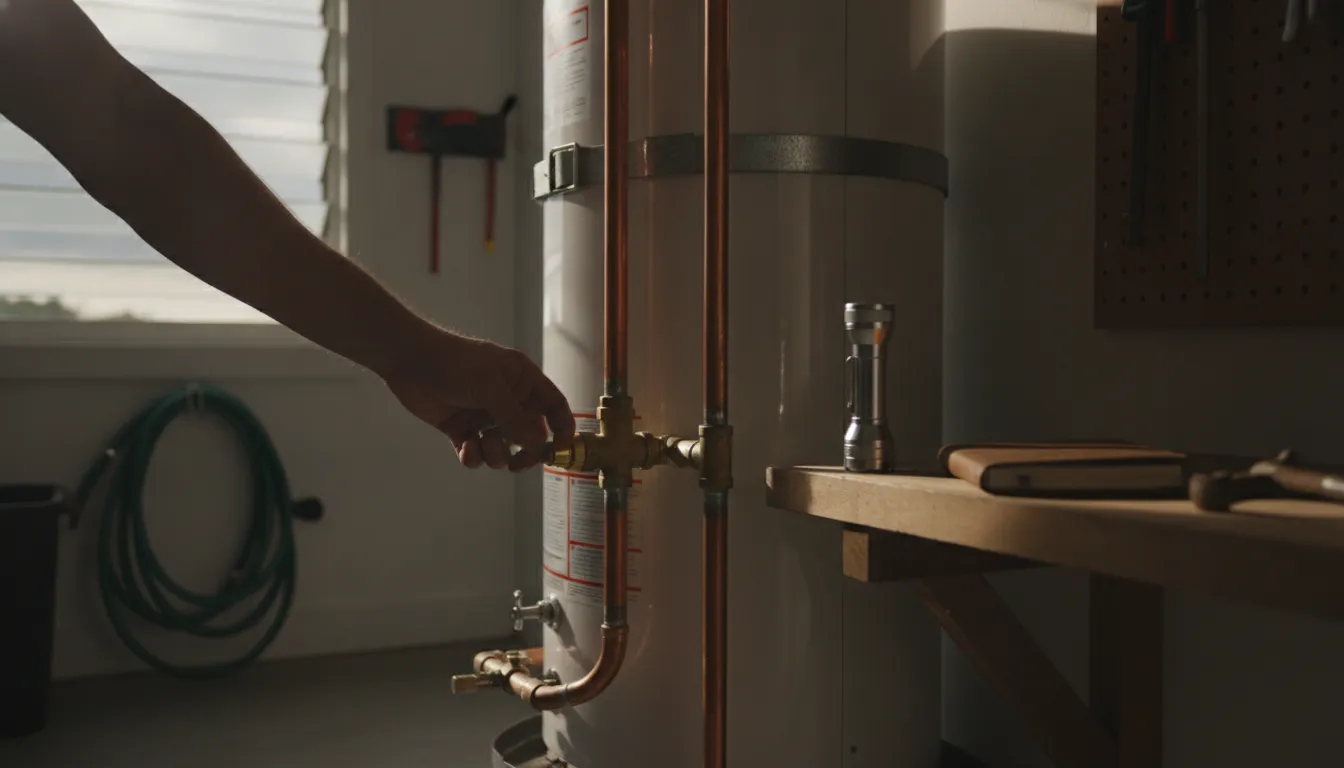
The first hurricane plumbing step is knowing how to stop water at the house. A cracked supply line or a failed heater valve can dump a full city connection onto the floor while you are evacuating. Find the valve before you need it.
On most Gulf Coast houses the main shutoff is where the water line enters, often on an exterior wall near the meter, in the garage, or in a utility closet. Slab homes sometimes hide it behind a panel or in a ground box by the street. Turn it clockwise until it stops, then open a faucet. Flow should drop to a trickle within a minute. Open the valve fully again so you do not leave it half closed, which can wear the washer.
Label the valve with a hang tag, and show every adult in the house. Gate valves that have not moved in years can snap. If the handle spins without stopping the water, or the stem weeps, that is a repair, not a practice run. Do not force a seized valve with pliers during a storm.
Also find the shutoffs at the water heater, under each toilet, and at the washing machine. Those smaller valves let you isolate one fixture when the main is fine. Keep a flashlight in the same closet. Streetlights and the panel may both be dark.
- Locate the main valve and both heater valves.
- Turn the main off and confirm a faucet stops.
- Turn it fully back on and check for drips at the stem.
- Tag the valve and tell the other adults where it is.
- Call for a replacement if the valve will not close or leaks when moved.
Secure the Water Heater Before Surge or Wind
A tank water heater is a tall cylinder of hot water. In a flood or a hard wind-driven shift, an unstrapped tank can tip, snap the gas or water lines, and flood the utility room. Strap it to the wall studs with two metal bands, one on the upper third and one on the lower third. Kits sold for seismic zones work fine in Florida garages. Do not strap only to drywall.
Set the heater on a platform if it sits on a garage slab that has flooded before. The goal is to keep the burner and controls above the water line you have actually seen in that room. If you do not know that line, ask a neighbor who stayed through the last surge, or look for a stain on the wall.
Before June, flush sediment if the tank is older than a year and you have not flushed it. Sediment cuts efficiency and can hide a failing drain valve. Check the temperature and pressure relief valve discharge tube. It should run downhill to a safe spot, not be capped and not dump where someone will be burned. If the valve itself is dripping, the heater needs service. Do not plug the tube.
Know how you will shut the heater off if you leave. Electric units need the breaker off. Gas units need the gas valve off, and only if you are comfortable doing that and relighting later. When in doubt, leave fuel isolation to the plumber or the gas company. Premier Plumbers handles water heater repair and replacement across the coast, including a look at whether an older tank is worth strapping or worth replacing before season.
Tankless units still need a plan. Confirm the unit is above the likely flood line, that the exhaust and intake are clear of debris, and that you know which breaker feeds it. A tankless heater does not tip the way a tank does, but it will not restart cleanly after a dirty power surge.
Clear Drains, Cleanouts, and the Sewer Path
Storm rain does not have to enter the house through a broken window. It enters through a floor drain, a laundry standpipe, or a toilet that is the lowest opening on a surcharged sewer. The prep is to give water a path that is not your bathroom.
Walk the yard after a dry week. Pull leaves from gutter downspout exits, channel drains, and the pop-up emitters that are supposed to carry roof water away from the slab. A blocked downspout dumps hundreds of gallons against the foundation during one rain band. Reattach any leader that wind has already loosened.
Inside, run water in every tub, shower, and floor drain you can reach. A drain that gulps and then rises is telling you the line is partly closed. Do not pour chemical opener into it and hope. Chemicals sit in a slow line, ruin fixtures, and make the later cleaning harder for the technician. If several fixtures are slow, or you hear gurgling when the washer discharges, the problem is likely the building drain or the lateral, not one trap.
Find the sewer cleanout. It is often a capped pipe in the yard, the garage, or a closet on the side of the house nearest the street. The cap should be tight and intact. A missing cap is an entry point for rain, roots, and pests, and it is also how sewage will fountain into the yard if the city main surcharges. Note where it is so a plumber is not hunting for it in the dark.
Homes on older cast iron, and homes that have already had a backup in heavy rain, should get a camera look before June. A video sewer inspection shows roots, bellies, and breaks that a bottle of cleaner will never fix. If the camera shows a sound pipe with buildup, hydro jetting can scour it. If the pipe is cracked or collapsed, jetting is the wrong tool and replacement or a lining decision comes next. Those are not interchangeable. Lining only belongs in a pipe the camera shows is still structurally fit.
Backwater valves are a separate project. A valve can keep city sewage from flowing backward into the house, but it has to be the right type, installed on the right line, and serviced. This article does not walk through that install. If storms already push water up through your lowest shower, ask for an inspection. Do not buy a cap online and thread it on yourself.
Outdoor Fixtures, Hoses, and What to Shut When You Leave
Outdoor plumbing is the part people skip because it looks minor. It is also the part wind and surge reach first.
- Disconnect garden hoses so a trapped hose cannot split a sillcock if pressure spikes, and so the faucet can drain.
- Shut the interior valve to each hose bib if you have one, then open the outside handle to relieve pressure.
- Bring in sprayer wands, pool fill hoses, and anything that can become debris against a window or a meter.
- Cap or close irrigation zones you will not run during the storm. A broken head on a live zone pumps water into a yard that is already flooded.
- If you have an outdoor shower, shut its stops and remove the handheld so it cannot whip in the wind.
Do not tape random fixtures shut and call that protection. Tape does not stop surge. A closed, labeled valve does.
If you evacuate, shut the main water valve after the hoses are off. Turn off the electric water heater at the breaker. For gas, follow the shutoff you already practiced, or leave it if you are not sure you can restore it safely. Fill a bathtub only if your local emergency guidance says to store water that way, and keep drinking water in clean food-grade containers. Bathtub water is for flushing, not for drinking.
Tell a neighbor or your property manager where the shutoff is if someone may need to enter. Condos and rental homes often hide the valve in a locked closet. The management office should know, but in a storm they may not answer.
What to Do While the Storm Is Overhead
Once the rain starts, the job shifts from projects to restraint. Do not run the dishwasher, the clothes washer, or a long shower while the street is flooding. Every gallon you send down the building drain is a gallon that may come back if the city main is full. Use toilets sparingly.
If a floor drain or tub starts to rise, stay out of the water. Sewage backup is a contamination problem, not a mop problem. Turn off the main supply if clean water is also leaking. Kill power to the utility room at the breaker only if you can reach the panel without stepping through water. If the floor is already wet near the panel, leave it and wait for the utility or the fire department guidance for your area.
Skip chemical drain openers during the storm. They will not beat a surcharged city main, and they sit in the line as a hazard for whoever opens a cleanout later. Skip the urge to pump floodwater into a cleanout or a toilet. You will overload the same pipe that is already failing, and you may push sewage into a neighbor’s house.
Generator use needs the same caution. Never backfeed the house by plugging a generator into a dryer outlet or a heater circuit. That can energize lines crews think are dead. If a transfer switch was installed earlier in the year, use that. Water heaters and well pumps, where a home has a well, should be on circuits you understand before the lights go out.
Keep calls short if you do reach a plumber during landfall. Crews cannot safely pull cleanout caps in high wind, and they should not be asked to. The useful call during the storm is a life-safety leak you can shut off, or a note so you are first on the list when travel is safe again.
| When | Plumbing step | Stop and call if |
|---|---|---|
| April or May. | Test the main shutoff. Strap the heater. Clear yard drains. Camera a suspect sewer. | The valve will not close. The heater leaks. Several fixtures gurgle. |
| Watch or warning. | Remove hoses. Shut hose bibs. Fill drinking-water jugs. Know the heater breaker. | You cannot find the shutoff. The cleanout cap is missing. |
| During the storm. | Limit water use. Stay out of rising drains. Do not add chemicals or pump into the sewer. | Sewage is coming up through a tub, shower, or floor drain. |
| After power returns. | Check for leaks. Restore the heater only after supply water is confirmed. Run one fixture at a time. | You smell gas. You see a bowed pipe. Drains back up on the first use. |
After the Storm: Leaks, Heaters, and Dirty Water
When the all-clear allows travel, walk the house before you turn everything back on. Look at the water heater platform, the washing machine hoses, and the ceiling under upstairs baths. A supply line that held during the storm can fail when pressure returns.
Open the main valve slowly if you closed it. A sudden rush can loosen sediment and clog aerators. Run a cold fixture at the lowest sink for a few minutes and watch the cleanout area outside. If water rises in a tub you are not using, shut the main again. That is a sewer problem, not a faucet problem.
Restore the water heater only after the tank or the heat exchanger is full. Electric elements that fire dry burn out. Gas valves that were closed should be relit only if you know the manufacturer’s steps and smell no gas. If the tank sat in floodwater, assume the insulation and controls are contaminated. Do not try to dry a submerged gas valve and reuse it. Replacement is the safe call, and insurance photos taken before you discard the unit will matter.
Follow local utility guidance before you drink tap water. A boil-water notice is common after pressure loss, because a drained public main can pull in groundwater. Plumbing prep does not override that notice. Use stored water or boiled water until the utility lifts it.
Document damage with photos before cleanup: the water line on the wall, the failed valve, the backed-up fixture. Standard homeowners policies often exclude flood, which is why NOAA points people to a separate flood policy well before season. A plumber’s invoice and a camera clip of a broken lateral help a claim. They do not replace the policy.
When to Call a Plumber Instead of Waiting
Some items on this list are homeowner work. Turning a labeled valve, pulling leaves from a drain, and taking hoses off are in that group. Other items need a licensed visit, because guessing makes the next storm worse.
Call before season if the main shutoff is seized or the water heater is unstrapped and past its warranty. Also call if floor drains gurgle in ordinary rain or you cannot find a cleanout. Call after the storm if sewage entered the house, a supply line burst, or the heater was submerged. Call if drains will not empty once the street has dried. Active flooding, a sewage backup, and a leak you cannot shut off are emergency calls. A slow drain on a dry day can be a scheduled visit.
Premier Plumbers answers 24 hours a day for those emergencies. That is an advertised capability, not a promise that a truck will arrive in a measured number of minutes during a hurricane. Dispatch depends on whether roads are open and whether the address is in the covered counties. Same-day scheduling on quieter days is a request for the dispatch board, not an instant booking.
Use the phone for the region you are in. Sarasota and Bradenton: (941) 257-9115, at 6026 S. Tamiami Trail, Sarasota. Fort Myers and Naples: (239) 427-2175, at 2317 Bruner Lane, Fort Myers. Tampa: (813) 279-8575, at 255 S 78th Street, Tampa. Naples is part of the Fort Myers service region, not a separate storefront. There is no St. Petersburg office.
If you are comparing repair choices after the camera visit, ask what the recording showed. A liner, a jetting visit, and a replacement solve different failures. Hydro jetting scours grease and roots from a pipe that is still intact. Sewer replacement is the path when the line is cracked, collapsed, or bellied beyond what a liner can carry. The technician should say which one the video supports before anyone digs.
Storm season fills the calendar fast. Call (941) 921-4846 and ask for a shutoff check, a heater strap, or a sewer camera before the first named storm. The office lines are Sarasota and Bradenton at (941) 257-9115, Fort Myers and Naples at (239) 427-2175, and Tampa at (813) 279-8575.
Frequently Asked Questions
When should Florida homeowners prep plumbing for hurricane season?
Finish the shutoff test, heater strap, and drain check in April or May. The Atlantic season runs June 1 through November 30, and shops book up once a storm is named. A valve that fails in May is an easy repair. The same valve failing during an evacuation is not.
Should I turn the water off if I evacuate?
Yes, if you can do it safely before you leave. Close the main after hoses are disconnected, and turn the electric water heater off at the breaker. Leave the gas supply alone if you are not sure how to restore it. Tell someone who may check the house where the valve is.
Can I use chemical drain cleaner to get ready for heavy rain?
No. Chemical openers do not fix a root mass, a belly, or a city main that will surcharge in the storm. They also stay in the pipe as a burn hazard. If more than one fixture is slow, schedule a cleaning or a camera inspection instead.
What if sewage comes up through the shower during the storm?
Stop using water, keep people and pets out of the water, and do not pour chemicals in. If you can reach the main shutoff without crossing standing sewage, turn it off. Call for emergency service when travel is safe. Mopping during the storm spreads contamination and does not stop the backup.
Does a strapped water heater need any other storm prep?
Yes. Straps keep the tank upright. You still want the relief valve discharging to a safe spot and a plan to kill power or gas if you leave. Flush sediment before season. A tank that sat in floodwater should be replaced, not dried out and restarted.