When Water Line Replacement May Be the Right Move
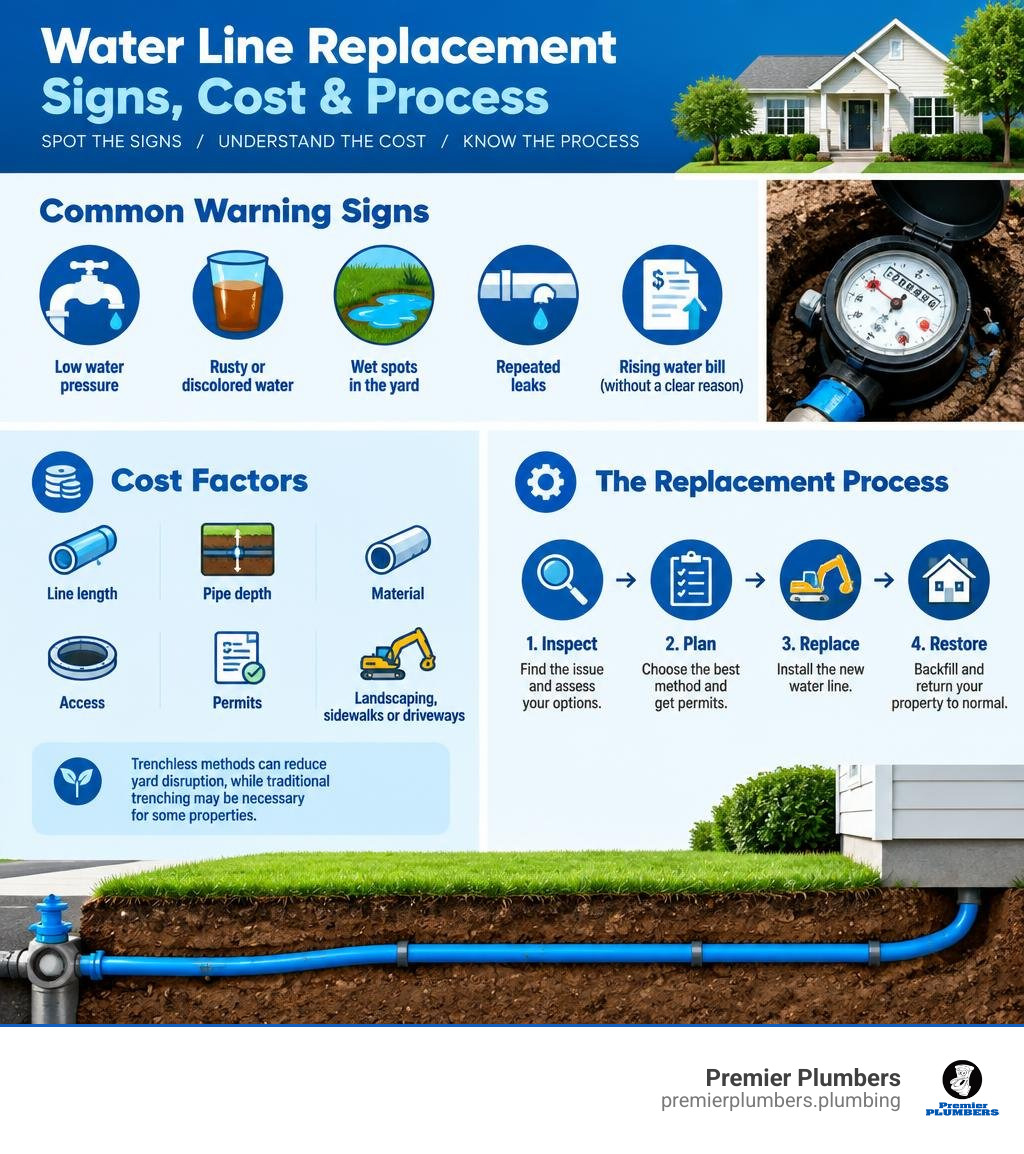
Water line replacement may be needed when you have ongoing low water pressure, rusty or discolored water, wet spots in the yard, repeated leaks, or a water bill that rises without a clear reason. Start by checking whether your water meter moves when all fixtures are off, then schedule a professional inspection to locate the issue and determine whether repair or replacement makes more sense.
For Bradenton homeowners, the final cost depends on the line length, pipe depth, material, access, permits, and whether excavation affects landscaping, sidewalks, or driveways. Trenchless methods can reduce yard disruption, while traditional trenching may be necessary for some properties.
The experienced team at Premier Plumbers helps Southwest Florida homeowners assess complex water line problems, understand their options, and prepare for the replacement process. In the sections ahead, you will learn what the warning signs mean, how replacement works, and what to expect before work begins.
Warning Signs That Require Immediate Water Line Replacement
Your main water service line operates continuously beneath your property, delivering pressurized, treated potable water from the city main into your home. Because this critical pipe stays hidden underground, failures often develop quietly before causing serious property damage. Recognizing early underground water line repair warning signs can help you respond before a leak causes extensive yard or interior damage.
In coastal Florida, shifting sandy soils, high water tables, and invasive root systems can accelerate the deterioration of aging pipes. When a main water supply line fractures, escaping water can quickly saturate the surrounding ground and undermine driveways, walkways, and concrete slabs.
If a sudden rupture threatens your property, the Premier Plumbers emergency plumbing team can help shut off the supply and limit further water damage.
Drop in Water Pressure and Flow Fluctuations
A sudden or gradual decline in household water pressure across multiple plumbing fixtures is one of the most reliable indicators of water line distress. While a localized fixture issue might point to an aerator clog or failing valve, an overall pressure drop across all faucets, showers, and hose bibbs points to a main supply problem.
Over decades of service, older lines accumulate interior mineral scaling and corrosion. Galvanized steel and early copper installations can develop interior pitting and sediment blockages that choke the pipe diameter. Furthermore, an underground fissure allows gallons of pressurized water to leak into the soil every minute, creating an immediate flow reduction inside the home. If your water pressure drops significantly whenever two appliances run at the same time, your main supply pipe may be compromised.
Persistent Lawn Puddles and Unexplained Spikes in Utility Bills
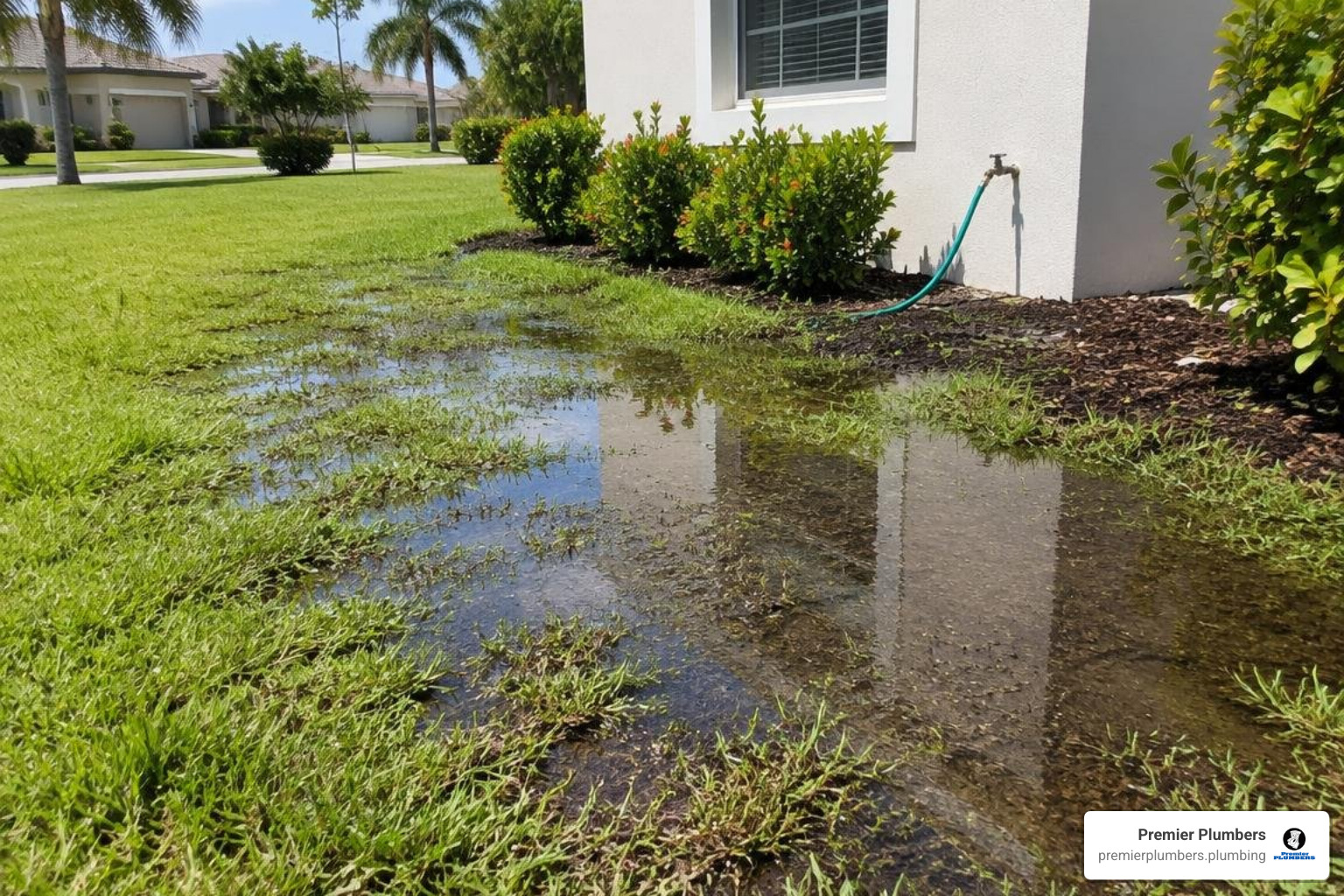
Unless Southwest Florida has just experienced a heavy afternoon storm, your yard should dry out evenly. Spongy, waterlogged patches of grass, unexplained sinkholes, or puddles that linger during dry spells are direct signs of subterranean leaks. The constant influx of moisture often causes grass directly above the break to turn an unnaturally bright green compared to the rest of the lawn.
Along with wet turf, unexpected spikes in your monthly water bill strongly indicate water loss. You can confirm an underground leak with a simple test:
- Turn off all water-consuming appliances and indoor fixtures.
- Locate your municipal water meter near the curb.
- Check the low-flow indicator dial or digital leak detection triangle.
If the meter moves while every fixture is shut off, unmetered water may be escaping between the meter box and your home. For complex property layouts, acting on a water line repair crisis early can help protect your home from foundation destabilization and escalating utility bills.
Comparing Methods for Residential Water Line Replacement
Choosing the best approach for replacing an underground supply pipe depends on your property layout, budget, soil composition, and existing landscape features. Modern plumbing practices offer alternatives to traditional open excavation, helping homeowners protect paved surfaces and landscaping.
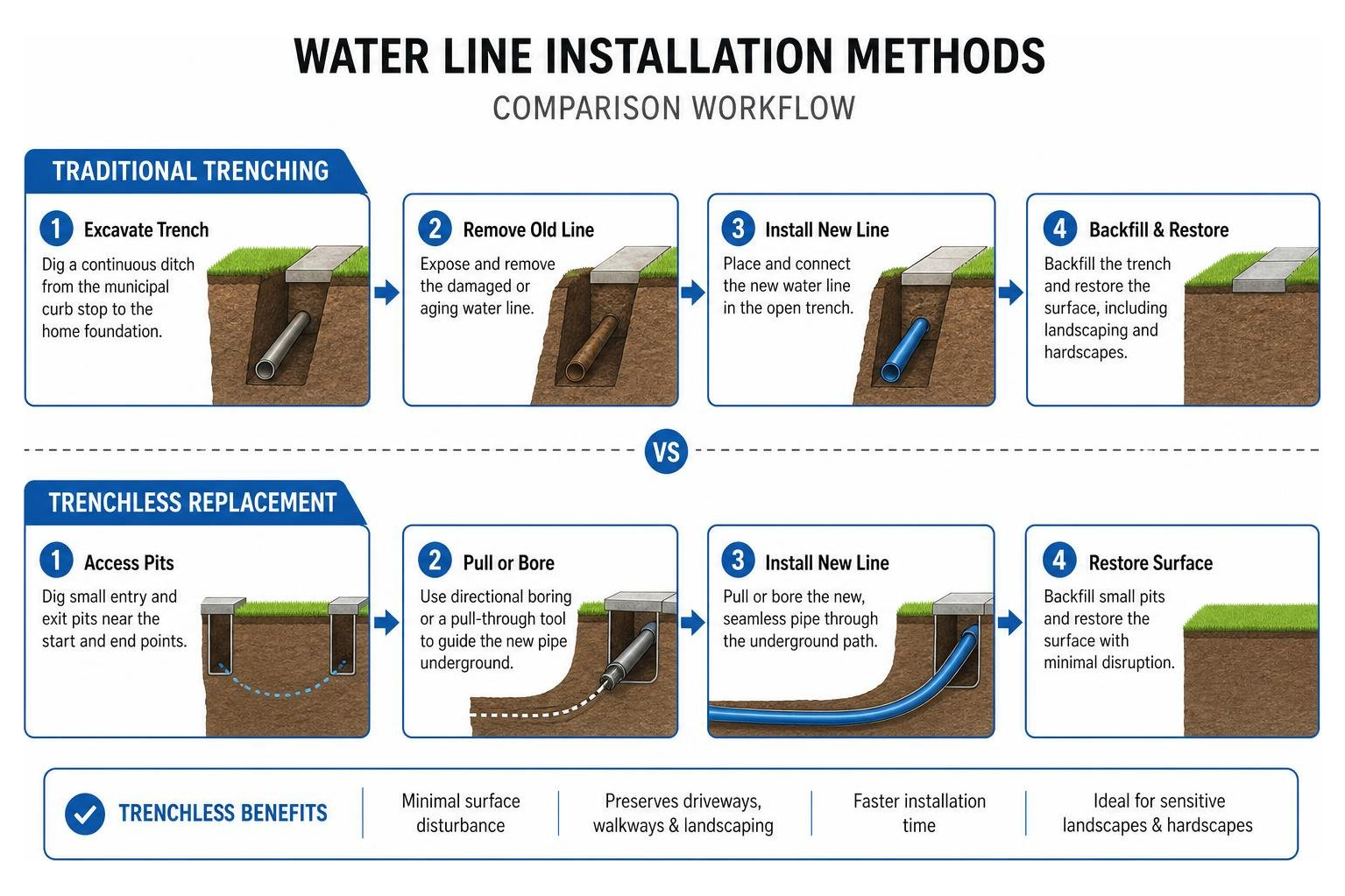
Traditional Trenching vs. Trenchless Water Line Replacement
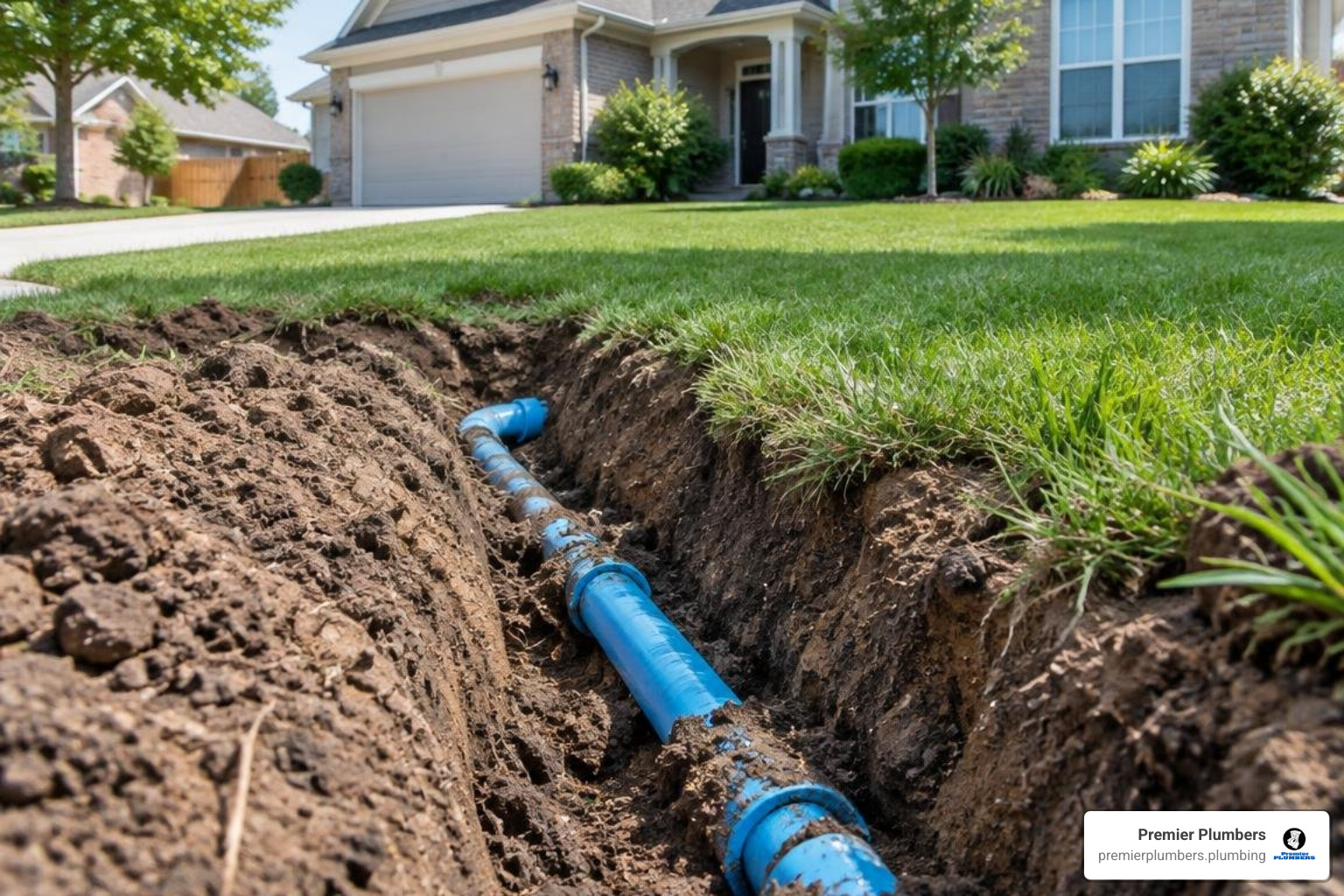
Traditional open trenching involves digging a continuous ditch along the entire path of the service pipe from the municipal curb stop to your home’s foundation entry point. While open excavation remains necessary when existing lines run under heavy tree root structures or through rocky subsoils, it disrupts driveways, sidewalks, and turf.
Trenchless water line replacement provides a minimally invasive alternative. By using directional boring or horizontal pull-through methods, plumbers dig small entry and exit pits. A specialized pneumatic tool then pulls or bores a new, seamless pipe underground without disturbing the surface above.
| Feature | Traditional Open Trenching | Trenchless Replacement |
|---|---|---|
| Surface Disruption | High (full-length yard excavation) | Minimal (small entry and exit pits) |
| Driveway / Walkway Impact | Often requires concrete demolition | Passes underneath paved surfaces |
| Installation Speed | Typically 1 to 2 days | Often completed in a single day |
| Landscape Restoration | Extensive sod, mulch, and replanting | Minimal surface patching |
| Soil Compatibility | Suitable for all soil and obstruction types | Ideal for sandy, clear subterranean paths |
Evaluating Pipe Materials: Copper, PEX, and PVC
Selecting the right pipe material helps ensure your drinking water remains clean, safe, and pressurized for decades. During water service upgrades, modern plumbing standards rely primarily on three materials:
- Type K Copper: The heavy-duty industry standard for underground potable water service. Seamless Type K copper offers exceptional strength, thermal stability, and long-term durability against underground soil pressure.
- Cross-Linked Polyethylene (PEX): Highly flexible, corrosion-resistant, and continuous over long runs without underground joints. PEX resists scale buildup and handles soil movement well without cracking.
- Polyvinyl Chloride (PVC / CPVC): Rigid and cost-effective, though generally less flexible than PEX in subterranean installations subjected to root movement and shifting ground.
Homes built before the mid-1980s may still have legacy galvanized steel pipes that corrode internally or lines that may present water-quality concerns. When aging pipes extend beyond the main service line, Premier Plumbers can evaluate whether whole-home repiping is appropriate.
Homeowners considering a broader plumbing upgrade can also learn how whole-home repiping services work and why the right approach depends on the condition and layout of the existing plumbing system.
Step-by-Step Water Line Replacement Process for Bradenton Homeowners
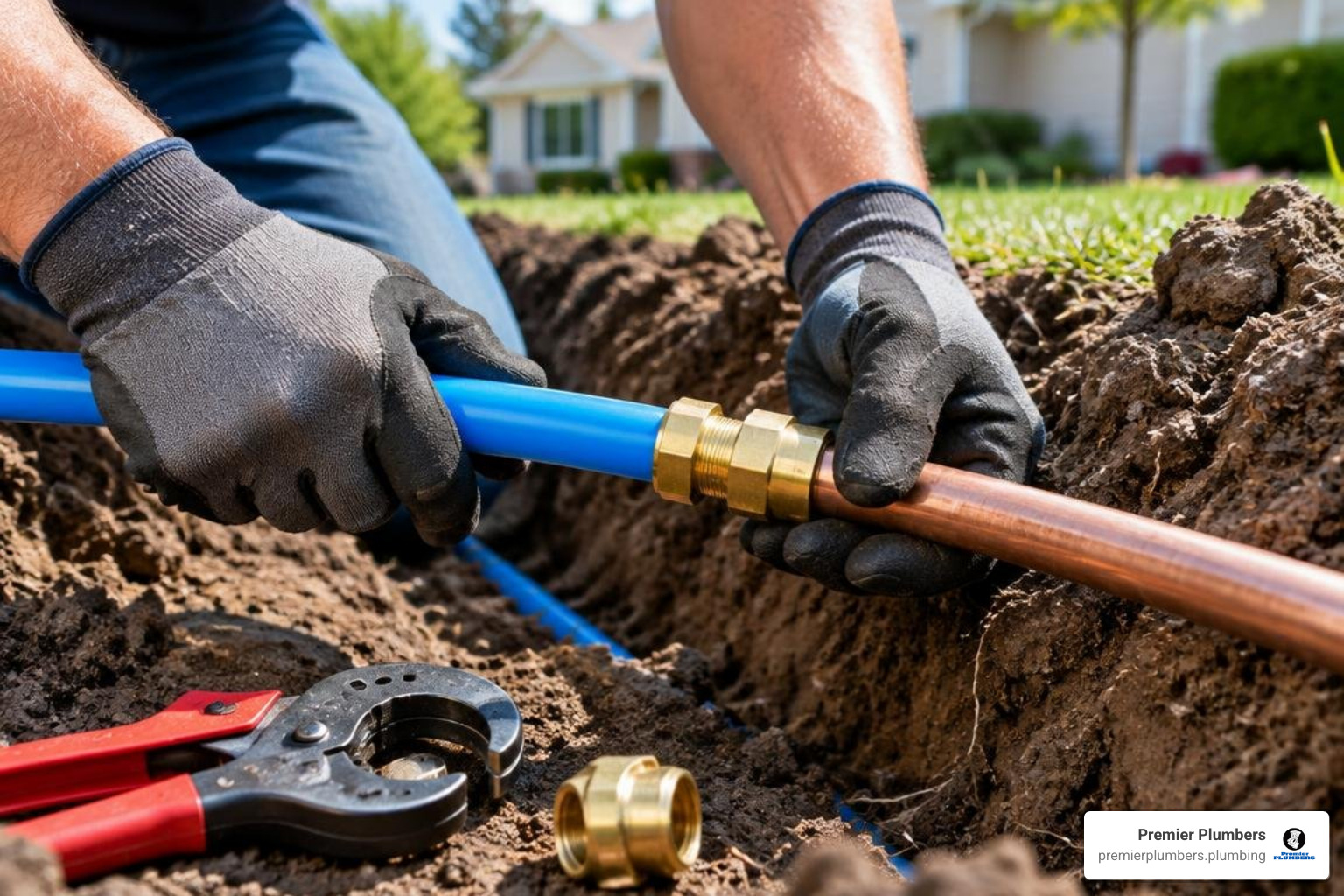
Replacing an underground water supply line requires structured coordination, engineering safety, and compliance with local municipal codes. At Premier Plumbers, our three-generation legacy ensures every installation meets current standards.
Preparing Your Property for Water Line Replacement
Before work begins, thorough site preparation prevents delays and protects your property:
- Utility Locating (Call 811): Sunshine 811 must mark underground electrical, gas, and communication lines across your property to prevent utility strikes.
- Access Clearances: Clear vehicles from the driveway and ensure a direct path between the municipal meter box and your home’s shut-off valve.
- Landscape Protection: Move potted plants, lawn decorations, and temporary fencing away from the planned pipe route.
- Water Interruption Planning: Prepare drinking and sanitation water for your household during the planned 4 to 8 hour service shut-off window.
Permitting, Excavation, and Municipal Water Line Connection
Under regional guidelines such as the Florida plumbing permitting guide standards, replacing an exterior water service line requires authorized building permits and formal municipal inspections.
Once permits are secured, the installation process moves through several essential stages:
- Excavation & Placement: Technicians prepare the connection points and pull or trench the new Type K copper or PEX supply line at the code-mandated burial depth.
- Curb Stop & Backflow Integration: The new line connects securely to the city water meter and the home’s main isolation valve, incorporating approved backflow prevention.
- Hydrostatic Pressure Testing: The line is brought up to working pressure and monitored to verify zero leakage along all fittings.
- Post-Installation Flushing & Filtration: The new line is thoroughly flushed for at least 15 to 30 minutes to clear construction sediment. In homes upgrading from older materials, homeowners should use point-of-use filters certified to NSF-53 standards on drinking taps for added peace of mind.
Estimating the Cost Factors of a Main Line Upgrade
Water service line replacement pricing varies based on your property’s specific conditions. The overall cost is shaped by the length and depth of the line, soil conditions, access to the work area, permitting requirements, and any landscape or hardscape restoration needed after installation.
- Linear Footage & Run Length: The distance from the municipal meter box near the street to your home’s foundation entry directly dictates material and labor requirements.
- Burial Depth & Obstructions: Digging around mature root systems, decorative pavers, retaining walls, or concrete driveways requires specialized tools or trenchless boring rigs.
- Permitting & Municipal Fees: Local administrative filing fees and mandatory post-installation plumbing inspections ensure code compliance.
- Surface Restoration: Re-sodding turf, repairing broken sidewalk sections, or repaving asphalt driveways will influence total project expenses if open excavation is chosen.
Working with an experienced team ensures you receive an accurate, upfront estimate tailored to your property.
Frequently Asked Questions About Main Water Service Lines
How long does a full service pipe replacement typically take?
Most residential water service line replacements are completed within a single working day. The water supply is typically shut off for only 4 to 8 hours during active line connection and testing. Once the new line passes inspection, the water is turned back on, the line is flushed, and the entry pits or trenches are backfilled.
Will replacing the underground supply line ruin my landscaping?
Not necessarily. By utilizing trenchless directional boring or pull-through techniques, our team can route a new supply pipe beneath established turf, flowerbeds, and concrete driveways with minimal surface disturbance. Traditional trenching is reserved only for situations with major underground obstructions or severe soil instability.
How do I verify whether my incoming line contains lead or galvanized steel?
You can identify your pipe material by checking where the service pipe enters your home near the main shut-off valve. Gently scratch the surface of the pipe with a key or coin:
- Lead: A dull gray metal that scratches easily to reveal a shiny, silver finish. A magnet will not stick to lead.
- Galvanized Steel: Dull gray or silver-brown, very hard to scratch, and strongly magnetic.
- Copper: The color of a penny and non-magnetic.
Ensuring Reliable Water Service for Your Home
A damaged or deteriorating main water supply pipe can undermine your home’s structural integrity, compromise water quality, and drive up utility costs. Replacing an outdated water line provides consistent water pressure, safeguards your property against subterranean leaks, and ensures safe drinking water for your family.
At Premier Plumbers, our family-owned business brings a three-generation legacy of plumbing craftsmanship to every job. Whether you need a comprehensive assessment or a modern trenchless upgrade, our licensed team is ready to help. If you notice warning signs on your property, contact our water line replacement specialists today to schedule an inspection.