What Whole Home Re-Piping Services Actually Involve (And When You Need Them)
Whole home re-piping services replace every water supply line in your house, from the main water entry point to every fixture, faucet, and appliance, giving you a completely fresh plumbing system.
Quick answer for homeowners:
- What it is: Full replacement of all supply pipes throughout your home
- When you need it: Pipes over 40-50 years old, recurring leaks, low water pressure, or discolored water
- Common materials: PEX, copper, or CPVC
- Typical timeline: 2 to 5 days depending on home size
- Typical cost range: Varies depending on home size, layout, and material choice
- Do you stay home? Yes, most homeowners can remain in the house during the project
- Does it add value? Yes, repiping can increase resale value for homes with outdated pipe systems
If your home is more than 40 years old and you’re dealing with rusty water, weak pressure, or leaks that keep coming back, the pipes themselves are likely the problem, not just individual fixtures. Patching one leak at a time can feel like a losing battle when the entire system is deteriorating.
This guide walks you through everything you need to know, from spotting the warning signs to choosing the right pipe material to understanding what happens inside your walls during the project.
At Premier Plumbers, our experienced plumbing team provides whole home re-piping services across Sarasota, Bradenton, Fort Myers, Naples, Tampa, Charlotte County, Collier County, and Lee County for homeowners who need a safer, more reliable water supply system.
When Do You Need Whole Home Re-Piping Services?
Plumbing systems are designed to last a long time, but they do not last forever. Knowing when to transition from simple repairs to a full system upgrade can save you thousands of dollars in water damage.

Many homeowners ask us whether they can simply continue patching individual leaks. While a single leak in a relatively new system is easily fixed with a spot repair, recurring leaks are a symptom of a systemic issue. When leaks keep appearing in different parts of the home, a full repipe is often the more reliable and cost-effective long-term solution.
Understanding why you might need a repipe is the first step toward protecting your home from catastrophic water damage, high insurance premiums, and structural issues.
Signs It Is Time to Consider Whole Home Re-Piping Services
If you are unsure about the state of your plumbing, there are several key indicators that your system is reaching the end of its life:
- Weak or Inconsistent Water Pressure: Over time, mineral deposits and rust build up inside older metal pipes. This buildup narrows the pathway for water, resulting in a frustratingly weak stream in your shower or kitchen sink.
- Discolored or Rusty Water: If your water comes out brown, yellow, or murky, your metal pipes are likely rusting from the inside out. This rust eventually flakes off and enters your water supply.
- A Metallic Taste or Odor: Corroding pipes can leach metals into your water supply, leading to a distinct metallic taste or smell.
- Frequent Leaks: If you are calling a plumber every few months to patch a new leak, your pipes have likely thinned out to the point where they can no longer handle standard water pressure.
- Fluctuating Water Temperatures: If flushing a toilet causes the shower water to turn boiling hot or freezing cold, it is often a sign that corroded supply lines are restricting the proper flow of hot or cold water.
A repipe focuses on your home’s water supply lines, but older homes may also have drainage problems that need attention. Premier Plumbers can evaluate whether pipe lining services are appropriate for damaged drain or sewer lines while planning a broader plumbing upgrade.
For homeowners trying to understand how water lines, fixture connections, and shutoff valves work together, our complete guide to plumbing installation explains the basics of residential plumbing systems in more detail.
The Hidden Risks of Outdated Pipe Materials
The material of your existing pipes plays a massive role in how quickly they deteriorate. Homes built in Florida between the 1920s and late 1990s often contain materials that are highly susceptible to failure:
- Polybutylene Pipes: Extremely common in homes built between 1970 and 1995, polybutylene is a flexible plastic piping that reacts poorly to water treatment chemicals like chlorine. Over time, the material becomes brittle, flakes, and splits without warning, causing sudden and severe flooding.
- Galvanized Steel: Standard in pre-1960s homes, galvanized pipes are coated in zinc, which eventually wears away. Once the zinc is gone, the raw steel rusts rapidly, leading to clogged lines, discolored water, and eventual failure.
- Copper Pinholes: While copper is highly durable, certain water chemistry profiles and high water velocity can cause localized corrosion, resulting in tiny, spray-like pinhole leaks that are incredibly difficult to detect behind walls.
- Cast Iron Drain Lines: Often paired with older supply lines, cast iron pipes suffer from internal rusting and cracking.
If your home’s aging supply pipes are paired with deteriorating cast iron drains, our article on cast iron pipe replacement in Southwest Florida explains why older drainage systems fail and how replacement protects the rest of the plumbing system.
Comparing Your Pipe Material Options
When investing in whole home re-piping services, selecting the right replacement material is critical. Modern plumbing codes allow for several high-quality options, each with its own set of advantages.
| Feature | PEX (Cross-linked Polyethylene) | Copper (Type L) | CPVC (Chlorinated Polyvinyl Chloride) |
|---|---|---|---|
| Average Lifespan | 40+ years | 50 to 70+ years | 50 years |
| Flexibility | High (fewer joints needed) | Rigid | Semi-rigid |
| Corrosion Resistance | Excellent (impervious to rust/acid) | Moderate (susceptible to acidic water) | High |
| Freeze Resistance | High (can expand slightly) | Low | Low |
| Material Cost | Budget-friendly | Premium | Mid-range |
Choosing the Right Material for Your Whole Home Re-Piping Services
The best material for your home depends on your budget, water chemistry, and long-term property goals. For instance, homes in coastal areas like Sarasota or Naples might face different environmental factors than inland properties.
When planning your project, understanding repiping costs and how material selection impacts the bottom line will help you make an informed decision.
Copper vs. PEX vs. CPVC
Let’s break down how these materials compare in real-world applications:
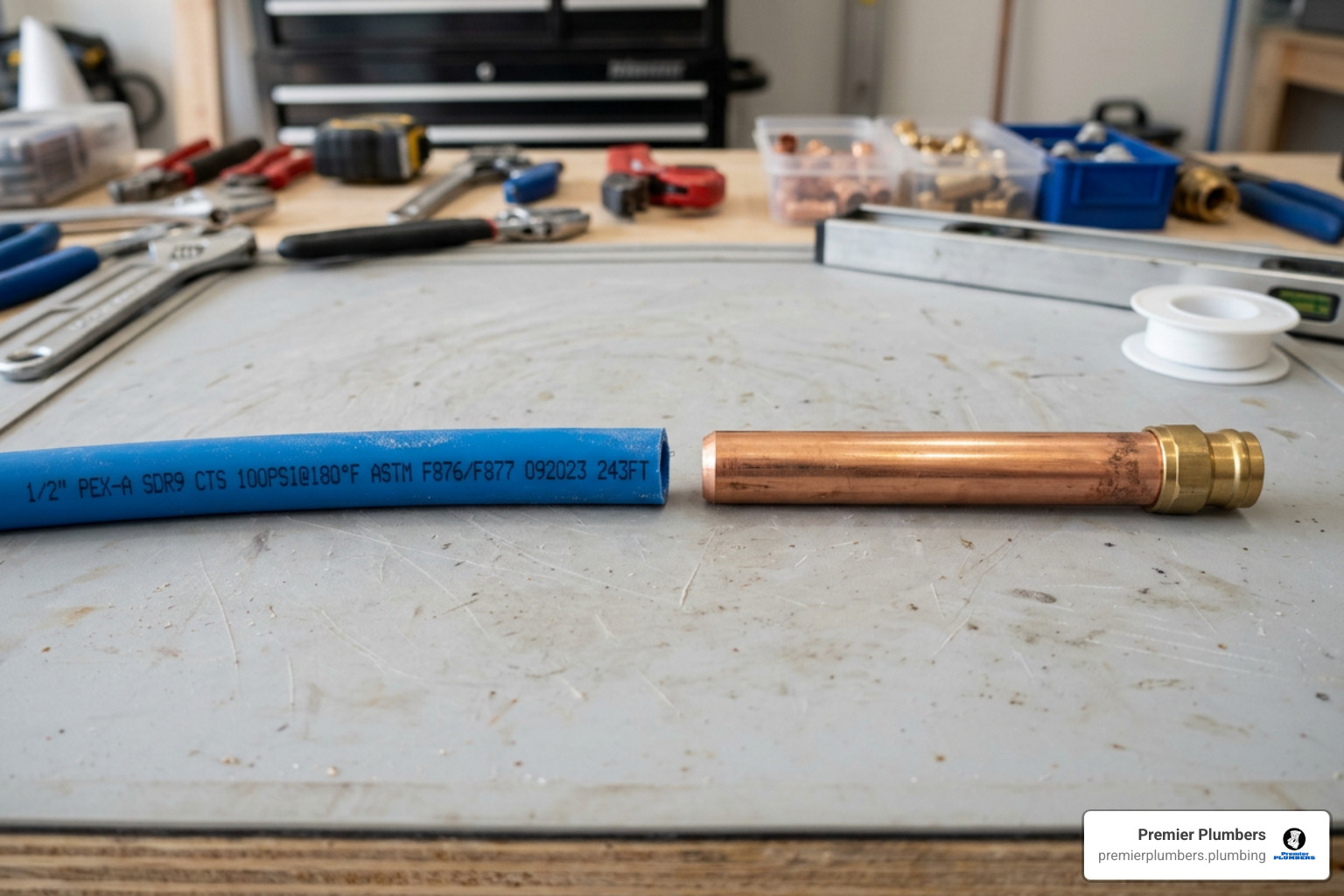
- PEX (Cross-linked Polyethylene): PEX is the industry standard for modern home repipes. Because it is highly flexible, our team can snake it through walls and ceilings with minimal drywall damage. PEX-A, which uses an expansion fitting method, is particularly favored for its superior strength and resistance to kinking. It is completely impervious to corrosion from hard water.
- Copper: Copper is the gold standard for longevity and durability. It naturally resists bacterial growth, handles extreme temperatures, and can last for over half a century. However, it is a rigid material, meaning it requires more wall openings to install and comes with a higher material cost.
- CPVC: CPVC is a rigid plastic pipe that has been used for decades. It is more cost-effective than copper and offers good chemical resistance, but it can become brittle over time, especially in hot water lines.
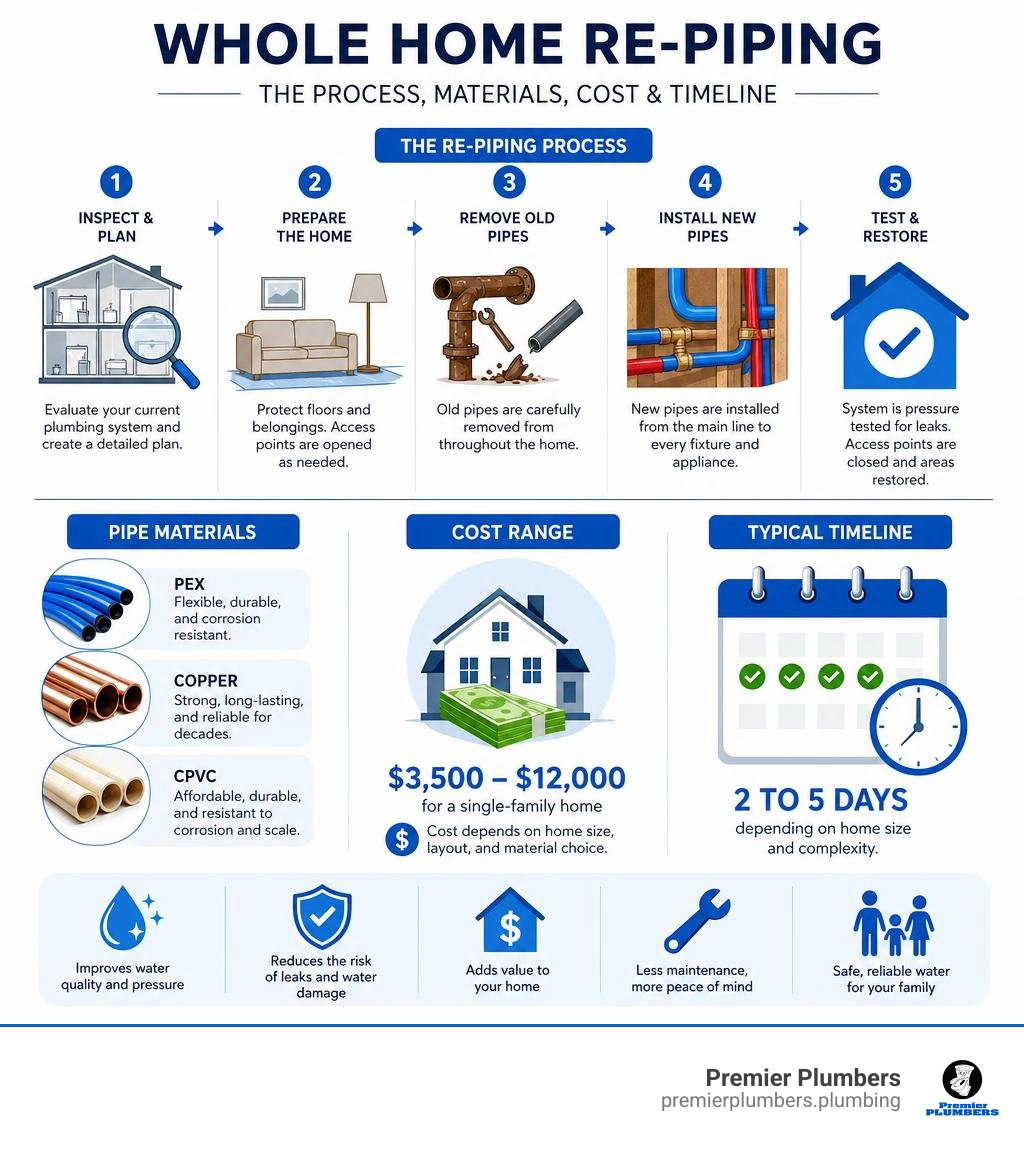
What to Expect During the Repiping Process
A whole-home repipe is a major home improvement project, but a structured process keeps it from feeling overwhelming.
Before we begin cutting into walls, we assess your existing plumbing layout, water pressure, fixture count, and any related drainage concerns. Supply lines almost always require physical replacement, while separate drain or sewer issues may call for a different solution.
Because repiping changes the potable water supply system in your home, permits and inspections are an important part of the work. Florida homeowners can review statewide code resources through the Florida Building Code, while your local city or county determines the specific permitting process for your property.
Minimizing Disruption and Protecting Your Home
At Premier Plumbers, we treat your home with the utmost respect. Here is how we protect your living space throughout the project:
- Prep and Protection: We cover your floors, furniture, and personal belongings with heavy-duty drop cloths and plastic sheeting to contain dust.
- Staged Water Shutoffs: We only shut off the water during active working hours, typically from 8:00 AM to 5:00 PM. We make sure your water service is restored at the end of each work day so you can bathe, cook, and live comfortably.
- Daily Cleanup: Our crews clean up their workspaces daily, removing debris and vacuuming up plaster dust so your home remains livable.
Permits, Inspections, and Wall Restoration
A professional repipe must always be done to code. This is not a project where you should ever skip the paperwork:
- Permitting: We handle the entire permitting process with your local county or city municipality, ensuring all work complies with applicable building and plumbing code requirements.
- Inspections: Once the new piping system is installed, we perform a rigorous pressure test before a local building inspector visits the property to sign off on the work.
- Drywall Restoration: After the inspection passes, we patch, texture, and paint the access points we made in your drywall, leaving your walls looking exactly as they did before we arrived.
Frequently Asked Questions About Home Repiping
We understand that you probably have plenty of questions about how this process affects your daily routine and your wallet. Here are some of the most common questions we hear from homeowners in Sarasota, Fort Myers, and Tampa.
How long does a whole-home repiping project typically take?
Most whole-home repiping projects for standard single-family homes take between 2 to 5 days to complete. Smaller, single-story homes or historic bungalows can often be repiped in as little as 1 to 2 days, while larger properties with multiple bathrooms or complex layouts may take up to 4 or 5 days.
Will repiping improve water pressure and water quality?
Yes, absolutely. By replacing old, corroded, or mineral-clogged pipes with smooth-walled PEX or copper, you will immediately notice a dramatic improvement in water flow and pressure. It also completely eliminates the rust, sediment, and metallic taste associated with deteriorating steel or copper lines, giving you clean, clear water.
How does repiping affect home value and insurance?
Repiping is one of the best investments you can make for your home’s long-term financial health.
- Resale Value: A fully documented, professionally permitted repipe can support your home’s resale value, especially if you are replacing high-risk materials like polybutylene or galvanized steel.
- Insurance Benefits: Many Florida home insurance providers charge steep surcharges or refuse to cover homes with active polybutylene or aging galvanized plumbing. Providing proof of a professional repipe may help lower your premiums or secure coverage.
Conclusion
Upgrading your home’s plumbing system is a significant step, but it is one that brings permanent peace of mind, improved water quality, and long-term protection for your property. With our three-generation legacy of expertise, the team at Premier Plumbers is dedicated to making the entire process as smooth, clean, and stress-free as possible for families across Southwest Florida. If you are ready to put an end to recurring leaks and low water pressure, contact our whole home re-piping specialists today to schedule your professional consultation.