When a Clogged Drain Is Actually a Sewer Emergency
Clearing a clogged sewer line is one of the most urgent plumbing problems a Florida homeowner can face. Unlike a single slow sink, a main sewer line clog affects every drain in your home at once, and if left untreated, it can lead to sewage backups, foul odors, and costly water damage.
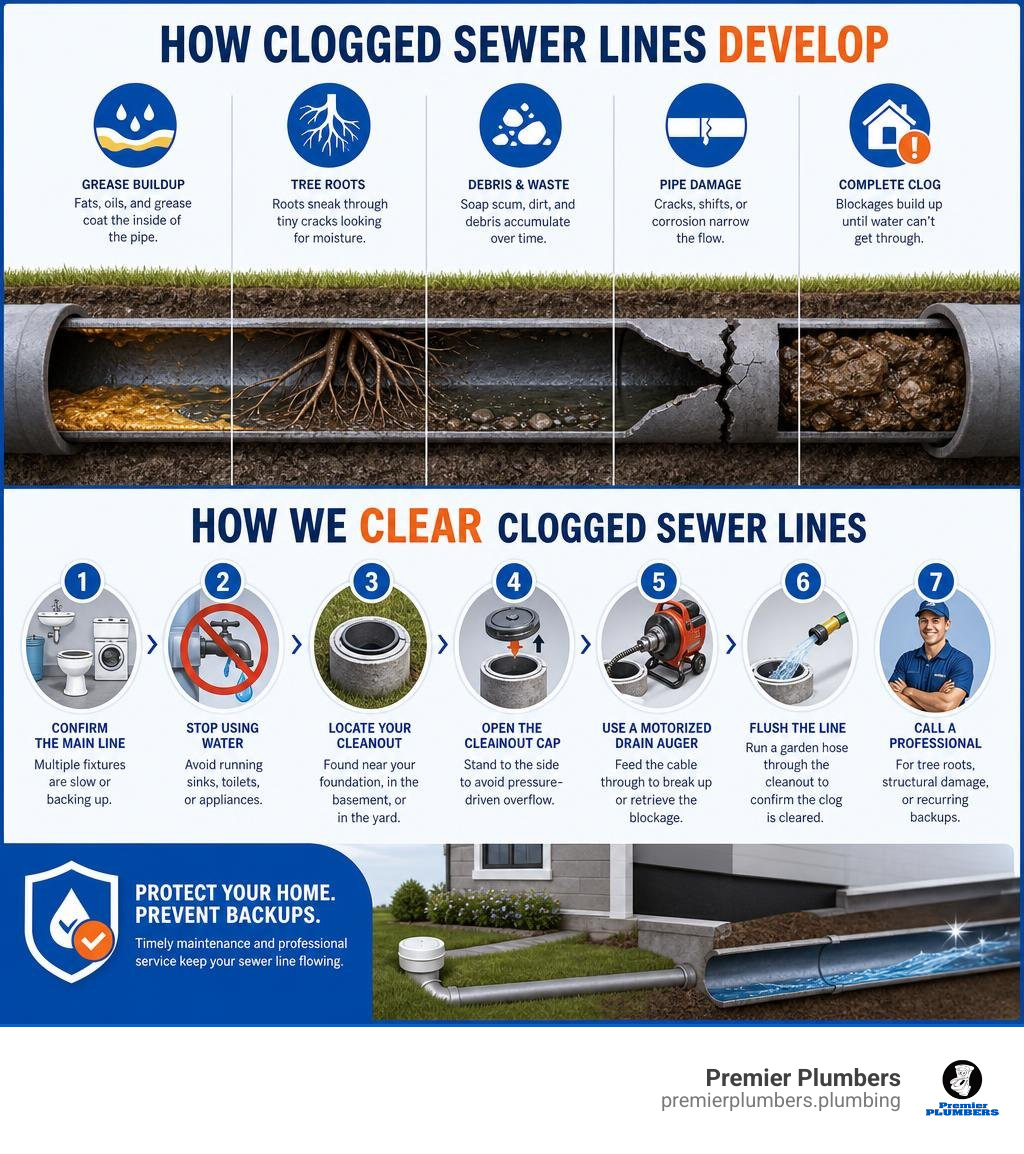
Here’s a quick overview of how to clear a clogged sewer line:
- Confirm it’s the main line: check if multiple fixtures are slow or backing up at the same time
- Stop using water: avoid running sinks, toilets, or appliances until the clog is cleared
- Locate your sewer cleanout: found near your foundation, in the basement, or in the yard
- Open the cleanout cap carefully: stand to the side to avoid pressure-driven overflow
- Use a motorized drain auger: feed the cable through to break up or retrieve the blockage
- Flush the line: run a garden hose through the cleanout to confirm the clog is cleared
- Call a professional: for tree roots, structural damage, or recurring backups
A clogged main sewer line rarely happens overnight. It builds gradually as grease coats the pipe walls, roots inch their way through tiny cracks, and one day every drain in your house slows to a crawl. That’s when the situation stops being a minor inconvenience and starts being an emergency.
At Premier Plumbers, our experienced team brings three generations of plumbing knowledge and more than 34 years of hands-on experience clearing clogged sewer lines for homeowners across Southwest Florida. In this guide, we walk you through everything you need to know, from diagnosing the problem to deciding when to grab a snake and when to call in the pros.
Main Sewer Line Clog vs. Localized Drain Clog
Before you head to the hardware store or call us out to your home in Sarasota or Naples, you need to know exactly what you are dealing with. Is the problem isolated to a single plumbing fixture, or is it a system-wide disaster waiting to happen?
A localized drain clog occurs in the branch line leading from a specific sink, shower, or toilet. A main sewer line clog, however, occurs in the central underground pipe that connects all of your household drains to the municipal sewer system or your private septic tank.
To help you quickly diagnose your system, we have put together this comparison table:
| Symptom | Localized Drain Clog (Branch Line) | Main Sewer Line Clog |
|---|---|---|
| Number of Affected Drains | Only one specific sink, tub, or toilet is slow or backed up. | Multiple fixtures throughout the home fail to drain simultaneously. |
| Reaction to Water Use | Running the bathroom sink has no effect on other fixtures. | Flushing a toilet causes water to rise or bubble up in the shower. |
| Gurgling Toilets | The toilet might bubble slightly when flushed if it’s the source. | Toilets gurgle and bubble spontaneously when other sinks or washing machines drain. |
| Sewage Odors | Rare, or limited to a single smelly garbage disposal or drain. | Strong sewer gas odors rising from multiple drains and floor grates. |
| Lowest Drains Overflowing | No impact on lower levels unless the clog is on that specific floor. | Wastewater backs up into the lowest drains in the home, including tubs and floor drains. |
If you notice that your plumbing problems are system-wide, you are dealing with a main sewer line emergency. Understanding the difference is crucial because attempting to clear a main line blockage with standard household tools is like bringing a butter knife to a gunfight. Homeowners who see multiple fixtures backing up, gurgling toilets, or sewage odors can use our signs your drains need more than a plunger when to call for hydro jetting article to understand when a deeper blockage needs professional cleaning instead of repeated plunging.
The Fixture Reaction Test
If you are still on the fence about whether you have a localized block or a main line emergency, you can perform a simple diagnostic test called the Fixture Reaction Test.
To run this test, go to the bathroom on the lowest level of your home. Flush the toilet while watching the nearby shower drain or bathtub. If the water level in the toilet bowl fluctuates wildly, or if you hear a distinct gurgling sound followed by soapy water bubbling up through the shower grate, your main sewer line is backed up.
Similarly, you can run your bathroom sink for two to three minutes. If the toilet bowl starts filling up with water or bubbling, the wastewater has nowhere to go because the main highway out of your home is blocked. When this happens, shut off your main water supply immediately to prevent an expensive and unsanitary overflow.
Primary Causes of Sewer Line Blockages
In our 34-plus years of serving Southwest Florida, we have seen almost everything inside a sewer pipe. Clogs rarely occur out of nowhere; they are usually the result of months or years of accumulation, pipe aging, or external environmental factors.
Here are the most common culprits behind a blocked main line:
- Tree Root Intrusion: This is the absolute number-one cause of sewer line failure, especially in older, established Florida neighborhoods. Tree roots naturally seek out moisture and nutrients. Older pipes made of clay or cast iron have porous joints. Over the years, microscopic roots find their way through these joints or tiny cracks. Once inside, they feast on the wastewater, growing into massive, thick root balls that completely choke off the pipe.
- Grease Buildup (FOG): Fats, Oils, and Grease (FOG) should never be poured down your kitchen sink. While grease is liquid when warm, it cools quickly once it hits your underground pipes. It adheres to the top and sides of the sewer line, gradually hardening into a thick, waxy substance. Over months, this grease restriction catches hair, food particles, and toilet paper, narrowing the pipe’s pathway until a complete blockage occurs.
- “Flushable” Wipes and Foreign Objects: Despite what the packaging claims, flushable wipes do not disintegrate like standard toilet paper. They remain fully intact as they travel through your plumbing, catching on pipe imperfections and creating massive, solid obstructions. Other common foreign items we pull out of main lines include feminine hygiene products, paper towels, dental floss, cotton swabs, and even kids’ toys.
- Pipe Scale and Corrosion: Over time, cast iron pipes suffer from interior corrosion and scale buildup. This rough, rusty surface acts like Velcro, snagging solids and toilet paper as they pass through, eventually building up a solid wall of debris.
- Sagging or “Bellied” Pipes: Due to shifting soil or poor initial installation, a section of the sewer line can sink, creating a low spot called a belly. Gravity relies on a continuous downward slope to move waste. In a bellied pipe, water and solid waste pool in the low spot, leading to frequent, stubborn clogs.
How to Locate and Access Your Main Sewer Cleanout
To clear a main line blockage yourself, you must first locate your sewer cleanout port. This is a dedicated access point that bypasses your indoor plumbing and provides direct access to the main lateral sewer line leading to the street or septic tank.
The cleanout port is typically a 3- to 4-inch diameter pipe made of black or white plastic (PVC) or older cast iron. It is sealed with a threaded cap that usually features a raised, square nut on top.
Here is where you can typically find your cleanout:
- Outside Near the Foundation: In most Florida homes, the cleanout is located just outside the exterior wall, often near a bathroom or kitchen window, hidden behind landscaping or decorative mulch.
- In the Yard: It may be located closer to the street or property line, sometimes housed inside a recessed metal or plastic utility box flush with the grass.
- Basement or Crawlspace: If you live in an older home with a basement or crawlspace, the cleanout may be located on the main vertical stack pipe.
Essential Safety Gear and Preparation
Working with sewage is a serious health hazard. Raw wastewater contains harmful bacteria, viruses, and parasites. Before you touch your cleanout cap, make sure you have the following protective equipment:
- Heavy-duty, waterproof rubber gloves
- Protective eyewear (safety goggles)
- Rubber boots
- A bucket and heavy plastic sheeting to catch any sudden spills
- A pipe wrench or channel locks to loosen the cap
Crucial Safety Warning: The sewer line behind the cleanout cap may be under extreme pressure from backed-up water. When unscrewing the cap, always stand to the side and loosen it slowly. If you see wastewater starting to seep or spray out of the threads, tighten the cap immediately. This indicates that the pipe is completely full of pressurized sewage, and opening it fully will cause a hazardous eruption. In this scenario, stop immediately and call a professional.
DIY Methods for Clearing a Clogged Sewer Line
If the backup is mild and there is no pressurized sewage spilling from your cleanout, you can attempt to clear the line yourself. Approximately 80% of residential drain issues can be resolved with basic tools if caught early enough.
Before renting heavy machinery, you can try mild, non-invasive methods. For instance, if you suspect a soft grease clog in your kitchen line is slowly restricting your main line, flushing the system with hot water for 10 to 15 minutes can soften the buildup. You can also pour one cup of baking soda down the drain, followed by one cup of white vinegar. Let it fizz for 15 minutes to help break up organic matter, then flush with boiling water.
While these household remedies are excellent for minor, localized clogs, they have limited success on deep, solid main sewer line blockages. For those, you will need mechanical drain cleaning methods that can reach the main line safely and remove buildup without relying on harsh chemicals.
Step-by-Step Guide to Snaking the Cleanout
If you decide to tackle the job mechanically, you will need to rent or purchase a motorized drain auger, also known as a sewer snake. While a basic hand-cranked drain snake costs between twenty and sixty dollars at a local hardware store, clearing a 3-inch or 4-inch main sewer line requires a heavy-duty, motorized sectional or drum machine with at least 50 to 75 feet of steel cable.
Here is how to safely snake your main sewer line:
- Prepare the Area: Lay down plastic sheeting around the cleanout to protect your lawn or flooring. Place your bucket nearby.
- Slowly Remove the Cap: Using your pipe wrench, slowly turn the cleanout cap counterclockwise. Stand to the side. Once the cap is off, let any standing water drain into your bucket.
- Position the Machine: Place the motorized auger within 2 to 3 feet of the cleanout entry point. This minimizes the amount of exposed, spinning cable, preventing dangerous loops or kinks.
- Feed the Cable: Put on your heavy leather or thick rubber gloves and safety goggles. Manually feed the end of the cable into the cleanout pipe until you feel resistance.
- Power On and Rotate: Turn the machine on so the cable rotates. Slowly feed the cable forward. Do not force it; let the spinning tip do the cutting work.
- Work Through the Clog: When you hit the blockage, you will feel the cable resist or pull back. Keep the cable rotating and move it back and forth gently to chew through the obstruction, such as soft roots, grease, or accumulated wipes.
- Retrieve and Flush: Once the cable moves freely past the blockage point, slowly retrieve the spinning cable, wiping it down as it exits the pipe.
- Flush with a Hose: Insert a garden hose into the cleanout and run water at full blast for 5 to 10 minutes to wash away any loosened debris down to the municipal main.
If you are located in our service areas, you can always rely on Premier Plumbers for professional assistance to ensure the job is done safely and cleanly.
When to Avoid DIY Clearing a Clogged Sewer Line
While DIY snaking can save you a service call, there are several situations where you must step away from the machine.
First, if you suspect your pipes have collapsed, are severely misaligned, or have major structural damage, running a steel cable through them can catch on the broken edges. This can completely destroy the remaining pipe or trap your rental equipment underground, turning a simple clog into an incredibly expensive excavation project.
Second, if you are dealing with thick, mature tree roots, a standard rental snake will only punch a temporary, pencil-sized hole through the root ball. The roots will quickly catch toilet paper and clog again within weeks.
Finally, if you live in older areas near the coast where cast iron pipes are heavily corroded, DIY snaking can scrape away the structural rust holding the old pipe together, causing immediate leaks under your home’s concrete slab. In these situations, professional inspection may show that sewer replacement is the safer long-term option.
Professional Sewer Cleaning Solutions
When DIY methods fall short, calling in licensed plumbing experts is the safest and most efficient path forward. Professional plumbers have access to commercial-grade diagnostic and cleaning equipment that can completely restore your pipes to like-new condition.
If you are dealing with a stubborn main line issue in Southwest Florida, our team of drain cleaning experts in Sarasota, Fort Myers, and Tampa is always ready to assist with state-of-the-art tools and three generations of plumbing expertise.
Professional Techniques for Clearing a Clogged Sewer Line
Professionals use highly specialized techniques to clear main lines without damaging your property:
- Hydro Jetting: This is the gold standard for sewer cleaning. Hydro jetting uses a specialized machine that pumps water at extreme pressures, typically between 3,000 and 4,000 PSI, through a multi-directional nozzle. The forward-facing jet blasts through solid blockages, while the rear-facing jets scour the interior pipe walls clean of grease, scale, and hair. When pipe walls are coated with grease, sludge, or recurring debris, hydro jetting can clean the full diameter of the line more thoroughly than a basic cable.
- Mechanical Root Cutters: If tree roots are the culprit, we use heavy-duty, truck-mounted sectional machines equipped with rotating steel blades sized exactly to the diameter of your pipe. These blades slice through tough root systems, clearing the way for a long-term fix.
Non-Invasive Video Camera Inspections
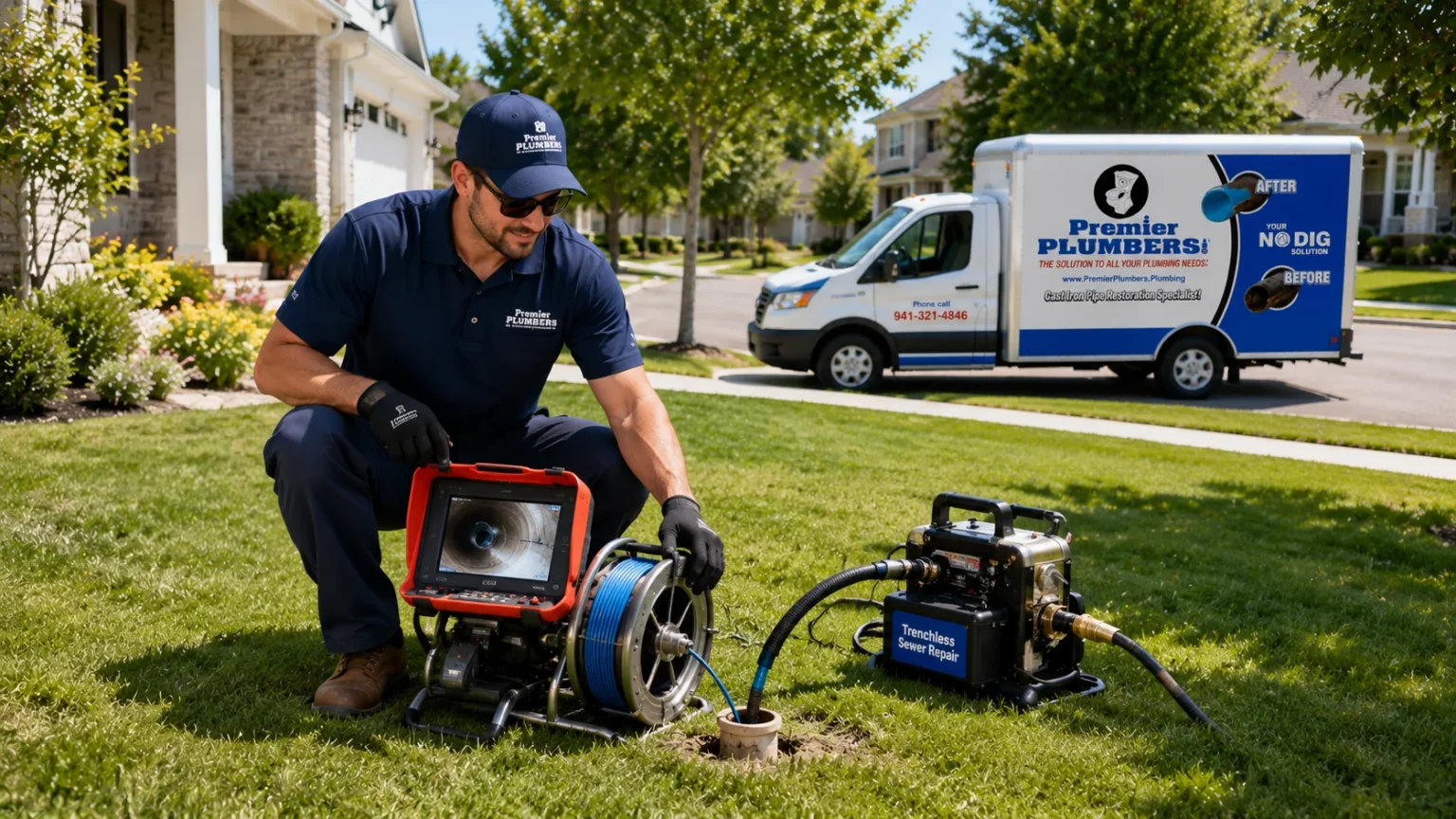
The absolute best way to solve a recurring sewer issue is to see exactly what is happening inside the pipe. Using our advanced sewer cameras, we feed a high-resolution, waterproof camera attached to a flexible fiber-optic cable down your cleanout.
This allows us to inspect the entire length of your lateral line in real-time, pinpointing the exact location and cause of the blockage, whether it is a sagging pipe, root intrusion, or a cracked section, without digging up your beautiful lawn.
Older sewer lines in Sarasota County and other established Florida neighborhoods may need more than a cleaning if corrosion, cracking, or repeated backups keep coming back. Our Sarasota sewer line replacement guide for stinky situations explains how recurring odor and backup problems can point to deeper pipe failure rather than a one-time clog.
Frequently Asked Questions about Sewer Clogs
How much does it cost to clear a main sewer line?
The cost of clearing a main sewer line varies depending on the severity and location of the blockage. For a standard, straightforward clog that can be cleared with a professional drain snake or basic hydro jetting, homeowners can pay as much as $200 depending on the severity of the blockage.
However, if tree roots have clogged the sewer system, or if concrete slabs and landscaping need to be removed to access a collapsed section of pipe, be prepared to spend over $150 per hour for excavations and repairs.
Investing in timely maintenance and professional diagnostic services can prevent these thousands of dollars in emergency excavation costs. For transparent, upfront pricing on our services, visit the Premier Plumbers drain cleaning page.
Can I use chemical drain openers on a main sewer line?
We strongly advise against using liquid chemical drain openers on a main sewer line.
First, these chemicals are highly corrosive. If your main line is completely blocked, the chemical liquid will sit in your pipes for hours or days. The chemical reaction generates intense heat, which can soften and warp PVC pipes or accelerate the corrosion and cracking of older cast iron and clay lines.
Second, chemical cleaners are designed for small, organic hair and soap clogs in branch lines. They have virtually zero effectiveness against thick tree roots, solid grease walls, or plastic flushable wipes. Additionally, if the chemical fails to clear the clog, your pipe remains filled with highly toxic, acidic water, making it extremely dangerous for any plumber who has to snake the line afterward.
How do I prevent future sewer line clogs?
Preventing future sewer line clogs comes down to establishing healthy household habits and scheduling regular professional maintenance:
- Practice Proper Waste Disposal: Never pour cooking oil, bacon grease, or butter down your kitchen sink. Collect grease in a tin can, let it solidify, and throw it in the trash.
- Throw Away Wipes: Even if a package says “flushable,” throw all baby wipes, cleaning wipes, and feminine products in the garbage.
- Install Root Barriers: If you have large trees near your sewer line, consider installing physical or chemical root barriers in your yard to redirect root growth away from your pipes.
- Schedule Routine Maintenance: Having your sewer line professionally inspected and hydro jetted every 2 to 3 years can wash away minor grease and root accumulation before they turn into a major plumbing emergency.
For localized prevention tips tailored to our coastal Florida climate, check out our Naples drain sewer maintenance tips.
If you need local assistance across Southwest Florida, Premier Plumbers provides comprehensive drain and sewer cleaning services throughout Fort Myers, Naples, Tampa, Charlotte County, Sarasota County, and Lee County.
Conclusion
Clearing a clogged sewer line is not a plumbing issue you can afford to ignore. What starts as a slow drain or a gurgling toilet can quickly escalate into a major sanitary hazard, damaging your floors, walls, and home foundation.
While minor clogs can sometimes be handled with a rented drain snake and a little elbow grease, complex blockages like tree root intrusions, sagging pipes, and heavy grease buildup require the precision of professional plumbing experts.
At Premier Plumbers, our family-owned business brings a three-generation legacy of quality, honesty, and unmatched expertise to every job. Whether you live in Sarasota, Bradenton, Fort Myers, Naples, or Tampa, we have the advanced technology and hands-on experience to clear your sewer lines safely and efficiently.
Don’t wait for a minor backup to turn into a costly emergency. Contact our professional sewer line cleaning technicians and keep your home’s plumbing running smoothly.