Why and When Homeowners Should Jet Clear Drains
Underground sewer pipes act as the central highway for all household wastewater. Over time, kitchen fats, body oils, soap scum, hair, and hard water minerals stick to the pipe walls. Standard methods often leave these layers untouched, but pressurized water at up to 4,000 PSI breaks down hardened scale, washes away years of sludge, and scrubs the entire inner diameter clean without harsh chemicals or invasive digging.
When tackling serious clogs, homeowners often wonder whether a standard mechanical cable or a high-pressure jet is the better choice. Following a reliable clearing a clogged sewer line approach helps prevent accidental pipe damage while ensuring total debris removal.
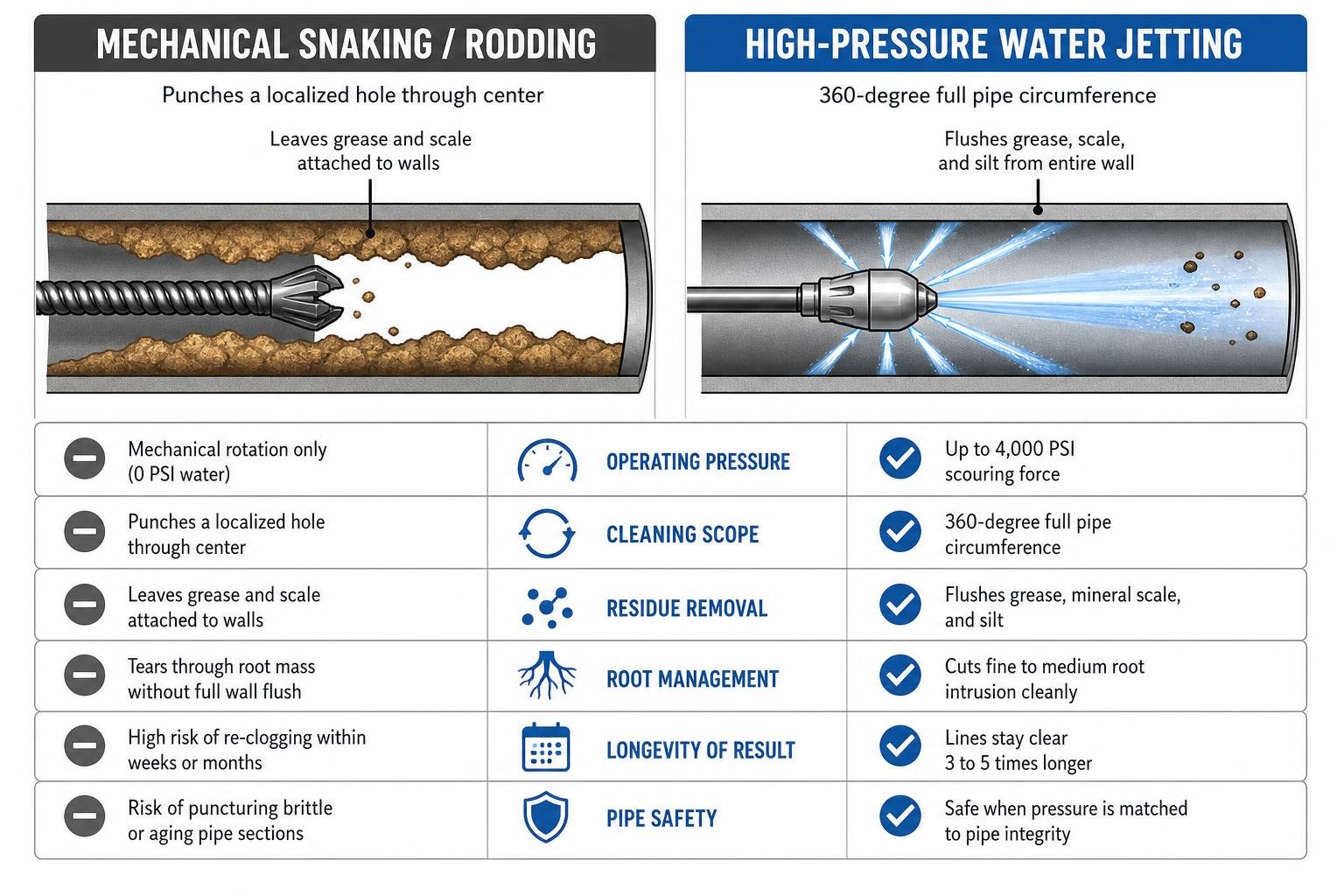
| Feature / Metric | High-Pressure Water Jetting | Mechanical Rodding / Snaking |
|---|---|---|
| Operating Pressure | Up to 4,000 PSI scouring force | Mechanical rotation only (0 PSI water) |
| Cleaning Scope | 360-degree full pipe circumference | Punches a localized hole through center |
| Residue Removal | Flushes grease, mineral scale, and silt | Leaves grease and scale attached to walls |
| Root Management | Cuts fine to medium root intrusion cleanly | Tears through root mass without full wall flush |
| Longevity of Result | Lines stay clear 3 to 5 times longer | High risk of re-clogging within weeks or months |
| Pipe Safety | Safe when pressure is matched to pipe integrity | Risk of puncturing brittle or aging pipe sections |
Signs It Is Time to Jet Clear Drains in Your Home
Sewer line problems rarely happen without warning. Recognizing the early symptoms allows you to intervene before wastewater backs up into bathtubs or shower pans.
Common warning signs include:
- Multiple slow-draining fixtures: When a single sink drains slowly, the issue is usually local. When toilets, tubs, and kitchen sinks slow down simultaneously, the main sewer line is restricted.
- Gurgling sounds from plumbing fixtures: Air trapped behind heavy build-up escapes through secondary vents and traps, creating bubbling or gurgling sounds after you run water or flush a toilet.
- Unpleasant sewer gas odors: Grease, food particles, and waste rotting on pipe walls emit persistent smells from floor drains, sink basins, and outdoor gullies.
- Recurring clogs after snaking: If your line backs up every few weeks or months, the root cause is likely hardened grease, scale, or fine tree roots that a standard cable head cannot clear.
Knowing the clear signs your drains need more than a plunger helps you avoid temporary fixes that fail to address deep line buildup.
Hydro Jetting vs. Snaking and Traditional Rodding
Traditional mechanical rodding relies on a flexible metal cable tipped with a cutting blade or corkscrew. As the motor spins the cable down the pipe, it punches through the central obstruction to restore basic flow. However, rodding rarely removes the thick layer of grease, slime, and mineral scale clinging to the pipe walls. The obstruction is merely displaced or perforated, which is why rodded drains often clog again quickly.
High-pressure water jetting works completely differently. Instead of simply puncturing the blockage, forward-firing water streams penetrate the obstruction while backward-facing jets propel the nozzle down the line, scouring pipe walls 360 degrees. This process emulsifies grease and flushes silt out of the plumbing system entirely. In fact, a jetted drain typically stays clear three to five times longer than a rodded line.
Small residential water-powered tools may help with localized sink-line clogs, but large underground sewer mains require commercial equipment and trained operation. Professional hydro jetting is designed to remove heavy grease, scale, and stubborn roots while matching pressure and nozzle selection to the condition of the line.
Essential Pre-Jetting Diagnostics and Pipe Inspection
Pressurized water is remarkably effective, but applying thousands of pounds of pressure to a compromised pipe can lead to structural failure. For this reason, professional drain cleaning should never begin without a thorough diagnostic inspection.
The Critical Role of Video Sewer Inspections
Before inserting a high-pressure jetter hose into an underground line, a technician inserts a specialized, high-resolution camera crawler down the cleanout. These camera systems illuminate the interior of the line, providing clear real-time footage of pipe conditions.
A thorough diagnostic inspection reveals:
- The exact nature of the blockage: Identifies whether the issue is soft grease buildup, hard mineral scale, wet wipes, physical foreign objects, or tree root intrusion.
- The physical condition of the pipe: Detects existing hairline cracks, misaligned joints, offset sections, sagging bellies, or severe pipe corrosion.
- Precise location and depth: High-tech cameras feature built-in radio sondes that allow technicians to locate the exact position and depth of problem areas from above ground, eliminating guesswork.
Using dedicated video sewer inspections protects your plumbing lines by confirming that the pipe is structurally sound enough to handle water jetting without risk of collapse.
Assessing Pipe Materials: PVC, Cast Iron, and Clay
Every piping material features distinct structural traits and age-related wear patterns:
- PVC (Polyvinyl Chloride): Modern PVC pipes feature smooth interiors that resist mineral scale buildup. However, excessive water pressure or rigid cutting nozzles can gouge softer plastic walls. Pressure must be regulated to safe operating limits.
- Cast Iron: Common in mid-century homes, cast iron corrodes over decades, forming jagged internal rust and scale deposits known as tuberculation. Specialized rotary descaling nozzles grind away these deposits and restore the smooth internal diameter without cracking the iron.
- Vitrified Clay: Older clay tile sewer lines are brittle and have numerous mortar joints. Tree roots target these joints in search of moisture and nutrients. Operators must adjust their water pressure carefully to remove invasive roots without shifting or fracturing delicate clay pipe sections.
If an inspection reveals broken joints, major structural cracks, or an imminent line collapse, our team at Premier Plumbers helps you explore options for targeted sewer replacement instead of attempting high-pressure cleaning on compromised piping.
How Professionals Clean Sewer Lines Step by Step
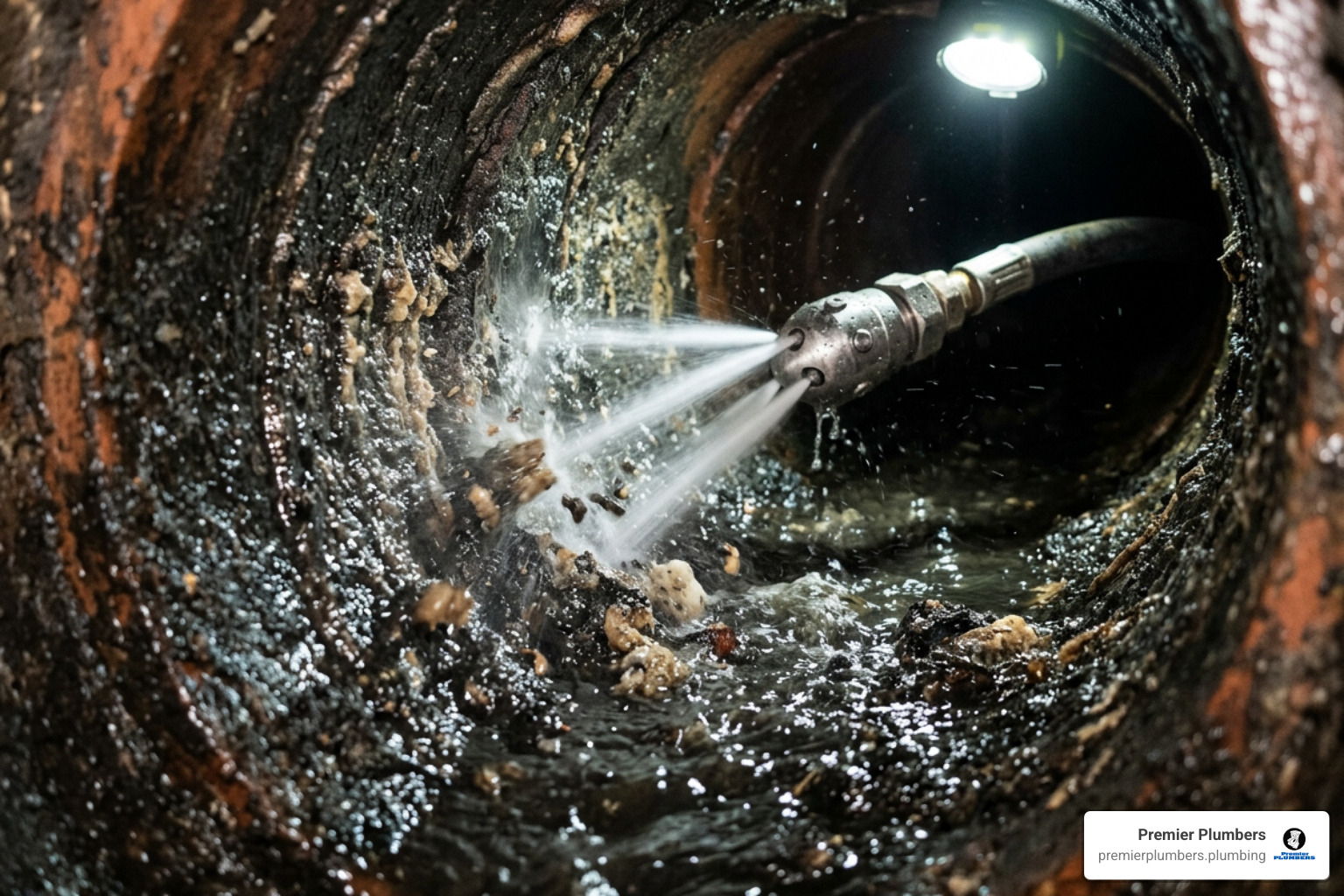
Hydro jetting requires trained operation, controlled water volumes, and industrial equipment to protect both the operator and the property’s plumbing infrastructure. Discover how sewer jetting keeps your pipes screaming clean by reviewing the specialized procedures that licensed professionals follow on every job.
The Step-by-Step Method to Jet Clear Drains Safely
When technicians clear a main sewer line, they execute a precise sequence designed to protect the system and ensure lasting results:
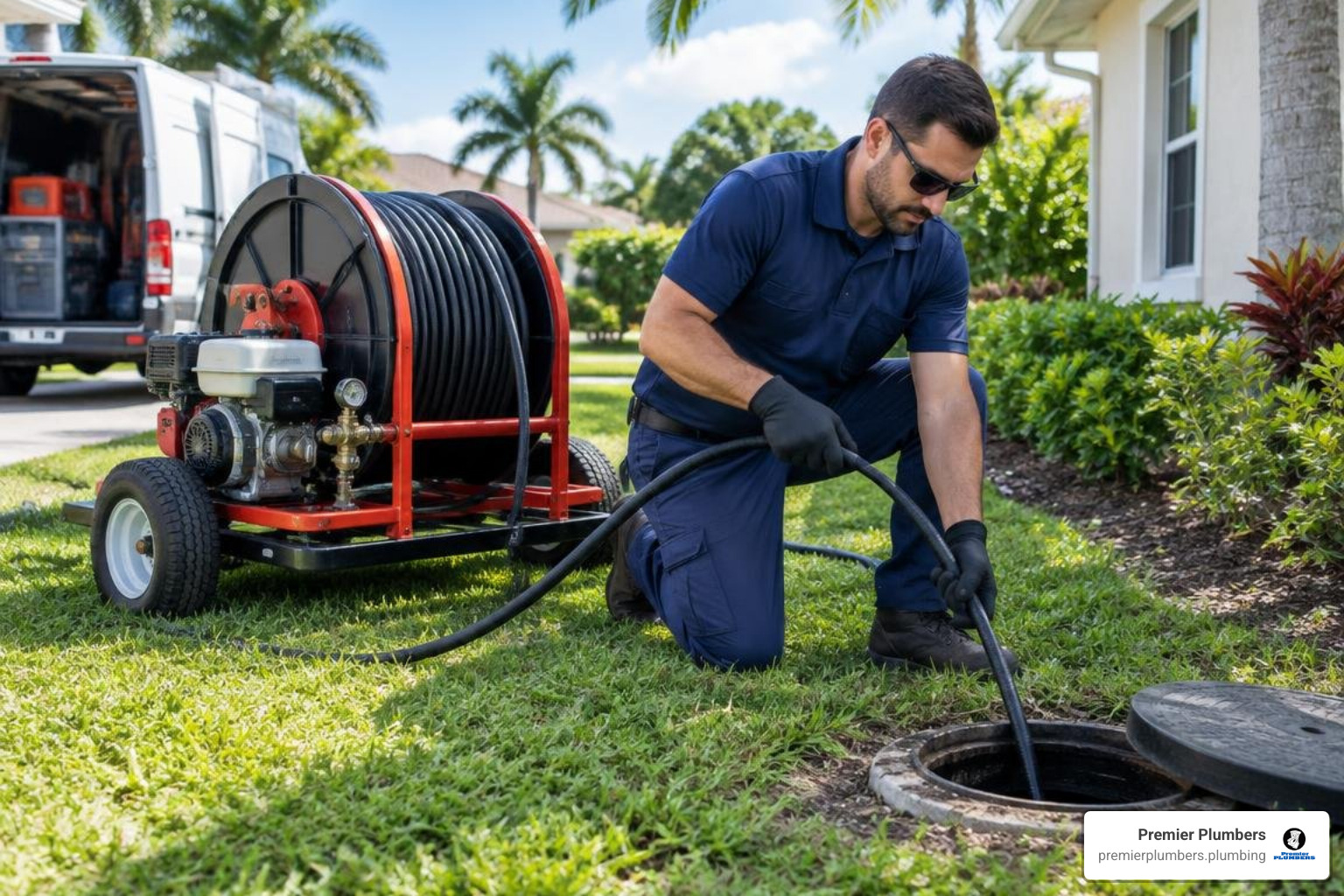
- Locate and Prepare Access: The technician accesses the plumbing system through an exterior main cleanout fitting or roof vent stack. Working from an outside cleanout prevents wastewater from backing up into indoor fixtures during the clearing process.
- Initial Camera Diagnostic: The line is inspected to map its layout, identify problem areas, and verify pipe integrity.
- Equipment Calibration: The operator selects the appropriate hose diameter, nozzle design, and operating pressure based on pipe material, diameter, and the type of buildup.
- Controlled Line Feeding: The operator inserts the jetting hose into the cleanout pipe. Once safely inside, the high-pressure water pump engages. Rear-facing thruster jets pull the hose smoothly down the line while forward jets break up the blockage.
- Slow Scouring Passes: The technician draws the nozzle back slowly under high pressure, scrubbing the pipe walls 360 degrees and pulling emulsified grease, dislodged scale, and loose debris out toward the municipal sewer main.
- Final Verification Inspection: A secondary camera inspection confirms that all debris has been thoroughly removed and that the line’s structural integrity remains intact.
To see how advanced hydraulic principles make this possible, explore how high pressure jetters blast blockages away to restore full drain flow.
Specialized Jetter Nozzles for Roots, Ice, and Heavy Grease
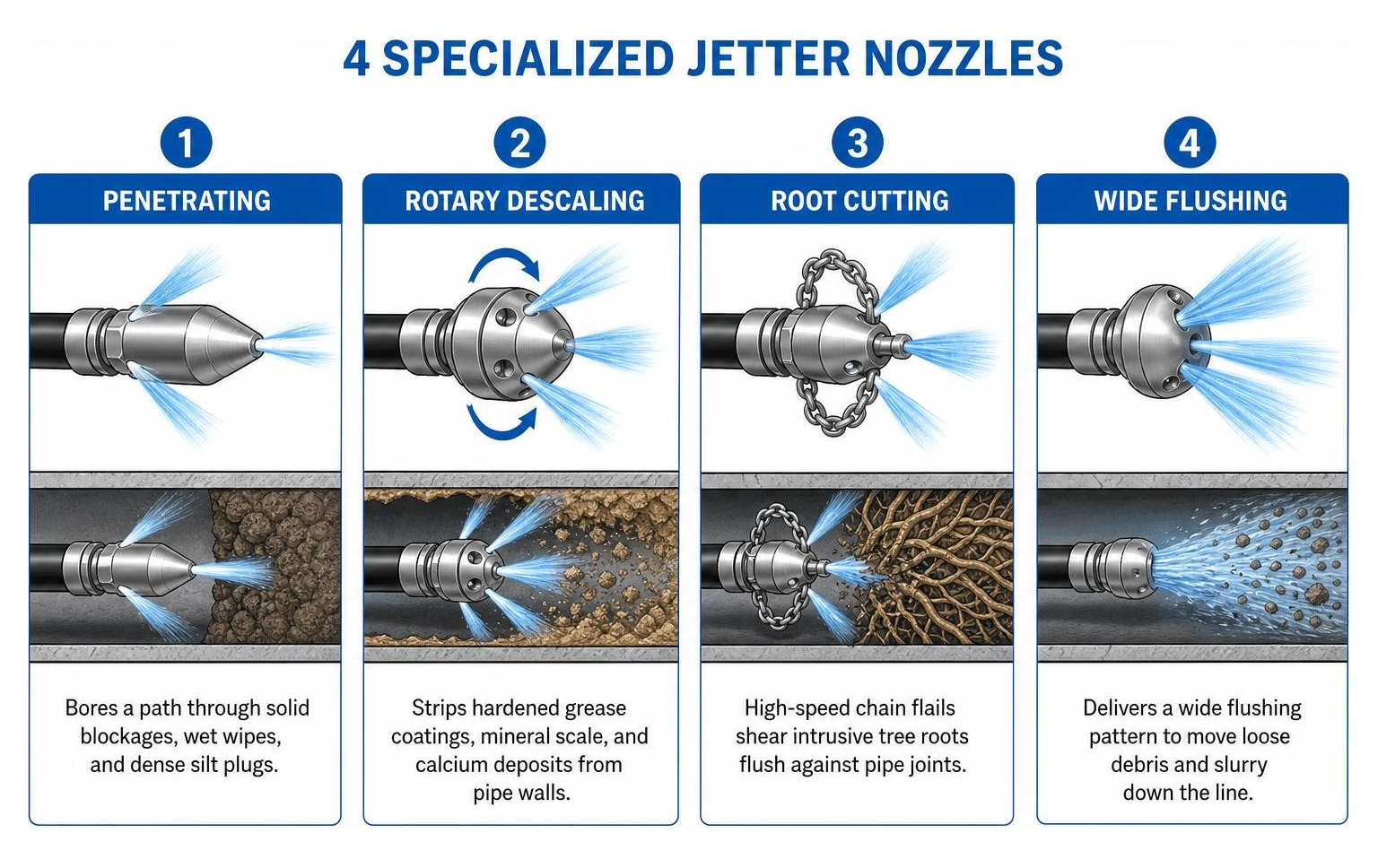
A jetting unit relies heavily on its nozzle design. Different blockages require specific nozzle profiles to clear lines efficiently:
- Penetrating Nozzles: Feature sharp, forward-facing water jets that bore a path through solid blockages, wet wipes, and dense silt plugs.
- Rotary Descaling Nozzles: Use rotating side-firing jets to strip hardened grease coatings, mineral scale, and calcium deposits from cast iron and concrete walls.
- Root-Cutting Chain Flails: High-speed spinning water turbines drive stainless steel chains or articulating blades that shear intrusive tree roots flush against pipe joints.
- Ice-Melting Nozzles: High-flow hot water nozzles quickly melt and cut through frozen pipe blockages faster than traditional mechanical steamers.
Preventative Maintenance and Long-Term Drain Care
After restoring your sewer main with hydro jetting, routine preventative care keeps wastewater flowing smoothly and helps avoid future emergencies. Professional drain cleaning every few years removes minor grease layers and soap scum before they solidify into stubborn blockages.
Homeowners can protect their plumbing lines between cleanings by following a few simple habits:
- Manage kitchen fats properly: Never pour cooking grease, bacon fat, butter, or cooking oils down the drain. Wipe greasy pans with paper towels before washing.
- Keep outdoor gullies clear: Periodically clean out surface yard drains, patio gullies, and gutter downspouts to prevent sand, leaves, and landscape silt from washing into main sewer lines during heavy storms.
- Flush lines with hot water: Periodically run hot tap water down kitchen sink lines to help keep soft organic films moving through your building drains.
- Mind what gets flushed: Keep feminine hygiene products, dental floss, cotton swabs, and so-called flushable wipes out of your toilets. These items do not break down in water and readily snag on minor pipe imperfections.
Frequently Asked Questions About Drain Jetting
How often should sewer drains be cleared with high-pressure jetting?
For most single-family residential properties, a preventative hydro jetting service every 18 to 24 months keeps the main line clear of heavy buildup. If your property has mature trees planted near sewer lines or has experienced chronic root intrusion, annual maintenance may be recommended. Commercial properties, particularly high-volume food service establishments that send large quantities of grease down the drain, often require quarterly jetting to stay compliant with local plumbing codes and prevent kitchen backups.
Can high-pressure water jetting damage older home pipes?
When performed by trained, certified technicians who conduct a pre-jetting camera inspection, hydro jetting is completely safe for older clay, cast iron, and PVC systems. Professional operators carefully match water pressure, nozzle configuration, and hose feed rates to the age and condition of your pipes. Jetting should never be performed on lines with severe pre-existing structural fractures, heavy corrosion decay, or collapsed joints, which is why a video inspection is always completed first.
What should I do during an urgent drain emergency?
If wastewater begins backing up into multiple plumbing fixtures or overflowing from toilets, stop using water throughout the home, including sinks, showers, washing machines, and dishwashers. Keep family members and pets away from contaminated wastewater, avoid using chemical drain cleaners, and call a qualified plumbing professional promptly for emergency assistance.
Conclusion
Sewer backups can quickly turn into stressful, messy emergencies, but understanding the benefits of high-pressure water cleaning gives you a clear path forward. Rather than relying on temporary snaking or corrosive chemical cleaners that only punch small holes through clogs, hydro jetting scours the entire inner circumference of your pipes, washing away grease, mineral scale, silt, and invasive roots for dependable, long-term flow.
At Premier Plumbers, our team brings a three-generation legacy of plumbing expertise to every home and business we serve. By combining precise video camera inspections with calibrated, pressure-matched jetting technology, we help homeowners protect their plumbing infrastructure and avoid unexpected sewer line failures. If your drains are gurgling, slowing down, or backing up, contact our hydro jetting specialists to restore your sewer lines quickly and safely.