If your water heater is nearing the end of its service life, you may be weighing a familiar replacement against a newer option. A heat pump water heater uses warmth from the surrounding air to heat water, which can make it more efficient than a standard electric tank. But efficiency is only one part of the decision. You’ll also want to consider tank capacity, how quickly the unit reheats water, where it can be installed, and whether your home needs electrical or drainage work. This guide breaks down the practical details, including likely costs and maintenance, to help you decide whether this type of heater suits your household.
Key Takeaways
- Compare efficiency with your current water heater: Potential savings depend on your energy rates, household hot-water use, and the system you replace.
- Check installation requirements before selecting a model: Confirm the space, airflow, electrical service, tank capacity, and condensate drainage suit your home.
- Plan for long-term costs and care: Request an itemized quote, verify any incentives and warranty terms, and follow the manufacturer’s maintenance guidance.
How Does a Heat Pump Water Heater Work?
A heat pump water heater uses electricity to move heat into a tank of water rather than generating heat directly. This can make it more efficient than a standard electric tank, though performance depends on the model, installation location, and household hot-water use.
How it moves heat from air into water
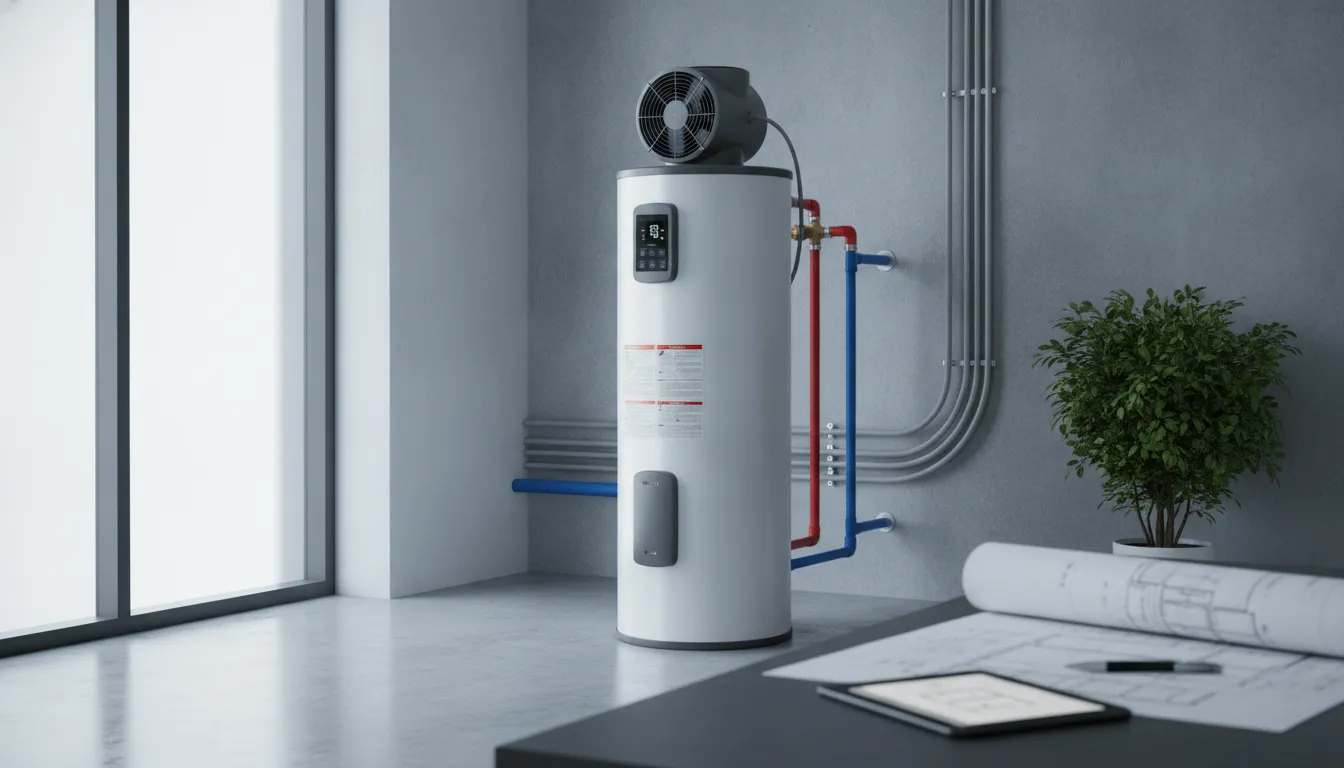
The unit draws in surrounding air and passes it over an evaporator coil. Refrigerant inside the coil absorbs heat from the air, then a compressor raises the refrigerant’s temperature. The heat moves into the tank water, and the cycle repeats.
Because the system transfers heat instead of relying only on electric-resistance elements, it can use less electricity than a conventional electric water heater. ENERGY STAR reports that heat pump water heaters can be two to four times more efficient than standard electric-resistance models. The process also releases cooler, drier air around the unit, so placement is worth considering, especially in a Florida home.
Heat-pump-only, hybrid, and resistance modes
Many heat pump water heaters have several operating modes. In heat-pump-only mode, the system uses heat from the surrounding air. This is generally the most efficient setting, but it heats the tank more slowly. It may suit households with predictable hot-water use and enough time for the tank to recover between busy periods.
Hybrid mode combines the heat pump with electric-resistance heating. The unit can rely on the heat pump for everyday use, then add resistance heat when demand rises, such as during back-to-back showers. Some models also offer a resistance-only setting. NYSERDA explains how these options balance energy use and hot-water availability. The right setting depends on your household’s routine and the unit’s controls.
How it compares with electric, gas, and tankless heaters
A standard electric tank uses resistance elements to heat stored water. A heat pump water heater transfers heat from the air, which can reduce electricity use compared with a standard electric model. Both store hot water, so tank size and recovery time matter when several people need hot water close together.
Gas tank heaters use a burner to heat stored water. Tankless models, which can run on gas or electricity, heat water as it flows through the unit instead of keeping a tank hot. Their capacity depends on the unit’s flow rate and the home’s incoming water temperature. Each type has different fuel, venting, electrical, and installation needs. A plumber can assess your setup and household demand, and help compare options through Premier Plumbers’ water-heater services.
Weigh the Benefits and Potential Savings
Heat pump water heaters can use less electricity than standard electric models, but the savings vary from home to home. Compare efficiency, likely utility-bill changes, and energy use to see whether the potential benefits fit your household and budget.
Compare efficiency with standard electric models
A standard electric water heater uses resistance elements to heat water. A heat pump model instead draws warmth from the surrounding air and transfers it to the water. Because it moves heat rather than generating it directly, a heat pump water heater can be two to three times as energy-efficient as a standard electric model, according to Consumer Reports’ testing and research.
That efficiency can reduce the electricity needed to meet your household’s hot-water needs. The comparison is especially useful if you’re replacing an older electric tank. If your current heater runs on gas, compare fuel and electricity costs, along with equipment and installation expenses. A plumber can help assess your home and review water-heater options and services available along Florida’s Gulf Coast.
Estimate utility-bill savings and understand why they vary
Energy Star estimates that a family of four could save about $550 a year compared with a standard electric water heater. The New York State Energy Research and Development Authority estimates annual savings of about $200 to $550, depending on the system being replaced. Treat these figures as a starting point, not a promise of what your household will save.
Your results depend on your electricity rate, hot-water use, household size, and the age and efficiency of your current heater. Replacing an older electric tank may offer greater savings than replacing a newer model or a gas heater. Before choosing a unit, review recent utility bills and ask your installer to estimate operating costs based on your home and the model you’re considering.
Consider lower energy use and potential environmental benefits
Using less electricity to heat water can lower household energy use. Replacing a standard electric or gas heater with a heat pump model may reduce greenhouse gas emissions by about one ton per year, according to NYSERDA’s overview of heat pump water heaters. The actual effect depends on the heater being replaced and how your electricity is generated.
For a realistic comparison, look at the model’s efficiency rating alongside your expected utility costs and hot-water demand. Ask a qualified installer to consider the unit’s location and your household’s usage when estimating performance. These details can help you judge whether potential energy and emissions reductions make sense for your Florida home.
Is a Heat Pump Water Heater Right for Your Florida Home?
Florida’s warm climate can make a heat pump water heater a good fit, but it still needs the right space and capacity to perform well. Think about when your household uses hot water, where the unit would go, and whether another type of heater better suits your home.
Match tank capacity and recovery rate to household demand
Heat pump water heaters store hot water in a tank, so choose a capacity that can handle your busiest periods. Consider how many people live in your home and whether showers, laundry, and dishwashing often happen at the same time.
Check the first-hour rating on the unit’s EnergyGuide label. It estimates how many gallons of hot water the heater can deliver in an hour, counting both the hot water already in the tank and the water it reheats. Match that rating to your household’s peak use, rather than average daily use. If the tank is too small, a hybrid model may rely more often on its electric resistance elements, which can reduce energy savings. NYSERDA’s guide explains how to compare capacity and first-hour ratings.
Consider how Florida’s climate and installation location affect efficiency
A heat pump water heater pulls warmth from the surrounding air, so Florida’s mild winters can support efficient operation. Still, check the manufacturer’s temperature and airflow requirements before choosing a location. Some models need about 1,000 cubic feet of surrounding air space, while exact requirements vary. The unit also needs a drain for condensation.
The location can affect comfort. A heat pump water heater may cool and dehumidify the room around it, which could be welcome in a warm garage or utility room. In a small enclosed space, however, that cooling effect may be less desirable. ENERGY STAR explains how heat pump water heaters affect the surrounding space. Ask a plumber to check clearances, airflow, and drainage before installation.
Decide when an electric, gas, or tankless unit may fit better
A heat pump model may suit your home if you have space for a storage tank and want to use less electricity for water heating. A standard electric tank may be a more straightforward replacement when the installation area does not meet a heat pump model’s requirements. A gas heater could be worth comparing if your home already has a suitable gas connection.
Tankless heaters take up less space and heat water on demand, but the right model must be able to meet your household’s flow needs. Heat pump models focus on efficient water heating and storage; tankless models prioritize a compact design and on-demand supply. A. O. Smith’s comparison of heat pump and tankless heaters outlines the differences. A local plumber can assess your setup and help compare options. Premier Plumbers offers water-heater services across Florida’s Gulf Coast.
Compare Heat Pump Water Heater Brands and Models
Review current models from Rheem, A. O. Smith, Bradford White, and GE Appliances
Several established brands make heat pump water heaters, but their model options and availability can vary. Rheem’s ProTerra hybrid electric water heater combines heat-pump and electric-resistance operation, with settings designed to balance energy use and hot-water demand. Check the manufacturer’s ProTerra product information for available sizes and features.
A. O. Smith’s Voltex line and Bradford White’s AeroTherm series are other options to compare. GE Appliances also has heat pump water heater models, though availability can vary by location and retailer. Check each manufacturer’s specifications and confirm that a model is currently sold in your area before comparing prices. Independent reviews, such as Consumer Reports’ water heater testing, can help you build a shortlist.
Compare capacity, efficiency, operating modes, and noise
Start with tank capacity and recovery performance. A unit that meets the needs of a small household may not keep up when several people use hot water close together. Compare each model’s Uniform Energy Factor (UEF) and estimated energy use, using the same capacity where possible. Rheem reports a UEF of up to 4.07 for some ProTerra models, but ratings vary by model.
Next, check the operating modes. Heat-pump-only settings prioritize efficiency, while hybrid modes can use electric resistance to help meet higher demand. Look at how easily you can change settings and whether the unit’s sound level suits its planned location. Compare the manufacturer’s installation guidance as well, since clearance and airflow needs can affect where the heater can go. A. O. Smith lists heat pump water heater models and specifications on its website.
Check warranties, service access, and replacement-part availability
Read the warranty details for both the tank and its components. Coverage periods, exclusions, and requirements can differ, so check whether professional installation, routine maintenance, or product registration is required. Keep the warranty documents and installation records after the work is complete.
Also ask whether local technicians service the brand and how readily they can obtain replacement parts. A model with strong efficiency ratings may be less convenient if repairs take longer because parts are difficult to source. Before choosing, ask your installer which models they regularly work on and whether the unit suits your home’s electrical setup and hot-water needs. Premier Plumbers offers water heater installation and repair along Florida’s Gulf Coast.
What Does Installation Require?
A heat pump water heater needs suitable space, airflow, electrical service, and a way to manage condensation. Check these requirements before choosing a model, since they can affect both installation costs and where the unit can go.
Confirm location, airflow, clearance, and temperature limits
Heat pump water heaters draw warmth from the surrounding air, so they need enough air space to operate and room for service access. Some models call for around 1,000 cubic feet of air space, roughly the size of a 12-by-12-by-7-foot room. Temperature limits vary, too. NYSERDA’s guide to heat pump water heaters notes that many units work best between 40°F and 90°F, but always check the manufacturer’s specifications for the model you’re considering.
In Florida, a garage or utility room may be a good location if it has the required airflow and clearance. Ask a qualified installer to assess the spot and confirm that the unit will be accessible for maintenance. You can review Premier Plumbers’ water-heater services when discussing options for your home.
Check electrical needs, including 120- and 240-volt options
Many heat pump water heaters need a 240-volt connection. If your home does not have a suitable circuit near the installation site, electrical upgrades may be necessary. Some models use 120 volts and connect to a standard outlet, but requirements and performance vary by unit. Check the installation guide for the specific model before you buy.
Have a qualified electrician verify the voltage, circuit capacity, and outlet location. A standard outlet does not automatically mean the installation is ready: the circuit still needs to meet the manufacturer’s instructions and local electrical codes. Confirming the electrical work early helps you understand the full project scope and avoid surprises during installation.
Plan for condensate drainage and moisture control
Heat pump water heaters produce condensation as they pull heat from the surrounding air. The water needs to drain safely, either through a suitable drain or, where gravity drainage is not practical, with a condensate pump. Your installer can recommend an approach based on the unit’s location and your home’s plumbing.
The amount of condensation can reach a couple of gallons per day, according to Consumer Reports’ overview of heat pump water heaters. Plan for drainage before installation, particularly if the heater will be in a finished area or somewhere without a floor drain. Keep the line clear and check for leaks so water does not collect around the unit.
Account for cooling, permits, code requirements, and professional installation
A heat pump water heater removes heat from the air around it, which can cool the space as it runs. Consider how that may affect a small room, nearby stored items, or areas used for other purposes. The impact depends on the room and the model, so check the manufacturer’s placement guidance with your installer.
Permit and code requirements vary by location and by the work involved. Check with your local building department, and use qualified professionals for plumbing and electrical work. Before scheduling, ask for an estimate that lists any wiring, drainage, or other changes, and confirm who will handle permits and inspections. Premier Plumbers can help homeowners discuss water-heater options and installation needs.
What Does It Cost—and What Could You Save?
Include equipment, labor, and possible electrical or drainage work
A heat pump water heater often costs more upfront than a standard electric model. Equipment prices typically range from about $1,500 to more than $5,000, though many models cost less than $2,500. By comparison, a standard electric water heater may cost under $1,000. Consumer Reports’ water heater guide can help you compare models, but remember to include installation in your budget.
Labor costs depend on your home’s existing setup. A 240-volt model may require electrical work, while some newer 120-volt models can use a standard outlet. Heat pump water heaters also produce condensate that needs to drain properly. NYSERDA’s installation overview explains how electrical and drainage needs can affect the project. Ask a plumber to assess the location and connections, and confirm whether electrical work requires a licensed electrician.
Estimate savings using local utility rates and the replaced water heater
A family of four may save about $200 to $550 a year compared with a standard electric water heater. Some estimates reach $600, but your results depend on household hot-water use, your electricity rate, and the efficiency of the heater you’re replacing.
For a more realistic estimate, check your electric bills for your cost per kilowatt-hour, then compare the current water heater’s energy use with the new model’s published efficiency. Replacing an older, less efficient electric tank may offer greater savings than replacing a newer model. If you’re weighing options for your home, Premier Plumbers’ water-heater services can help you plan an installation that fits your setup.
Compare payback timelines; treat broad savings estimates as a starting point, not a guarantee
To estimate payback, divide the additional cost of the heat pump unit and installation by the expected annual savings. For example, if the project costs $1,500 more than a standard replacement and saves $300 per year, the simple payback estimate is five years. Electrical upgrades, drainage work, utility rates, and hot-water use can all change that timeline.
Some estimates suggest a payback period as short as three years, with lifetime savings exceeding $5,000 over a typical 13- to 15-year service life. These are broad estimates, not guarantees. Get a quote based on your home and use your actual utility costs to decide whether the potential savings justify the higher upfront expense.
Weigh Performance Trade-Offs
Heat pump water heaters can reduce energy use, but their operating characteristics may affect comfort and convenience. Before choosing a model, consider your household’s hot-water habits, the installation location, and how the unit will drain.
Allow for slower recovery during heavy hot-water use
In heat-pump-only mode, these systems typically heat water more slowly than standard electric or gas water heaters. If several people shower one after another, or appliances use hot water at the same time, you may need to wait longer for the tank to recover.
Many models offer a hybrid mode that combines the heat pump with electric resistance heating to meet higher demand. This can restore hot water more quickly, though frequent use of resistance heating may reduce energy savings. Compare tank capacity and recovery details with your household’s routines. The ENERGY STAR guide to heat pump water heaters explains how these systems work. A plumber can help determine whether a model’s capacity and operating modes suit your home.
Consider noise, cool air, and dehumidification near the unit
A heat pump water heater uses a fan and compressor, so it makes some noise while running. It also draws heat from the surrounding air, which can make the installation area cooler and drier. This effect may be more noticeable in hot, humid conditions, as ENERGY STAR explains.
Consider the room’s location before installation. A garage or utility room may be a better choice than a small space near bedrooms or living areas. Florida’s warm climate can support efficient operation, but the room still needs to meet the manufacturer’s requirements for airflow, clearance, and temperature. Ask your installer to review the proposed location and the model’s sound level so you know what to expect.
Keep the condensate drain clear to prevent moisture problems
As a heat pump water heater removes moisture from the air, it produces condensate that must drain safely. The amount depends on humidity and hot-water use, and can reach a couple of gallons a day. Consumer Reports’ overview of heat pump water heaters notes that condensate needs to drain away or be removed with a pump.
Have the installer plan for a suitable drain or condensate pump, then check that water flows freely during routine maintenance. A blocked or disconnected drain can cause standing water, leaks, or moisture damage. If you notice pooling near the unit, arrange service promptly. Homeowners along Florida’s Gulf Coast can contact Premier Plumbers for water-heater service.
Maintain the System
Routine care helps a heat pump water heater work as designed and makes it easier to catch small problems early. Follow the maintenance schedule in your owner’s manual, and have a qualified plumber inspect the unit if you notice changes in performance, unusual sounds, or moisture nearby.
Clean the air filter and follow manufacturer guidance
Dust and debris can restrict airflow through the unit, so check and clean the air filter as directed in your owner’s manual. The steps vary by model. Follow the manufacturer’s instructions for safely accessing the filter, cleaning it, and turning off the unit if needed. Avoid tools or cleaning products the manual does not recommend.
The New York State Energy Research and Development Authority’s heat pump water heater guidance includes air-filter cleaning among routine maintenance tasks. Keep a record of when you clean the filter, and follow the schedule for your specific model rather than waiting for hot-water performance to change.
Check the drain, tank, and components during routine service
Heat pump water heaters produce condensation that must flow through a clear drain line. Look around the unit for standing water, damp flooring, or signs of a blockage. In Florida’s humid climate, deal with moisture promptly to help protect nearby walls, floors, and stored belongings.
During routine service, a plumber can check the drain connection, tank, fittings, and accessible components for leaks or wear. The NYSERDA guidance notes that these units need a drain for condensation and work best within the temperature range specified for their installation. Have a professional check your model’s requirements, and don’t open or drain the tank unless the manufacturer’s instructions call for it.
Arrange repairs promptly if performance changes or leaks appear
Notice whether water takes longer to heat, the unit makes unfamiliar sounds, an error message appears, or your energy use changes unexpectedly. If you find water around the tank or its connections, contact a plumber promptly. If you can do so safely, shut off the water supply to the unit while you wait for help.
A plumber can determine whether the issue involves the drain, controls, heating elements, or another part. Corrosion, leaks, or rust in the water may signal that the heater is nearing the end of its service life. NYSERDA advises homeowners to start planning for replacement when a water heater is more than 10 years old. Premier Plumbers offers water-heater service and repairs for homeowners across Florida’s Gulf Coast.
Plan for Lifespan and Warranty
A heat pump water heater is a long-term purchase, so consider more than its price and efficiency. Its expected service life, maintenance needs, and warranty can affect the total cost of ownership. Before choosing a model, check what the manufacturer covers and whether local technicians can service it.
Review typical service life and factors that affect it
Heat pump water heaters typically last about 13 to 15 years, compared with roughly 10 to 12 years for standard electric or gas models, according to Consumer Reports’ water heater guidance. These are estimates, not guarantees. Installation quality, usage, and the conditions around the unit can all affect its lifespan.
Follow the manufacturer’s instructions for airflow, clearance, and routine care. Check the tank, connections, and condensate drain regularly, and address changes in performance promptly. If you’re replacing an existing unit, a plumber can assess the installation space and identify any piping or electrical work that may be needed. Premier Plumbers offers water-heater services across Florida’s Gulf Coast.
Check tank and component coverage, exclusions, and replacement plans
Warranty terms vary by manufacturer and model, so read the full document rather than relying on the advertised coverage period. Check how long the tank, compressor, and other components are covered. Also confirm whether the warranty includes labor, diagnostics, or removal and installation, since a parts warranty may not cover the cost of a repair visit.
Review exclusions, registration deadlines, and any requirements for authorized installation or service. Keep your purchase receipt, model and serial numbers, and maintenance records together in case you need to make a claim. Routine care matters, too: NYSERDA’s heat pump water heater guidance recommends cleaning filters as directed by the manufacturer. Check the manual for your specific unit’s maintenance schedule and warranty conditions.
Check Rebates and Financing
Verify federal tax-credit eligibility and requirements
A heat pump water heater may qualify for a federal tax credit, but eligibility depends on current rules, the equipment, and the installation date. Before buying, review the IRS guidance on energy-efficient home improvements and confirm that the specific model and installation meet the requirements. Ask your installer for the product details and paperwork you may need when filing.
Tax credits and rebates work differently: a tax credit generally reduces the federal income tax you owe, rather than lowering the price at checkout. Credit amounts, limits, and rules can change, so don’t rely on figures in older articles. If you’re unsure how a credit applies to your household, check with a qualified tax professional.
Check Florida utility, state, and local rebates
In Florida, incentives may be offered by your electric utility, a state program, or a local government. Availability and terms vary by location, so contact your utility directly and ask whether it currently offers incentives for heat pump water heaters. You can also search the DSIRE database for programs by location and technology.
Check the fine print before scheduling installation. Some programs require preapproval, specific equipment, an approved contractor, or an application within a set time after purchase. Ask what documentation you’ll need, such as an itemized invoice or the model and serial numbers. Confirm the details with the program administrator, since listings can change and funding may be limited.
Compare financing and confirm incentive rules before buying
Compare financing offers by looking at the full cost, not just the monthly payment. Review the interest rate, fees, repayment period, and total amount you’ll pay. Ask whether the rate can change or if there’s a fee for paying off the loan early. Request an itemized installation quote that includes equipment, labor, permits, and any electrical or drainage work.
Before signing, confirm in writing whether incentives can be combined with financing, whether they affect your loan balance, and what happens if you don’t qualify. Premier Plumbers can discuss water-heater services and installation as you plan the project. Build your budget around verified costs, and treat any incentive as a possible reduction rather than guaranteed savings.
Frequently Asked Questions
Are heat pump water heaters a good choice for Florida homes?
They can be, since Florida’s warm climate may help the unit draw heat from the surrounding air. The installation area still needs to meet the model’s requirements for temperature, airflow, clearance, and drainage. A plumber can check whether your garage or utility room is a suitable location.
Will a heat pump water heater provide enough hot water for a busy household?
That depends on tank size, recovery rate, and how often people use hot water at the same time. Compare the unit’s first-hour rating with your household’s peak demand. If hot-water use is concentrated in the morning or evening, ask whether a hybrid mode can help the unit keep up.
How much could I save by replacing my current water heater?
Savings depend on your electricity rate, hot-water use, and the type and condition of your existing heater. Replacing an older electric tank may offer more potential savings than replacing a newer model or a gas unit. Use your utility bills and a model-specific estimate to compare costs.
Does installation require electrical or plumbing changes?
It may. Depending on the model and your existing setup, you could need a dedicated electrical circuit, condensate drain, or condensate pump. Have a qualified professional assess the location and connections before purchasing, and confirm which permits or inspections apply.
How long does a heat pump water heater typically last?
Many last around 13 to 15 years, though service life varies with installation, use, and maintenance. Follow the owner’s manual, keep the air filter and condensate drain clear, and arrange service if you notice leaks, unusual sounds, or a change in hot-water performance.