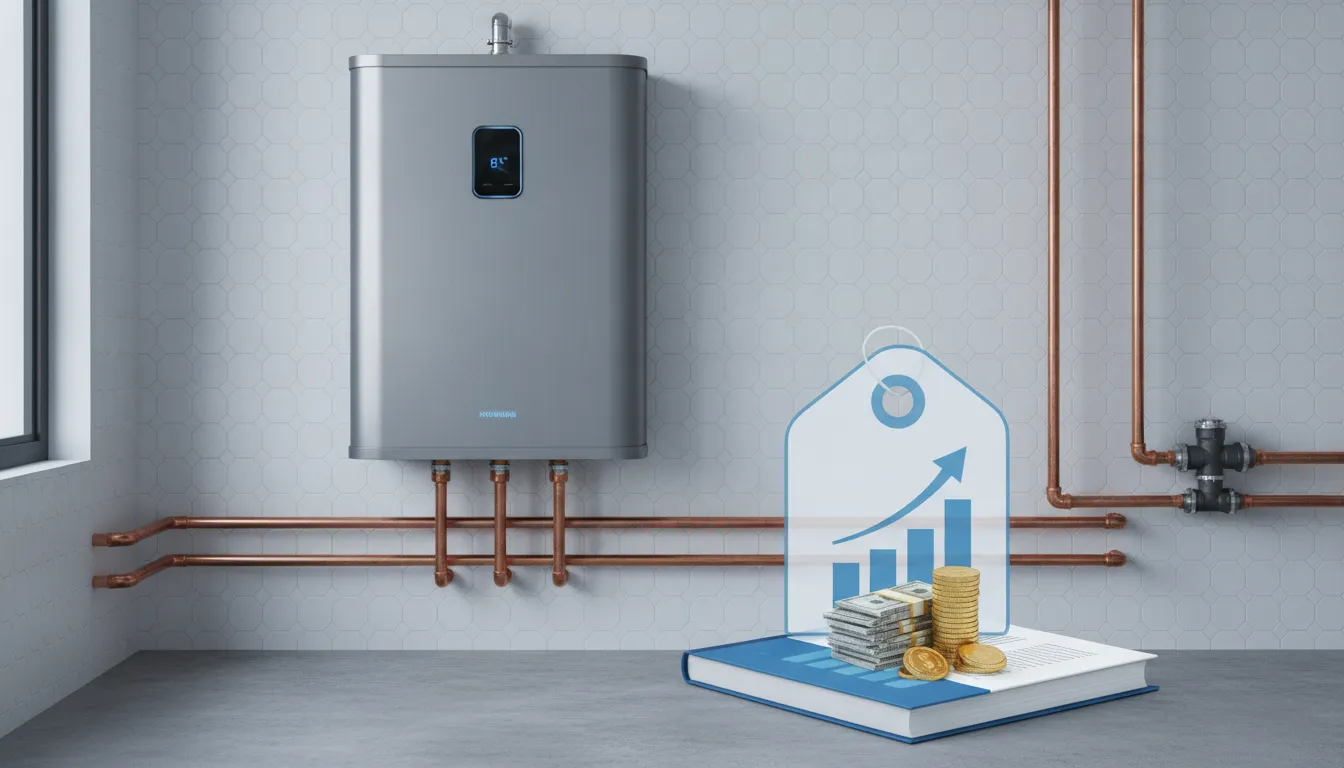
A lower-priced water heater can seem like an easy way to control project costs, but choosing a model before checking your home’s needs may lead to extra expenses later. The electric tankless water heater cost starts around $400 for some units and can reach $2,000, while installation commonly brings the total to $1,500 to $3,500. Capacity, simultaneous hot-water use, electrical panel limits, and installation access all play a role. This guide explains the main costs, from labor and permits to possible upgrades, and shares what to discuss with a plumber. With a complete estimate in hand, you can judge whether tankless is a practical fit for your home.
Key Takeaways
- Plan for the installed price: The heater may cost $400 to $2,000, but installation often brings the total to $1,500 to $3,500.
- Check fit before buying: Have a professional assess your household’s hot-water use, electrical capacity, plumbing, and installation location.
- Compare ongoing costs and benefits: Include energy use, maintenance, potential upgrades, lifespan, and warranty terms in your decision.
How Much Does an Electric Tankless Water Heater Cost?
An electric tankless water heater typically costs $400 to $2,000 for the unit alone. Many standard models fall between $500 and $1,500, but the right price point depends on your household’s hot-water needs and the heater’s capacity. A lower-priced model may suit a smaller household, while a higher-capacity unit can cost more.
The total project cost is usually higher than the purchase price. Once you add labor and any required electrical or plumbing work, expect an installed cost of about $1,500 to $3,500. A tankless water heater cost breakdown offers a helpful starting point, but prices vary by home and installation needs.
Your home’s existing setup can make a significant difference. Replacing a heater in the same location may involve less work than installing one elsewhere or upgrading the electrical system to support it. The unit’s capacity, access to the installation area, and local project requirements can also affect the estimate.
For a more useful comparison, ask for a quote that separates the heater, labor, and any planned upgrades. This helps you see what the price includes and make a decision based on the full project cost. Homeowners along Florida’s Gulf Coast can explore Premier Plumbers’ water-heater services when comparing replacement options.
Compare unit prices of $400–$2,000 with installed costs of $1,500–$3,500
The unit price covers the heater itself, not the work to install and connect it. Labor, materials, electrical modifications, plumbing changes, and any required permits or inspections may add to the bill. Difficult access or an installation that requires moving the heater can raise the cost as well.
Before choosing a model, have a plumber check your household’s hot-water demand and your home’s electrical capacity. That assessment can help confirm whether the heater is a good fit and identify possible upgrades before work begins. Ask for an itemized estimate so you can compare options on the same basis.
What Does Installation Cost Cover?
The heater itself is only one part of the installation bill. You’ll also pay for the work needed to connect it safely, confirm your home can support it, and meet local requirements. Labor for an electric tankless installation commonly falls between $500 and $1,000. Permits and inspections may add $100 to $300, though the exact fees depend on your municipality and the scope of the project. CR Plumbing DFW’s cost guide outlines these common expenses.
Electrical work can have a major effect on the final price. An electric tankless unit draws significant power, so your home may need new wiring, dedicated circuits, or an electrical panel upgrade. These upgrades can cost another $500 to $1,000. Your plumber may also need to modify water lines or install a pressure relief valve. Just Plumbing AZ explains how electrical capacity and plumbing changes can affect installation costs.
The location of the heater matters, too. A unit in a cramped closet, crawl space, or other hard-to-reach area can take longer to install, increasing labor costs. Before approving the work, ask for an on-site assessment and an itemized estimate. A qualified professional can check your electrical panel, plumbing connections, and access conditions. For help with water-heater work, review Premier Plumbers’ plumbing services.
Budget for labor, permits, inspections, electrical upgrades, plumbing changes, and access
Ask your installer to list the heater, labor, permits, inspections, electrical work, and plumbing changes separately. That makes it easier to see which expenses apply to your home and compare estimates accurately. The figures above are general ranges, not a guaranteed quote. Your home’s existing wiring, panel capacity, water lines, and installation location all affect the final cost.
Before scheduling the work, confirm who will obtain permits and arrange inspections. Also ask whether the estimate includes repairs or upgrades discovered during installation. Getting these details in writing can help you plan for the full project cost, rather than just the heater’s purchase price.
What Drives Your Total Cost?
The unit price is only one part of an electric tankless water heater project. Your total cost also depends on how much hot water your household uses, whether your electrical system can support the heater, and how much work is needed to connect it to your plumbing. Two homes choosing the same model can end up with different installation bills if one needs new wiring or panel work.
A lower-capacity unit may cost less to buy, but it might not supply enough hot water when several fixtures run at once. A larger unit can meet higher demand, but it may require more electrical capacity and cost more to install. That’s why it helps to consider your daily routines before comparing models: note how many showers, sinks, and appliances you typically use at the same time. A plumber can then assess your home and explain what the installation involves. Review Premier Plumbers’ services to learn more about plumbing work available along Florida’s Gulf Coast.
Consider hot-water demand, unit capacity, incoming water temperature, flow limits, and panel capacity
Tankless heaters warm water as it passes through the unit. The heater’s flow rate, measured in gallons per minute (GPM), indicates how much hot water it can provide at once. A home that runs two showers simultaneously needs more capacity than one that typically uses a single fixture. Flow-rate guidance can offer a starting point, though your household’s needs and the selected model determine the right size.
Incoming water temperature also affects performance: colder water takes more energy to heat. For an electric model, check whether your breaker panel, wiring, and circuits can handle the unit’s power requirements. If upgrades are needed, they can add to the project cost. A qualified professional can review these factors and help estimate the work before you choose a heater. Learn more about how incoming water temperature affects cost.
What Will You Pay to Run and Maintain It?
An electric tankless water heater heats water as you use it, rather than keeping a tank of water hot throughout the day. That can reduce energy use, but your actual electricity bill depends on household demand, utility rates, incoming water temperature, and the unit’s capacity.
One estimate puts annual energy costs at $250 to $400 for an electric tankless heater, compared with $450 to $600 for a traditional tank heater. Use those figures as a general guide, not a guarantee. Your home’s usage and local electricity rates can change the numbers. When comparing systems, consider maintenance expenses alongside energy use. A plumber can assess your setup and explain what service it may need. Premier Plumbers provides water-heater services for homeowners along Florida’s Gulf Coast.
Compare electricity use with a tank heater and budget for flushing, filter service, inspections, and repairs
Mineral buildup can affect a tankless heater’s performance, so manufacturers often recommend regular flushing. A yearly flush may cost $100 to $200. Filter replacements can add another $30 to $100 annually, depending on the unit and filter type. Check your owner’s manual for the recommended schedule, since maintenance needs vary by model and water conditions.
It’s also smart to plan for inspections and repairs. A service call may range from $100 to $400, depending on the problem, parts, and labor. These figures are estimates, so ask what a maintenance visit includes before scheduling. Tankless water heater cost estimates can help you plan, while a plumber can provide pricing based on your specific system.
Is an Electric Tankless Water Heater Worth the Cost?
An electric tankless water heater can cost more to install than a traditional tank, so the long-term value depends on how your household uses hot water and what your home needs for installation. One estimate puts annual operating costs at $250 to $400 for an electric tankless model, compared with $450 to $600 for a tank heater. These are general estimates, not guaranteed savings. Your electricity rates, water use, and system size all affect the bill. Review the estimated operating costs alongside your own household’s energy use.
Lifespan is another factor. Electric tankless models may last 15 to 20 years, compared with about 8 to 12 years for traditional tank heaters, though maintenance and water quality can affect how long either system lasts. A wall-mounted unit also takes up less floor space, which can help in a crowded utility room. Compare typical water-heater lifespans as part of your decision.
Rebates or tax credits may reduce the upfront price, but programs, eligibility rules, and equipment requirements vary. Check with your utility and the relevant tax authority before including an incentive in your budget. For homeowners on Florida’s Gulf Coast, a local assessment can help determine whether a tankless model suits the home and how much installation work it may require. Explore Premier Plumbers’ water-heater services to discuss your options.
Weigh energy savings, lifespan, warranty requirements, space savings, rebates, and upgrade costs before choosing a system
Potential energy savings can be offset by electrical upgrades. Many homes need additional wiring or a higher-capacity breaker panel to support an electric tankless unit. The work can add significantly to the installation bill, so have a professional check your electrical setup before selecting a model. Learn about possible electrical upgrade costs.
Review the warranty, too. Manufacturers may require professional installation or routine maintenance to keep coverage valid. Ask what service the unit needs, how often it is required, and whether parts or labor are covered. A plumber can also confirm that the model can meet your household’s hot-water demand. Comparing the full installed cost, expected energy use, maintenance needs, and warranty terms will give you a clearer picture than the purchase price alone.
Frequently Asked Questions
How much should I budget for an electric tankless water heater installation?
Plan for roughly $1,500 to $3,500 for the complete project. The final price depends on the unit, labor, permits, and any electrical or plumbing changes your home needs.
Can my existing electrical panel support an electric tankless heater?
It depends on the heater’s power requirements and your panel’s available capacity. Have a qualified professional inspect your panel and wiring before you choose a model, since upgrades may add to the cost.
How do I choose the right size heater for my home?
Consider how many showers, sinks, and appliances might need hot water at the same time. A plumber can assess your household’s demand, the incoming water temperature, and the unit’s flow rate to recommend a suitable model.
How often does an electric tankless water heater need maintenance?
Many models need periodic flushing to help limit mineral buildup, but the schedule varies by manufacturer and water conditions. Check the owner’s manual and ask a plumber what maintenance your specific unit requires.
Is a tankless water heater a good fit for a Gulf Coast home?
It may be, but installation requirements and household hot-water use affect whether it makes sense. A local assessment can help you compare the full installation cost, expected operating expenses, and maintenance needs.