Clean Water Starts Here: What Every Homeowner Should Know About Water Purification
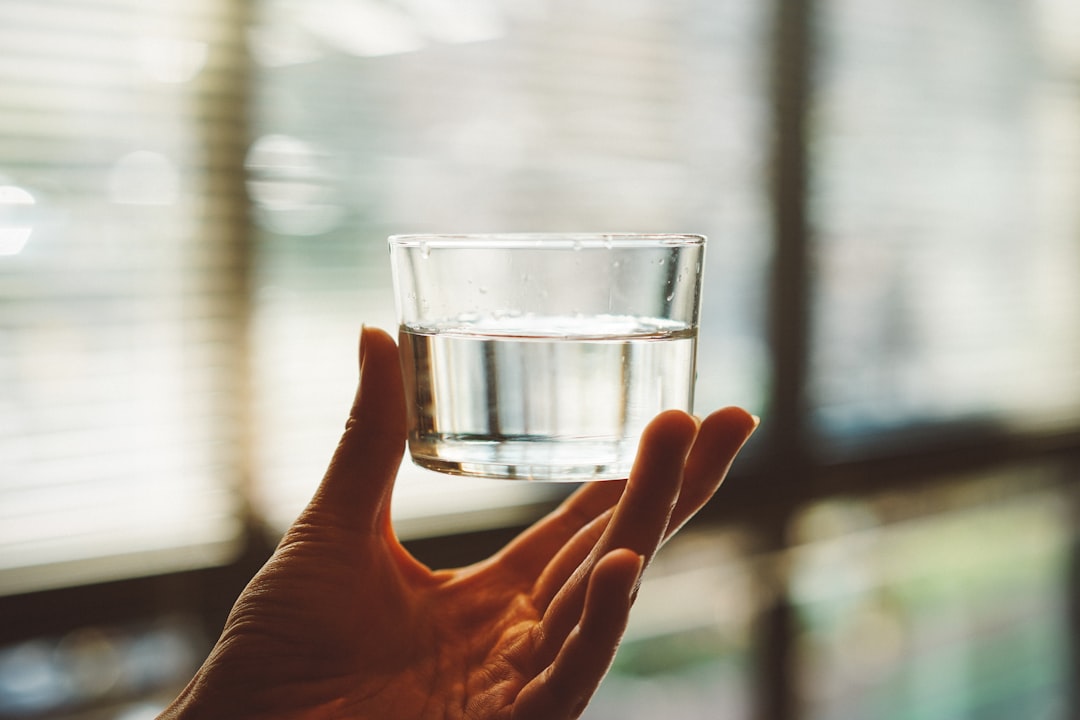
Water purification is the process of removing harmful contaminants, including bacteria, viruses, chemicals, and sediment, from water to make it safe to drink and use at home.
Quick answer: What is water purification?
- What it does: Removes biological, chemical, and physical contaminants from water
- Why it matters: Unsafe water causes millions of illnesses and deaths every year
- Common methods: Boiling, filtration, reverse osmosis, UV disinfection, chemical treatment
- Who needs it: Anyone on a private well, in an area with aging pipes, or preparing for emergencies
- Florida relevance: Local water can carry sulfur, lime, chlorine, and other common contaminants that affect taste, safety, and home plumbing
Most people don’t think about their water until something goes wrong, such as a strange smell, a discolored glass, or a boil advisory on the news.
But the reality is sobering. The U.S. Environmental Protection Agency estimates that 90% of the world’s water is contaminated in some way. Over 1.1 billion people lack access to safe drinking water, and 1.8 million die each year from diarrheal disease linked to unsafe water, with 94% of those cases considered preventable.
Even in a modern city or suburb, your tap water passes through miles of pipes, treatment plants, and storage systems before it reaches your glass. A lot can go wrong along the way.
This guide breaks down how water purification actually works, from basic boiling to whole-home filtration systems, so you can make smart decisions for your family’s health and safety.
At Premier Plumbers, our team brings a three-generation plumbing legacy and decades of hands-on experience helping Southwest Florida homeowners protect their water quality through proper plumbing and water purification solutions. In the sections ahead, we will walk you through everything you need to know to choose the right approach for your home.
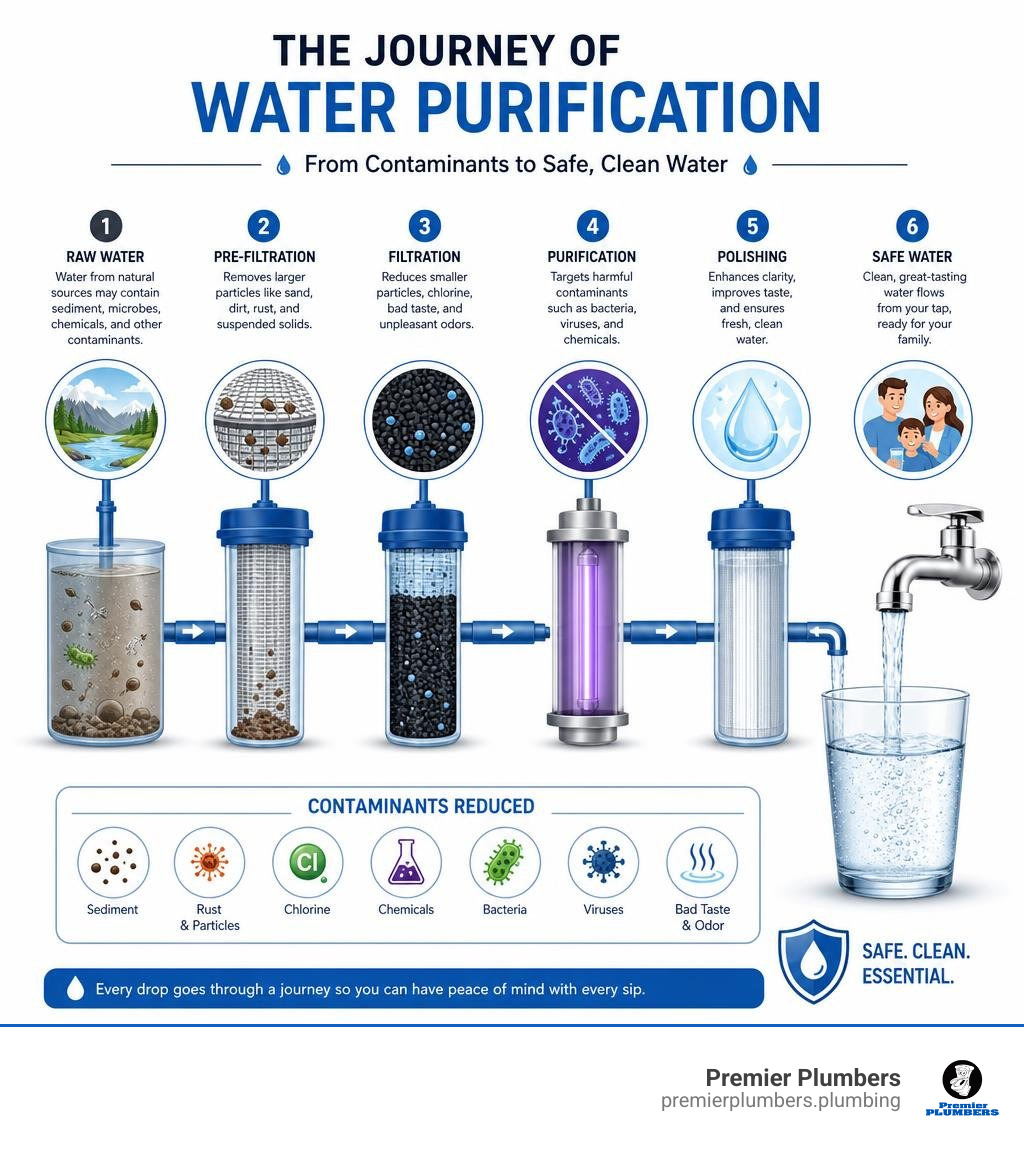
Why Water Purification Matters for Health and Safety
Clean-looking water is not always safe water. Some of the most dangerous contaminants are invisible, odorless, and tasteless. That is why water purification matters so much for both public health and daily life at home.
Unsafe water contributes to around 4 billion diarrheal disease cases each year worldwide, and 88% of those cases are tied to unsafe water plus poor sanitation and hygiene. Children, older adults, and people with weakened immune systems are often hit the hardest.
In Florida homes, water issues are not always dramatic. Sometimes it is sulfur odor, hard water scale, chlorine taste, sediment after storms, or concern about what a private well may contain. None of that should be brushed off as “just how the water is.”
The Main Types of Water Contamination
Water contamination usually falls into three main categories:
- Biological contaminants
- Bacteria such as E. coli and Salmonella
- Viruses such as hepatitis A and rotavirus
- Protozoa such as Giardia and Cryptosporidium
- Chemical contaminants
- Lead, arsenic, nitrates, pesticides, PFAS, and chlorine byproducts
- Dissolved salts and minerals that affect taste and plumbing
- Physical contaminants
- Sediment, rust, silt, turbidity, color, and floating debris
Biological contaminants are the ones most associated with acute illness. Chemical contaminants are often the long-game problem, with repeated exposure over time. Physical contaminants may sound less serious, but cloudy water can interfere with disinfection and clog filters, valves, and appliances.
How Contaminated Water Affects Homes and Communities
Contaminated water affects more than drinking glasses.
It can lead to:
- Stomach illness, nausea, cramping, and diarrhea
- Greater health risks for infants, seniors, and immunocompromised people
- Pipe corrosion that may release metals into water
- Mineral scaling in water heaters, fixtures, and appliances
- Bad taste and odor that make water unpleasant to use
- Problems during boil advisories, flooding, storms, or seasonal supply stress
For homeowners with private wells, regular testing matters because there is no city treatment plant acting as a safety net. For homeowners on municipal water, treatment usually helps a lot, but water can still pick up issues from aging plumbing, local distribution lines, or in-home piping.
Water Purification Methods Explained: From Boiling to Reverse Osmosis
There is no single best method for every water problem. The right choice depends on what is in the water, how much water you need, and whether you are planning for everyday use or an emergency. The CDC’s guide to home water treatment systems is a good reminder that treatment should match the contaminant. For local plumbing support, our water purification service helps Florida homeowners compare practical point-of-use and whole-home options.
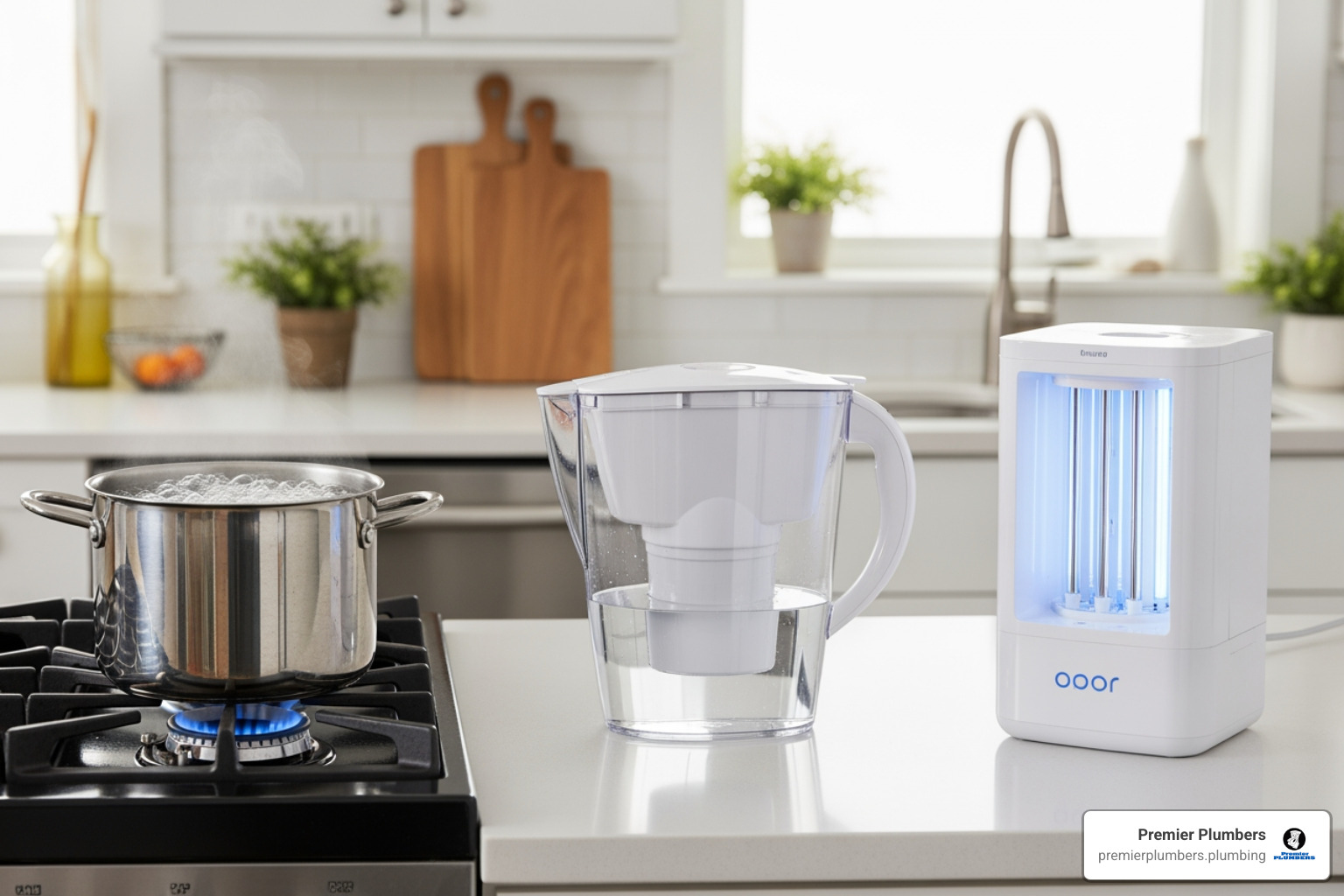
Boiling and Emergency-Ready Water Purification Basics
Boiling is the old-school method because it works. It is one of the most reliable ways to kill disease-causing microorganisms.
Best practices:
- Bring water to a rolling boil for at least 1 minute
- If you are above 5,000 feet elevation, boil for 3 minutes
- If water is cloudy, let particles settle first and strain through a clean cloth, paper towel, or coffee filter before boiling
Boiling is excellent for bacteria, viruses, and protozoa. What it does not do is remove:
- Heavy metals
- Salts
- Most chemicals
- Sediment already dissolved or suspended in the water
So boiling is a strong emergency disinfection tool, not a cure-all. Think of it as the “make it microbe-safe” method, not the “make every contaminant disappear” method.
Chemical Disinfection: Chlorine, Iodine, and Chlorine Dioxide
Chemical disinfection is another useful emergency option when fuel or power is limited.
Common choices include:
- Chlorine bleach
- Iodine
- Chlorine dioxide tablets or drops
For emergency bleach disinfection, only use regular, unscented household bleach suitable for disinfection. Typical guidance is:
- 8 drops of 6% bleach per gallon of clear water
- 6 drops of 8.25% bleach per gallon of clear water
- Double the dose if water is cloudy, very cold, or discolored
Then:
- Stir well
- Let it stand for 30 minutes
- Check for a slight chlorine smell
- If there is no chlorine smell, repeat the dose and wait another 15 minutes
A few important limits:
- Cold water slows chemical action, so longer contact time may be needed
- Cloudy water reduces effectiveness
- High pH can reduce chlorine performance
- Iodine is not ideal for pregnant people, people with thyroid disorders, or long-term use
- Chemical disinfection improves safety but does not remove metals or many industrial chemicals
Chlorine dioxide is often more effective than standard chlorine products against some hardier organisms and is popular in portable tablets, but it still works best in relatively clear water with proper wait time.
Filtration, Reverse Osmosis, UV, and Distillation
Filtration and advanced treatment systems are where home water purification becomes more targeted.
Common technologies include:
- Sediment filtration for dirt, rust, and sand
- Activated carbon for chlorine, taste, odor, and some chemicals
- Microfiltration for larger particles and some microorganisms
- Ultrafiltration for finer particle and microbe reduction
- Nanofiltration for some dissolved substances
- Reverse osmosis for very small dissolved contaminants
- UV disinfection for microorganisms
- Distillation for broad purification using evaporation and condensation
Here is the simple version:
- Activated carbon improves taste and odor and can reduce certain chemicals, but it does not reliably disinfect water on its own
- UV systems can inactivate bacteria, viruses, and protozoa, but water usually needs prefiltration so the light can do its job
- Reverse osmosis uses an extremely fine membrane, around 0.0001 micron, and can reduce many dissolved contaminants including salts, fluoride, lead, copper, chromium, and some PFAS-related concerns depending on system design
- Distillation can remove many contaminants but tends to be slower and more energy-intensive
RO systems are popular because they address both microbes and dissolved contaminants better than many simpler options. Countertop and under-sink models are common, and some systems include remineralization afterward to improve taste. For a deeper homeowner-friendly explanation of RO technology, our article on the reverse osmosis water filter explains how the system works and when it makes sense. The right fit depends on your water test results, usage, and plumbing layout.
Natural and Municipal Water Purification Processes
Most people picture purification as a filter cartridge in a kitchen, but large-scale water treatment is a full process with several stages working together.
Pre-Treatment Steps That Make Purification More Effective
Before final disinfection or membrane treatment, water often goes through pre-treatment steps such as:
- Screening to remove sticks, leaves, and large debris
- Grit removal for sand and heavy particles
- Sedimentation so suspended solids can settle
- Coagulation using chemicals like alum to neutralize particle charges
- Flocculation to clump tiny particles into larger “flocs”
- Dissolved air flotation in some systems to lift particles for removal
These steps matter because cleaner water is easier to disinfect and less likely to foul membranes or clog filters. In plain English: if you send muddy water into a delicate purification system, that system will complain in the only language it knows – reduced performance.
How Slow Sand Filters, Bank Filtration, and Artificial Groundwater Recharge Work
Some purification happens through natural processes, and these methods are more impressive than they sound.
Slow sand filters work by passing water through fine sand at a slow rate. A biological layer forms near the top, often called the schmutzdecke, which helps break down and capture contaminants. It is not just physical straining. It is biological treatment too.
Bank filtration uses the soils and sediments near riverbanks as a natural filter. As water moves through the ground, particles are strained out and contaminants may be reduced through sorption, biodegradation, oxidation-reduction, and other natural attenuation processes.
Artificial groundwater recharge takes that idea further. Water is intentionally infiltrated into shallow aquifers using basins, ditches, pipes, or wells. The ground acts as a natural treatment zone and storage reservoir. This can help with:
- Improving water quality through subsurface filtration and biodegradation
- Storing water in wet periods for use in dry periods
- Reducing evaporation compared with open surface storage
- Creating a more reliable year-round supply
Seasonal recharge is especially valuable in places that swing between downpours and dry spells. That is a fancy way of saying it helps when water availability behaves like a moody Florida summer.
Post-Treatment and Distribution Protection
Purification does not end when water leaves the plant.
Post-treatment may include:
- pH adjustment to reduce corrosiveness
- Corrosion control to protect pipes and plumbing
- Fluoridation where used by local utilities
- Remineralization after RO or distillation
- Residual disinfectant, such as chlorine, to help protect water in storage tanks and distribution lines
This final stage matters because purified water can still be recontaminated if it enters dirty tanks, damaged pipes, or poorly maintained plumbing systems.
Water Filters vs. Water Purifiers: What Actually Gets Removed?
People often use these terms interchangeably, but they are not always the same thing.
A water filter typically removes some contaminants. A water purifier is designed to remove or inactivate a broader range, often including microorganisms.
| Feature | Water Filter | Water Purifier |
|---|---|---|
| Main job | Reduce sediment, taste, odor, some chemicals | Reduce or inactivate microbes plus other contaminants depending on design |
| Protozoa | Often yes | Yes |
| Bacteria | Sometimes | Usually yes |
| Viruses | Usually no | More likely, if properly rated |
| Common tech | Carbon, sediment, ceramic, microfilters | RO, UV, ultrafiltration, advanced combinations |
| Best use | Improving tap water quality | Higher-risk water or broader contaminant reduction |
Understanding Micron Ratings in Water Purification
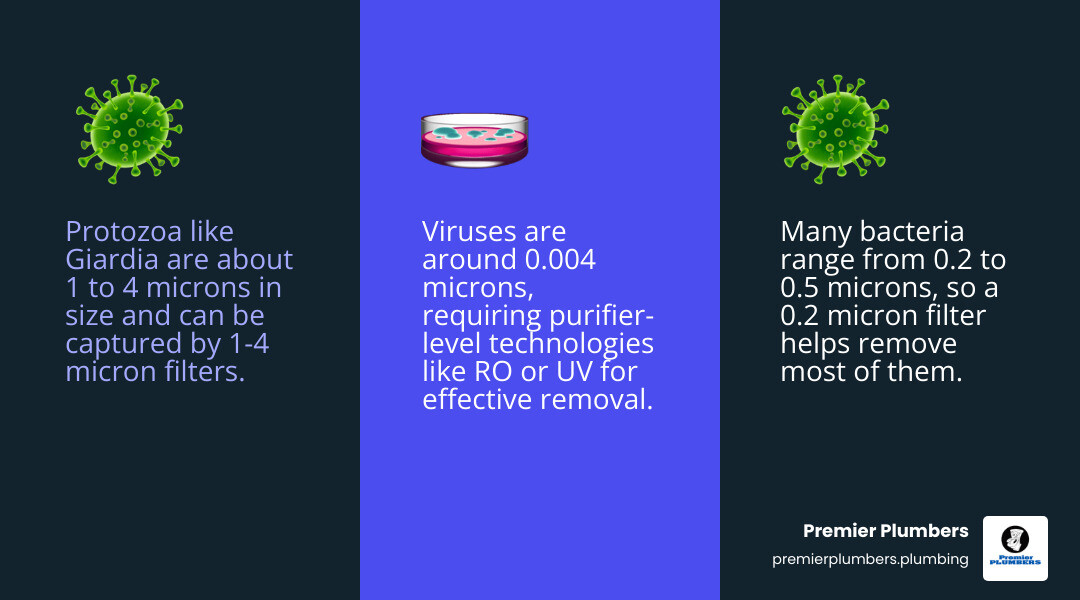
Micron ratings tell you the approximate size of particles a filter can capture.
Helpful reference points:
- Protozoa such as Giardia: about 1 to 4 microns or larger
- Many bacteria: about 0.2 to 0.5 microns
- Viruses: far smaller, around 0.004 micron range for physical removal targets
- Reverse osmosis membranes: about 0.0001 micron
- Microfiltration: roughly 0.05 to 5 microns depending on design
That is why:
- A 1 to 4 micron filter may catch protozoa
- A 0.2 micron filter can help with many bacteria
- Virus removal usually needs a purifier-level technology, not just a standard backpacking filter
Also watch for the difference between:
- Nominal rating: captures a percentage of particles at that size
- Absolute rating: captures nearly all particles at that size
Absolute ratings are generally more meaningful when safety matters.
Membrane Filters vs. Depth Filters
Membrane filters trap contaminants primarily at the surface or in highly controlled pores. Examples include hollow-fiber membranes and RO membranes. They are precise and effective but can clog if water is dirty.
Depth filters capture particles within thicker media. Ceramic and carbon-based filters often behave more like depth filters. They can handle some sediment better but may be less precise depending on the design.
Quick comparison:
- Membrane filters
- More exact pore control
- Better for microorganism removal
- More sensitive to fouling
- Depth filters
- Good for sediment and taste improvement
- Often used as prefilters
- Flow and effectiveness vary by media type
Choosing the Right System for Home, Travel, or Private Well Water
A good system matches the water source.
For homes on municipal water, common goals are:
- Better taste and odor
- Chlorine reduction
- Sediment removal
- Protection from plumbing-related contaminants
For private wells, testing is essential before choosing treatment. Depending on results, you may need:
- Sediment filtration
- Iron or sulfur treatment
- UV disinfection
- Reverse osmosis at the tap
- Water softening for hardness
For travel or emergency use, portable purifiers may be more appropriate than home filters. Compact purifier bottles, gravity-fed systems, and higher-capacity off-grid units can all play a role depending on where the water is coming from and how many people need safe drinking water. For everyday household decisions, start with testing, identify the specific contaminants, and then choose a point-of-use or whole-home setup that fits your plumbing, water usage, and maintenance expectations.
Emergency and Portable Water Purification When Systems Fail
Storms, flooding, pipe breaks, and power outages can turn water safety into an immediate issue. In Florida, hurricane prep is not optional theater. It is practical planning.
How to Disinfect Water in an Emergency
If your regular system is unavailable:
- Start with the clearest water possible
- Let sediment settle if needed
- Prefilter through a clean cloth, coffee filter, or paper towel
- Use one of these methods:
- Boil for 1 minute
- Disinfect with unscented bleach
- Use purification tablets
- Use iodine tincture if other options are unavailable
Emergency essentials include:
- Food-grade water containers
- Unscented bleach
- Measuring dropper
- Coffee filters or clean cloths
- Backup tablets
- Portable filter or purifier
- Separate clean and dirty containers
Solar disinfection can help in some situations, but it depends heavily on clear bottles, strong sunlight, and enough exposure time. It is best treated as a backup, not your primary plan.
Portable Options and Best Practices for Safer Drinking Water
Portable treatment options include:
- Gravity-fed filters for higher-volume family use
- Personal bottles and straw filters for mobility
- UV pens for quick treatment of clear water
- Compact purifier bottles for travel kits
A few best practices:
- Avoid stagnant water when possible
- Choose the clearest source available
- Keep intake hoses and dirty-water parts separate from clean gear
- Carry backup treatment in case one method fails
- Replace filters on schedule
For local emergencies tied to flooding, broken lines, or sudden service issues, our emergency plumbing service can help assess plumbing-related risks in the home. If a water line break is part of the problem, our guide to a Sarasota water line repair crisis explains warning signs, repair options, and steps homeowners can take while waiting for professional help.
Safe Storage After Water Purification
Purified water can become unsafe again if it is stored badly.
Use:
- Clean, sanitized, food-grade containers
- Tight-fitting lids or covers
- Separate containers for untreated and treated water
- Good hand hygiene when pouring or dispensing
If disinfected water retains a small chlorine residual, that can help protect it in storage. Rotate emergency water regularly and replace anything stored in questionable conditions.
After floods, never assume containers, wells, or plumbing fixtures are safe until they are cleaned, disinfected, and, where appropriate, tested.
Global Challenges and Smarter Water Management
Even with better technology, clean water access is still a major world problem. The global water purification market is worth about $22 billion, which tells you two things at once: demand is huge, and the challenge is not solved.
Emerging contaminants such as PFAS and microplastics have raised the bar. Older infrastructure, climate stress, and water scarcity complicate things further. In rapidly growing urban areas worldwide, families often mix municipal water, bottled water, and home purifiers to manage risk and taste concerns.
Balancing Cost, Technology, and Public Health
Low-cost tools like boiling and chlorination save lives. High-tech systems like RO and UV can provide broader protection, but they also bring:
- Upfront equipment costs
- Maintenance needs
- Filter replacement schedules
- Possible wastewater or energy tradeoffs
- Need for proper installation and certification
The smartest approach is often layered:
- Protect the source if possible
- Test the water
- Use the least complex system that solves the actual problem
- Maintain it consistently
A neglected high-end system can underperform just as badly as an inexpensive one used incorrectly.
Seasonal Storage and Recharge for Reliable Safe Water
Smarter water management includes capturing surplus water during wet periods and storing it for dry periods. Artificial recharge and aquifer storage help reduce evaporation and improve resilience during drought or peak demand.
That matters for long-term water security because purification is not just about technology. It is also about timing, storage, infrastructure, and planning.
Frequently Asked Questions about Water Purification
Does boiling water remove all contaminants?
No. Boiling is excellent for killing bacteria, viruses, and protozoa, but it does not remove heavy metals, dissolved salts, or most chemicals. It is best for emergency biological disinfection.
What is the best water purification method for home use?
It depends on your water test results and goals.
- For taste and chlorine: activated carbon may help
- For microbes: UV or purifier-grade filtration may be needed
- For dissolved contaminants like fluoride, salts, or some metals: reverse osmosis is often the better choice
- For whole-home scale and hardness issues: pretreatment such as softening or sediment filtration may be part of the solution
In short, match the system to the contaminant, not the marketing.
How do I keep purified water safe after treatment?
Store it in clean, sealed, food-grade containers. Avoid touching the inside of caps or containers. Keep untreated and treated water separate. If using chemical disinfection, maintain proper contact time and, where applicable, a light residual disinfectant.
Conclusion
Safe drinking water does not happen by accident. It depends on the right treatment method, proper plumbing integration, routine maintenance, and protection against recontamination.
Whether you are dealing with sulfur smell, hard water, sediment, chlorine taste, private well concerns, or emergency readiness in Florida, understanding water purification helps you make better decisions for your family and your home.
If you want help choosing a system that fits your water quality and plumbing setup, contact our professional water purification technicians. At Premier Plumbers, we bring a three-generation plumbing legacy to homes across our Florida service areas, and we are here to help you get cleaner, safer water without the guesswork.