Why Jetting Drain Lines Is the Most Effective Way to Clear Your Pipes
Jetting drain lines uses high-pressure water to scour the inside of your pipes clean, removing grease, roots, sludge, and mineral buildup that a plunger or snake simply cannot touch.
Here’s what you need to know at a glance:
- What it is: A professional method that blasts water at up to 4,000 PSI through specialized nozzles to clean pipe walls from the inside out
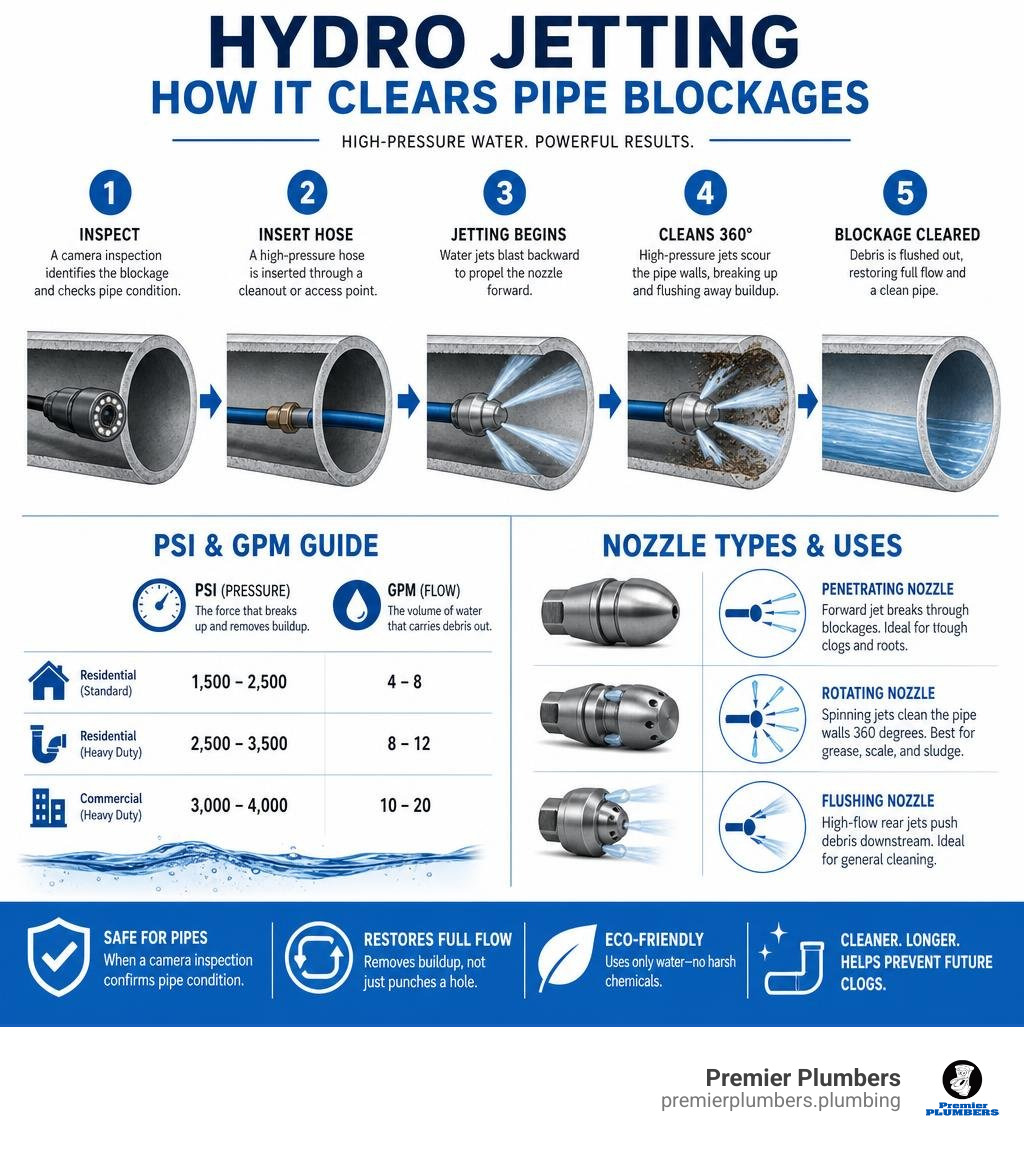
- How it works: A high-pressure hose is fed into your drain line; rear-facing jets propel the nozzle forward while scrubbing the pipe walls 360 degrees
- What it clears: Grease and FOG, tree roots, mineral scale, sludge, sand, and hardened debris
- Who needs it: Homeowners with recurring clogs, slow drains, gurgling pipes, or sewage odors
- How often: Every 18 to 24 months for most homes; every 3 to 6 months for commercial kitchens
- Is it safe? Yes, when a camera inspection is done first to confirm pipe condition
If your drains keep clogging every few months despite repeated snaking, jetting is likely the fix you actually need. A snake punches a hole through a blockage. Jetting removes the blockage and restores the full diameter of your pipe.
At Premier Plumbers, our team brings decades of hands-on plumbing experience to every job. We find that jetting drain lines is one of the most powerful tools we use to solve the stubborn, recurring clogs that other methods can’t fully resolve. In this guide, we will walk you through exactly how the process works, when to use it, and what to expect.
What is Sewer Jetting and How Does It Work?
Sewer jetting, also commonly referred to as hydro jetting, is a highly reliable method of complete pipe restoration. While traditional drain cleaning methods focus on simply breaking up an immediate obstruction, hydro jetting is designed to scrub the entire interior of the pipe back to its original flow capacity.
To understand why this is such a game-changer, it helps to look at what happens inside your plumbing over time. Every time you wash dishes, take a shower, or run the washing machine, waste materials cling to the pipe walls. Over months and years, fats, oils, grease, hair, soap scum, and mineral scale build up, narrowing the pathway for water.
When you use a mechanical snake, the metal cable spins through the pipe and punches a hole through the clog to get water flowing again. However, standard snakes often leave up to 70 percent of the grease and scale behind on the pipe walls. This creates a sticky trap that immediately begins catching new debris, leading to another backup just a few weeks or months later. Chemical drain cleaners are even worse, they rely on harsh acids that can eat away at older metal pipes, damage the environment, and rarely clear the entire diameter of the pipe.
Hydro jetting solves this by utilizing a specialized high-pressure pump that delivers water through a heavy-duty hose to a custom-engineered nozzle. This nozzle directs high-velocity streams of water directly against the pipe walls, effectively shaving away grease, scale, and roots. By returning the pipe to its original, clean state, we prevent the immediate recurrence of clogs.
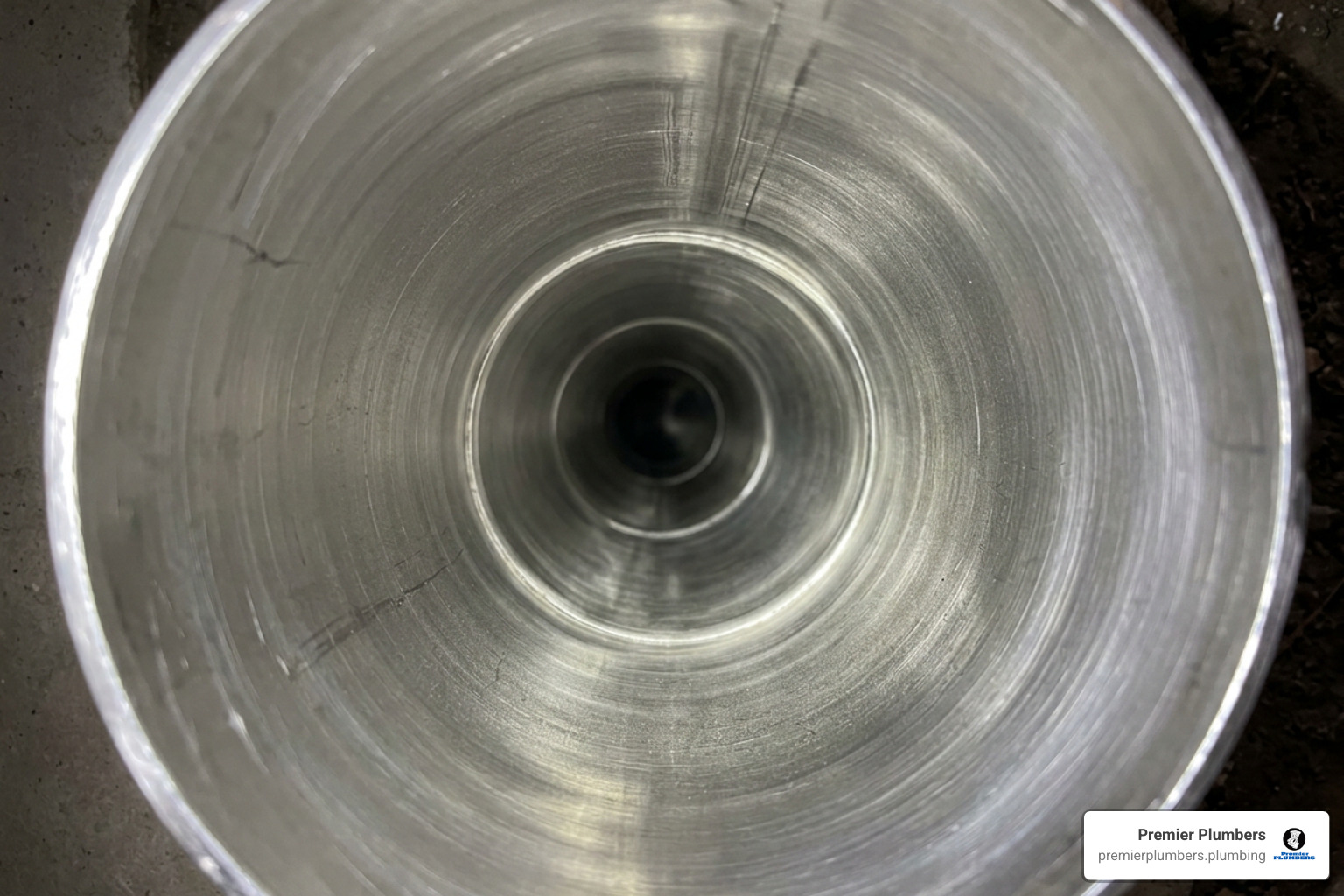
If you are noticing slow-draining sinks, gurgling sounds from your toilets, or faint sewer odors near your drains, your system is trying to tell you something. These are often the same warning signs homeowners see before they need more than a plunger, especially when buildup has been forming deep inside the line.
When to Choose Jetting Drain Lines Over Traditional Snaking
While jetting drain lines is incredibly effective, it is not always the only tool in a plumber’s arsenal. Traditional snaking still has its place. Knowing when to use each method ensures your pipes get the right treatment without unnecessary expense.
We generally recommend traditional cable snaking for:
- Retrieving solid, foreign objects like children’s toys, flushable wipes, or small bathroom items that have been accidentally flushed
- Clearing simple, one-time hair clogs in localized branch lines
- Temporary emergency relief when budget constraints prevent immediate full-scale restoration
- Fragile, old, or severely deteriorated pipes that cannot withstand high-pressure water
On the other hand, we highly recommend jetting drain lines for:
- Heavy grease and sludge accumulation, which is particularly common in kitchen drain lines
- Tree root intrusions that have found their way into your main sewer lateral
- Severe mineral scale and tuberculation inside older cast iron pipes
- Recurring drain backups that happen every few months
- Commercial properties, especially restaurants and food service facilities, that handle high volumes of organic waste
If you are facing an active backup that is threatening to flood your home or business, you do not have time to wait. At Premier Plumbers, our professional 24 hr drain service helps handle these high-stress situations quickly and safely.
Homeowners across Southwest Florida, from Sarasota to Naples, often discover that investing in a complete hydro jetting service saves them significant money over time. Rather than paying for repeated snake runs every few months, a single professional jetting session can keep your lines clear for several years. Our comprehensive drain cleaning services allow the team to tailor the right method to your specific plumbing setup.
The Science Behind Jetting Drain Lines: How High-Pressure Water Works
The incredible cleaning power of hydro jetting comes down to simple physics. When water is forced through a tiny orifice at high pressure, it transitions from a simple liquid flow into a high-velocity cutting and scouring tool.
As the specialized nozzle travels through the pipe, the water jets strike the pipe walls at precise angles. This creates a powerful shearing force that breaks the molecular bonds of grease, scale, and debris. Instead of just pushing the clog further down the line, the water sweeps the pulverized debris backward, flushing it completely out of your home’s plumbing system and into the municipal sewer main.
Understanding PSI and GPM in Hydro Jetting
When evaluating hydro jetting equipment and techniques, two measurements dictate how the machine performs: PSI (Pounds per Square Inch) and GPM (Gallons Per Minute).
- PSI (Pressure) is the cutting power: It determines the force with which the water strikes the obstruction. High PSI is necessary for slicing through tough tree roots, breaking up hardened mineral scale, and cutting through solid blockages.
- GPM (Flow Rate) is the flushing volume: It is the actual amount of water pushed through the pipe per minute. While PSI breaks the debris loose, GPM is what actually carries that debris out of the pipe. Without adequate GPM, the dislodged grease and sand will simply settle back down in the pipe as soon as the nozzle passes.
Finding the right balance between PSI and GPM is critical for a successful job. For example, clearing sand or fine sediment out of a large storm drain requires massive GPM at lower pressures, while cutting woody tree roots out of a residential lateral requires high PSI with moderate GPM.
| Blockage Type | Recommended PSI | Recommended GPM | Primary Cleaning Action |
|---|---|---|---|
| Light grease & soap scum | 1,500 to 2,000 PSI | 3 to 4 GPM | Scouring and flushing |
| Heavy commercial grease | 3,500 to 4,000 PSI | 6 to 12 GPM | Emulsifying and wall-to-wall descaling |
| Moderate tree root intrusion | 3,500 to 4,000 PSI | 8 to 10 GPM | Root cutting and shearing |
| Sand, silt, and heavy mud | 1,000 to 1,500 PSI | 40 to 60 GPM | Heavy volume flushing |
It is also important to note that pressure loss occurs as water travels through the hose. The longer the hose and the smaller its diameter, the more friction loss occurs, which reduces the actual cleaning pressure at the nozzle. Professional technicians calculate these factors before starting the job so the nozzle receives the right pressure for the pipe material, blockage type, and distance being cleaned.
The Role of Specialized Nozzles and Hoses
The nozzle is the business end of the hydro jetter. A jetter machine can have all the horsepower in the world, but without the correct nozzle, it will not clear the line effectively. Nozzles use a combination of forward-facing and rear-facing water jets:
- Forward-facing jets: These jets point straight ahead to blast a path through solid blockages, ice, or thick grease walls, allowing the hose to advance.
- Rear-facing jets: These jets are angled backward, usually between 15 and 45 degrees. They serve two vital purposes. First, they create a “rocket thrust” effect that pulls the heavy hose deep into the plumbing line. Second, they are angled toward the pipe walls to provide the actual 360-degree scouring action that cleans the pipe.
Common specialized nozzle types include:
- The Penetrator: Featuring a sharp, forward-facing jet, this nozzle is designed to bust through solid blockages and establish initial water flow.
- Rotary Nozzles: These nozzles feature spinning heads that rotate under water pressure, providing complete 360-degree coverage to scrub grease and scale from the pipe walls.
- Root Cutters: Equipped with internal turbines or sharp, rotating water blades, these cut through stubborn tree roots without damaging the surrounding pipe.
- Sand and Sludge Nozzles: Designed with wide, heavy rear jets, these ride along the bottom of the pipe to scoop and flush out heavy accumulations of sand, dirt, and mud.
The hoses used in jetting are also highly specialized. Unlike standard pressure washer hoses, jetter hoses are made of slick, highly flexible materials like thermoplastics or specialized rubber. They must be slick enough to slide easily around tight bends and durable enough to withstand high internal pressures without bursting.
Types of Jetter Machines and Their Applications
At Premier Plumbers, we utilize several different types of jetting equipment depending on the scale and location of the plumbing system we are servicing.
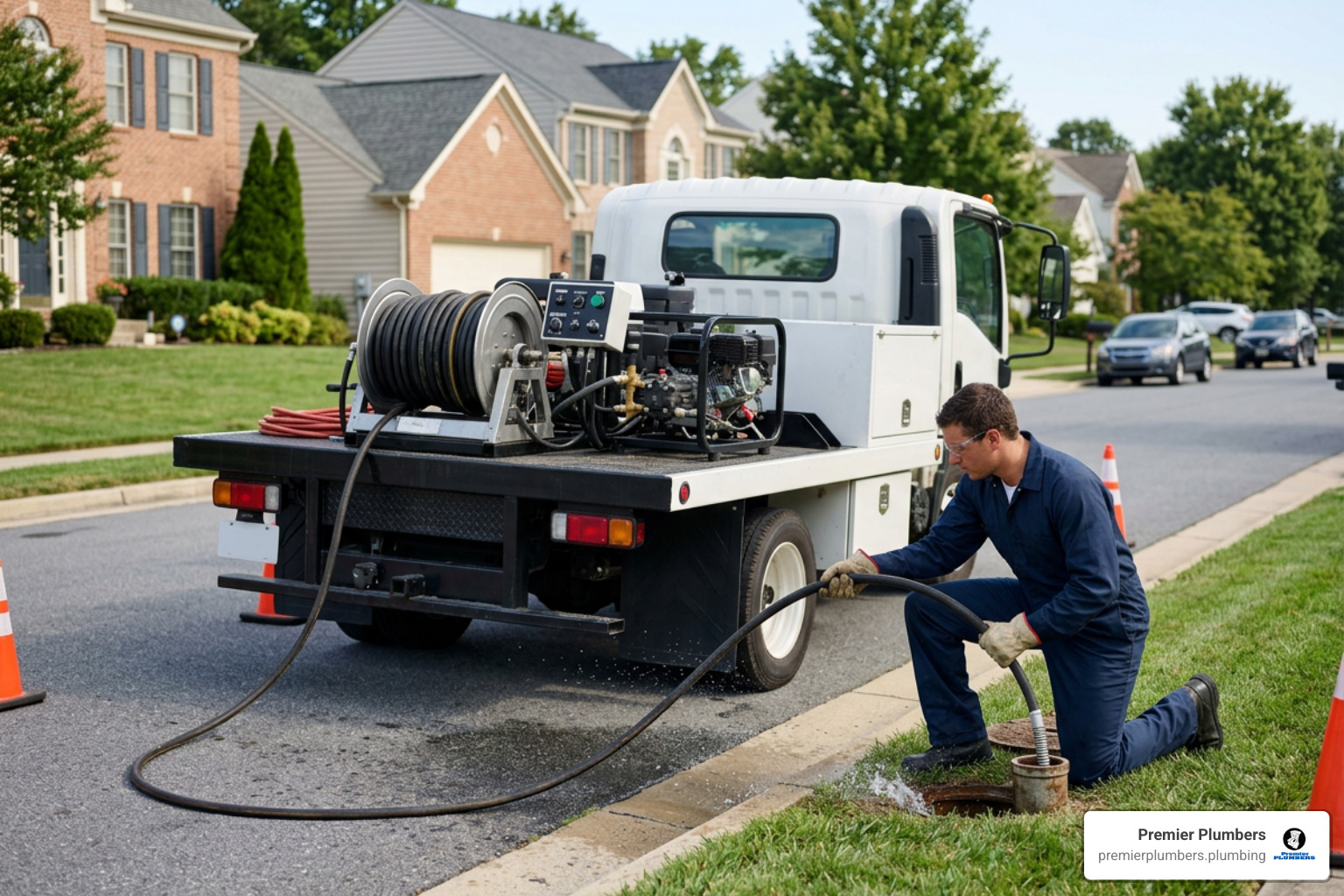
Portable electric mini-jetters are perfect for small, indoor residential lines, such as kitchen sinks and branch lines. They run quietly, use less water, and easily navigate tight indoor traps. For larger main sewer lines, we step up to gas-powered skid or trailer units that deliver the high PSI and GPM required to handle heavy root systems and thick grease. Our team provides professional hydro jetting services across Southwest Florida, ensuring that homes in Cape Coral, Fort Myers, Punta Gorda, and surrounding areas receive the highest standard of care.
Trailer-Mounted vs. Skid-Mounted Systems
For heavy-duty residential, commercial, and municipal work, plumbers rely on larger, engine-driven jetting systems. These typically fall into two categories:
- Skid-Mounted Systems: These units are designed to be mounted directly into the bed of a service truck or van. They are highly compact and keep all the equipment self-contained within the vehicle. Skid mounts are excellent for navigating tight residential streets and parking lots where towing a trailer would be difficult.
- Trailer-Mounted Systems: These are large, heavy-duty machines mounted on dedicated towable trailers. They feature massive water tanks, often carrying 300 to 500 gallons of water, and are powered by industrial diesel or gas engines. Trailer units are the gold standard for heavy commercial grease lines, storm sewers, and municipal lateral cleaning because they provide the high GPM flow rates needed for deep flushing.
Hot Water vs. Cold Water Jetting
While cold water jetters are excellent for clearing roots, dirt, and general debris, they often struggle with heavy grease. Cold water will break grease apart, but it can cause the grease to re-solidify further down the pipe, potentially creating a secondary clog downstream.
Hot water jetters feature onboard heating coils that heat the water up to 185 to 195 degrees Fahrenheit. This hot water instantly emulsifies fats, oils, and grease, melting them into a liquid state so they can be completely flushed out of the system without risk of re-hardening. This is highly beneficial for commercial kitchens and restaurants that handle heavy frying and food prep waste.
Best Practices for Safe and Effective Pipe Cleaning
Operating a hydro jetter requires specialized training and a strict adherence to safety protocols. With water pressurized up to 4,000 PSI, an inexperienced operator can easily destroy older pipes, flood a home, or cause serious personal injury.
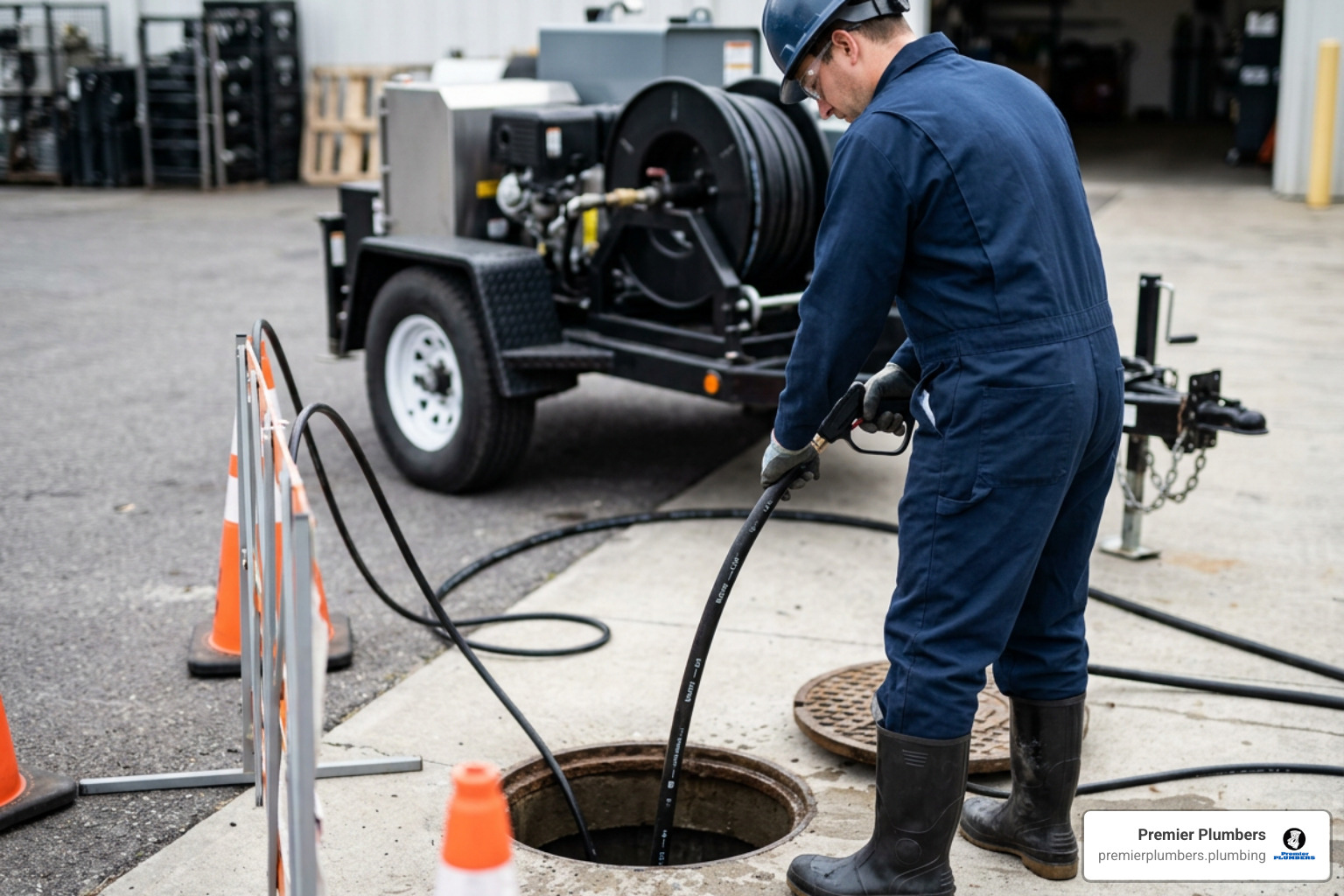
At Premier Plumbers, our technicians follow rigorous safety standards on every job. We wear heavy-duty protective gear, including safety goggles, water-resistant suits, and specialized gloves. We also ensure that the plumbing system is properly vented to prevent pressure blowbacks inside the home. Knowing how to respond when a clog becomes an emergency can help protect your property until the team arrives.
The Step-by-Step Process of Jetting Drain Lines Safely
To ensure a safe and thorough clean, we follow a precise step-by-step process on every job:
- Locate the Cleanout: We identify and access the main sewer cleanout, which is typically located outside the home or in the basement. Jetting should always be done from an outdoor or main-line access point whenever possible.
- Hose Marking: Before inserting the hose into the pipe, we mark it with high-visibility tape at a distance of approximately six feet from the nozzle. This serves as a critical safety warning. When pulling the hose back out of the pipe under pressure, the technician knows to shut off the water flow as soon as the tape appears, preventing the pressurized nozzle from accidentally exiting the pipe while active.
- Nozzle Insertion: We insert the nozzle at least ten feet into the drain line before starting the jetter engine. This ensures the high-pressure spray is safely contained within the pipe.
- Step Cleaning: For heavy deposits, we practice a technique called step cleaning. Instead of pushing the hose as far as it can go immediately, we jet forward a specific distance, say 50 feet, and then slowly retrieve the nozzle. Once that section is clean, we advance to 100 feet and retrieve it again, working section-by-section to prevent dislodged debris from stacking up and trapping the nozzle.
- The Reverse Flush: As we slowly retrieve the hose, the rear-facing jets perform a reverse flush. This creates a vacuum effect that pulls all the loosened sludge, grease, and roots backward toward the cleanout, where it can be safely extracted.
Why Video Camera Inspections Are Non-Negotiable
A professional plumber should never insert a hydro jetter into a pipe without performing a video camera inspection first. Operating a high-pressure jetter in a line that has collapsed, broken, or shifted can cause catastrophic damage, resulting in expensive excavation repairs.
Our pre-inspection allows us to:
- Verify the structural integrity of the pipe walls
- Identify the exact material of the pipe (PVC, cast iron, clay, or orangeburg)
- Locate the exact position and nature of the blockage
- Determine the safe operating pressure for that specific pipe material
Once the jetting process is complete, we perform a post-inspection. This second camera run provides absolute proof that the line is completely clean, restoring your peace of mind.
Whether you need hydro jet pipe cleaning in Sarasota, professional hydro jetting services in Bradenton, or comprehensive sewer drain jetting in Naples, our team at Premier Plumbers uses advanced camera verification to ensure your lines are completely clear. Local soil conditions and sandy terrain in Southwest Florida can heavily impact your home’s main lateral, making these professional diagnostic practices essential for long-term pipe health.
The Long-Term Benefits and Cost-Effectiveness of Hydro Jetting
While the initial cost of a professional hydro jetting service is generally higher than a basic snake run, it is far more cost-effective in the long run. By completely clearing the pipe walls, hydro jetting extends the lifespan of your plumbing system, prevents emergency backups, and eliminates the need for frequent plumbing service calls.
Furthermore, hydro jetting is completely eco-friendly. It relies solely on the physical force of pressurized water, meaning we do not have to introduce toxic chemicals into your home or the delicate Florida water table.
If you want to protect your home’s plumbing system from recurring issues, our specialized hydro jetting services can restore your lines to like-new condition with high-pressure water and camera-verified results. For those in Charlotte County, including Port Charlotte, our highly rated team is always ready to deliver reliable, professional solutions that local homeowners trust.
Recurring clogs are often a sign that standard plunging is no longer enough. If your sinks, toilets, or main drain line keep slowing down, the signs your drains need more than a plunger can help you decide when it is time for professional hydro jetting.
A sudden backup can quickly turn into property damage, especially when wastewater starts coming up through floor drains, tubs, or toilets. Understanding how to handle emergency blocked drains helps you take safer next steps while a trained team is on the way.
Commercial and Residential Maintenance Schedules
To keep your drains flowing smoothly, we recommend establishing a regular maintenance schedule based on your property type:
- Residential Homes: For most households, having your main sewer lateral jetted every 18 to 24 months is sufficient to address normal buildup and prevent root intrusion.
- Commercial Properties and Office Buildings: These high-traffic systems benefit from annual jetting to prevent disruptive business interruptions.
- Restaurants and Commercial Kitchens: Due to the high volume of fats, oils, and grease, food service facilities should have their grease lines jetted quarterly, or even monthly for high-volume kitchens with heavy fryer output.
Frequently Asked Questions About Sewer Jetting
Can hydro jetting damage older pipes?
When performed by a trained professional, hydro jetting is highly safe for most plumbing materials. However, if a pipe is already structurally compromised, collapsed, or severely corroded, high-pressure water can worsen the damage. This is why we always perform a video camera inspection first.
If we encounter older clay or cast iron pipes, we adjust our operating pressure to a safe limit (typically between 1,500 and 2,500 PSI) to safely clean the line without risking structural damage.
How often should sewer lines be jetted?
For standard residential properties, we recommend preventative jetting every 18 to 24 months. However, if your property is surrounded by mature trees with aggressive root systems, or if you have an older cast iron system prone to scale buildup, you may benefit from annual cleanings.
Can I use a standard pressure washer to jet my drains?
No, we highly advise against attempting to DIY jet your drains with a standard consumer pressure washer. Standard pressure washers operate at very low GPM flow rates, meaning they do not have enough water volume to flush debris out of the pipe.
Additionally, consumer pressure washers lack the specialized “pulse” technology that professional jetters use to help the hose navigate tight pipe bends. Attempting to DIY jet your lines often results in the hose getting permanently stuck inside a pipe bend, leading to extremely expensive excavation costs to retrieve the equipment.
Conclusion
Keeping your drains clear does not have to be a constant struggle. While traditional snaking is a great temporary fix for simple blockages, jetting drain lines is the only method that completely restores your pipes to their original, wall-to-wall flow capacity. By removing years of accumulated grease, scale, and tree roots, hydro jetting provides a long-term, eco-friendly solution that protects your home and saves you money over time.
As a family-owned business with three generations of plumbing expertise, the team at Premier Plumbers is dedicated to providing quality service across Southwest Florida, including Sarasota, Bradenton, Tampa, Fort Myers, and Naples. We combine advanced diagnostic technology with industrial-grade jetting equipment to ensure your plumbing system runs flawlessly.
To restore your home’s drain system to peak performance, contact our professional drain cleaning technicians today to schedule an inspection and experience the difference of a truly clean pipe.