Why Water Heater Repair Is Something Every Florida Homeowner Should Understand
If you need water heater repair, here is a quick answer to the most common questions:
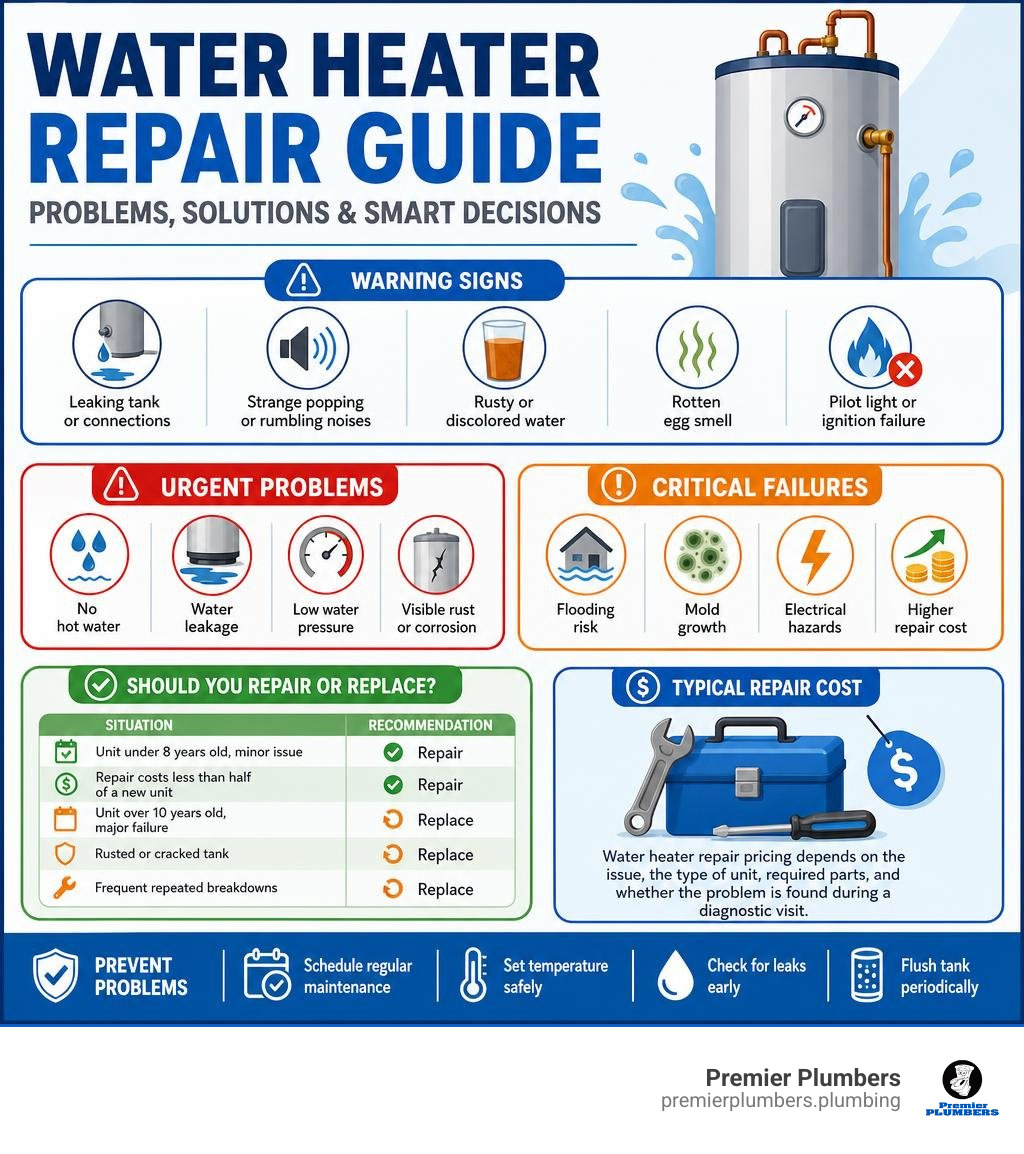
Most common water heater problems:
- No hot water or only lukewarm water
- Leaking tank or connections
- Strange popping or rumbling noises
- Rusty or discolored water
- Rotten egg smell
- Pilot light or ignition failure
Should you repair or replace?
| Situation | Recommendation |
|---|---|
| Unit under 8 years old, minor issue | Repair |
| Repair costs less than half of a new unit | Repair |
| Unit over 10 years old, major failure | Replace |
| Rusted or cracked tank | Replace |
| Frequent repeated breakdowns | Replace |
Typical repair cost: Water heater repair pricing depends on the issue, the type of unit, required parts, and whether the problem is found during a diagnostic visit.
Few household problems hit as suddenly as a broken water heater. One morning you step into the shower and the hot water simply never arrives. For Florida homeowners, a failing water heater is more than an inconvenience; it can mean water damage, mold risk, and disrupted daily routines.
The good news is that most water heater problems follow predictable patterns. Once you know what to look for, you can make faster, smarter decisions about whether to repair, maintain, or replace your unit.
This guide covers everything: common problems, repair costs, when to call a pro, and how to keep your water heater running longer.
At Premier Plumbers, our team brings three generations of plumbing experience to water heater repair and all aspects of residential plumbing. We have seen just about every water heater problem imaginable, and this guide walks you through what you need to know to protect your home and your budget.
Common Water Heater Problems Homeowners Face
When a water heater begins to fail, it usually doesn’t stay quiet about it. Whether it’s a sudden icy blast in the shower or a puddle forming in your garage, the signs are often clear. In our experience servicing homes from Tampa down to Naples, we see a few recurring “villains” in water heaters.
One of the most frequent complaints is sediment buildup. In many parts of Florida, hard water is a reality. Over time, minerals like calcium and magnesium settle at the bottom of the tank. This creates a layer of “crust” that makes the heater work harder, leads to strange noises, and eventually causes the tank to overheat or corrode.
Other common issues include:
- No hot water: Usually a tripped breaker (electric) or a pilot light that has gone out (gas).
- Lukewarm water: Often caused by a failing heating element or a broken dip tube.
- Rusty water: A sign that your internal anode rod has failed and the tank itself is starting to rust.
- Rotten egg smell: This is typically caused by sulfur bacteria reacting with the magnesium anode rod inside the tank.
- Ignition failure: A common headache for tankless water heater owners, often tied to gas supply issues or dirty sensors.
Water heater repair signs you should never ignore
Don’t wait for a total breakdown. If you notice any of these “red flags,” it’s time to look into water heater repair before a minor fix turns into a major flood:
- Popping or Rumbling Sounds: That “knocking” sound is actually steam bubbles escaping through sediment at the bottom of the tank. It’s a sign your heater is struggling.
- Inconsistent Temperatures: If your shower goes from hot to cold and back again, your thermostat or heating elements are likely on their way out.
- Discolored Water: If the water looks “tea-colored” or rusty, the tank is likely corroding from the inside.
- Rising Utility Bills: If your electric or gas bill is creeping up but your usage hasn’t changed, your water heater is likely losing efficiency.
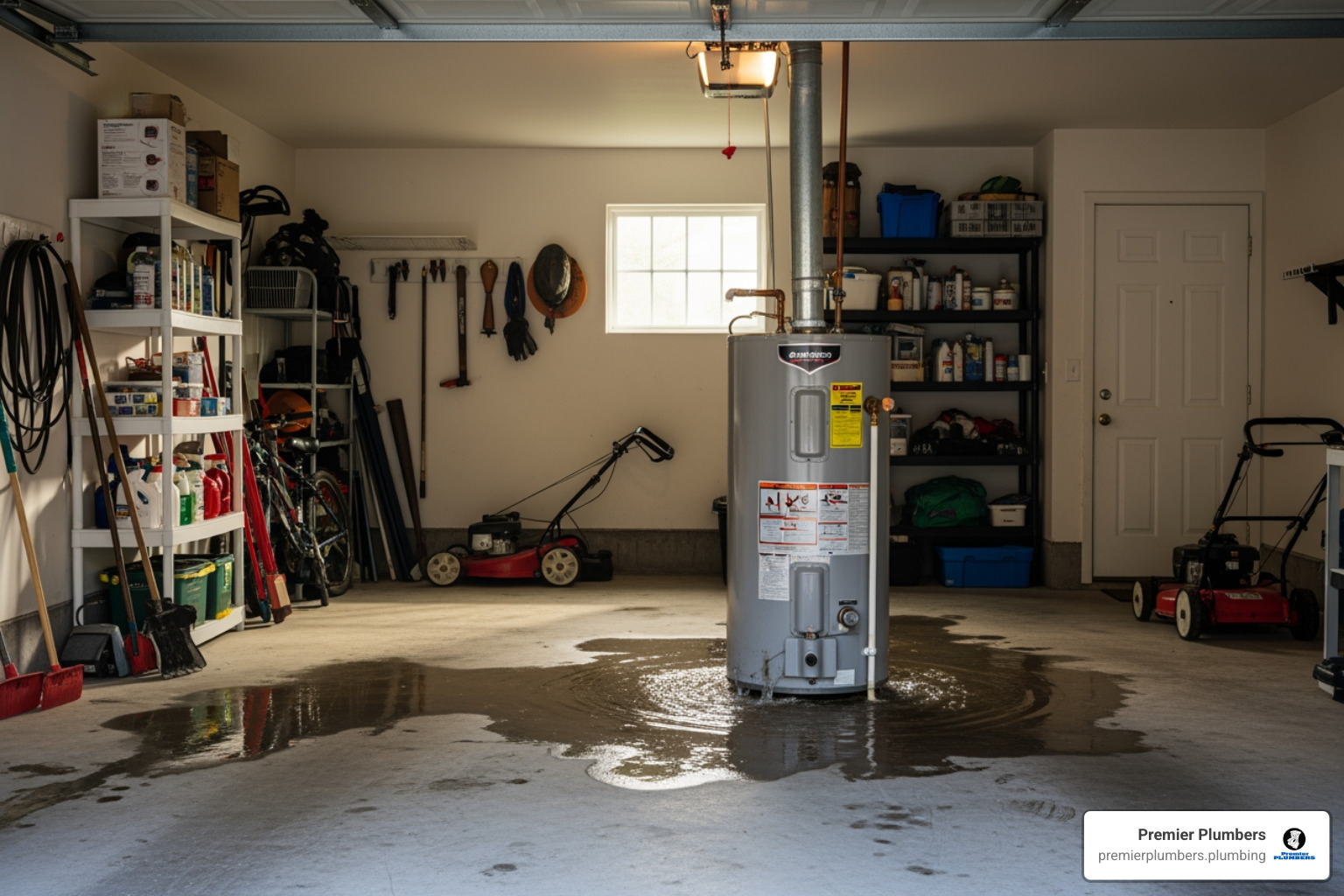
- Moisture or Pooling Water: Any moisture around the base of the unit is an emergency. It could be a simple valve leak, or it could be a hairline crack in the tank.
Problems by water heater type: electric, gas, and tankless
The “guts” of your water heater determine what can go wrong.
- Electric Water Heaters: These rely on upper and lower heating elements and thermostats. If one element burns out, you’ll get some hot water, but it won’t last. A tripped circuit breaker is also a common, non-mechanical fix.
- Gas Water Heaters: These involve more moving parts like the pilot light, thermocouple, and gas control valve. If the pilot light won’t stay lit, it’s often a faulty thermocouple, a safety device that shuts off the gas if it doesn’t sense a flame.
- Tankless Water Heaters: These are high-powered “computers” for your water. They commonly face scale buildup in the heat exchanger, especially in Florida’s hard water areas. They may also throw error codes due to venting blockages or sensor failures.
What to do if your water heater is leaking or making unusual noises
If you find a leak, don’t panic, but act fast. A leaking water heater can quickly lead to mold growth or structural damage.
- Turn off the power: For electric units, flip the breaker. For gas units, turn the dial on the gas valve to “Off.”
- Shut off the water: Close the cold water intake valve (usually a lever or knob on the pipe leading into the top of the heater).
- Check the Pressure Relief Valve: Sometimes a “leak” is just the valve doing its job and releasing excess pressure. However, if the tank itself is dripping, it’s usually time for a replacement.
Water Heater Repair or Replacement: How to Decide
As a rule of thumb, we tell our customers in Sarasota and Bradenton to consider the 8 to 12-year lifespan of a traditional tank. If your unit is older and needs a major repair, you may be better off putting that money toward a new, energy-efficient model.
When water heater repair is the smarter choice
We generally recommend water heater repair if:
- The unit is less than 8 years old.
- The repair cost is less than half of the cost of a new unit.
- The problem is a “bolt-on” part, like a heating element, thermostat, or pressure relief valve.
- The unit is still under manufacturer warranty (which often covers parts for 6–10 years).
When replacement makes more financial sense
Sometimes, a repair is just a “band-aid” on a terminal problem. Replacement is necessary when:
- The tank is leaking: There is no industry-accepted way to “patch” a rusted or cracked water heater tank.
- Frequent Breakdowns: If you’ve called us three times in the last year, the unit is telling you it’s tired.
- Massive Sediment: If the tank is so full of “calcium rocks” that it can no longer be flushed, efficiency will never return.
- Upgrading for Savings: Modern units are significantly more efficient. Why your current water heater is tanking your savings explains how an old unit can cost you extra in utilities every year.
For help comparing repair and replacement options, visit our water heater services page to learn more about how Premier Plumbers handles conventional and tankless water heater needs for Florida homeowners.
Cost comparison: repair vs replacement factors
| Factor | Repair | Replacement |
|---|---|---|
| Average Cost | Usually lower for minor part or labor issues | Higher upfront investment |
| Time Required | Often completed in one visit | Typically requires a longer installation appointment |
| Lifespan Added | May extend service life for a limited time | Provides a new expected service life |
| Efficiency | Remains the same | Increases (lower bills) |
Water Heater Repair Costs and What Affects the Price
The cost of water heater repair depends on the specific issue, the type of unit, the parts required, and the labor involved. Florida homeowners can usually expect pricing to vary based on whether the problem is a simple component replacement, a safety-related repair, or a more complex tankless system issue.
Most reputable plumbers charge a diagnostic or trip fee before starting work. At Premier Plumbers, we believe in transparency, so we always provide an upfront estimate before any work begins.
Common water heater repair issues that affect cost
- Thermocouple replacement: Common on gas units when the pilot light will not stay lit.
- Heating element replacement: Common on electric units that produce little or no hot water.
- Thermostat replacement: Needed when temperature control becomes unreliable.
- Anode rod replacement: Helps slow tank corrosion and extend service life.
- Pressure relief valve replacement: Important for safe pressure control.
- Gas control valve repair or replacement: A more involved repair that requires professional testing.
Why electric, gas, and tankless repair costs differ
Electric units are often the simplest to repair because the parts are standardized and the systems are relatively straightforward. Gas units require more expertise because of the combustion and venting components. Safety is paramount here, and testing for gas leaks adds to the labor time.
Tankless water heaters are often more involved to service than standard tank units. They require specialized training, careful diagnostics, and sometimes proprietary parts that are not always stocked on every truck.
How long a typical water heater repair takes
Most repairs are completed in a single visit. Once we arrive at your home in Fort Myers or Naples, the process usually looks like this:
- Diagnosis: We identify the root cause.
- The repair: Many common parts, including elements, valves, and thermostats, are kept on our service trucks.
- Testing: We ensure the water reaches the correct temperature and there are no leaks.

DIY Troubleshooting vs Calling a Professional
We love a handy homeowner, but water heaters involve high-voltage electricity, pressurized water, and flammable gas. Some things you can do yourself; others require a license.
Safe DIY water heater repair steps homeowners can try first
Before you call us, check these basics:
- Check the breaker: If you have an electric unit, ensure the circuit hasn’t tripped.
- The reset button: Many electric water heaters have a red high-limit reset button on the thermostat. Push it once.
- Check the pilot: For gas units, follow the instructions on the tank to see if the pilot light needs relighting.
- Thermostat setting: Ensure it’s set to 120°F. The U.S. Department of Energy recommends this setting to prevent scalding and save energy. Higher can cause scalding; lower can lead to lukewarm showers.
When to call a licensed plumber immediately
Call a professional if you encounter:
- The smell of gas: Leave the house and call for help immediately.
- Any active leak: Water damage spreads fast.
- Electrical issues: If you see charred wires or smell burning plastic.
- No hot water after a reset: This indicates a mechanical failure.
- A unit under warranty: DIY repairs can void your manufacturer warranty.
What happens during a professional water heater repair visit
When we arrive, we don’t just “swap parts.” We perform a full system health check. We look at the venting, the water pressure, and the condition of the tank. You’ll receive an upfront estimate, and once approved, we perform the repair and provide a final walkthrough to show you everything is back in working order.
Water heater problems can also reveal issues elsewhere in the plumbing system, such as high water pressure, aging shutoff valves, corroded supply lines, or drainage concerns near the unit. If your repair visit uncovers a larger concern, Premier Plumbers can help with a full range of plumbing services, so you have one local team handling the repair, safety checks, and any related plumbing work your home may need.
Maintenance That Helps Prevent Costly Repairs
The best water heater repair is the one you never have to pay for. Maintenance is the secret to getting 15 years out of a 10-year tank.
The maintenance tasks that matter most
- Annual Flush: Removes sediment that causes overheating.
- Anode Rod Inspection: This sacrificial rod “eats” the corrosion so your tank doesn’t have to. It should be replaced every 2–3 years.
- Temperature Check: Keeping the unit at 120°F reduces scale formation.
- Pressure Relief Test: Briefly lifting the lever ensures the valve isn’t stuck.
Why flushing your water heater matters
In coastal areas like Siesta Key or Naples, minerals in the water can settle quickly. If you don’t flush the tank, that sediment acts as an insulator, meaning the heating element has to heat the “rocks” before it can heat the water. This leads to element failure and higher bills.
Regular flushing is one of the simplest ways to reduce sediment buildup, protect heating elements, and help your water heater operate more efficiently. For a deeper look at why this maintenance step matters, see our guide on flushing your water heater. Homeowners in Southwest Florida may also benefit from our local breakdown of why flushing is especially important for homes in Naples, Fort Myers, and Bonita Springs, where water conditions can make sediment control even more important.
Maintenance schedules for tank and tankless units
- Traditional Tank: Flush once a year; check anode rod every 2 years.
- Tankless Unit: Needs professional “descaling” once a year to keep the heat exchanger clear of calcium.
- Coastal Homes: If you live near the water, salt air can corrode external components faster. We recommend a visual inspection every 6 months.
How to Find a Reliable Water Heater Repair Service Near You
Not all plumbers are created equal. When searching for water heater repair in Florida, look for a company with deep roots in the community.
Questions to ask before booking service
- Are you licensed and insured?
- Do you offer same-day service?
- What is your warranty on labor?
- Is the diagnostic fee waived if I do the repair?
Warranties, guarantees, and service protections
Most new water heaters come with a 6-year manufacturer warranty on the tank. If your unit fails within this window, the parts may be free, though you will still pay for labor. At Premier Plumbers, we stand by our work with a satisfaction guarantee, ensuring the job is done right the first time.
Local options and service resources for Florida homeowners
We serve a wide range of communities across the Gulf Coast and Tampa Bay area. Whether you are in Sarasota, Bradenton, Tampa, Naples, or Fort Myers, local regulations and water conditions vary. For instance, homes in Charlotte County often deal with different water hardness levels than those in Hillsborough County. We tailor our repair and maintenance approach to your specific local water chemistry.
Conclusion
At Premier Plumbers, we know that a broken water heater can turn a good day into a stressful one. As a family-owned, three-generation company, we pride ourselves on providing “repair-first” guidance. We won’t try to sell you a new unit if a simple heating element will fix the problem.
From Tampa to Marco Island, Premier Plumbers is here to ensure your home stays comfortable and your water stays hot. If you’re hearing strange noises, dealing with inconsistent temperatures, or facing a cold shower, our team can inspect the issue, explain your repair options clearly, and help you decide the next best step for your home. To schedule service or ask a question about your water heater, contact our water heater repair specialists and connect with a local plumbing team that understands Florida homes.