

Is Your Water Heater Quietly Draining Your Wallet?
A heat pump hot water tank is one of the most effective upgrades a Florida homeowner can make to cut energy costs. Here’s what you need to know at a glance:
| Heat Pump Water Heater | Standard Electric Heater | |
|---|---|---|
| Efficiency | Up to 3x more efficient | Baseline |
| Annual operating cost | ~50% less | Higher |
| Estimated yearly savings | $200–$400+ | — |
| 10-year savings potential | Up to $6,000 | — |
| ENERGY STAR certified | Yes (top models) | Some models |
| Greenhouse gas offset | ~2.9 metric tons/year | Minimal |
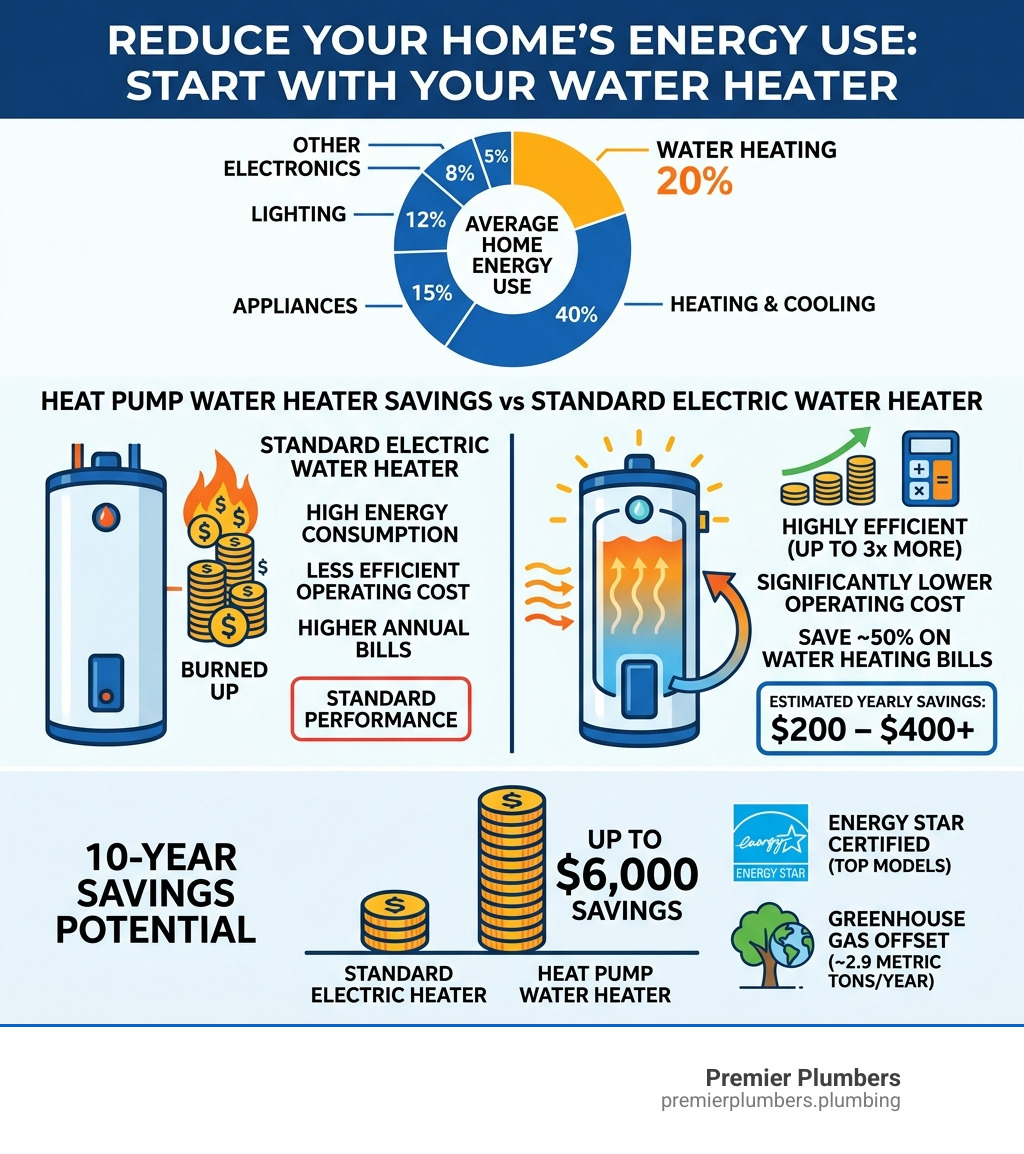
Water heating accounts for roughly 20% of the average home’s energy use. That’s not a small number. And if you’re still running a conventional electric or gas unit, chances are you’re paying far more than you need to every single month.
The difference isn’t marginal — it’s significant. Heat pump technology can cut your water heating bill in half, sometimes more. Yet most homeowners don’t think about their water heater until something goes wrong.
That’s where the hidden cost lives: in the quiet, daily drain of an inefficient system running in the background.
I’m Kelly Cardin, owner of Premier Plumbers and a third-generation plumber with over 34 years of experience helping Southwest Florida homeowners choose, install, and maintain the right heat pump hot water tank for their homes. In this guide, I’ll walk you through everything you need to make a smart, informed decision.
Understanding the Heat Pump Hot Water Tank
To understand why a heat pump hot water tank is so revolutionary, you have to change how you think about “heating.” Most appliances create heat. A heat pump, however, is a master of relocation. It doesn’t create heat; it moves it.
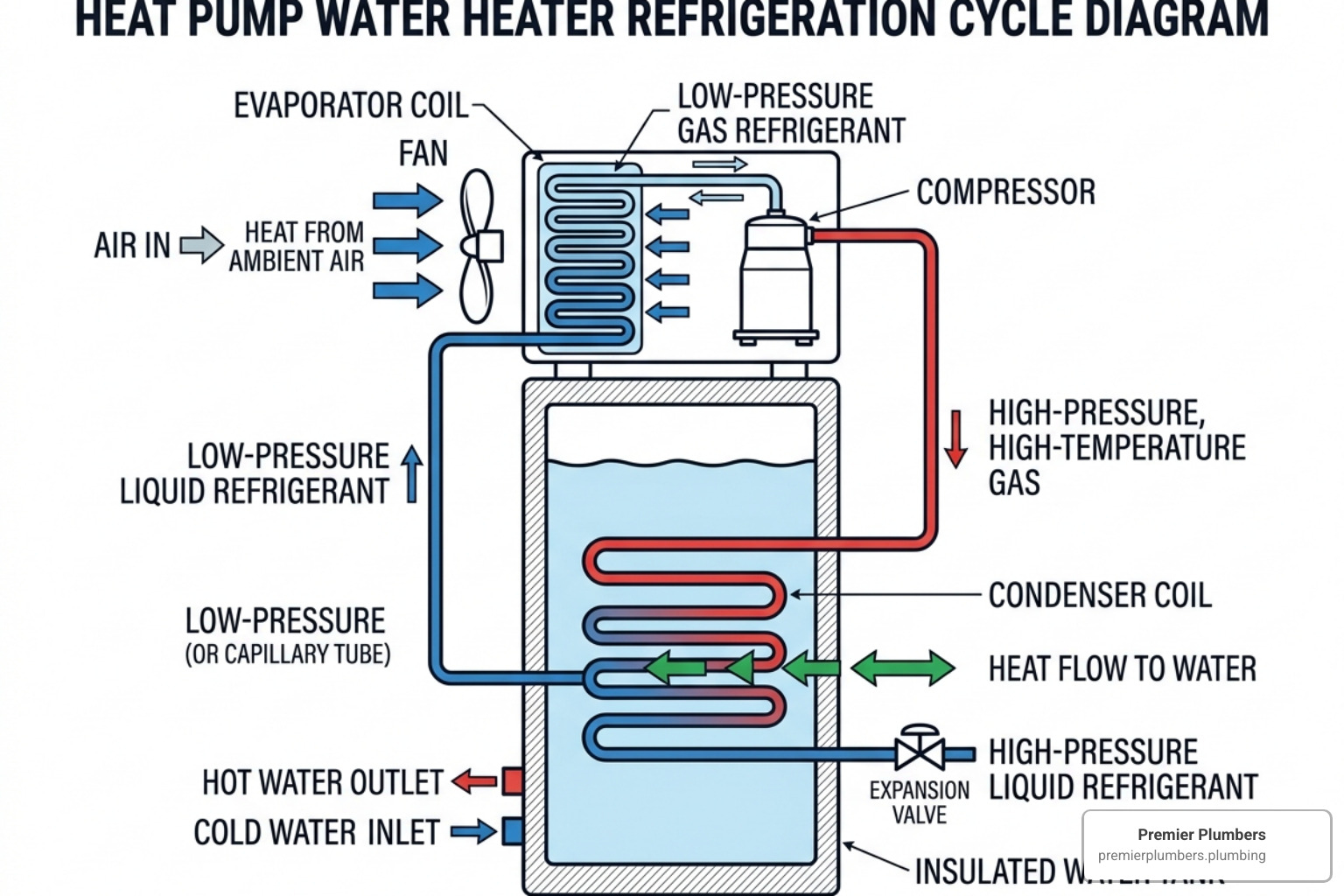
Think of it like a refrigerator running in reverse. While a fridge pulls heat from the inside and pushes it out into your kitchen, a heat pump water heater pulls heat from the surrounding air and dumps it into your water tank. This process is incredibly efficient because moving existing heat requires far less electricity than generating new heat from scratch.
According to the Department of Energy, these units use a fan to pull in ambient air. That air passes over an evaporator coil containing a refrigerant. The heat in the air warms the refrigerant, which is then compressed to increase its temperature even further. This concentrated heat is then transferred to the water in the tank through a heat exchanger.
How a heat pump hot water tank differs from traditional units
Traditional electric water heaters are “resistance” heaters. They use big electric coils (much like a giant toaster) that sit inside the water. While 100% of the electricity used is turned into heat, it takes a massive amount of power to get those coils hot enough to warm 50 or 80 gallons of water.
Gas units are different again, relying on combustion. They burn fuel to create a flame that heats the bottom of the tank. While effective, a lot of that heat literally goes up the flue and out of your house.
A heat pump hot water tank is often called a “hybrid” because it combines this high-efficiency heat pump technology with standard electric backup elements. This ensures that if you have a house full of guests and everyone takes a shower at once, the unit can switch to “high demand” mode to keep up. If you’re looking to upgrade, exploring water heater services can help you determine which hybrid model fits your home’s existing infrastructure.
Efficiency mechanisms of a heat pump hot water tank
When comparing these units, you’ll see two main metrics: UEF and COP.
- UEF (Uniform Energy Factor): This is the modern standard for measuring overall water heating efficiency. While a standard electric tank might have a UEF around 0.90 to 0.95, a high-end heat pump hot water tank can achieve ratings of 3.45 to 3.80 or higher.
- COP (Coefficient of Performance): This measures the ratio of heating provided to the electricity consumed. A COP of 4.0 means the unit provides four units of heat for every one unit of electricity it uses.
By using the surrounding air as a “free” fuel source, these tanks consume significantly less energy, making them the most efficient tank-style heaters on the market in May 2026.
Financial and Environmental Benefits of Hybrid Technology
The primary reason our customers in Sarasota and Naples switch to hybrid technology is the bottom line. The math is hard to argue with: when you cut the energy consumption of a major appliance by 60% to 70%, the savings add up fast.
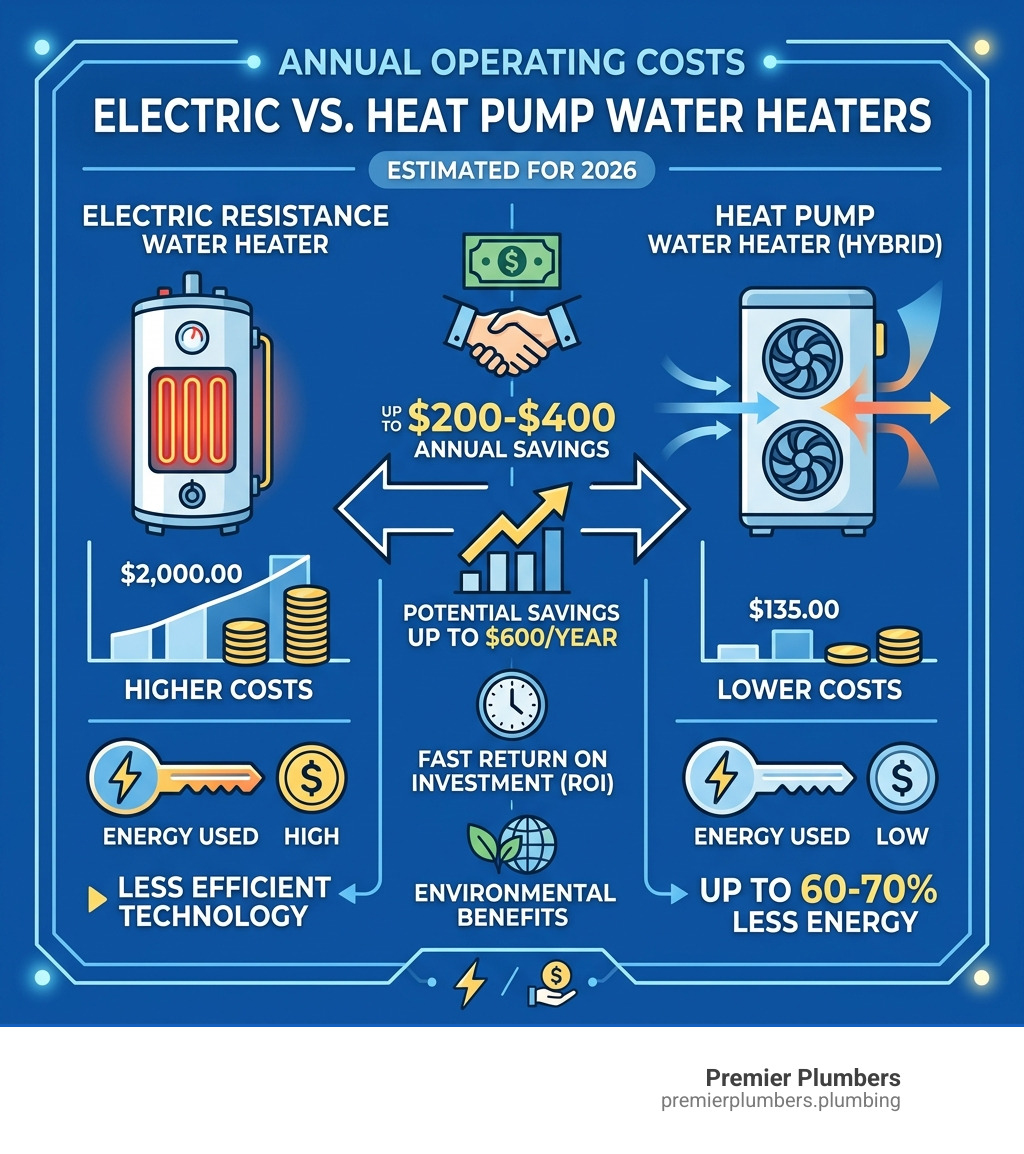
Typical savings range from $200 to $400 per year, but in high-use households, we often see savings of up to $600 annually. Over the 10-to-15-year lifespan of the unit, that is thousands of dollars staying in your pocket rather than going to the utility company.
Long-term ROI and energy savings
While the upfront cost of a heat pump hot water tank is higher than a standard “dumb” electric tank, the return on investment (ROI) is remarkably short. Most homeowners see the unit pay for itself through energy savings in just 3 to 5 years.
Consider these projections over a decade:
- Standard Electric: ~$6,000–$8,000 in energy costs.
- Heat Pump Hybrid: ~$1,500–$2,000 in energy costs.
That’s a lifetime savings potential of roughly $6,000. For families in the Hillsborough County area, choosing Tampa water heater replacement options that include hybrid models is often the single best way to lower a monthly power bill.
Environmental impact and carbon footprint
Beyond the dollars and cents, there is a massive environmental win. Because these units are so efficient, they significantly reduce the demand on the power grid. Upgrading to a hybrid model can offset approximately 2.9 metric tons of greenhouse gas emissions per year.
Modern units are also moving toward “greener” refrigerants. Some advanced models use R-744 (CO2), which has a Global Warming Potential (GWP) of only 1, compared to older refrigerants that were hundreds of times more impactful. By choosing an ENERGY STAR certified unit, you are directly participating in the decarbonization of your home.
Installation Requirements and Florida-Specific Considerations
Installing a heat pump hot water tank isn’t exactly the same as swapping out a standard tank. Because they “breathe” the surrounding air, they have specific environmental needs.
Space and voltage needs
The most important requirement is air volume. A heat pump hot water tank needs at least 1,000 cubic feet of surrounding air space to operate efficiently. If you put it in a tiny, sealed closet, it will quickly suck all the heat out of that air and be forced to switch to its inefficient backup electric coils.
- Ideal Locations: In Florida, garages and unfinished basements (though rare here) are perfect.
- Voltage: Most models require a 240V circuit, just like a standard electric heater. However, if you don’t have a 240V line and don’t want to run one, there are now 120V “plug-in” models available that can work with a standard wall outlet, making professional hybrid water heater installation easier than ever.
- Clearance: You generally need about 6 to 12 inches of clearance around the unit and several feet above it for the heat pump “head” to function correctly.
Why Florida homes benefit from heat pump technology
Florida is arguably the best place in the country for this technology. Why? Because our air is almost always warm and humid.
- Efficiency: The hotter the air, the easier it is for the heat pump to find energy. Our 90-degree summer days make these units run at peak performance.
- Dehumidification: This is the “secret” bonus. As the unit pulls heat from the air, it also pulls out moisture. A hybrid water heater in your garage acts as a built-in dehumidifier, keeping your storage area dryer and helping to prevent mold and mildew.
- Cooling Effect: The exhaust air coming out of the heat pump is cool and dry. If your water heater is in a garage or a laundry room, it actually provides a slight cooling effect to that space. It’s like getting a tiny bit of free air conditioning every time you take a shower.
For local homeowners, this makes energy-efficient water heating for Florida homes a triple-win: hot water, lower bills, and a dryer garage.
Key Features and Smart Technology to Look For
In May 2026, a heat pump hot water tank is more than just a tank; it’s a smart appliance. When we help families in Fort Myers or Bradenton select a unit, we look for features that provide both convenience and protection.
Advanced protection and monitoring
One of the biggest advancements is integrated leak detection. Some smart hybrid heat pump water heaters use built-in sensors to spot leaks early, before a small drip turns into major water damage. Higher-end models may also include an automatic shut-off valve that stops the water supply as soon as a leak is detected.
Other features to look for include:
- Anode Rods with Stainless Steel Cores: These last longer and protect the tank from the “hard” water common in Southwest Florida.
- WiFi Connectivity: This allows you to set “Vacation Mode” from your phone while you’re at the airport, ensuring you aren’t paying to heat water while you’re away.
- Grid Capability: Some units can communicate with your utility provider to heat water when electricity is cheapest and most abundant.
Choosing the right capacity for your household
Sizing is critical. Because heat pumps recover (reheat) a bit slower than standard electric elements, we often recommend “sizing up.” If you currently have a 40-gallon standard tank, a 50-gallon hybrid is usually the better fit.
- 40-50 Gallons: Ideal for 2 to 4 people.
- 66-80 Gallons: Necessary for 5+ people or homes with large soaking tubs.
- First-Hour Rating: Check this number on the yellow EnergyGuide label. It tells you how much hot water the unit can deliver in the first hour of a busy morning. A high-quality 80-gallon hybrid can often deliver over 85 gallons in that first hour.
Maintenance and Longevity: Protecting Your Investment
A heat pump hot water tank is a sophisticated piece of machinery. While they are built to last—many come with 10-year warranties—they do require a bit more attention than the old “set it and forget it” tanks.
The biggest enemy of any water heater in Florida is sediment. Our water is full of minerals that settle at the bottom of the tank, creating an insulating layer that makes the heater work harder. This is why flushing your water heater matters; it removes that “gunk” and keeps your efficiency high.
Essential upkeep for coastal homes
If you live in Siesta Key, Anna Maria Island, or Fort Myers Beach, you have an extra challenge: salt air. Salt is incredibly corrosive to metal. We emphasize water heater maintenance for coastal homes in Siesta Key because the exterior components and electrical connections need to be inspected for signs of corrosion regularly.
Your sacrificial anode rod is your tank’s primary defense. It “sacrifices” itself to the corrosive elements in the water so the tank doesn’t rust. In our area, these should be checked every 2 to 3 years.
Troubleshooting and professional inspections
Because a hybrid unit has an air filter (to keep dust off the evaporator coils) and a condensate drain (to remove the water it pulls from the air), there are a few extra steps for the homeowner:
- Clean the Air Filter: Usually a simple mesh screen on top that needs a quick rinse every few months.
- Check the Condensate Line: Ensure the drain line isn’t clogged so water doesn’t back up.
For everything else, we recommend a professional inspection once a year. Understanding why water heater maintenance is essential for homes in Sarasota can save you from an unexpected cold shower and extend the life of your unit well beyond its warranty period.
Frequently Asked Questions about Heat Pump Water Heaters
Do heat pump water heaters work in cold climates?
Yes, but they are most efficient when the air is between 40°F and 90°F. In the rare event that a Florida “cold snap” drops the garage temperature below 40°F, the unit will automatically switch to standard electric resistance mode. Once it warms up again, it switches back to the high-efficiency heat pump mode.
How noisy are these units during operation?
Early models were a bit loud, but modern units are very quiet. Most operate between 45 and 51 decibels. To put that in perspective, a quiet conversation is about 50 decibels, and a modern dishwasher is around 45. You’ll hear a gentle hum from the fan and compressor, similar to a small window AC unit.
Are there tax credits or rebates available in 2026?
Absolutely. Because these are ENERGY STAR certified, they often qualify for federal tax credits under the Inflation Reduction Act (which can cover up to 30% of the cost, up to $2,000). Additionally, many local utility providers in Florida offer instant rebates ranging from $300 to $800 to encourage homeowners to make the switch. Always check the current ENERGY STAR rebate finder before you buy!
Conclusion
Upgrading to a heat pump hot water tank is one of the few home improvements that truly pays for itself. In the warm, humid climate of Southwest Florida, these units aren’t just efficient—they’re the smartest way to provide hot water for your family while keeping your utility bills in check.
At Premier Plumbers, we bring a three-generation legacy of plumbing expertise to every job. Whether you’re in Sarasota, Bradenton, or down in Naples, we understand the specific water conditions and installation requirements of our coastal community. We don’t just install tanks; we provide long-term solutions that save you money and protect your home.
If you’re tired of your old water heater tanking your savings, give us a call. We’ll help you find the perfect hybrid system for your household and ensure it’s installed for maximum efficiency.
Schedule your water heater service today and start saving.