Understanding Trenchless Pipe Liner Repair and CIPP Methods
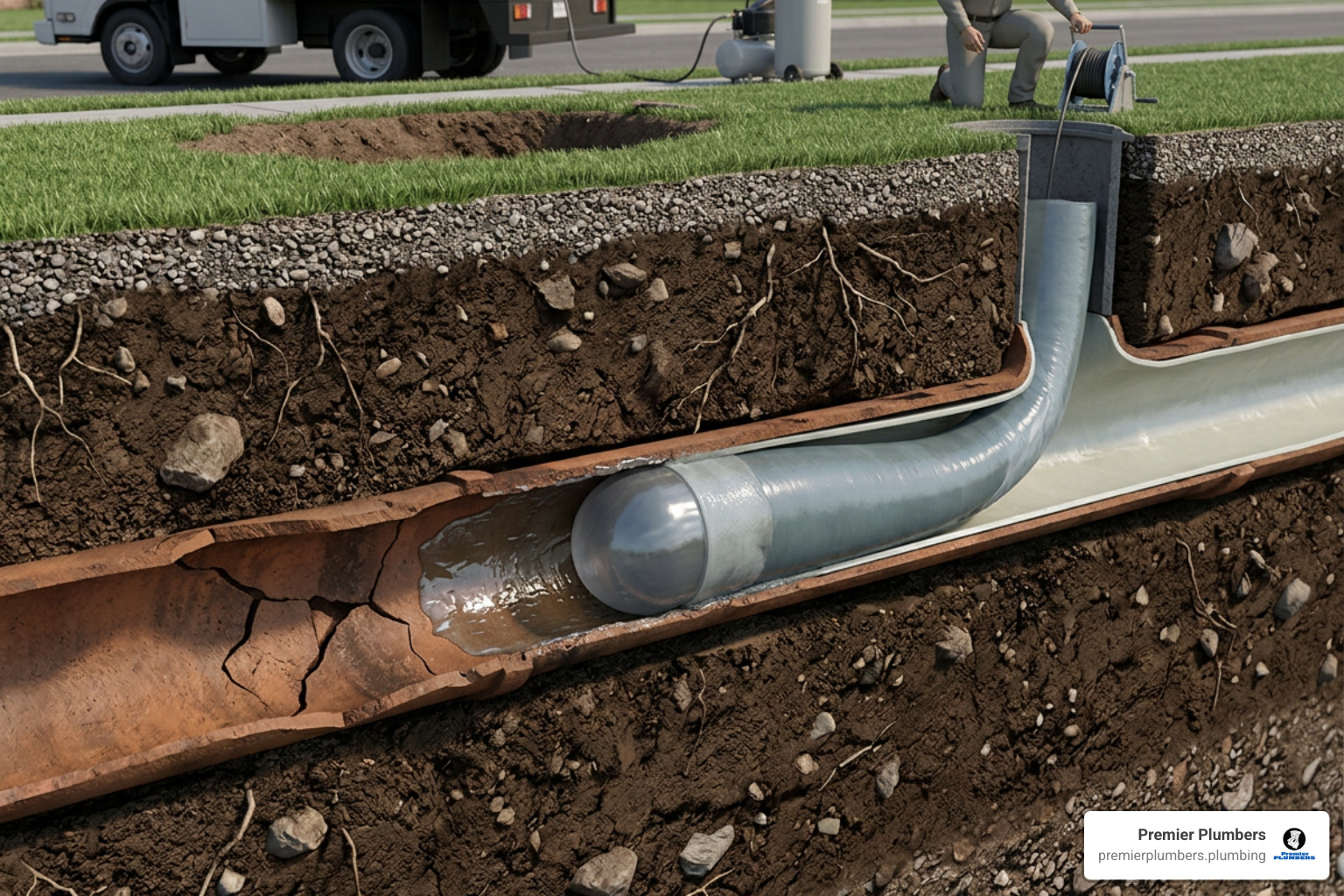
Trenchless rehabilitation has changed the way underground utilities are restored across Florida communities. Instead of carving trenches through driveways, tile flooring, and mature landscaping, trenchless solutions rehabilitate the damaged host pipe from the inside.
The backbone of this technology is cured-in-place pipe (CIPP) lining. This system relies on specialized resin types that react, harden, and bond to create a structural pipe within the old one. Epoxy resins are commonly chosen for residential laterals because they offer strong bonding, low odor, and minimal shrinkage. For larger storm or sewer mains, contractors may use polyester or vinyl ester formulations to balance strength and cure speed.
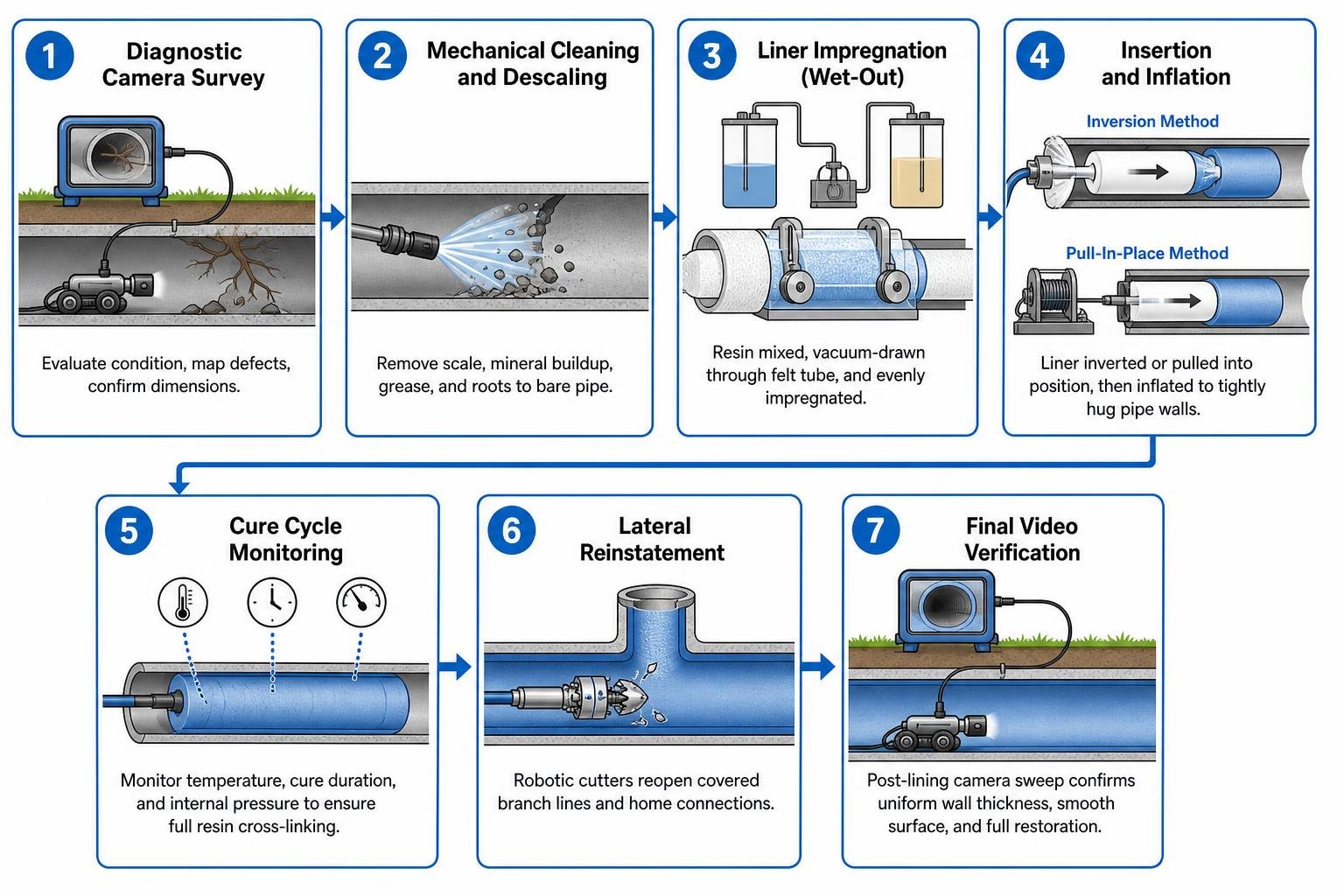
CIPP technology can be used across a range of pipe diameters. Technicians typically introduce liners through either inversion, where air or water pressure turns the tube inside-out into the pipe, or pull-in-place installation, where the liner is guided into position before expansion.
A detailed pipe lining guide can help homeowners understand the process, common applications, and the questions to ask before choosing a repair method.
What Is Cured-in-Place Pipe Lining and How Does It Work?
At its core, CIPP mechanics rely on a flexible nonwoven felt tube or fiberglass sleeve coated with an impermeable outer layer. Before entering the drain, this tube is saturated with a measured volume of liquid thermosetting resin during a process known as wetting out.
Once in position, technicians inflate a calibration hose or bladder inside the liner. This expands the wet felt tightly against the inner perimeter of the host pipe. To harden the resin, technicians may use one of three primary curing methods:
- Ambient curing: The resin cures naturally at ground temperature, which can suit standard residential drain lines.
- Heat curing: Circulating heated water or pressurized steam accelerates the chemical reaction and is commonly used for larger pipes.
- UV light curing: Specialized light trains travel through the pipe and trigger rapid curing without excess heat.
Once fully cured, technicians deflate and remove the inner calibration tube. The result is a smooth, jointless pipe barrier that can seal cracks, bridge limited missing sections, and help block root intrusion.
Step-by-Step Pipe Liner Repair Installation Process
Executing a successful lining project requires precise engineering and quality control at every stage.
- Diagnostic camera survey: Premier Plumbers uses video sewer inspections to evaluate pipe condition, pinpoint root intrusions, map bends, and confirm internal dimensions.
- Mechanical descaling and cleaning: Before resin enters the system, rotating chains, milling cutters, and hydro jetters remove scale, mineral buildup, grease, and roots.
- Liner impregnation: The resin is mixed to manufacturer specifications, vacuum-drawn through the felt tube, and passed through calibrated rollers for even thickness.
- Insertion and inflation: The saturated liner is inverted or pulled into place, then inflated to hug the host pipe walls.
- Cure-cycle monitoring: Technicians monitor temperature, cure duration, and internal pressure to support a consistent cure.
- Lateral reinstatement: If the liner covers branch lines or fixture connections, robotic cutters reopen those junctions.
- Final video verification: A post-lining camera inspection confirms surface transitions and that connections are open.
Key Limitations, Health Hazards, and Cast Iron Pipe Risks
While trenchless restoration can solve many drainage problems, it has important engineering limits. A liner requires enough remaining host-pipe structure to guide its shape. When a pipe has collapsed, has severely offset joints, or contains major bellies where water pools, lining may not correct the underlying problem. Some resins can also shrink slightly during curing, so proper design and installation are important to help prevent water from tracking behind the liner.
Structural Drawbacks, Diameter Reduction, and Wrinkling
Every CIPP installation causes a slight internal diameter reduction. Its smooth interior may support flow, but an undersized pipe or improperly measured liner can still restrict carrying capacity.
Standard nonwoven felt liners can also be difficult to install through sharp bends. As a liner moves through 45-degree or 90-degree fittings, fabric may compress and form wrinkles or fins that can collect debris if the installation is not designed for that configuration.
Chemical Emissions, Styrene Risks, and Environmental Standards
Safety and environmental protocols are important during thermal CIPP installations. When steam or hot water cures polyester or vinyl ester resins, volatile organic compounds, including styrene, can be released and may migrate through dry plumbing traps or be present in curing exhaust.
Premier Plumbers follows job-site safety practices designed for the selected lining method, including ventilation, controlled handling of curing exhaust, and appropriate resin selection for residential projects.
Why Broken Cast Iron May Need Replacement
Cast iron plumbing systems in older Florida homes can present unique rehabilitation challenges. Severe deterioration should be evaluated carefully before a liner is selected.
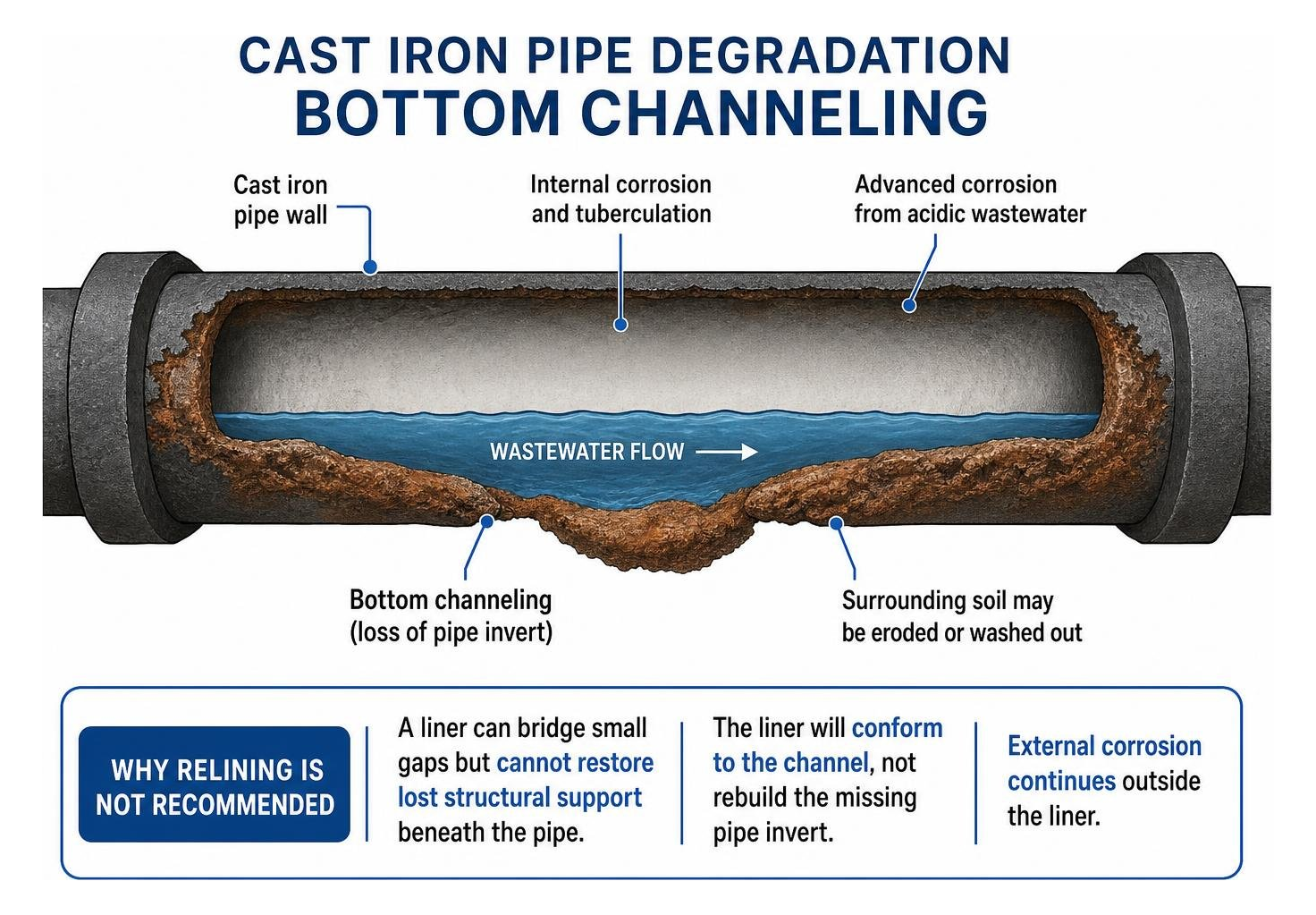
Cast iron pipes can suffer from bottom channeling, where corrosion damages the pipe invert. A liner may bridge limited damage, but it cannot restore soil support or correct every loss of structural integrity beneath the pipe. External corrosion can also continue outside the liner.
Homeowners comparing repair paths can use this cast iron pipe relining overview to learn when relining may be appropriate and when a more permanent repair should be considered.
Evaluating Alternatives to Full-Length Pipe Relining
When full-length CIPP lining is not practical, homeowners can consider targeted trenchless repairs or physical replacement based on the pipe’s condition, layout, and accessibility.
Executing Sectional Pipe Liner Repair for Targeted Fixes
When a camera inspection shows that most of a sewer lateral is in good condition, a full-length liner may not be necessary. In some cases, a technician can use a short sectional liner to address a localized crack, joint separation, or root-intrusion point.
These repairs still require a clear diagnosis, thorough cleaning, and professional installation. The right repair scope depends on the amount of damage, the pipe material, and whether the surrounding pipe has enough structural integrity to support a lasting result.
Expandable Pressure Pipe Systems for Potable Lines
Trenchless rehabilitation is not limited to gravity sewer pipes. Some pressure-pipe systems are designed for specific water-line applications, but the materials and method must be appropriate for potable water and the pipe’s condition.
A professional assessment helps determine whether a pressure-line rehabilitation method is suitable or whether replacement is the safer long-term choice.
When Traditional Dig-and-Replace Is Unavoidable
Despite advancements in trenchless technology, certain structural conditions make open-trench excavation unavoidable. Physical pipe replacement may be necessary when there is:
- Complete structural collapse that prevents cleaning equipment or a liner from passing through.
- Severe back-pitching that causes standing water and chronic backups.
- Major soil shifting that has broken pipe alignment.
- Heavily deteriorated cast iron with substantial loss of the pipe base.
When these conditions are present, sewer replacement can provide a reliable foundation for restoring drainage performance and protecting the property over the long term.
DIY vs. Professional Pipe Lining: Costs, Quality Standards, and Maintenance
With basic consumer repair kits available online, some property owners consider tackling pipe lining on their own. However, trenchless lining requires industrial machinery, precise chemistry, and extensive training. A DIY mistake during resin mixing or inflation can cause the liner to cure prematurely mid-pipe, causing a complete line occlusion that requires emergency excavation.
| Comparison Factor | Trenchless CIPP Relining | Traditional Dig-and-Replace | DIY Pipe Lining Kits |
|---|---|---|---|
| Surface Disruption | Minimal (access via cleanouts) | Extensive (trenches through yards/slabs) | Minimal (if installed correctly) |
| Installation Time | 1 to 2 days | 3 to 7 days | Variable (high risk of delays) |
| Design Lifespan | 50+ Years (ASTM F1216) | 50 to 100 Years (PVC/Cast Iron) | Unknown / Uncertified |
| Structural Integrity | Standalone structural pipe | Brand-new physical pipeline | Thin, non-structural barrier |
| Risk of Total Line Blockage | Very Low (monitored by pros) | None | High (premature curing risks) |
Upfront Costs, Project Lifespan, and Warranty Comparisons
When evaluating project estimates, look beyond the line-item plumbing quote to calculate the total property impact. Traditional dig-and-replace requires extensive excavation, which often means tearing up concrete slabs, repaving driveways, and restoring landscaping.
Because trenchless CIPP requires only small access points, it eliminates these expensive restoration tasks. When paired with a verified 50-year design life and strong manufacturer material warranties, professional trenchless rehabilitation offers exceptional long-term return on investment.
ASTM Standards and Post-Installation Quality Assurance
Professional trenchless installations must meet stringent structural metrics governed by ASTM F1216 in North America and EN ISO 11296-4 internationally.
Quality assurance protocols require technicians to pour test samples from each resin batch into test molds at the job site. Certified laboratories perform flexural testing and tensile strength verification on these samples to prove the cured composite meets structural design loads. Following curing, a comprehensive video inspection confirms wall uniformity and verifies that all branch lines are fully reinstated.
Long-Term Pipe Maintenance: Hydro Jetting vs. Snaking
Maintaining a lined drainage line requires updated cleaning methods.
Property owners must never allow mechanical drain snakes with aggressive, sharp steel cutting blades inside a CIPP-lined pipe. High-torque steel blades can gouge the smooth epoxy layer, cause edge delamination, or puncture the composite wall.
Instead, high-pressure hydro jetting is the gold-standard maintenance method for lined systems. Specially engineered water nozzles scour the smooth epoxy walls using controlled water pressure, clearing grease, scale, and foreign debris without scratching or compromising the structural lining.
Frequently Asked Questions About Pipe Liner Repair
How long does a cured-in-place pipe liner last?
When installed to ASTM F1216 standards using premium epoxy resins, a cured-in-place pipe liner delivers a minimum 50-year design life. The resulting composite tube resists chemical corrosion, prevents root intrusion, and withstands ground load pressures comparable to a newly installed PVC pipe.
Why can’t I use a mechanical drain snake on a lined pipe?
Traditional mechanical drain cables use spinning steel blades designed to scrape against rigid cast iron or clay walls. Inside a lined pipe, these aggressive metal edges can scratch the resin surface, catch on lateral cutouts, or delaminate the felt barrier. Always use professional hydro jetting for routine drain maintenance.
Is trenchless pipe lining safe for drinking water lines?
Yes, provided the installation utilizes materials certified to NSF/ANSI Standard 61 for drinking water safety, such as specialized expandable pressure pipes or approved potable water liners. These systems create a non-toxic, lead-free barrier that prevents leaching without contaminating your household water supply.
Conclusion
Understanding repair options helps homeowners make informed decisions about underground plumbing. Whether a property needs a targeted point repair, a full-length structural liner, or an open-trench sewer replacement, an experienced team can recommend a solution based on the pipe’s actual condition. Premier Plumbers brings a three-generation legacy of plumbing expertise to projects across Southwest Florida, combining diagnostic camera surveys with high-quality trenchless solutions. If you are experiencing slow drains, recurring clogs, or possible underground pipe damage, contact our pipe lining specialists to schedule a comprehensive video inspection and discuss the right repair strategy for your home.