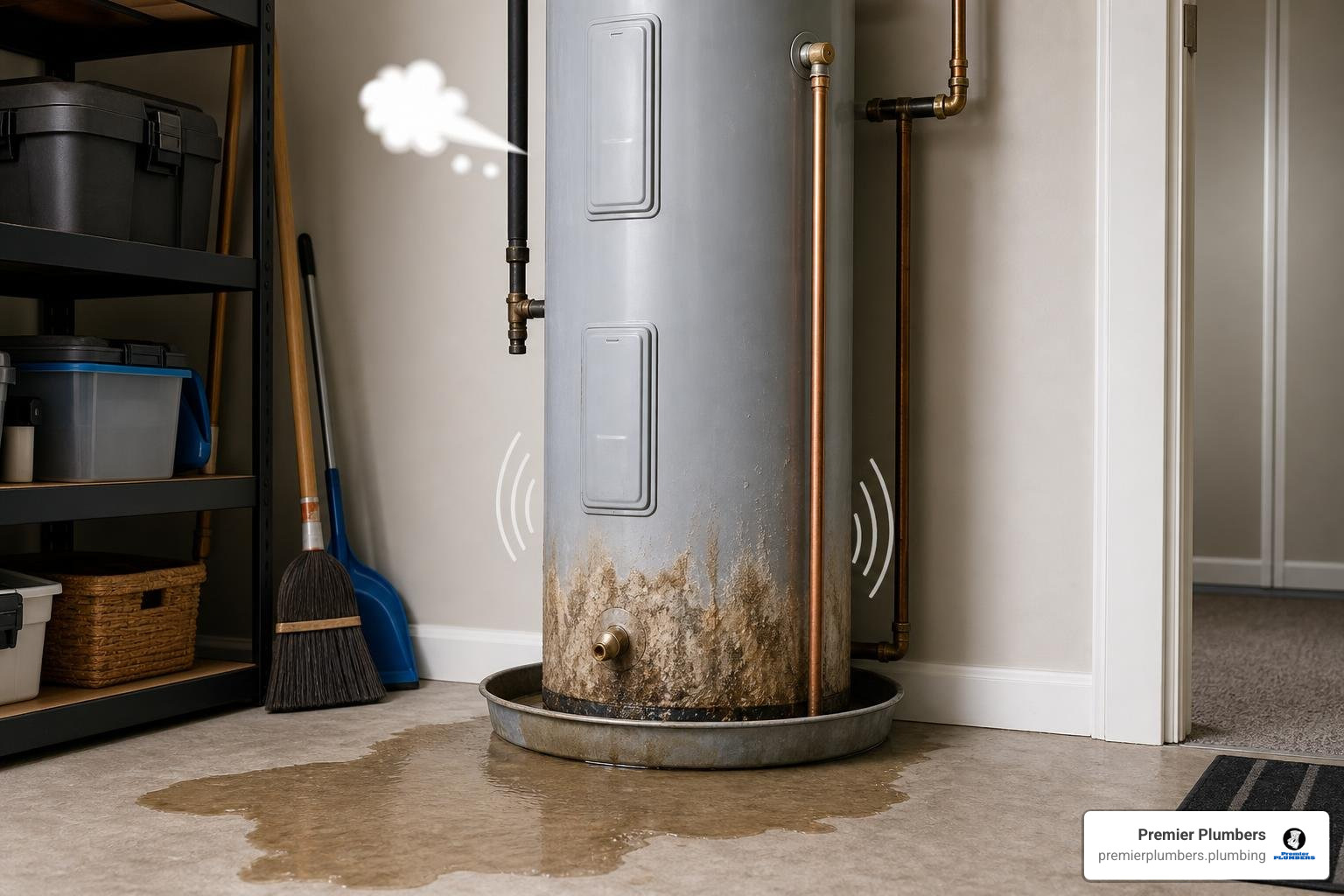
Popping, Rumbling, Hissing: What Your Water Heater Is Trying to Tell You
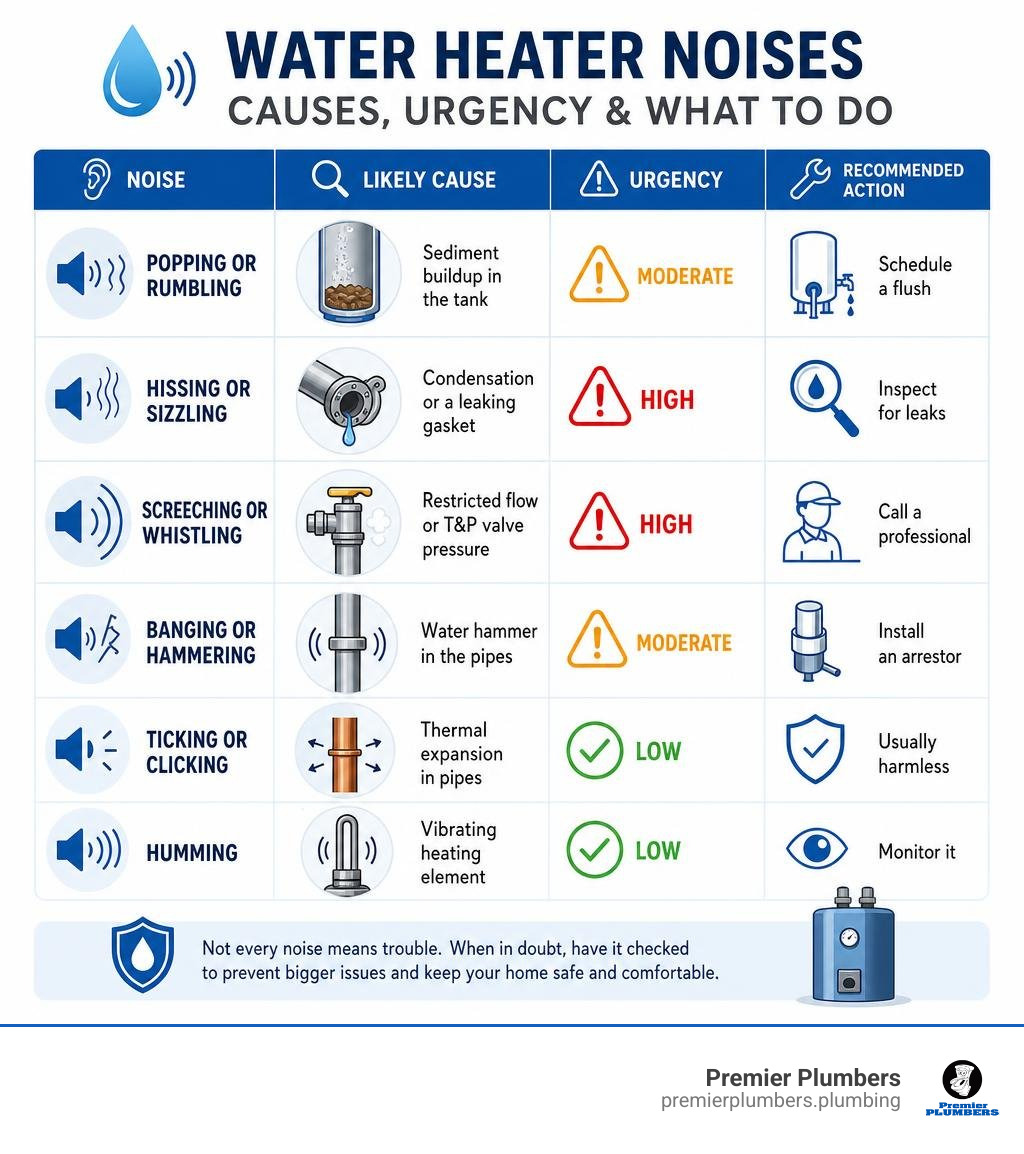
A water heater making noise is one of the most common plumbing concerns Florida homeowners face. The good news? Most sounds have a clear cause and a straightforward fix. Here is a quick breakdown:
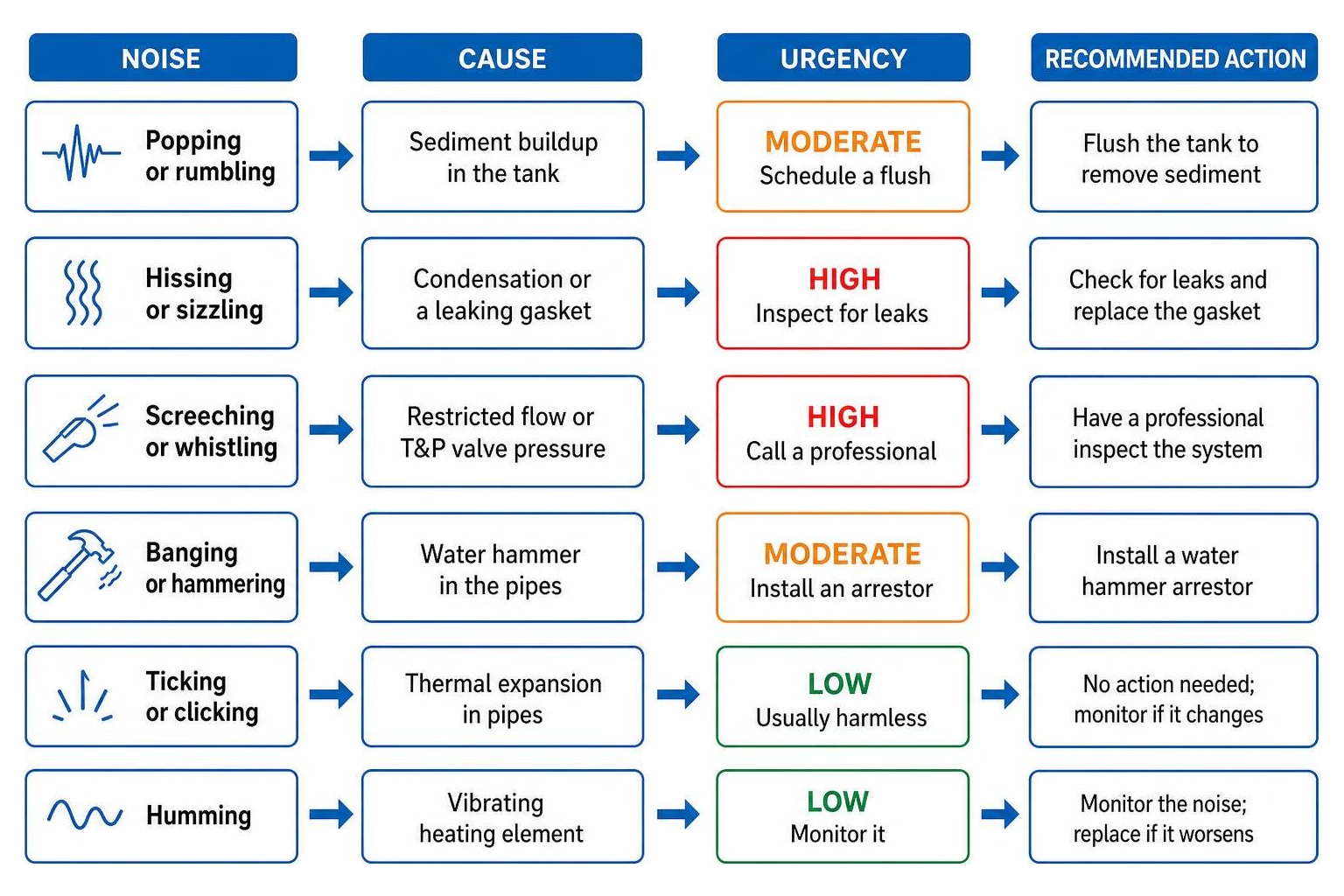
| Sound | Likely Cause | Urgency |
|---|---|---|
| Popping or rumbling | Sediment buildup in the tank | Moderate – schedule a flush |
| Hissing or sizzling | Condensation or a leaking gasket | High – inspect for leaks |
| Screeching or whistling | Restricted flow or T&P valve pressure | High – call a professional |
| Banging or hammering | Water hammer in the pipes | Moderate – install an arrestor |
| Ticking or clicking | Thermal expansion in pipes | Low – usually harmless |
| Humming | Vibrating heating element | Low – monitor it |
Not every noise means trouble. A soft hum or an occasional tick is totally normal. But loud rumbling, persistent screeching, or a sizzling sound can be early warnings of a real problem.
Ignoring those sounds can lead to higher energy bills, a shorter system lifespan, and in some cases, a safety risk. Sediment buildup alone can force your water heater to work up to 20% harder, and water hammer shockwaves can reach over 300 PSI, more than five times the normal residential pressure of 40 to 60 PSI.
At Premier Plumbers, our team of third-generation plumbers has over 34 years of experience diagnosing and resolving every type of water heater making noise issue across Southwest Florida. In this guide, our team walks you through exactly what each sound means and what to do about it.
Why Is Your Water Heater Making Noise?
When your water heater begins speaking to you, it is rarely just making idle conversation. In our decades of servicing homes from Sarasota to Naples, we have found that a noisy appliance is almost always responding to physical changes inside the tank or within your home’s broader plumbing system.
The primary culprits behind these sounds are sediment buildup, hard water minerals, thermal expansion, and water hammer. Understanding these factors is the first step toward restoring peace and quiet to your utility closet.
Southwest Florida is famous for its beautiful beaches, but it is also known for having highly mineralized municipal and well water. As water is heated inside your tank, dissolved minerals like calcium and magnesium naturally solidify and settle to the bottom. Over time, this forms a thick, crusty layer of scale. This scale acts as a thermal barrier, trapping water beneath it. When that trapped water heats up, it boils and bursts through the sediment layer, creating the classic popping and rumbling sounds that many homeowners mistake for a failing tank.
Thermal expansion is another physical process at play. When a standard 50-gallon water heater warms cold incoming water from 40 degrees up to 140 degrees, the water itself expands by approximately three-quarters of a gallon. In a closed plumbing system, this extra volume has nowhere to go, which increases internal pressure and causes pipes to expand and contract against your home’s wooden framing.
Similarly, water hammer occurs when a fast-closing valve, like the solenoid valve in your washing machine or dishwasher, snaps shut. This forces a sudden stop in water flow, sending high-pressure shockwaves traveling backward through your plumbing lines.
Understanding why flushing your water heater matters is essential because routine maintenance directly addresses these physical stressors. Regularly clearing out minerals and managing system pressure prevents premature wear and tear on your tank.
Decoding the Sounds: What Your Water Heater Is Telling You
To properly troubleshoot your system, we need to look at the unique acoustic profile of each noise. Different sounds point to completely different mechanical or physical issues. By learning how to decode these sounds, you can determine whether you are dealing with a minor, cosmetic nuisance or a serious safety hazard that requires us to step in.
Popping or Rumbling: The Most Common Water Heater Making Noise Culprit
If your water heater sounds like a boiling tea kettle or a microwave popping popcorn, you are dealing with the classic symptoms of sediment accumulation. This is the single most common cause of a water heater making noise in our coastal Florida service areas, including Sarasota, Bradenton, and Fort Myers.
When hard water minerals like calcium and magnesium settle at the bottom of a tank-style system, they create a dense, insulating blanket directly over the burner or electric heating element. Water becomes trapped underneath this heavy mineral layer. As the heating element or burner heats up, this trapped water reaches its boiling point and flashes into steam. The steam bubbles then burst through the heavy sediment crust to escape into the main tank, creating a loud popping or rumbling sound. This process is often referred to in the plumbing industry as “kettling.”
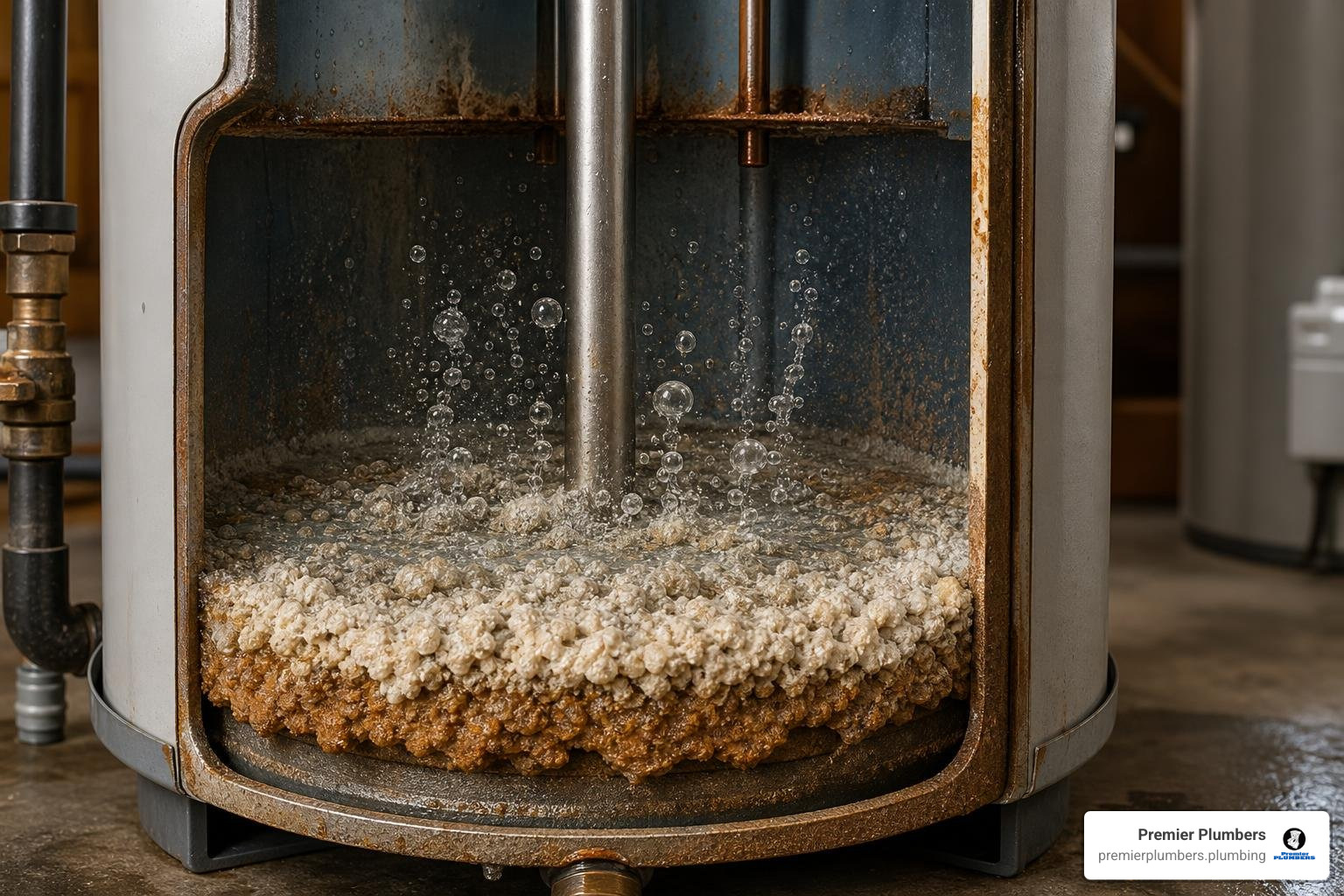
This mineral blanket does more than just make noise; it severely impacts your system’s efficiency. According to industry studies, hard water scale can reduce a gas storage water heater’s heating efficiency from 70.4% to 67.4% in just two years of simulated use. Because sediment acts as a thermal barrier, your burner must run much longer and hotter to heat the water to your desired temperature, which can increase your energy bills by up to 20%.
Furthermore, this extreme heat can overheat the steel bottom of the tank, leading to metal fatigue, microscopic cracks, and eventual tank failure. This is why keeping up with routine water heater maintenance in Sarasota is so critical. Regular maintenance keeps your system running quietly, efficiently, and safely.
Hissing or Sizzling: Is It a Leak or Condensation?
A hissing or sizzling sound can have a few different causes depending on whether you own a gas or electric water heater.
For gas water heaters, hissing is often caused by internal condensation. When cold water first fills a completely empty or heavily depleted tank, the temperature difference between the cold water and the hot combustion gases creates condensation. This water then drips down onto the hot burner assembly below, creating a sizzling or hissing sound like water splashing on a hot frying pan. While occasional condensation is normal, a persistent sizzling sound can indicate a slow, internal tank leak that is dripping water directly onto the burner.
For electric water heaters, a sizzling sound usually points to a problem with the lower heating element. If sediment builds up to the point where it completely buries the lower element, the element will overheat and cause the surrounding water to flash into steam, producing a continuous hissing or sizzling noise. Over time, this extreme heat will cause the element to burn out completely.
If your element has failed, understanding the role of water heater repair can help you decide when a noisy system needs professional diagnostics instead of another DIY flush.
Screeching or Whistling: High Pressure and Restricted Flow
A high-pitched screeching or whistling sound should never be ignored. This sharp noise is almost always a sign of restricted water flow or dangerously high pressure building up inside your plumbing system.
Whistling often occurs when one of the water shutoff valves leading to or from your water heater is partially closed. When water is forced through a tiny, restricted opening, it creates a high-velocity whistling sound. Simply checking to ensure that your cold water inlet valve and hot water outlet valve are fully open can sometimes resolve this issue immediately.
However, if the whistling or screeching is coming directly from your temperature and pressure (T&P) relief valve, you are dealing with a potential safety hazard. The T&P valve is designed as a safety backup to release water if your tank’s internal pressure exceeds 150 PSI or if the water temperature rises above 210 degrees Fahrenheit. If this valve is whistling or weeping, it means your tank is under extreme pressure or the valve itself is failing.
If you suspect your T&P valve is failing, turn off the power or gas to your unit immediately and call Premier Plumbers for professional assistance.
Banging or Hammering: Understanding Water Hammer
Does your home shake or make a loud banging sound when your washing machine, dishwasher, or a faucet suddenly turns off? This phenomenon is known as water hammer.
Water hammer is a pressure surge that occurs when a moving fluid is forced to stop or change direction suddenly. When a fast-closing solenoid valve in a modern appliance snaps shut, the kinetic energy of the rushing water has nowhere to go. This creates a high-pressure shockwave that travels back through your pipes at incredible speeds. These shockwaves can easily measure over 300 PSI, which is more than five times the normal residential operating pressure of 40 to 60 PSI.
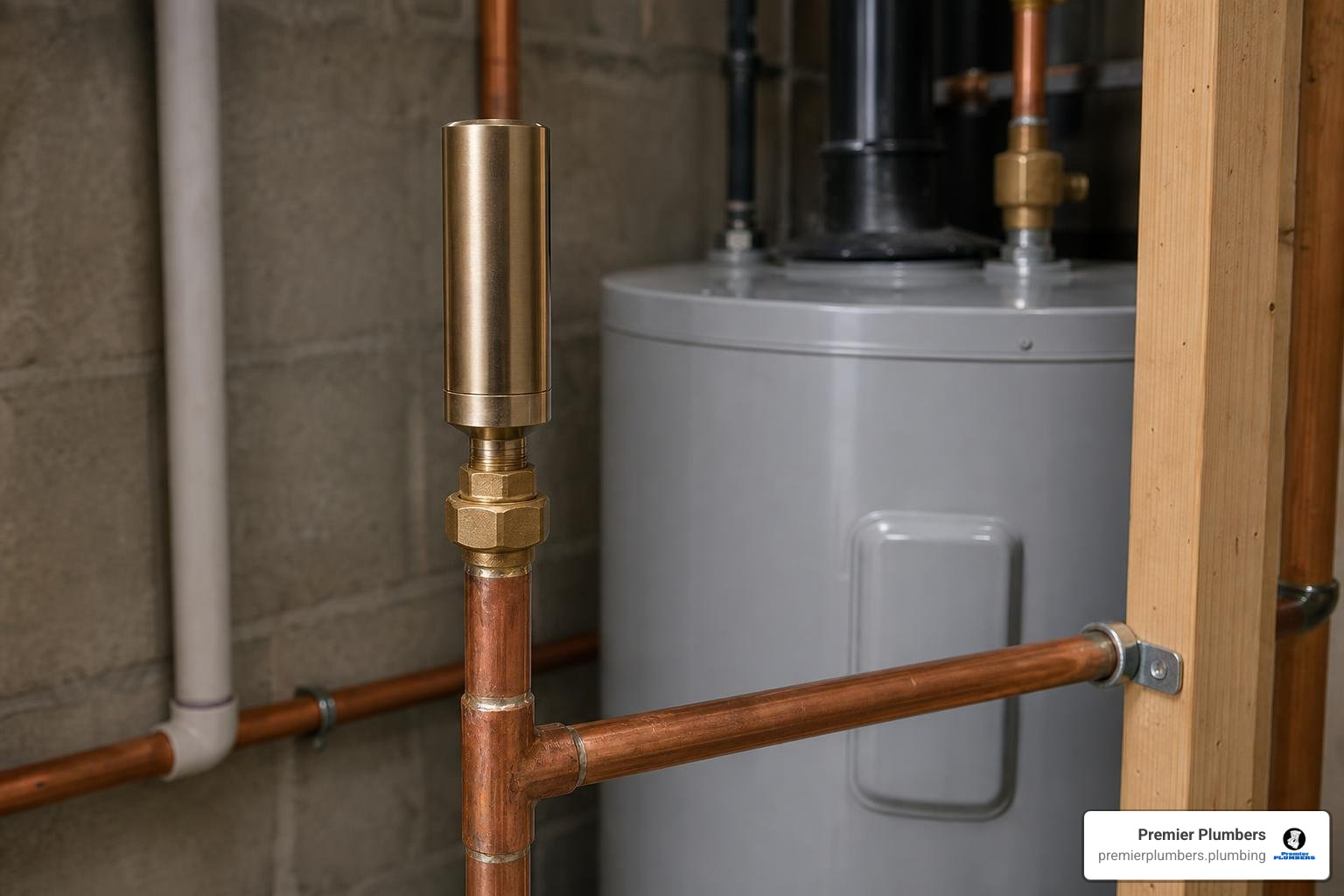
Over time, these violent pressure spikes can loosen pipe hangers, damage joints, deform water heater tanks, and even cause pipes to burst inside your walls. The most effective way to resolve this issue is by installing a water hammer arrestor. These small, inexpensive devices contain a pressurized air chamber that acts as a shock absorber, safely cushioning the pressure spike before it can rattle your plumbing system.
How to Prevent and Fix a Noisy Water Heater
Fortunately, you do not have to live with a noisy plumbing system. With consistent preventative maintenance, smart water pressure management, and professional support, you can keep your water heater operating quietly for years to come.
How to Safely Flush Your Tank to Stop a Water Heater Making Noise
The most effective way to eliminate popping and rumbling noises is to perform an annual sediment flush. If you live in an area with particularly hard water, we highly recommend flushing your tank every six months.
Here is a step-by-step guide to safely flushing your tank:
- Turn off the power source: For electric water heaters, turn off the dedicated breaker in your electrical panel. For gas units, turn the gas control valve to the “Pilot” or “Off” position. Never flush a water heater with the power still on, as this will quickly burn out the heating elements or damage the tank.
- Shut off the water supply: Turn the cold water inlet valve at the top of the tank clockwise to shut off the incoming water.
- Connect a garden hose: Attach a standard garden hose to the drain valve located near the bottom of your water heater tank. Route the other end of the hose to a safe drainage location, like a driveway, floor drain, or yard. The water draining out will be extremely hot!
- Open a hot water faucet: Open a hot water faucet on the main floor of your home. This allows air to enter the plumbing system, preventing a vacuum from forming and allowing the tank to drain smoothly.
- Open the drain valve: Slowly open the drain valve on the water heater. Let the water drain completely until it runs clear and free of sediment.
- Flush the tank with fresh water: Once the tank is empty, briefly turn the cold water inlet valve back on for a minute or two. This fresh burst of water will help stir up and wash out any stubborn sediment clinging to the bottom of the tank.
- Refill and restart: Close the drain valve, remove the hose, and turn the cold water inlet valve fully back on. Keep the hot water faucet inside your home open until water flows in a steady stream without sputtering air. Once the tank is completely full of water, you can safely turn the power or gas back on.
If you are uncomfortable performing these steps yourself, or if your drain valve is stuck or leaking, our team is always here to help. Our water heater services cover tank flushing, repair, replacement, and tankless options for homeowners who want the issue handled safely.
For Florida homeowners dealing with recurring sediment, our guide to flushing your water heater in Naples and Fort Myers explains why local water conditions make routine maintenance especially important.
When to Call a Professional Plumber
While flushing a water heater is a great DIY project, some issues require advanced diagnostic tools and licensed expertise. Working with high-voltage electricity, gas lines, and high-pressure safety valves can be incredibly dangerous if handled incorrectly.
You should always call Premier Plumbers if you experience any of the following:
- Electrical buzzing or humming: This often indicates an electrical short, a vibrating heating element, or a failing thermostat.
- Gas smells or burner issues: If you smell gas or notice yellow, lazy flames instead of a crisp blue burner flame, shut off your gas supply immediately and call us.
- Leaking T&P relief valve: If your safety valve is constantly weeping water or whistling, it must be replaced by a licensed professional.
- Persistent noises after flushing: If your water heater continues to make loud banging or screeching noises even after a thorough flush, there may be deeper mechanical issues at play.
For more complex issues, Premier Plumbers provides water heater repair for pressure problems, faulty heating elements, leaks, and noisy systems that need a licensed diagnosis.
Frequently Asked Questions About Noisy Water Heaters
Is a noisy water heater dangerous?
In most cases, an occasional popping or ticking sound is simply a harmless nuisance caused by sediment or thermal expansion. However, certain noises can signal serious safety risks. A high-pitched screeching or whistling sound from your T&P valve indicates dangerous pressure buildup or extreme temperatures inside the tank. A persistent sizzling sound in a gas water heater can also point to a water leak dripping onto the burner, which can disrupt combustion and potentially lead to carbon monoxide risks. If you ever hear these sounds, it is safest to turn off your system and call a professional.
Can sediment buildup increase my energy bills?
Yes, absolutely. Because mineral scale acts as an insulating barrier between the heat source and the water, your system has to run significantly longer to heat the same volume of water. This thermal barrier can force your water heater to work up to 20% harder, directly increasing your monthly utility costs and putting unnecessary strain on your system’s components.
How long do water heaters typically last?
A standard tank-style water heater typically has an average lifespan of eight to 12 years. If your system is approaching or has passed this age range and is making loud, persistent noises, it may be more cost-effective to replace the unit rather than continue repairing it. On the other hand, a modern tankless water heater can last roughly 20 years on average, making it an incredibly durable and energy-efficient alternative for Southwest Florida homeowners.
Conclusion
A quiet home is a comfortable home, and your water heater should never be the loudest appliance in your house. While Florida’s hard water presents unique challenges for local plumbing systems, proactive maintenance is the key to protecting your investment, keeping your utility bills low, and ensuring your family has reliable hot water.
At Premier Plumbers, we bring three generations of plumbing expertise to every job. Whether you need a routine sediment flush, a quick heating element replacement, or a complete system upgrade, our team of highly skilled technicians is ready to help. If your water heater is starting to make unusual noises, do not wait for a minor issue to turn into an expensive emergency. To restore quiet and efficiency to your home, contact our professional water heater technicians today.