A slow kitchen sink, a backed-up shower, or several drains acting up can all point to a blockage, but the cause isn’t always obvious. Grease, hair, soap residue, roots, and pipe damage may call for different next steps. That’s why choosing between hydro jetting and snaking isn’t simply a matter of picking the more powerful tool. In this guide to hydro jetting vs. snaking for drain cleaning, you’ll learn what each method can do, where it has limits, and why a plumber may inspect the line before starting. A clear diagnosis can help address the clog without overlooking a larger issue.
Key Takeaways
- Choose the method based on the blockage: Snaking can clear many localized clogs, while hydro jetting may suit widespread buildup in pipes that can safely handle the pressure.
- Check the pipe before hydro jetting: Ask whether a camera inspection is needed, especially if the drain clogs repeatedly or the line may be damaged.
- Get professional help for recurring or urgent issues: Note which fixtures are affected and when the problem started. Contact a plumber promptly for sewage backups.
Hydro Jetting vs. Snaking: How Does Each Work?
Hydro jetting and snaking clear drains in different ways. A plumber considers the type of blockage, how often it returns, and the pipe’s condition before choosing a method. Here’s how each one works and what it can remove.
Hydro jetting clears clogs and pipe walls with high-pressure water
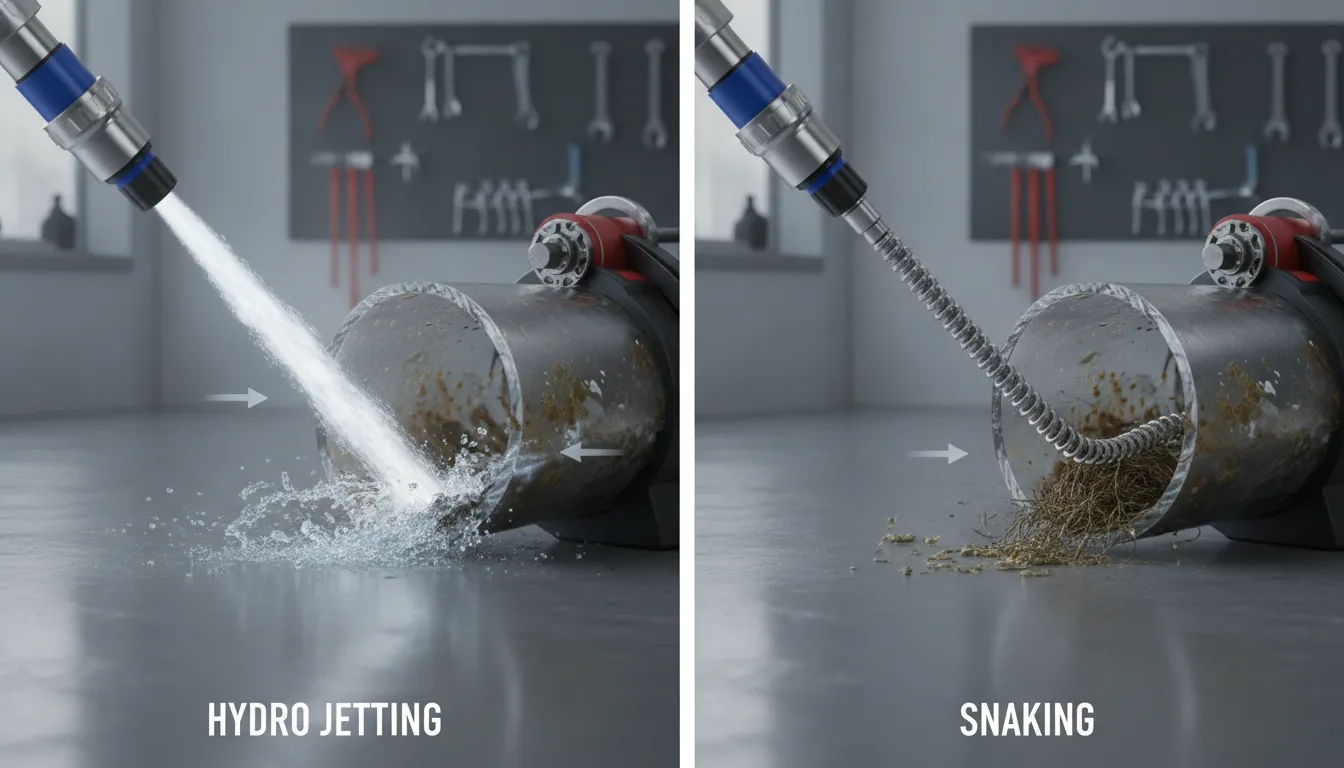
Hydro jetting sends water through a pipe using a specialized hose and nozzle. The force breaks up the blockage and washes away debris along the pipe walls. One plumbing guide describes equipment that can operate at 3,000 to 8,000 PSI, though the pressure used depends on the job and the condition of the line. DJason Plumbing explains the hydro jetting process.
Because hydro jetting uses high-pressure water, a plumber should check that the pipe can handle it first. Older or damaged lines may need a different cleaning method. Premier Plumbers offers drain cleaning services and can assess the line before recommending an approach.
Snaking breaks up, cuts through, or retrieves clogs with a rotating cable
A drain snake, also called an auger, uses a flexible metal cable to reach a blockage. Its tip may cut through the clog, break it into smaller pieces, or catch material so the plumber can pull it out. The cable rotates as it moves through the pipe, allowing it to pass bends and reach clogs farther down the line.
Snaking is often used for localized blockages caused by hair, soap, toilet paper, or food waste. It can be an appropriate option when a drain has a simple clog and there are no signs of extensive buildup. Superior Plumbing Jax describes how a drain snake handles common blockages.
Snaking may open a passage without clearing pipe buildup
A snake can restore water flow by breaking through a clog or removing some of the material causing it. But it may leave residue on the pipe walls. Grease, sludge, and other debris can remain in the line, where they may collect more material and contribute to another blockage. Advantage Plumbing Rooter explains why snaking may leave buildup behind.
If the same drain clogs repeatedly, clearing a path may not address the cause. The blockage could be part of a larger buildup, or the line may have another issue. A plumber can inspect the drain and recommend whether it needs additional cleaning or a repair.
What can each method remove?
Snaking is often suited to a straightforward, localized clog, such as hair in a bathroom drain or food waste in a kitchen line. Hydro jetting can remove more extensive buildup, including grease, sludge, some root material, and mineral scale. It flushes loosened debris through the pipe while cleaning the interior, which can make it useful for stubborn or recurring clogs. DJason Plumbing compares the types of blockages each method can address.
Neither method fits every drain. A plumber may use a camera inspection to identify the blockage and check the pipe’s condition before choosing equipment. Premier Plumbers provides plumbing services along Florida’s Gulf Coast, including drain cleaning and sewer inspections.
What Are the Pros and Limits of Each Method?
Hydro jetting and snaking can both clear a drain, but each suits different blockages and pipe conditions. The best option depends on what is causing the clog, how much buildup is present, and whether the pipe is sound. A plumber can inspect the line and explain which method fits.
Hydro jetting tackles grease, sludge, scale, and some root intrusion
Hydro jetting uses high-pressure water to break apart a blockage and wash residue from the pipe walls. It can be effective for heavy grease, sludge, mineral scale, and some root debris. Since it cleans along the pipe rather than making only a narrow opening through a clog, it may be useful when buildup has contributed to repeated blockages.
Hydro jetting does not remove the source of tree-root growth or repair damage to the pipe. The plumber needs to choose an appropriate pressure based on the line’s condition. A plumber’s explanation of hydro jetting describes why it is often used for stubborn buildup and severe blockages.
Snaking quickly clears many localized clogs, including hair and debris
A drain snake is a flexible cable with a tip that can break apart a clog or retrieve material from the pipe. Plumbers often use it for localized blockages caused by hair, soap, toilet paper, or food waste. Because the cable can reach the obstruction directly, snaking may be a practical choice when a single drain is clogged and the pipe is otherwise in good condition.
The method can restore drainage without cleaning the entire pipe. Its effectiveness depends on the clog’s location and makeup, and some material may remain on the pipe walls. For a straightforward blockage, though, snaking can be an efficient option. Learn how drain snaking works and ask your plumber whether it fits your situation.
Hydro jetting may not suit every pipe or blockage
Hydro jetting can be appropriate for many pipes when a trained plumber checks the line and adjusts the equipment to its condition. But severely corroded, cracked, or structurally weakened pipes may not be suitable. Applying high-pressure water before checking for damage could worsen an existing problem.
Hydro jetting also cannot correct a collapsed or misaligned pipe. When the cause of a blockage or the condition of the line is unclear, a camera inspection can help the plumber decide whether cleaning is safe. Ask what the inspection shows, why hydro jetting is recommended, and whether another approach would be safer. This guide to hydro jetting and pipe safety explains why pipe condition matters.
Snaking may leave buildup and allow clogs to return
Snaking can break through a blockage or pull material out of the pipe, but it may leave grease, sludge, and other residue behind. Water can drain normally after the service even if some buildup remains. That residue may catch more debris over time, allowing the drain to clog again.
If the same drain keeps backing up, let your plumber know how often it happens and whether other fixtures are affected. A recurring clog may call for more thorough cleaning or an inspection to check for a deeper issue. Snaking can still be the right choice for a localized blockage, but the plumber should consider the pattern, not just the immediate clog. Find out why some blockages return after snaking.
Neither method repairs cracked, collapsed, or damaged pipes
Snaking and hydro jetting clear blockages; neither method repairs a cracked, collapsed, corroded, or misaligned pipe. If structural damage is behind a recurring clog, cleaning may restore flow temporarily without addressing the underlying problem.
Repeated backups, several slow drains, sewage odors, or wet areas in the yard are good reasons to ask about a camera inspection. If the plumber finds damage, ask what repair options are available before cleaning continues. Premier Plumbers offers sewer inspections and drain services for property owners along Florida’s Gulf Coast. A clear diagnosis helps distinguish a blockage that needs cleaning from a pipe that needs repair. Learn what hydro jetting cannot fix before choosing a cleaning method.
When Should You Choose Hydro Jetting or Snaking?
The best method depends on what is blocking the drain, how much buildup is present, and the pipe’s condition. Snaking often clears a localized clog, while hydro jetting may suit lines with heavy residue or recurring blockages. The number of affected fixtures and how often the problem returns can offer useful clues, but a plumber can inspect the line and recommend an appropriate method. Premier Plumbers provides drain cleaning services for homeowners along Florida’s Gulf Coast.
Choose hydro jetting for heavy buildup or recurring clogs
Hydro jetting may be a good option when a drain keeps clogging or a plumber finds significant residue inside the pipe. High-pressure water can remove grease and food scraps from kitchen lines, soap and hair from bathroom branches, lint from laundry drains, and mineral scale from some older pipes. Unlike a snake, which typically clears a path through an obstruction, jetting can clean buildup from more of the pipe wall.
Recurring clogs can also signal a damaged or aging pipe, so cleaning is not always the whole solution. A plumber may recommend a camera inspection to check the line before choosing a method. This comparison of hydro jetting and snaking explains why pipe condition matters.
Choose snaking for localized clogs or when less intensive cleaning is appropriate
Snaking is often effective for a single, localized blockage, such as hair near a bathroom drain or debris caught in a short section of pipe. A rotating cable can break apart or retrieve the clog, restoring flow without using high-pressure water. For a one-time blockage, this may be all the cleaning needed.
A plumber may also start with snaking when the pipe’s condition calls for a less intensive approach. Keep an eye on what happens after service: if the same drain slows down or backs up again, residue may remain along the pipe walls, or another issue may be involved. The plumber can assess whether further cleaning is appropriate. Learn more about situations where snaking can clear a drain clog.
Use hydro jetting to clear root debris or prepare for trenchless repair
Roots can enter a sewer line through small openings at joints or damaged sections. Once inside, they can catch waste and contribute to a blockage. Hydro jetting may remove some root debris and other material from the line, and a plumber may use it to clean a pipe before assessing or preparing for a trenchless repair.
Jetting cleans a pipe, but it does not repair cracks, offset joints, corrosion, or a collapsed section. If roots have entered through a defect, they may return unless the underlying problem is addressed. Ask the plumber what an inspection reveals and whether the plan includes repairs as well as cleaning. This guide explains why hydro jetting cannot correct structural pipe damage.
Watch for slow drains, repeated backups, or multiple affected fixtures
One slow sink may point to a nearby clog. When several sinks, tubs, or toilets drain slowly or back up, the blockage may be farther along in a shared branch or sewer line. Note which fixtures are affected, when the issue began, and whether it has returned after a previous clearing. These details can help a plumber identify where to inspect.
Repeated problems deserve attention, especially if snaking restores flow only briefly. Buildup may remain inside the pipe, or the line may have another issue that needs a closer look. Hydro jetting may be an option if inspection shows the pipe can handle it. A plumber can explain the likely cause and recommend a suitable approach, as described in this guide to hydro jetting and snaking.
Treat sewage backups as urgent and ask a plumber to assess the cause
Sewage backing up into a tub, shower, or floor drain needs prompt attention. Avoid using fixtures connected to the affected line, and keep children and pets away from contaminated water. Drain cables and high-pressure equipment can cause injury or damage when used without proper training, so leave the work to a qualified plumber.
A plumber can assess whether the cause is a blockage, root intrusion, or pipe damage, then recommend the next step. Hydro jetting may be suitable for some lines, but the pipe’s condition should be checked first. If you have a sewage backup or another urgent plumbing problem, contact a professional. Premier Plumbers offers 24/7 emergency plumbing service along Florida’s Gulf Coast.
How Do Pipe Condition, Cost, and Safety Affect Your Choice?
The right drain-cleaning method depends on the clog and the pipe it’s in. A plumber should consider the blockage’s location, how much buildup has collected, the pipe’s condition, and whether previous cleaning attempts solved the problem. Snaking may be suitable for a localized clog, while hydro jetting can remove buildup from the pipe walls when the line is in good condition.
Cost matters, but the lowest upfront price may not be the best value if the clog returns. Ask what the estimate includes, whether the plumber recommends a camera inspection, and what they expect the chosen method to accomplish. If you’re unsure why one option is recommended, ask the plumber to explain the findings and any risks before work begins.
For homeowners along Florida’s Gulf Coast, a professional assessment can help narrow down the safest, most practical next step. Premier Plumbers provides drain cleaning and other plumbing services in communities from Tampa to Marco Island. Share details about recurring clogs, backups, or past repairs when you book, since that history can help the plumber assess the line.
Consider pipe age, material, corrosion, joints, cracks, and past repairs
A pipe’s age can be useful context, but it doesn’t tell the whole story. Material, corrosion, loose joints, cracks, and earlier repairs can all affect which cleaning method is appropriate. A plumber should assess the condition of the line before using high-pressure water, especially if the pipe has a history of leaks or repeated blockages. Hydro jetting can clean pipes that are in sound condition, but pressure may worsen existing damage in a compromised line. My Bison Plumbing outlines why pipe condition matters when choosing between hydro jetting and snaking. Tell your plumber about previous repairs and recurring symptoms, and ask whether a camera inspection is needed before cleaning.
Compare costs based on the clog, access, inspection, and equipment
Drain-cleaning costs depend on the job, not just the tool. A plumber may need more time or specialized equipment to reach a blockage deep in a sewer line than to clear an accessible clog near a fixture. Inspection can also affect the estimate, especially if a camera is needed to locate the blockage or check pipe condition. Before approving the work, ask what the quote includes, whether inspection is billed separately, and whether follow-up service could add to the cost. Snaking often costs less upfront, while hydro jetting may be more involved. A comparison of the two methods can help explain the difference, but your plumber’s findings should guide the choice for your drain.
Weigh snaking’s lower upfront cost against the potential for repeat service
Snaking is often a cost-conscious way to clear a localized clog. The rotating cable can break through a blockage or retrieve some material, such as hair and debris, so water can flow again. But snaking may leave grease, sludge, or scale on the pipe walls. If that buildup remains, the drain could clog again and require another service call. My Bison Plumbing explains that snaking may offer temporary relief when buildup remains in the line. Ask your plumber whether the cable is likely to remove the cause of the blockage or simply reopen a path through it. That answer can help you compare the initial price with the possibility of repeat service.
Ask whether hydro jetting can safely clean the pipe
Hydro jetting uses high-pressure water to clear debris and wash buildup from pipe walls. It may be appropriate for stubborn or recurring clogs, but the pipe must be in suitable condition to handle the pressure. If the plumber can’t confirm the condition of the line, ask whether a camera inspection should come first. An inspection may reveal cracks, corrosion, root intrusion, or other concerns that affect the recommendation. AllTech Services recommends a professional assessment before hydro jetting. Ask what the inspection showed, whether the pipe can safely withstand the process, and why hydro jetting is a better fit than snaking for your situation.
Let trained professionals handle drain cables and high-pressure equipment
Powered drain cables and hydro jetting equipment can cause serious injury or damage plumbing if used incorrectly. A cable can catch or twist unexpectedly, while hydro jetting sends water through the line at substantial pressure. Professional equipment isn’t intended for DIY use. A trained plumber can select the appropriate method, operate the equipment, and stop if the pipe’s condition raises concern. My Bison Plumbing describes the safety risks of DIY hydro jetting, including the potential hazards of high-pressure water. If a drain keeps backing up or several fixtures are affected, contact a professional to identify the cause before attempting to clear the line yourself.
Why Should a Plumber Assess Your Drain Before Cleaning?
Request a camera inspection when the cause or pipe condition is unclear
A slow drain may point to a nearby clog, buildup deeper in the line, or a damaged pipe. If the cause is unclear, ask whether a sewer camera inspection is appropriate before cleaning. A camera lets the plumber locate the blockage and check for cracks, corrosion, separated joints, or a collapsed section. These details help determine whether snaking or hydro jetting is suitable, and whether cleaning alone can address the issue.
An inspection is especially useful before high-pressure cleaning, because the plumber needs to understand the pipe’s condition before choosing equipment and pressure settings. Learn more about when a camera inspection can help guide drain cleaning.
Identify whether grease, scale, roots, or damage caused the blockage
The best cleaning method depends on what is blocking the drain. Grease, soap residue, and mineral scale can coat pipe walls and narrow the passage over time. Hair and other debris may form a localized clog, while roots can enter through joints or existing openings. A snake can break up or retrieve some blockages; hydro jetting can wash away many types of buildup along the pipe walls.
Neither method repairs a cracked or collapsed line, so ask the plumber to explain what they find. Hydro jetting can remove grease, sludge, scale, and some root intrusion, but pipe damage may call for a repair plan instead.
Ask the plumber to explain the recommended method, risks, and expected cost
Before work begins, ask what may be causing the clog, which method the plumber recommends, and why. Find out what the service includes, whether an inspection is needed, and what the estimate covers. If hydro jetting is recommended, ask whether the pipe can safely handle the pressure and whether the inspection revealed any concerns.
High-pressure cleaning can be effective, but it may not suit a severely corroded, cracked, or weakened pipe. A professional assessment helps match the method to the pipe’s condition. A plumber’s evaluation of hydro jetting and snaking can help you understand the risks and expected results before cleaning starts.
Choose the safest effective method and find out whether the pipe needs repair
A plumber can consider the clog’s location, pipe material and condition, and cleaning history before recommending an approach. Snaking may be enough for a localized blockage, while hydro jetting may be more suitable when buildup extends along the line. Older pipes or sections with cracks, corrosion, or previous repairs may need a different method, or repairs before cleaning.
Ask whether the proposed method could affect vulnerable sections and what the next step would be if the inspection reveals damage. Trained professionals adjust their equipment and approach to the pipe and blockage. Premier Plumbers provides drain and sewer services for Gulf Coast property owners who need an assessment and a clear plan.
Frequently Asked Questions
Is hydro jetting better than snaking?
Neither method is best for every drain. Snaking often works well for a single, localized clog, while hydro jetting may be a better fit for widespread buildup or recurring blockages. A plumber can inspect the line and recommend the right option.
Can hydro jetting damage pipes?
It can worsen existing damage if a pipe is cracked, corroded, or weakened. A plumber should check the line’s condition before using high-pressure water and adjust the approach to suit the pipe.
Why does my drain clog again after snaking?
Snaking may clear a path through the blockage without removing all the residue along the pipe walls. If the drain keeps clogging, the plumber may recommend a more thorough cleaning or an inspection to check for pipe damage.
Will hydro jetting remove tree roots from a sewer line?
It can clear some root debris from inside the line, but it won’t repair the opening that allowed the roots to enter. If roots return, the pipe may need repair.
When should I call a plumber for a clogged drain?
Call a plumber if clogs keep returning, several fixtures drain slowly, or sewage backs up into your home. Premier Plumbers offers 24/7 emergency plumbing service along Florida’s Gulf Coast.