When Your Shower Drain Is Clogged, Here’s What to Do First
Unclog shower drain fast with these proven methods:
- Remove visible hair by hand or with a plastic barbed tool after taking off the drain cover
- Pour boiling water slowly down the drain to break up soap scum (skip this if you have PVC pipes; use hot tap water instead)
- Use baking soda and vinegar by pouring ½ cup baking soda, following with ½ cup vinegar, waiting 15–30 minutes, then flushing with hot water
- Plunge it with a cup-style plunger and enough water to cover the cup, then thrust firmly
- Snake it by inserting a drain snake, rotating to grab the clog, and pulling it out
- Call a plumber if none of the above works, or if multiple drains are slow at the same time
You step into the shower after a long day, and instead of water running down the drain, it starts pooling around your feet. Sound familiar? A clogged shower drain is one of the most common household plumbing problems, and the culprit is almost always the same thing: hair.
Hair is the leading cause of shower drain clogs. It tangles together and traps soap scum, shampoo residue, and other gunk until water has nowhere to go. Left untreated, a slow drain can turn into a full blockage and eventually lead to foul odors, mold growth, or even pipe damage.
The good news? Most shower clogs are easy to fix at home with basic tools and a little know-how.
At Premier Plumbers, our experienced Florida plumbing team helps homeowners unclog shower drains and tackle all kinds of plumbing issues with practical, professional guidance. In this guide, we’ll walk you through every method, from the simplest DIY fixes to knowing when it’s time to call in a pro.
Common Causes of Shower Drain Blockages
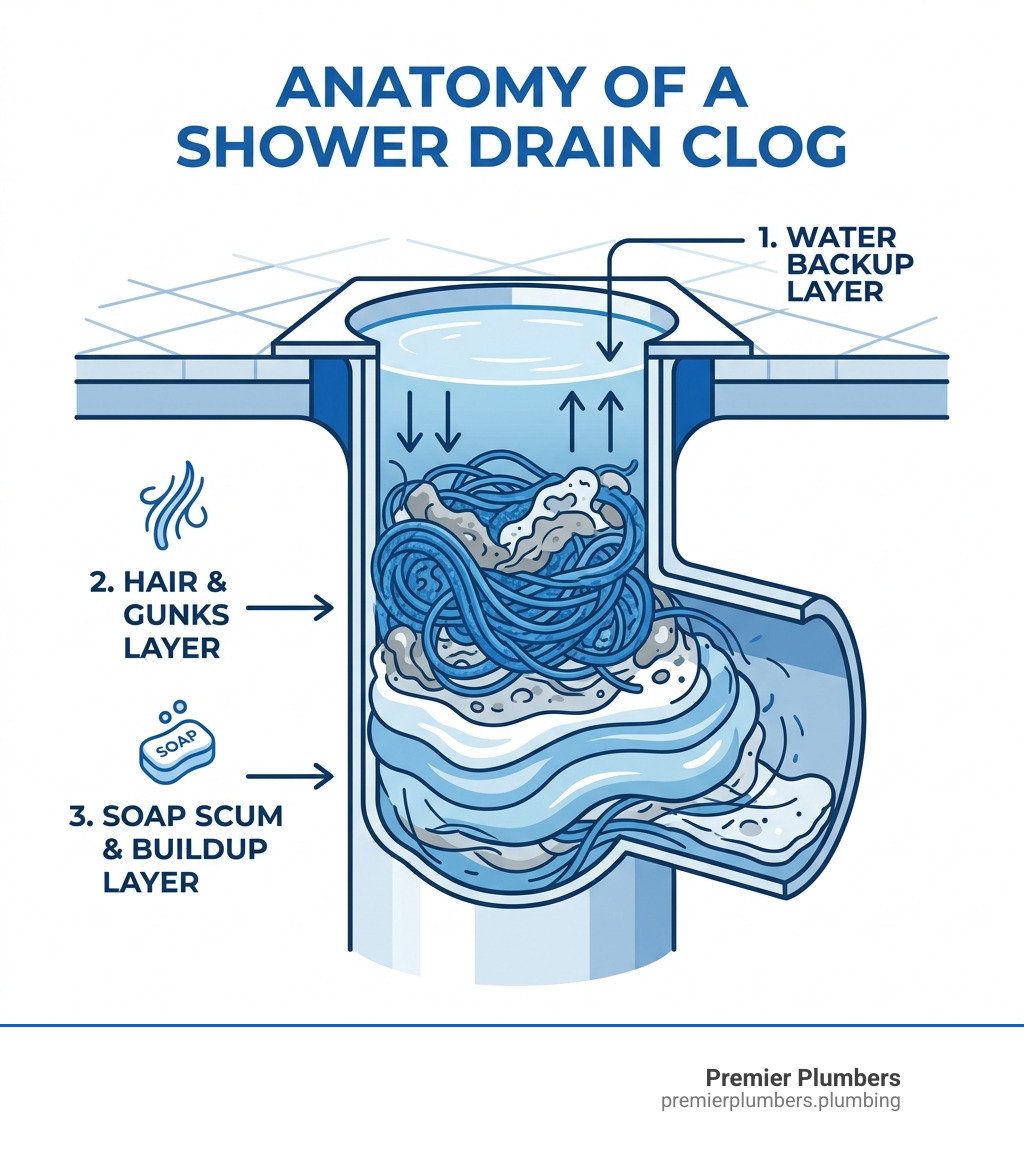
In our decades of serving Florida communities from Sarasota to Naples and up to Tampa, we’ve seen just about everything that can stop a pipe. While hair is the undisputed heavyweight champion of clogs, it rarely acts alone. It usually teams up with several other household “villains” to create a blockage that is nearly impossible for water to penetrate.
According to industry statistics, hair is the most common cause of shower drain clogs because it acts as a net. It catches everything else that washes off your body. Here are the primary culprits we encounter:
- Shed Hair: Whether it’s from you or your furry friends, hair is the structural foundation of almost every shower clog. It binds with other materials to create a thick, rope-like obstruction.
- Soap Scum: Traditional bar soaps contain fats and minerals that react with our Florida hard water. This creates a waxy residue that coats the inside of your pipes, narrowing the opening and giving hair something sticky to cling to.
- Hard Water Deposits: In areas like Bradenton and Fort Myers, hard water is a fact of life. Over time, calcium and magnesium deposits can build up inside pipes, creating a rough surface that snags debris.
- Skin Cells and Body Oils: It sounds a bit gross, but we shed millions of skin cells and natural oils every time we bathe. These mix with soap to form “gunk” that fills the gaps between hair strands.
- Foreign Objects: From bottle caps to small plastic toy parts, sometimes things fall into the drain that shouldn’t be there. These objects often get stuck in the P-trap, the U-shaped pipe under the shower.
Clog Culprit Comparison Table
| Culprit | Severity | Best DIY Fix |
|---|---|---|
| Hair | High | Manual removal / Drain snake |
| Soap scum | Medium | Baking soda and vinegar / Boiling water |
| Hard water | Low (slow build) | Vinegar soak / hydro jetting |
| Small objects | High | Manual removal with pliers |
Understanding these common causes can help you spot a clog early and choose the safest DIY fix before the blockage gets worse.
Proven Methods to Unclog Shower Drain Without Harsh Chemicals
Many people’s first instinct is to reach for a bottle of liquid drain cleaner. At Premier Plumbers, we generally advise against this. Chemical cleaners are often highly corrosive and can damage your pipes with repeated use. Furthermore, they are toxic to the environment and can be dangerous if they splash back on your skin or eyes.
Instead, we recommend starting with the simplest, safest methods to unclog shower drain basins.
The Boiling Water Flush
This is the “low-hanging fruit” of plumbing fixes. Boiling water is incredibly effective at melting away soap scum and grease that might be holding a hair clog together.
How to do it:
- Boil a kettle or a large pot of water.
- Using a funnel to prevent splashing, slowly pour the water down the drain in two or three stages.
- Wait a few minutes between pours to let the heat work its magic.
CRITICAL SAFETY NOTE: Only use boiling water if you have metal pipes, like copper or iron. If your home has PVC plastic pipes, which are very common in newer Florida homes, do not use boiling water. The extreme heat can soften or melt the plastic joints, leading to leaks. For PVC, use the hottest water your tap can provide instead.
If the water doesn’t clear the blockage after a few tries, you may need a more mechanical approach. Try manual removal, plunging, or a drain snake before considering professional help.
How to Unclog Shower Drain with Baking Soda and Vinegar
This is the classic “science fair volcano” method, and it’s surprisingly effective for minor to moderate clogs. The chemical reaction between the base, baking soda, and the acid, vinegar, creates carbon dioxide bubbles. This fizzing action helps physically dislodge gunk from the pipe walls.
The Step-by-Step Process:
- Prep: If there is standing water in the shower, try to scoop it out first.
- The Base: Pour about ½ cup of baking soda down the drain. If you have some salt on hand, adding ¼ cup of salt can add a bit of abrasive power.
- The Acid: Pour ½ cup of white vinegar down the drain. You’ll hear it start to sizzle and pop.
- Seal It: Cover the drain with a stopper or a rag to keep the reaction forced downward toward the clog.
- Wait: Let it sit for at least 15 to 30 minutes. For tough clogs, you can even let it sit overnight.
- Flush: Rinse the drain with a gallon of hot, not boiling if you have PVC, water to wash away the loosened debris.
Using a Plunger to Unclog Shower Drain Effectively
Most people think plungers are only for toilets, but a cup-style plunger is a fantastic tool for shower drains. Plunging works by using pressure and suction to force a clog to break apart or move further down the line into a larger pipe.
Pro Tips for Plunging:
- Use the Right Tool: Use a standard cup plunger, the one that looks like a rubber bowl. Don’t use the flange plunger with the extra flap at the bottom designed for toilets.
- Create a Seal: Apply a little petroleum jelly to the rim of the plunger cup. This helps create an airtight seal against the shower floor.
- Add Water: There needs to be enough water in the shower basin to cover the rubber lip of the plunger.
- Block the Overflow: If you are unclogging a bathtub-shower combo, you must block the overflow drain, the little silver circle higher up on the tub wall, with a wet rag or duct tape. If you don’t, the air pressure will just escape out the overflow instead of hitting the clog.
- The Motion: Use quick, sharp, vertical strokes. The “up” motion is just as important as the “down” motion because it helps pull the hair clog toward you so you can grab it.
If your pipes seem to be struggling despite your best efforts, you might need professional plumbing repairs to ensure there isn’t a deeper issue like a cracked line.
Manual Removal and Professional Snaking Tools
Sometimes, the “soft” methods aren’t enough. If you’re dealing with a dense ball of hair, you’re going to have to get your hands a little dirty, or at least wear some rubber gloves.
Manual Extraction
Before you go out and buy a tool, take a look.
- Use a screwdriver to remove the drain grate.
- Use a flashlight to peek inside. If you see a clump of hair right at the top, you can often pull it out with a pair of needle-nose pliers or even a bent wire coat hanger.
- Always dispose of this gunk in the trash. Never try to wash it further down the drain.
The Plastic Barbed Tool
You’ve likely seen these at hardware stores in Sarasota or Tampa. They are long, thin strips of plastic with “teeth” on the sides. You simply slide it into the drain, wiggle it around, and pull. It’s incredibly effective at catching hair clogs that are within the first few inches of the drain.
Using a Drain Snake (Drum Auger)
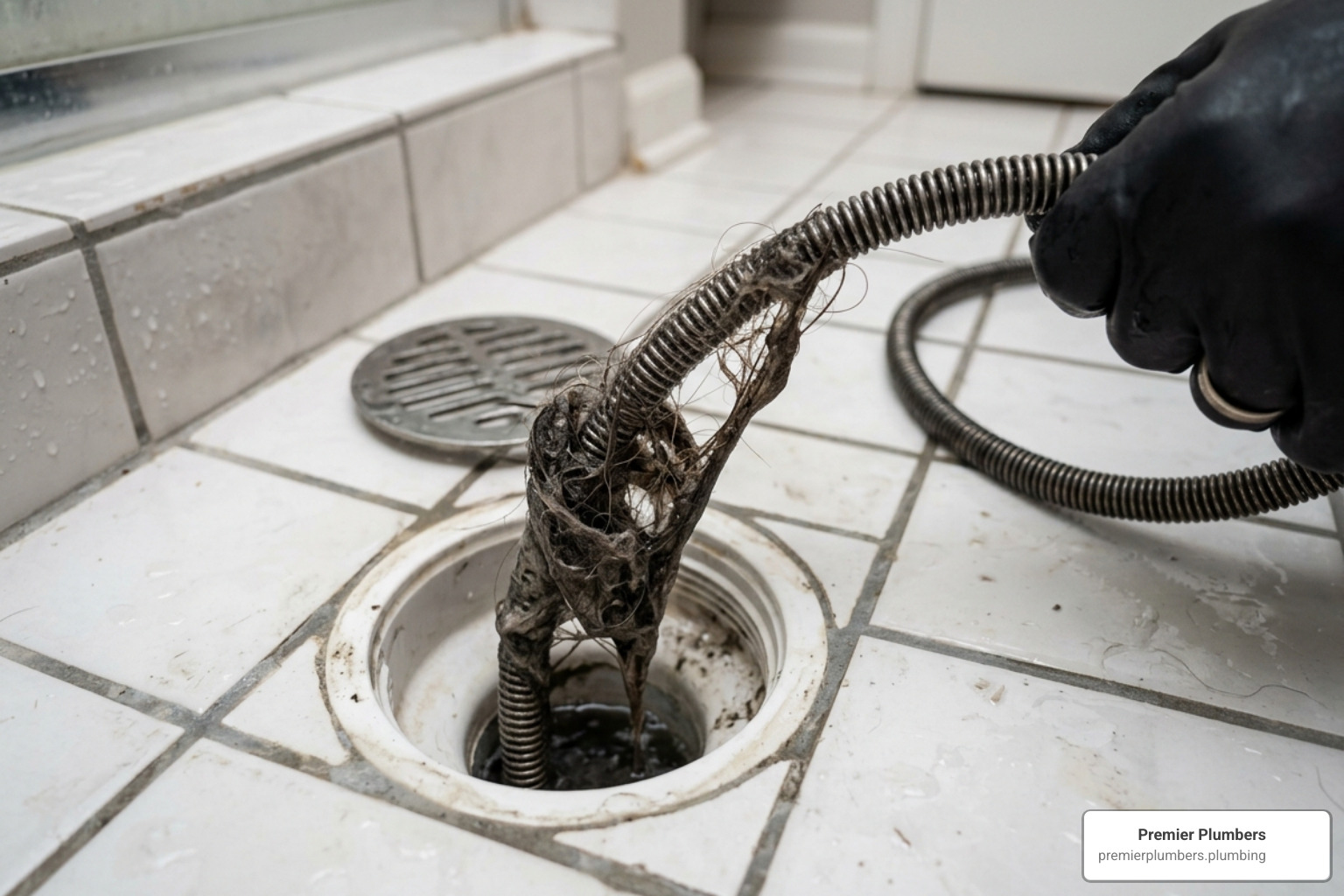
If the clog is deeper, you’ll need a plumber’s snake. This is a flexible steel cable that you “crank” down into the pipe.
How to Snake Like a Pro:
- Insert: Feed the cable into the drain opening slowly.
- Rotate: When you feel resistance, that’s the clog. Rotate the handle clockwise. This helps the tip of the snake “hook” into the hair or debris.
- Extract: Slowly pull the cable back out. Be prepared, what comes out isn’t going to be pretty!
- Repeat: You may need to do this 3 or 4 times to ensure the entire blockage is gone.
If the snake comes back clean but the water still won’t drain, the problem might be in the main sewer line, requiring professional drain cleaning.
Frequently Asked Questions about Shower Clogs
As a family-owned business serving Florida for three generations, Premier Plumbers answers a lot of questions about drains. Here are the most common ones we hear from our customers in places like Bradenton and Fort Myers.
If you’re noticing that your drains are slow even after you’ve tried these DIY fixes, take a look at these signs your drains need more than a plunger: when to call for hydro jetting.
Why won’t my snake go down the shower drain?
This is a common frustration! Usually, it’s because of the “P-trap.” The pipe under your shower curves in a “U” shape to hold water, which blocks sewer gases from entering your home.
The Fix: You must rotate the snake handle while pushing downward. The rotation helps the head of the snake navigate the tight curves of the trap. Also, ensure you are using a 1/4-inch or 5/16-inch cable; anything larger might be too stiff for a standard 2-inch shower drain.
How often should you snake a shower drain?
Prevention is always better than a cure. For a typical family home in Florida, we recommend a “preventative snake” every one to two months. If you have several people with long hair using the same shower daily, you might want to do it monthly.
Pro Tip: To reduce the need for snaking, install a mesh hair catcher over your drain. It’s an inexpensive fix that can save you from costly plumbing problems. If you want a deeper clean that lasts longer, consider professional hydro jetting once a year to clear out the soap scum and mineral scale that a snake can’t reach.
When should I call a professional for a clogged drain?
While we love empowering homeowners to handle DIY fixes, some problems require the heavy machinery. You should call us if:
- Multiple Drains are Slow: If your shower, toilet, and sink are all backing up, you likely have a main sewer line blockage.
- Foul Odors: A “rotten egg” smell can indicate a venting issue or a more serious sewer backup.
- Gurgling Pipes: If your shower drain gurgles when you flush the toilet, air is being trapped in your system.
- Standing Water Won’t Budge: If you’ve tried snaking and plunging and the water hasn’t moved an inch, the clog is likely too deep or too solid, like tree roots, for DIY tools.
In these cases, you might need emergency plumbing services to prevent water damage to your home.
Conclusion
Knowing how to unclog shower drain blockages is a vital skill for any homeowner. Whether you’re using the baking soda and vinegar method or learning to master the drain snake, most minor clogs can be handled with a little patience and the right technique.
The best way to deal with a clog is to prevent it from happening in the first place. Use a hair catcher, flush your drains with hot water regularly, and avoid using harsh chemical cleaners that can eat away at your plumbing.
At Premier Plumbers, we are proud to be a family-owned, three-generation plumbing legacy. We’ve been keeping the water flowing for families across Sarasota, Bradenton, Fort Myers, Naples, and Tampa for decades. We treat your home like our own, offering expert quality and honest service every time.
If your DIY efforts haven’t done the trick, or if you’re facing a plumbing emergency, don’t wait for the water to rise. Contact our professional shower drain technicians to get your pipes back in top shape. We’re here to help you live clog-free!