

Introduction
Why a Clogged Kitchen Sink Drain Is More Than Just an Annoyance
Kitchen sink drain unclog methods you can try right now, from easiest to most involved:
- Pour boiling water down the drain to loosen grease (metal pipes only)
- Use baking soda + vinegar — pour 1 cup of each, wait 1 hour, flush with hot water
- Plunge the drain with 3–4 inches of water in the basin
- Clean the P-trap — the curved pipe under the sink where most clogs hide
- Use a drain snake to break up deeper blockages
- Call a plumber if none of the above works
The kitchen sink is one of the hardest-working fixtures in your home. Grease from cooking, food scraps, and soap scum all go down that drain, day after day. Eventually, something sticks. Then more sticks to that. Before long, you’ve got standing water and a sink you can’t use.
A slow drain is easy to ignore. But left alone, it almost always gets worse.
The good news? Most kitchen sink clogs can be fixed without calling a plumber — if you catch them early and use the right method.
Premier Plumbers is a family-owned, third-generation plumbing company with decades of experience helping Florida homeowners handle everything from slow drains to full kitchen sink drain unclog emergencies. In this guide, we’ll walk you through every method — from the simplest fix to knowing when it’s time to pick up the phone.
Common Causes of Kitchen Sink Clogs
Understanding why your sink stopped draining is the first step to a successful kitchen sink drain unclog. In our experience serving Florida communities from Tampa down to Naples, we see the same culprits time and again.
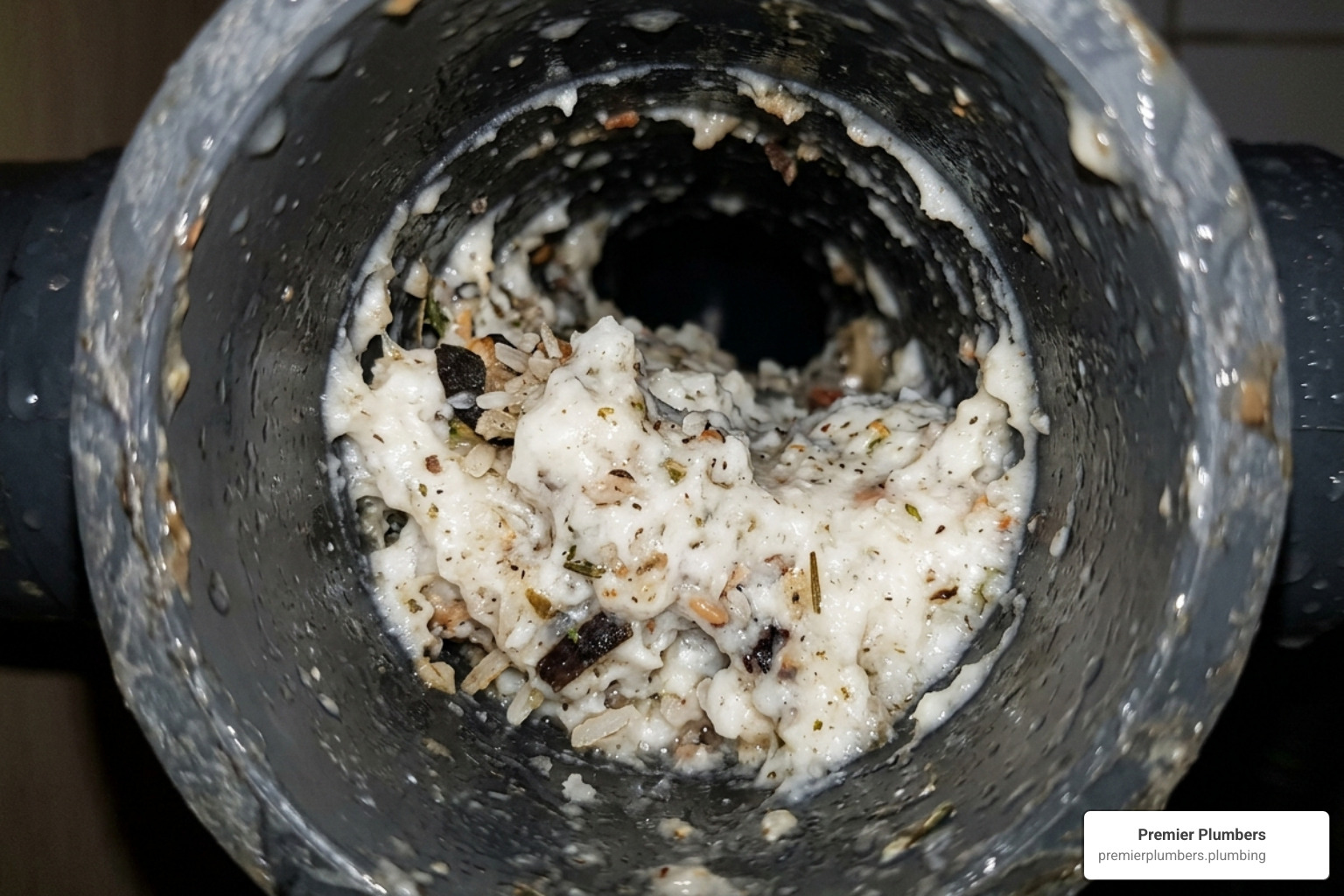
The primary offender is cooking grease. When fats, oils, and grease (FOG) are liquid and hot, they flow easily. However, as they cool down inside your pipes, they solidify, creating a sticky lining that traps other debris. Imagine a delicious rib-eye steak; the grease that melts off into the pan will eventually turn into a thick, white paste in your pipes.
Other common causes include:
- Food Scraps: Even with a garbage disposal, items like pasta, rice, and potato peels can expand or create a starchy paste that blocks water flow.
- Coffee Grounds: These don’t dissolve in water. Instead, they settle in the P-trap and act like sediment in a river, eventually damming the pipe.
- Soap Scum: Modern soaps can react with minerals in Florida’s water to form a hard residue on pipe walls.
- Mineral Buildup: Over time, calcium and magnesium deposits can narrow the diameter of your pipes, making it easier for even small food particles to cause a total blockage.
As of May 2026, we are seeing more homeowners struggle with clogs due to the increased use of “flushable” wipes or heavy vegetable fibers in disposals . Identifying whether your clog is grease-based or a physical obstruction determines which DIY method will actually work.
Effective DIY Methods for a Kitchen Sink Drain Unclog
Before you reach for the phone, there are several low-cost, highly effective ways to handle a kitchen sink drain unclog yourself. Most of these involve items you already have in your pantry.
| Method | Speed | Cost | Best For |
|---|---|---|---|
| Boiling Water | 5 Mins | $0 | Fresh grease clogs |
| Baking Soda & Vinegar | 1 Hour+ | ~$2 | Minor buildup & odors |
| Plunger | 10 Mins | ~$10 | Physical blockages |
| P-Trap Cleaning | 30 Mins | $0 | Deep, stubborn clogs |
If these methods don’t do the trick, it might be time for professional drain cleaning services to ensure your pipes aren’t permanently damaged.
Using Boiling Water for Grease
This is the simplest and cheapest first step. It is specifically designed to melt solidified fats and oils that have “glued” themselves to your pipe walls.
- Remove standing water: Use a cup or bucket to bail out as much water as possible. Boiling water won’t work if it has to fight through a gallon of cold, dirty sink water first.
- The Slow Pour: Bring a kettle or large pot of water to a rolling boil. Pour it slowly and directly down the drain in two or three stages, letting the hot water work for several seconds between pours.
- Check your pipes: This is vital. Only use boiling water if you have metal pipes. If you have PVC (plastic) pipes, boiling water can soften the plastic or damage the seals. For PVC, use very hot tap water instead.
The Baking Soda and Vinegar Method
This is the classic “science fair volcano” fix. While it won’t always move a heavy physical object (like a stray bottle cap), the chemical reaction is excellent at breaking down grime and mineral deposits.
- Pour 1 cup of baking soda down the drain. Use a spatula to push it down if needed.
- Follow it with 1 cup of white vinegar.
- Immediately put the stopper in the sink to force the fizzing action downward instead of up into the basin.
- Let it sit for at least an hour, or even overnight for a stubborn kitchen sink drain unclog.
- Flush with a gallon of hot water to clear the loosened debris.
Mechanical Solutions for Stubborn Blockages
When liquids don’t work, it’s time to apply some force. You don’t need a massive tool shed to fix most drains; a few basic items will handle 95% of household clogs.
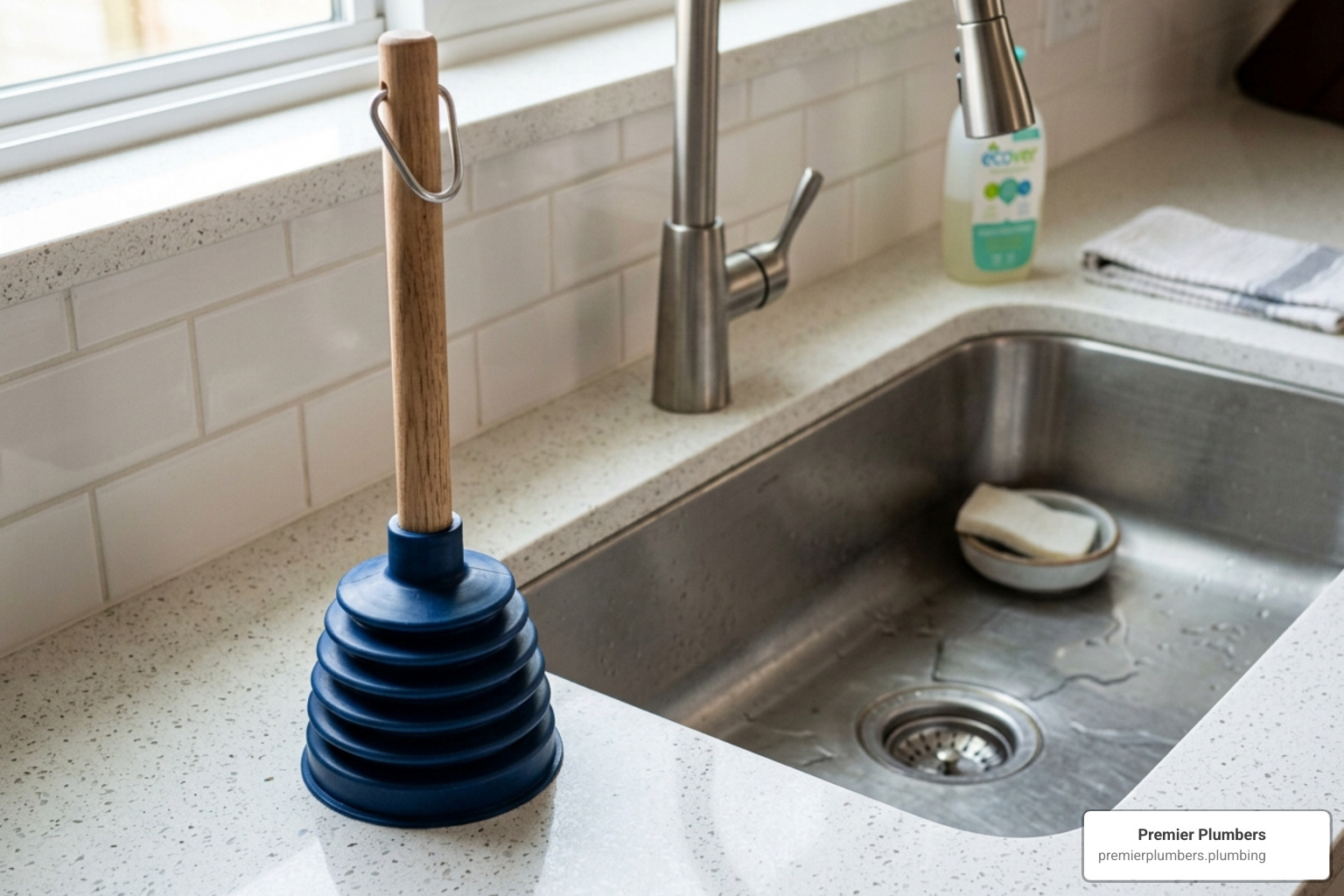
How to Use a Plunger for a Kitchen Sink Drain Unclog
Most people use a plunger incorrectly. For a kitchen sink, you want a flat-bottomed cup plunger or a bellows-style plunger rather than the flanged type used for toilets.
- Seal the deal: If you have a double sink, you must seal the other side. Use a wet rag or the sink stopper to block the second drain. If you don’t, the pressure you create will simply escape out the other side rather than hitting the clog.
- Clamp the line: If you have a dishwasher, clamp the flexible drain line. This prevents dirty water from being forced back into your appliance.
- The Technique: Fill the sink with 3–4 inches of water to create a liquid seal around the plunger head. Roll the plunger into the water to ensure no air is trapped inside the cup. Plunge vigorously up and down for about 20 seconds, maintaining a tight seal.
Using a Drain Snake for a Kitchen Sink Drain Unclog
If the clog is further down the line, a plumber’s snake (or auger) is your best friend. For kitchen sinks, a 3/8-inch cable that is about 20 feet long is usually sufficient.
- Feed the snake into the drain (or through the wall pipe after removing the P-trap) until you feel resistance.
- Crank the handle clockwise to “bite” into the clog.
- Continue to push and rotate to break up the mass.
- Slowly retract the snake, cleaning the cable as it comes out to avoid a mess.
Advanced DIY: Cleaning the P-Trap and Disposal
If you’ve tried plunging and pouring to no avail, the blockage is likely sitting in the P-trap, the U-shaped pipe under your sink. This pipe is designed to hold water to prevent sewer gases from entering your home, but its shape also makes it a magnet for debris.
- Prepare for a mess: Place a bucket under the trap to catch the water that will inevitably spill out.
- Unscrew the slip nuts: Use pliers or a pipe wrench to loosen the nuts at both ends of the U-shaped bend.
- Clean it out: Remove the trap and dump the contents into the bucket. You might find anything from a ring to a solid “slug” of grease and hair.
- Inspect the “trap arm”: This is the pipe that goes into the wall. If the trap is clear, the clog is further back, and you should snake through the wall opening.
- Reassemble: Hand-tighten the nuts, then give them another quarter-turn with pliers. Don’t over-tighten, especially on plastic pipes, as they can crack.
Garbage Disposal Issues: Sometimes the “clog” is just a jammed disposal. Always turn off the power first. You can often use an Allen wrench in the bottom of the unit to manually rotate the flywheel and break a jam. If the motor is humming but not turning, hit the red “reset” button on the bottom of the unit. For more complex issues, we always recommend professional drain cleaning to avoid damaging your disposal.
Prevention Tips and When to Call a Pro
The best kitchen sink drain unclog is the one you never have to do. We recommend a few simple habits to keep your Florida home’s plumbing flowing smoothly:
- Use Mesh Strainers: These cheap little baskets catch food particles and hair before they enter the system.
- The Grease Can: Never pour grease down the drain. Keep an old coffee can or glass jar under the sink to collect grease, then toss it in the trash once it solidifies.
- Hot Water Flushes: Once a week, pour a kettle of hot water down the drain to melt away minor grease buildup.
- Avoid Chemicals: We strongly advise against using products like Drano or Liquid-Plumr. These chemicals are highly corrosive. They can damage PVC pipes, eat through older metal pipes, and are extremely dangerous for plumbers to handle if the DIY fix fails. Plus, if they don’t clear the clog, you’re left with a sink full of toxic acid.
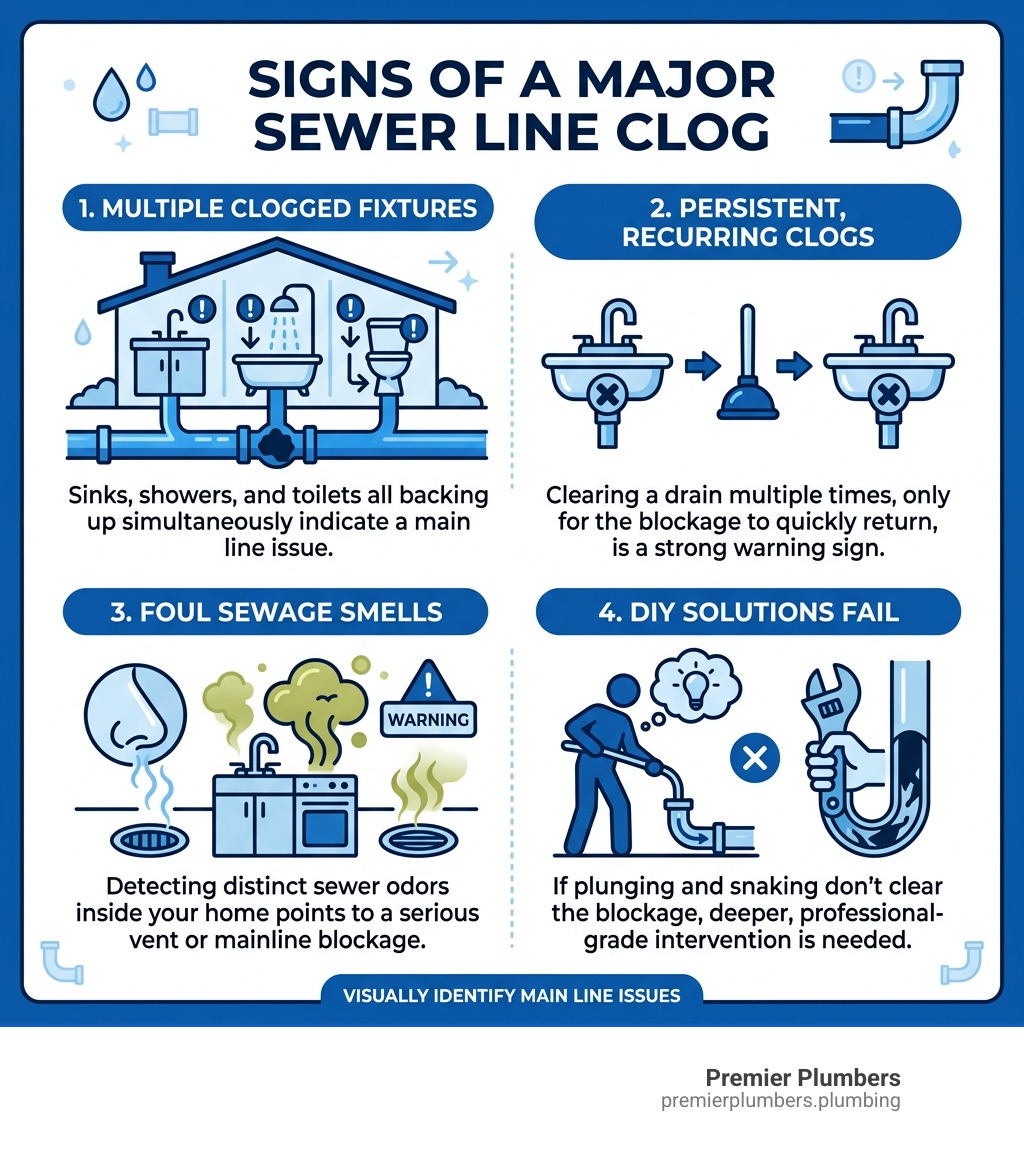
When to call Premier Plumbers: Sometimes, a DIY fix isn’t enough. You should call us if:
- Multiple fixtures are clogged: If your kitchen sink and your bathroom shower are backing up, you likely have a main sewer line blockage.
- The clog keeps coming back: This usually indicates a deeper issue, like tree roots or a collapsed pipe.
- You smell sewage: This could mean a broken vent or a serious backup.
- DIY methods fail: If you’ve snaked and plunged with no luck, you may need hydro jetting to blast away years of buildup.
Frequently Asked Questions about Kitchen Sink Clogs
Is boiling water safe for PVC pipes?
No. While boiling water is great for metal pipes, it can reach temperatures high enough to melt or warp PVC (plastic) pipes and damage the seals in your plumbing joints. If you have plastic pipes under your sink, stick to very hot tap water.
Why should I avoid chemical drain cleaners?
Chemical cleaners create an intense heat reaction that can crack porcelain and melt plastic. Furthermore, they often don’t clear the entire clog, leaving a “tunnel” through the debris that quickly closes back up. They are a temporary fix that causes long-term damage.
How do I unclog a sink with a garbage disposal?
First, check if the disposal itself is jammed. If the disposal is clear but the sink is backed up, plunge the non-disposal side while sealing the disposal side. This forces pressure through the shared P-trap. Never put your hands down the disposal. Use tongs to retrieve dropped items.
Conclusion
A kitchen sink drain unclog doesn’t have to be a nightmare. By starting with simple solutions like boiling water or baking soda and moving up to mechanical tools like plungers and snakes, most Florida homeowners can resolve these issues in an afternoon.
However, if you find yourself facing a stubborn backup that won’t budge, don’t risk damaging your pipes with harsh chemicals or excessive force. At Premier Plumbers, we bring a three-generation legacy of expertise to every job. Whether you’re in Sarasota, Tampa, or Fort Myers, our family-owned team is ready to provide expert drain cleaning and get your kitchen back in working order.
Contact our plumbing professionals today, and let us handle the dirty work for you!