
Why Your Water Heater Pilot Light Keeps Going Out
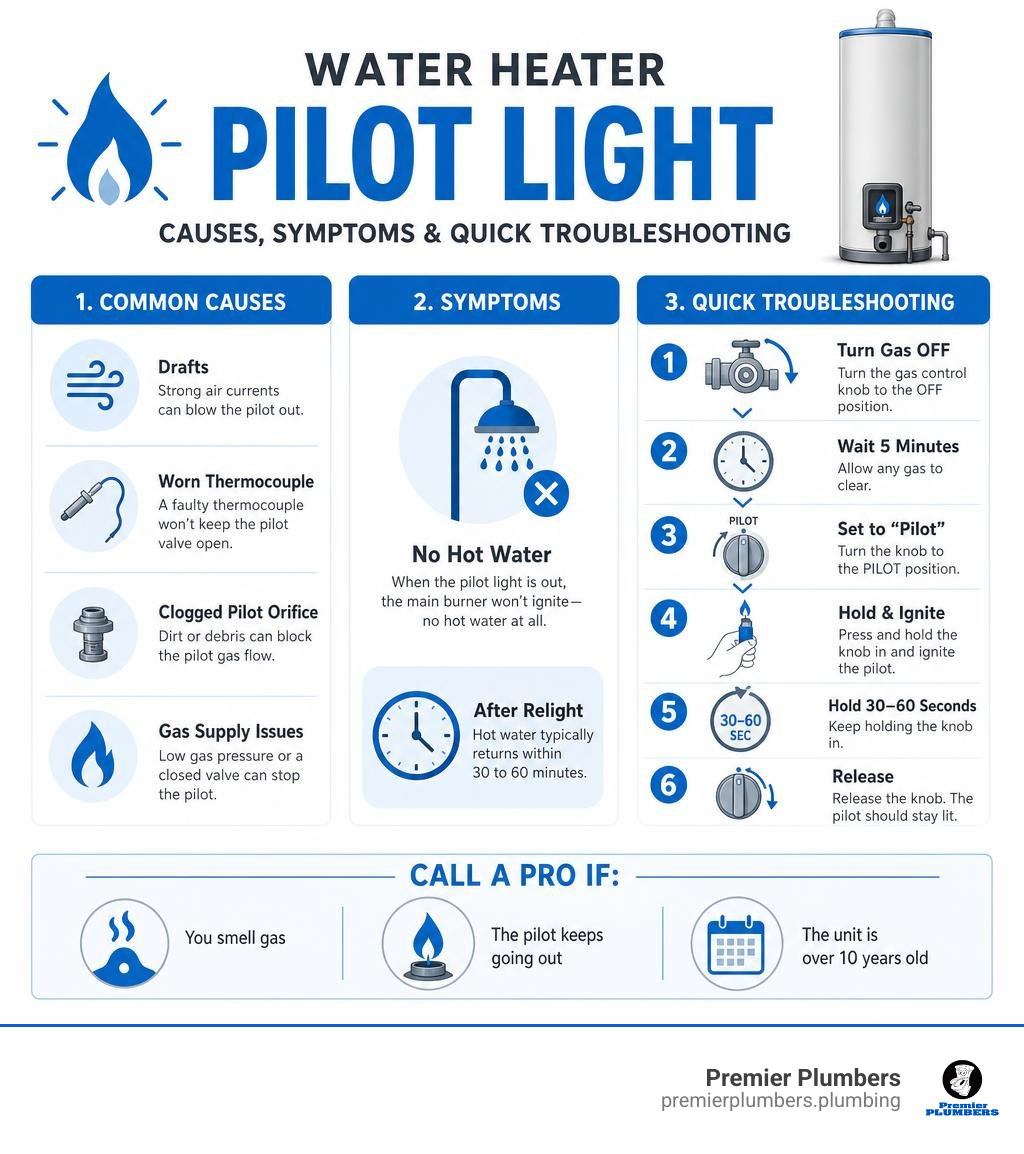
A faulty water heater pilot light is the single most common reason for a sudden loss of hot water in a gas-powered home. Here is a quick summary of what you need to know:
- Pilot light out? Your water heater will produce no hot water at all.
- Common causes: drafts, a worn thermocouple, clogged pilot orifice, or gas supply issues.
- Quick fix: Turn gas off, wait 5 minutes, set knob to “Pilot,” hold and ignite, hold 30-60 seconds, release.
- Hot water returns: typically within 30 to 60 minutes after a successful relight.
- Call a pro if: you smell gas, the pilot keeps going out, or the unit is over 10 years old.
Picture this: you step into the shower expecting warm water, and instead you get an icy blast of cold. It’s jarring. And if you have a gas water heater, there’s a good chance a small, extinguished flame is the culprit.
The pilot light is a continuously burning flame that ignites the main burner whenever your home calls for hot water. When it goes out, everything downstream stops working. No hot water for showers, dishes, or laundry.
The good news? In most cases, relighting it is a straightforward task you can handle yourself. But if it keeps going out, that’s your water heater telling you something deeper is wrong.
At Premier Plumbers, our team of third-generation plumbers has over 34 years of experience diagnosing and repairing water heater pilot light issues across Southwest Florida. In this guide, we’ll walk you through everything you need to know, from safely relighting your pilot to figuring out why it won’t stay lit.
Understanding Your Water Heater Pilot Light and How It Works
To understand why your pilot flame is struggling, you first need to understand how it functions. The pilot light is a small, steady flame that burns 24/7 inside your gas water heater. It acts as the primary ignition source for the main burner. When the thermostat inside your tank detects that the water temperature has dropped, it signals the gas valve to open. The gas rushes to the main burner, and the pilot light ignites it, creating the large fire that heats your water.
At the center of this process is a vital safety device called the thermocouple. The thermocouple is a small copper sensor tube that sits directly in the path of the pilot flame. When the pilot is lit, it heats the tip of the thermocouple. This heat generates a tiny electrical current that signals the gas safety valve to stay open.
If the pilot light goes out, the thermocouple cools down in seconds. Without that heat, the electrical current stops, and the safety valve immediately snaps shut. This prevents dangerous, unburned gas from leaking into your home. Understanding this safety loop is essential when learning how to light a pilot light on a water heater safely.
How to tell if your water heater pilot light is out
The most obvious sign that your pilot light has extinguished is a total lack of hot water. However, you can easily confirm this visually.
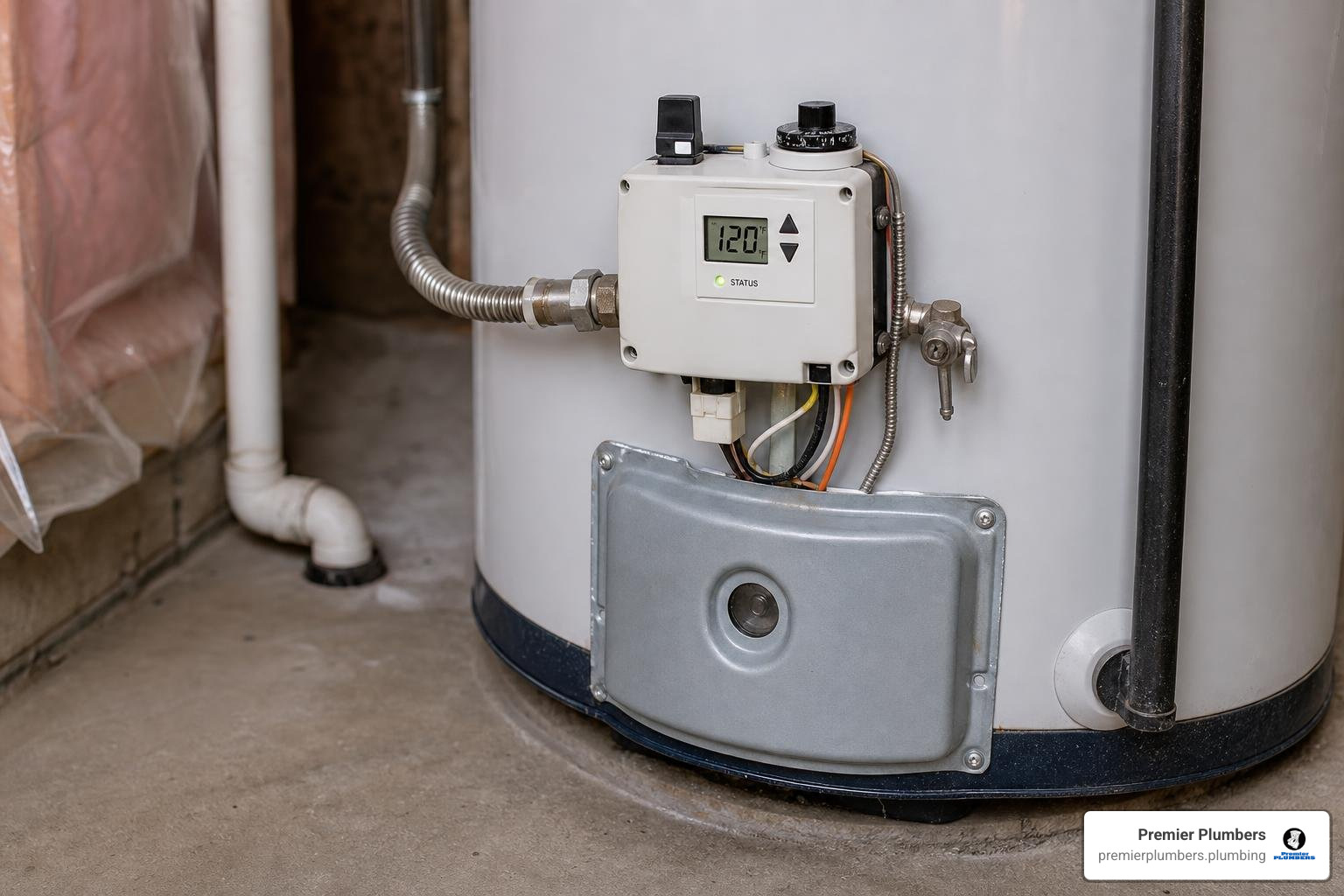
First, locate the gas control valve box near the bottom of your water heater tank. Look directly beneath it for a small metal access door or a glass viewing port (often called a sight glass). If you look through this sight glass and see no small blue flame, your pilot is out. On newer, modern water heaters, the gas control valve features a status light. If this status light is not flashing or is blinking a specific error code, it indicates the pilot has failed.
Standing pilot vs electronic ignition systems
Depending on the age of your water heater, you will have one of two ignition systems:
- Standing Pilot Systems: Found mostly on older water heaters (typically over 10 to 15 years old), these units rely on a flame that burns continuously. While reliable, they consume a small amount of gas constantly.
- Electronic Ignition Systems: Modern conventional water heaters use an intermittent spark or hot surface ignition system. Instead of burning 24/7, these systems use a piezoelectric spark igniter (similar to a gas grill button) to light the pilot only when the tank needs to heat water, which greatly improves energy efficiency.
| Feature | Standing Pilot System | Electronic Ignition System |
|---|---|---|
| Flame Operation | Burns continuously 24/7 | Ignites only on demand |
| Ignition Method | Manual match or long lighter | Built-in piezo spark button |
| Energy Efficiency | Lower (wastes gas when idle) | Higher (saves fuel) |
| Common Age | Older models (10+ years old) | Modern models (under 10 years old) |
| Safety Sensor | Standard thermocouple | Flame sensor or thermopile |
Safety First: Preparation and Tools for Relighting
Before you attempt to relight your water heater pilot light, safety must be your absolute top priority. Gas is highly combustible, and improper handling can lead to serious hazards.
Your first step is always the “sniff test.” Natural gas and propane are naturally odorless, but utility companies add a chemical called mercaptan to give them a distinct rotten egg smell. Before you do anything, sniff the air around the base of the water heater.
Because propane gas is heavier than air, it tends to sink and settle near the floor. Be sure to perform your safety smell check at floor level, not just at head height. If you smell rotten eggs at any point, stop immediately. Do not light matches, do not flip light switches, and do not use your phone near the appliance. Leave the house immediately and call your gas provider or emergency services.
Essential safety steps and the gas sniff test
If the air is completely clear of odors, you can proceed. Always read the safety labels printed directly on your water heater tank and consult your printed owner’s manual before troubleshooting.
If the pilot was recently burning or if you just attempted to light it, turn the gas control knob to the OFF position and wait at least 10 full minutes. This waiting period is critical because it allows any residual gas trapped in the combustion chamber to safely dissipate. Rushing this step is a common mistake that can lead to a dangerous flash flare-up when you introduce a spark. For homeowners who want extra peace of mind before handling a gas appliance, Premier Plumbers offers emergency plumbing services for urgent leaks, gas-related concerns, and sudden hot water problems.
Tools and supplies for the job
Having the right tools nearby makes the process smooth and safe:
- A Flashlight: Essential for peering into the dark burner chamber through the sight glass.
- A Long-Reach Lighter: Often called a fireplace or BBQ lighter, this keeps your hands safely away from the burner if you have an older manual model.
- Safety Glasses: To protect your eyes from any unexpected drafts or sparks.
- Fine Steel Wool: Useful if you need to gently clean a dirty thermocouple tip.
Step-by-Step Guide to Relighting Your Water Heater
Once you have completed your safety checks and waited for any residual gas to clear, you are ready to begin. The exact steps will depend on whether you have a manual standing pilot or an electronic spark system, but both require you to interact with the gas control valve.
Relighting a traditional standing pilot
If your water heater is an older model that requires a manual flame to light, follow these steps:
- Clear the Area: Ensure there are no flammable items, rags, or chemical cleaners near the unit.
- Turn Off Gas: Turn the gas control knob to OFF and wait 10 minutes.
- Set Temperature: Turn the temperature dial to its lowest setting (often labeled “Low” or “Vacation”). This prevents the main burner from roaring to life immediately when the pilot ignites.
- Remove the Door: Take off the outer metal burner access door at the bottom of the tank.
- Set to Pilot: Rotate the gas control knob to the PILOT position.
- Press and Hold: Press the control knob down firmly. This overrides the safety valve and sends gas directly to the pilot tube.
- Light the Flame: While holding the knob down, insert your long-reach lighter into the burner chamber and light the pilot nozzle.
- Wait for the Thermocouple: Once you see a small blue flame, continue holding the control knob down for 45 to 60 seconds. This gives the thermocouple enough time to heat up and generate the electrical current needed to keep the gas valve open.
- Release and Verify: Slowly release the knob. Look through the sight glass to confirm the flame stays lit.
- Turn to On: Turn the gas control knob to the ON position, replace the outer door, and adjust the temperature dial back to your preferred setting (120 degrees Fahrenheit is recommended).
Restarting an electronic ignition system
Modern water heaters with electronic ignition do not require matches or lighters. They use a built-in spark igniter button.
To relight an electronic system:
- Prepare the Unit: Turn the gas control knob to OFF, wait 10 minutes, and set the temperature dial to its lowest setting.
- Switch to Pilot: Turn the gas control knob to the PILOT position.
- Press and Click: Press and hold the gas control knob down. While keeping it fully depressed, click the piezo spark igniter button once per second.
- Watch the Status Light: Keep clicking the igniter for up to 90 seconds while holding the knob down. Look through the sight glass or watch the status light on the control box. Once the pilot ignites, the status light will begin to flash steadily (usually once per second).
- Hold and Release: Continue holding the control knob down for 30 to 60 seconds after ignition to warm the sensor. Release the knob slowly and verify the status light continues to flash normally.
- Turn to On: Rotate the control knob to ON and adjust your temperature dial.
Note for newly installed water heaters: New units often have air trapped in the gas line. It may take several attempts of holding the knob and clicking the igniter to bleed the air out of the line before gas finally reaches the pilot nozzle.
Troubleshooting and Frequently Asked Questions
If you followed the steps above and your pilot light went out the moment you released the control knob, or if it keeps going out every few days, you are dealing with an underlying mechanical issue.
Why your water heater pilot light keeps going out
If your pilot refuses to stay lit, several common factors could be at play:
- Thermocouple Wear: Over time, the constant heating and cooling cycles cause thermocouples to degrade. Most thermocouples last between 5 and 10 years. If yours is older, it may no longer generate enough voltage to keep the gas valve open.
- Dirty Pilot Orifice: The pilot orifice is a tiny opening where gas exits to form the flame. Dust, rust flakes, or even spider webs can clog this opening, resulting in a weak, yellow, “lazy” flame that fails to heat the thermocouple properly. A healthy pilot flame should be small, steady, and sharp blue.
- Venting and Drafts: Strong drafts can easily blow out a pilot light. This is common in Florida homes where water heaters are located in utility closets, garages, or near drafty exterior doors. Additionally, an improperly sized or blocked exhaust flue pipe can cause backdrafts that extinguish the flame.
- Sediment Buildup: If your tank has heavy sediment buildup at the bottom, it can cause the unit to overheat. This triggers a high-limit safety switch that automatically shuts down the gas supply, extinguishing the pilot. Regular maintenance matters, especially in Florida homes where hard water and coastal conditions can shorten equipment life. Premier Plumbers explains more in its blog on why flushing your water heater matters and its local maintenance article on water heater maintenance for Sarasota homes.
What to do if the pilot won’t stay lit
If the pilot won’t stay lit, you can try a few basic DIY steps before calling a professional:
- Clean the Thermocouple: Sometimes soot or oxidation builds up on the thermocouple tip, insulating it from the flame’s heat. You can remove the burner access door and gently rub the tip of the thermocouple with fine steel wool to clean it.
- Check the Alignment: Ensure the thermocouple is positioned directly in the path of the pilot flame. The flame should engulf the top 1/3 to 1/2 of the thermocouple tip.
- Inspect the Gas Supply: Ensure your main gas valve is fully open. If other gas appliances in your home are struggling, you may have a gas pressure issue from your utility provider or a faulty gas meter.
If the thermocouple is clean and properly positioned but the flame still dies when you release the knob, the thermocouple or the gas control valve itself has likely failed and requires replacement.
How long does it take for hot water to return?
Once you successfully relight your pilot and the main burner ignites, you won’t have hot water instantly. It typically takes 30 to 60 minutes for a standard 40 or 50 gallon tank to heat completely. If you have a large family or a high-capacity tank, it may take slightly longer to reach your target temperature.
Conclusion
Relighting a water heater pilot light is a valuable homeowner skill that can save you from a cold shower and a needless service call. However, working with gas systems requires caution. If you smell gas, if your pilot flame burns yellow instead of blue, or if the pilot repeatedly goes out after multiple relighting attempts, it is time to step back and call in the experts.
At Premier Plumbers, we bring a three-generation legacy of plumbing expertise to homeowners across Southwest Florida. Our dedicated team serves Sarasota, Bradenton, Tampa, Fort Myers, Naples, and the surrounding coastal communities with fast, reliable, and professional service. We can quickly diagnose whether you need a simple thermocouple replacement, a thorough tank flush, or a complete system upgrade.
If your pilot light is giving you trouble and you want the peace of mind that comes with professional care, do not hesitate to contact our professional water heater technicians today to get your hot water running safely and reliably.